
Cathie Wood, one of the world’s most famous tech investors, told Australian media that an Anthropic researcher’s warning AI could lead to humanity’s extinction is “ridiculous.” But there is investment opportunity amid the fear generated, she says.
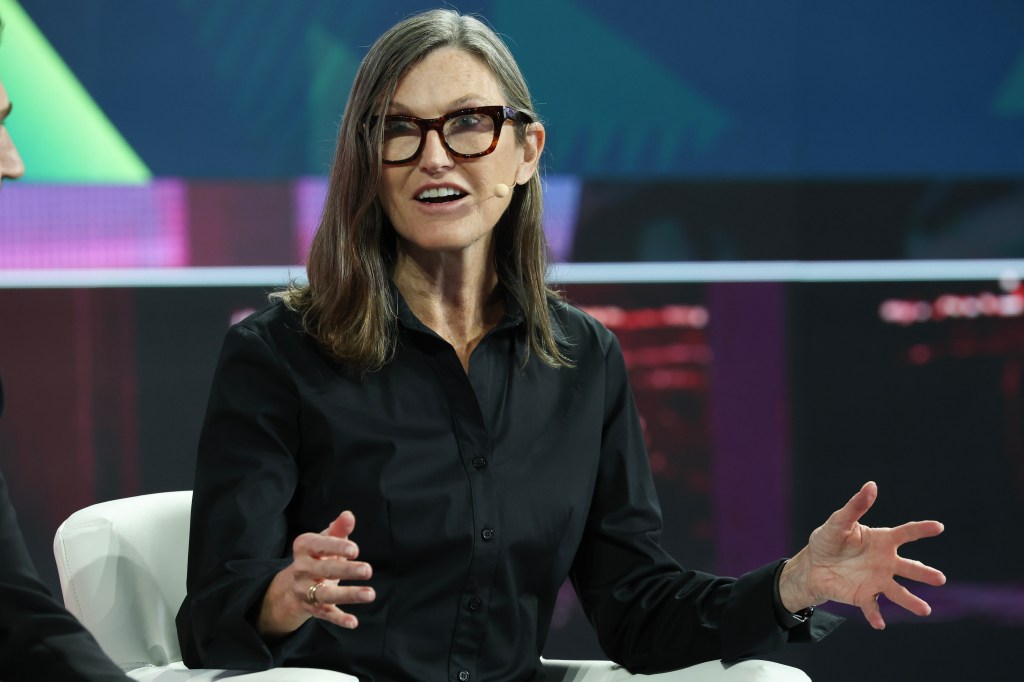
If you’re worried about warnings from researchers within Anthropic and OpenAI that artificial intelligence could be the end of us all, Cathie Wood has some advice for you: Keep calm and invest in cybersecurity.
Wood, a famous tech investor known for bullish bets made through her ARK Invest funds, on Tuesday dismissed Anthropic researcher Evan Hubinger’s viral claim that there is an over 10 per cent chance AI “wipes out” humanity in the next ten years.
“That’s ridiculous,” Wood told media on Tuesday morning. “And yet it gives us a great opportunity to focus the world on cybersecurity in this space.”
Fear that AI would be used by cybercriminals to hack into old, vulnerability-ridden software infrastructure has proven unfounded, ARK Invest research analyst Jozef Soja added. The technology is more useful for companies to patch up their own vulnerabilities than it is for bad actors to find weaknesses to exploit, he said.
ARK’s message is that not only is the fear of AI risk overstated, the emergence of agentic armies will drive investment in both cybersecurity and the AI companies themselves.
“We think these sorts of issues that are being raised, like cybersecurity, are going to be tailwinds in both the short term and long term for spend on these foundation models,” Soja said. “They’re an integral part of solving the very problems that many people believe they could potentially create.”
Wood is in Australia promoting the ARK Venture Fund, which launched in here earlier this month. The actively managed fund holds stakes in many of the world’s biggest private companies, including Anthropic, OpenAI and Stripe.
“We need these frontier models to protect us,” Wood said. “I’ve seen some reports of software flaws and vulnerabilities that have been in place for 50 years that nobody found, and now AI can find them… every company now knows it is vulnerable from a software point of view, and that it actually needs to use these models to solve that problem.
“So it is actually increasing the demand for the models. I think the publicity has been good.”
After founding ARK in 2014, Wood became a sensation when her Innovation ETF returned 152 per cent to investors in 2020 – and then a cautionary tale when that same fund lost 67 per cent in 2022. Whereas many fund managers look to find and back undervalued companies, Wood often invests more along the lines of a VC – looking for technologies that can grow exponentially and transform industries.
Anthropic founder and chief executive Dario Amodei earlier this week published an essay titled We Must Pace the Frontier, arguing that the rate of AI advancement is causing the risk of catastrophe to accumulate. Amodei made three proposals: That third-party evaluators be posted in each frontier lab, that frontier labs agree to pace cutting-edge development, and that the United States strike similar agreements with countries like China.
Despite growing anxiety around frontier AI models and their apparent capacity for cataclysm, Wood says there is no need for regulation to rein in the leading labs.
“We don’t have to worry until ’29 [because] Trump will veto everything in the meantime,” she said. “He understands our biggest competitor, China, is not going to slow down.”
Last week AI researcher Jacob Coxon announced his resignation from Anthropic on X, warning that frontier models will “soon be superhuman systems that can hack anything” and that “the people building AI earnestly believe that it could kill us all by the end of the decade.” Evan Hubinger, Anthropic’s lead of alignment (the division responsible for making sure AI behaves) responded to the post by saying “I personally think it is >10% within the next decade.”
Want to see more Forbes articles on your feed? Tap here to make Forbes Australia a preferred source on Google.
Look back on the week that was with hand-picked articles from Australia and around the world. Sign up to the Forbes Australia newsletter here or become a member here.


