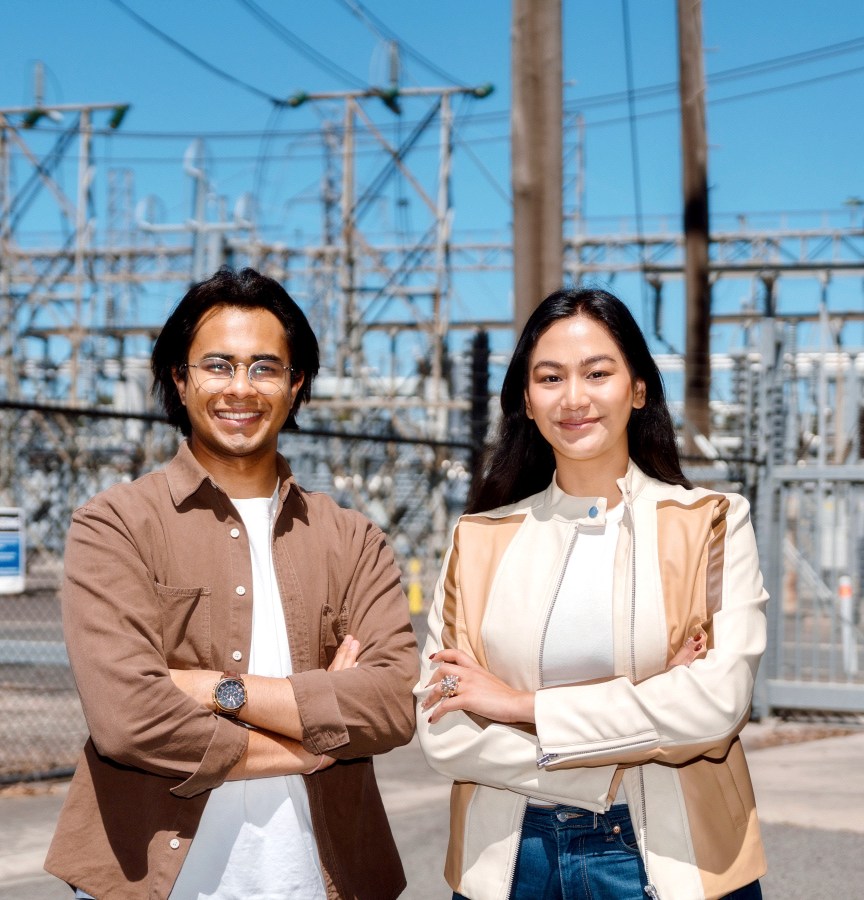
Sydney founders Yasemin and Merrick Selvi created a solution to retrofit power points into a network of EV chargers. Now, a partnership with Origin Energy and ARENA is helping scale Alchemy Charge across Australia.

It was 2020, and Yasemin Selvi was living in a blur of sleep deprivation with newborn twins. When her husband Merrick Selvi walked into the room suggesting they buy their first electric vehicle, Selvi’s response was simple: “Sure, whatever mate.”
Exhausted, she asked how he planned to charge the EV. Merrick, a remedial building veteran with two decades of experience, replied that there were multiple options in the market.
Not long after, the couple visited the Sydney showroom of a hardware vendor and pointed at the largest, shiniest DC fast charger on display and asked how much it cost. The salesman laughed and gave them a reality check: “Guys, don’t worry about how much it costs. Tell me how much power you actually have available.”
Alchemy co-founder Selvi was perplexed to learn that property owners were spending thousands of dollars to install complex high-voltage chargers – only to then dial their output down to match a standard power point.
That was the spark that gave rise to Alchemy Charge and its flagship technology, SmartPoint, which converts standard power points into intelligent, safe charging accessible to any electric vehicle. The technology is particularly useful for apartment buildings and strata organisations which oversee neighbours who don’t want to foot the electricity bill to charge other people’s cars.
“Before us, commercialised Level 1 charging simply didn’t exist,” Selvi tells Forbes Australia.
“We looked at mature markets like Norway, where EV adoption was high, and realised that when they were electrifying entire carparks, they were installing seven-kilowatt chargers and dialling them down to 2.4 kilowatts – the output of a standard power point. Why install multi-thousand-dollar hardware just to dial it down?,” Selvi asks.
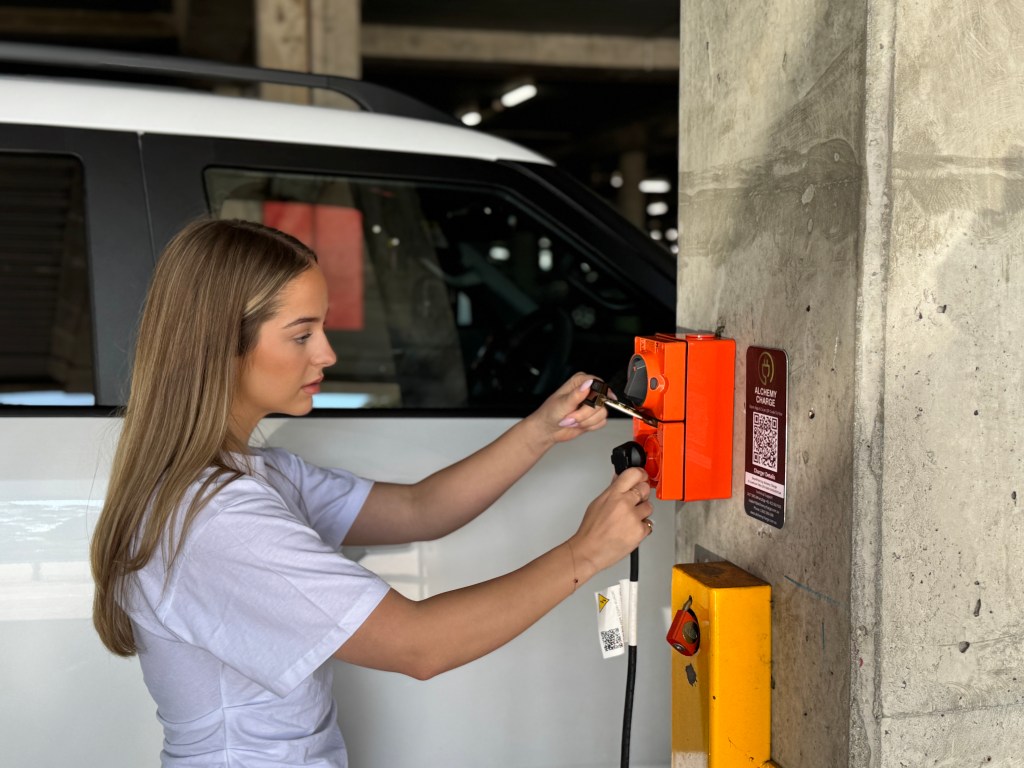
Instead, Alchemy’s commercialised, Australian-made smart socket gives building owners and managers the ability to monetise Level 1 trickle charging across multi-residential, commercial, and fleet car parks.
Sourcing EV solutions for strata operators
Electric Vehicle Council data shows that 80 per cent of Australian EV drivers charge at home, with half using standard portable trickle cables. The average Australian travels just 38 kilometres a day, according to the ABS, a distance easily replenished by two to three hours of slow trickle charging from a standard socket.
Yet the simplicity of plugging in at home takes on a different dynamic when “home” belongs to multiple stakeholders.
There are 368,000 strata buildings in Australia, and more than 3.2 million apartment parking bays, according to the former Fuji, Xerox, Canon and law firm executive.
Body corporate committees are often asked to upgrade the electrical backbone in their buildings to accommodate high-voltage Level 2 or Level 3 chargers, requiring complex approvals, 18-month lead times, and rewiring costs running into hundreds of thousands of dollars.
“Charging can look just like plugging in your mobile phone overnight. Your car is parked 23 hours of the day, and 80 percent of that time it’s sitting at home.”
Yasemin Selvi
Selvi’s research uncovered that apartment dwellers who were plugging portable chargers into unmetered common carpark sockets were inadvertently committing power theft and creating fire risks by using unrated legacy wiring.
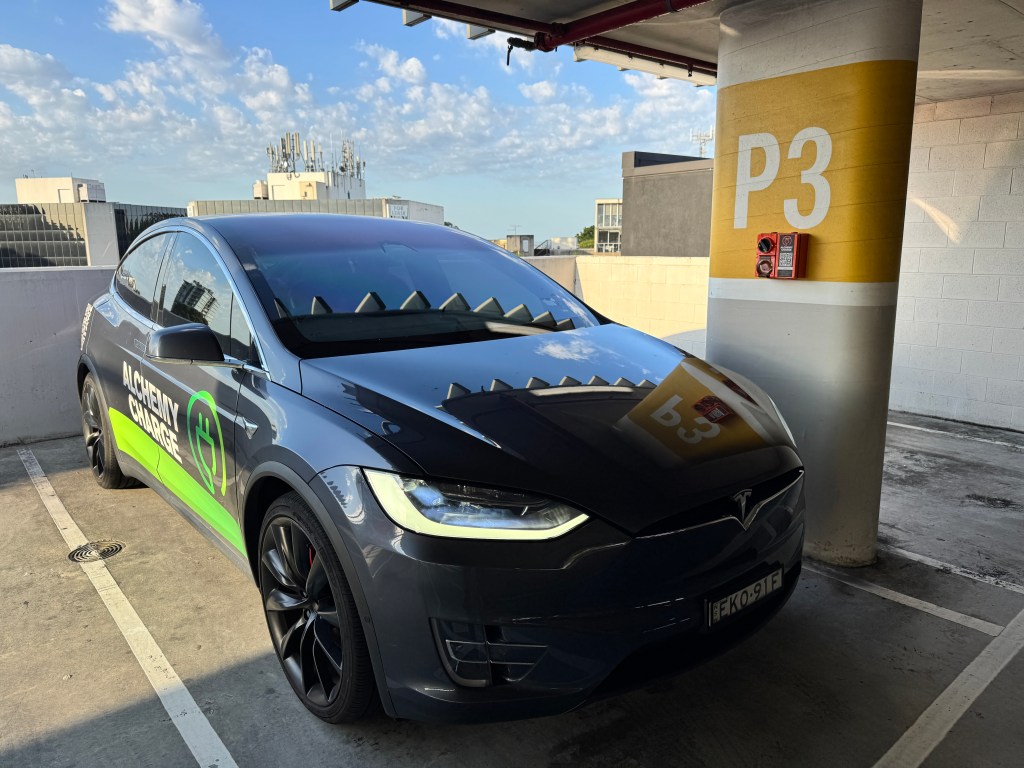

She came to the conclusion that the market was currently solving the wrong problem. By treating vehicle charging like an overnight phone top-up, and regular sockets like a device that could be monetised, Alchemy Charge removed the significant infrastructure costs holding back EV adoption in apartments.
Three levels of charge
To understand how the Alchemy socket retrofit stacks up in the broader market, it helps to break down how EV charging is structured. The industry categorises charging into three distinct levels: Level 3 is ultra-fast DC highway chargers that deliver an 80 per cent charge in as little as 18 minutes, but require heavy infrastructure, vast power draws, and significant capital expenditure.
Level 2 covers the 7-to-22 kilowatt AC boxes commonly seen in shopping centres and public car parks. Level 1 refers to trickle charging – plugging the portable cable that comes standard with most electric vehicles directly into a regular 10 or 15-amp power socket to top up range over a longer period of time.
What separates SmartPoint from a regular wall plug comes down to four key capabilities. Unlike standard unmetered sockets that draw shared building power, SmartPoint measures exact kilowatt-hours to bill the driver directly.
To prevent fire risks from continuous 24-hour power draws that melt domestic plugs, the unit incorporates thermal monitoring that keeps internal components cool. The socket remains digitally locked until an authorised driver authenticates via smartphone, preventing power theft.
Finally, for corporate fleets, SmartPoint can generate ATO-compliant usage reports so employers can reimburse employees who need to charge company vehicles at home.
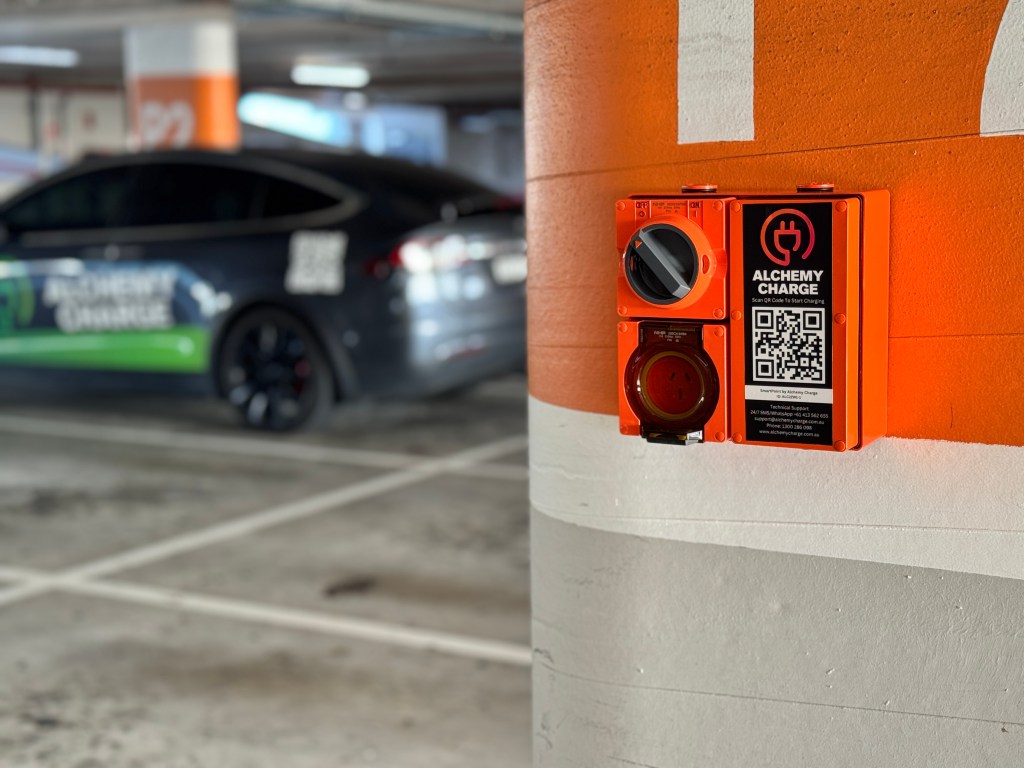
The cost to retrofit power points into SmartPoint devices is around $1,000, Selvi says.
To ensure safety in harsh property environments, every socket is built for industrial durability. The casing provides heavy-duty outdoor weather resistance against rain and dust, and the isolator switch is rated for 100,000 cycles – meaning an owner can flip the switch 10 times a day for over 25 years without mechanical failure.
Origin and ARENA come to the smartsocket party
While SmartPoint has been in the works for six years, just this week, Alchemy locked in $2 million in partnership funding from Australia’s Renewable Energy Agency (ARENA) to help apartment dwellers shift to EVs through a program called Smart Assist.
It is a timely move, given NSW recently brought in legislation that gives strata lot owners the right to “install an electric vehicle charging station on their own lot, including where the work also requires changes to common property.”
Alchemy has also partnered up with Origin Energy this month, pairing Australian hardware innovation with the national scale of the energy operator. SmartPoint is now an official Origin Level 1 EV charge provider, that can be utilised nationwide.

Under that program, when a driver plugs in, they authenticate via the Origin platform. Origin tracks the exact electricity consumed, bills the user directly, and can automatically reimburse the building’s body corporate for the electricity used.
The partnership solves an objection often raised by strata committees, Selvi says.
“A question that we were getting was, ‘Okay, but what happens if Alchemy ceases to exist? Then I’ve got a socket on the wall that I can’t use,'” Selvi explains. “When it’s the Origin network and not the Alchemy network, that question doesn’t come up. People look at scale, or a huge company with a known name, and they trust that it will be around.”
Anticipating increased demand, Alchemy moved hardware manufacturing from its Sydney R&D hub to an established commercial facility in Melbourne known for providing electrical infrastructure to Woolworths and the MCG. The move gives Alchemy a thousandfold increase in production capacity, Selvi says.
On the back of the Origin deal, Alchemy is also expanding into New Zealand and undertaking a 500-socket pilot in Bali in conjunction with the Indonesian government, aiming to accelerate the electrification of scooters and motorbikes.
It marks an international milestone for the company that goes beyond what the husband and wife founders dreamed of. In the early days, Selvi recalls asking her husband where he envisioned the business going.
“He said, ‘One in every parking spot in Australia.’ But really, anywhere a vehicle dwells, it makes sense to get a top-up and charge overnight.”
Forbes Women is a global network of female business owners, entrepreneurs and changemakers. Sign up to Forbes Women here
Look back on the week that was with hand-picked articles from Australia and around the world. Sign up to the Forbes Australia newsletter here or become a member here.