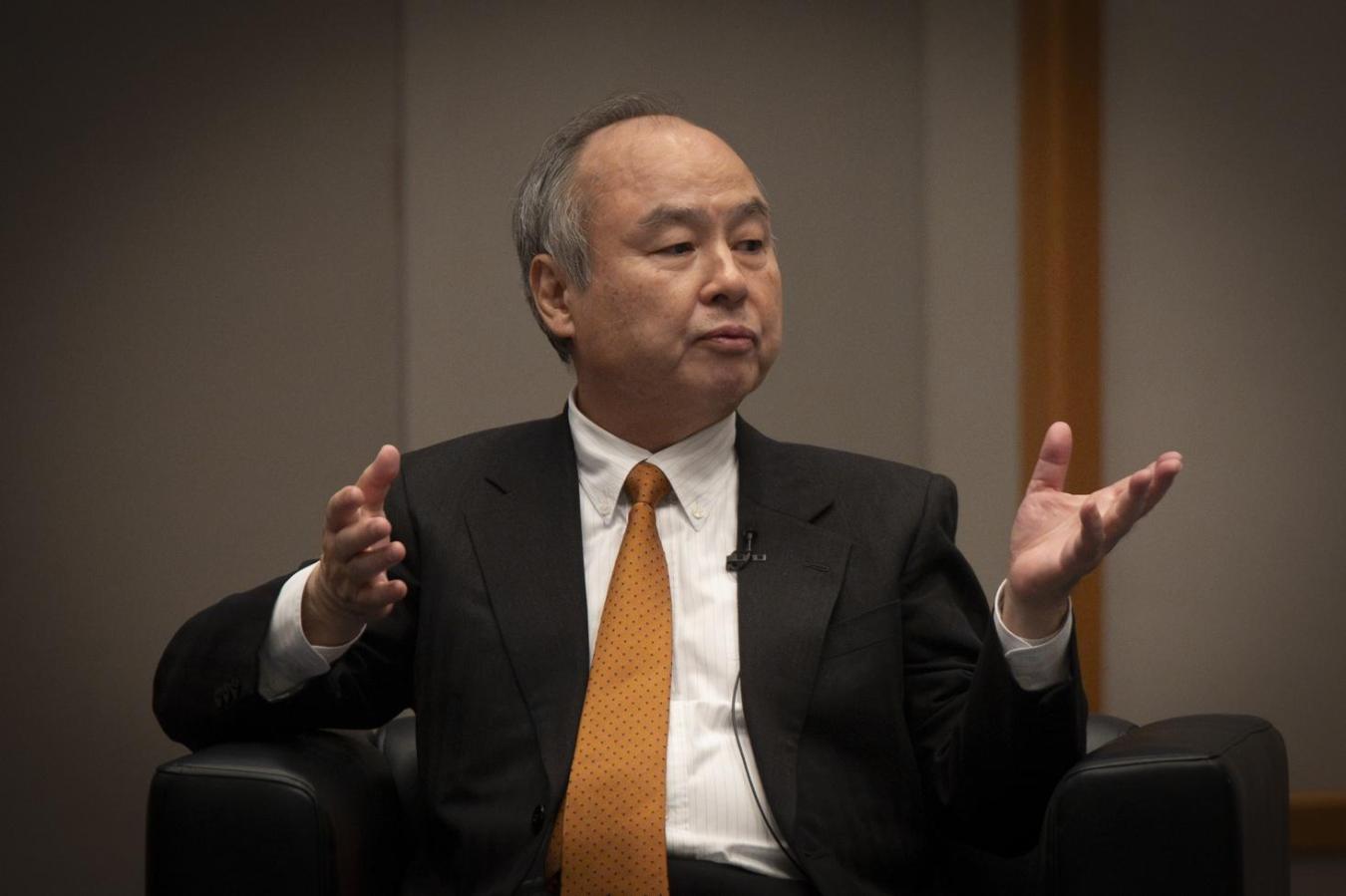
Taiwan’s MetAI Technology uses digital twins to help chipmakers including TSMC avoid costly construction mistakes, with AI data center builders next in its sights.

Taipei-based MetAI Technology is enabling chipmakers like TSMC to avoid costly construction mistakes with its digital twin technology that can create virtual, detailed copies of fabs within minutes. Cofounder and CEO Daniel Yu is targeting builders of AI data centers next.
When Nvidia CEO Jensen Huang took the stage at the Computex technology expo in Taipei in May 2025, he hammered home that the age of industrial AI has arrived with AI-trained robots working the floors of high-tech factories. With trillions of dollars pouring into these complex plants, the stakes are high to ensure they are built well, cost effectively and on time. What makes that possible, he said, are their next-gen digital twins that allow companies to virtually model production processes before construction begins—and in a video showcasing the technology, a little-known Taiwanese startup was singled out by name.
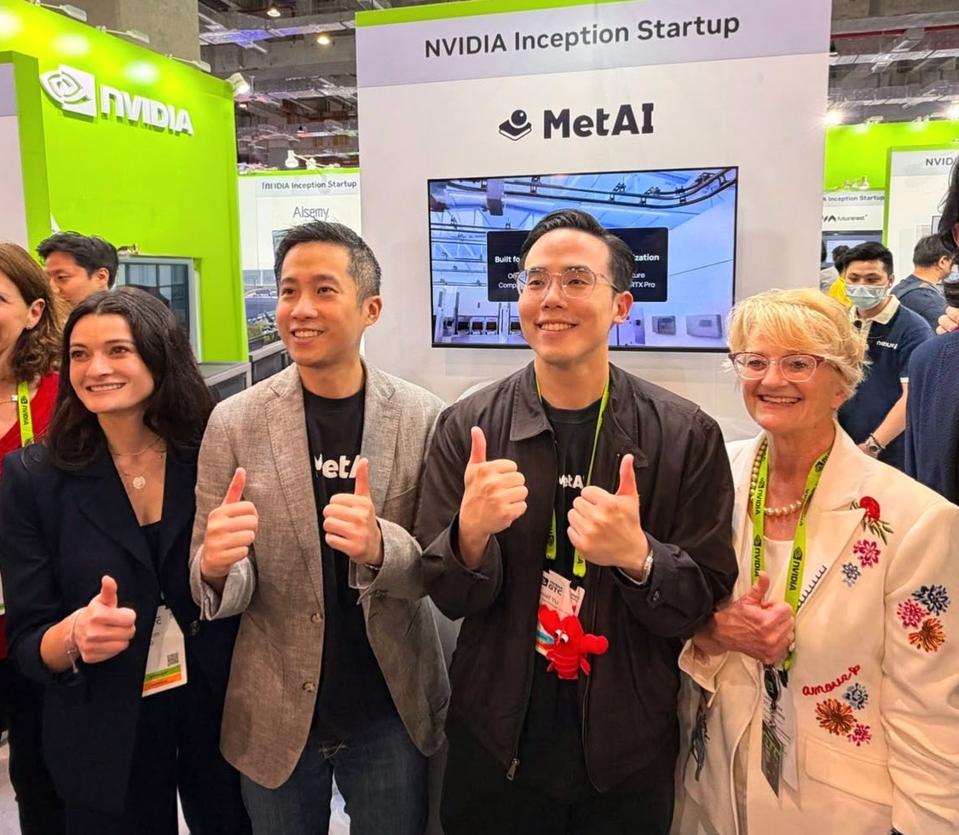
It was a big moment for Daniel Yu, cofounder and CEO of MetAI Technology, who was in the audience listening keenly to Huang’s keynote address. “But public recognition is one thing,” says Yu, 36, in a video interview from his home in Taipei. “Commercial execution is another. It was a mix of excitement and a reminder that we still have a lot of work to do.”
His four-year-old company has so far landed clients such as Taiwan Semiconductor Manufacturing Co. (TSMC) and U.S.-based Micron Technology, and also earned it a spot on Forbes Asia’s 100 To Watch list in 2025. TSMC, the world’s largest contract chipmaker by market share, for example, is using MetAI’s software to generate customized digital twins of utility and piping systems for its new fabs being built in Taiwan and the U.S.
With MetAI’s MetGen software, chipmakers can validate and refine complex fab layouts by converting reams of blueprints and equipment specifications into digital twins. These not only mirror the blueprint down to the last machine but also offer a simulated training ground for the AI models that power smart robots to learn and practice real-world skills. The software is compatible with Nvidia’s Omniverse platform, which provides tools like 3D rendering to make these virtual factories look and operate like their physical counterparts.
In these virtual spaces, AI models can rehearse tasks under different operating conditions before running on physical robots or automated machines. “With our industry-specific knowledge and simulation generation capabilities combined, we can create virtual environments that would take humans an enormous amount of time to build,” says Yu.
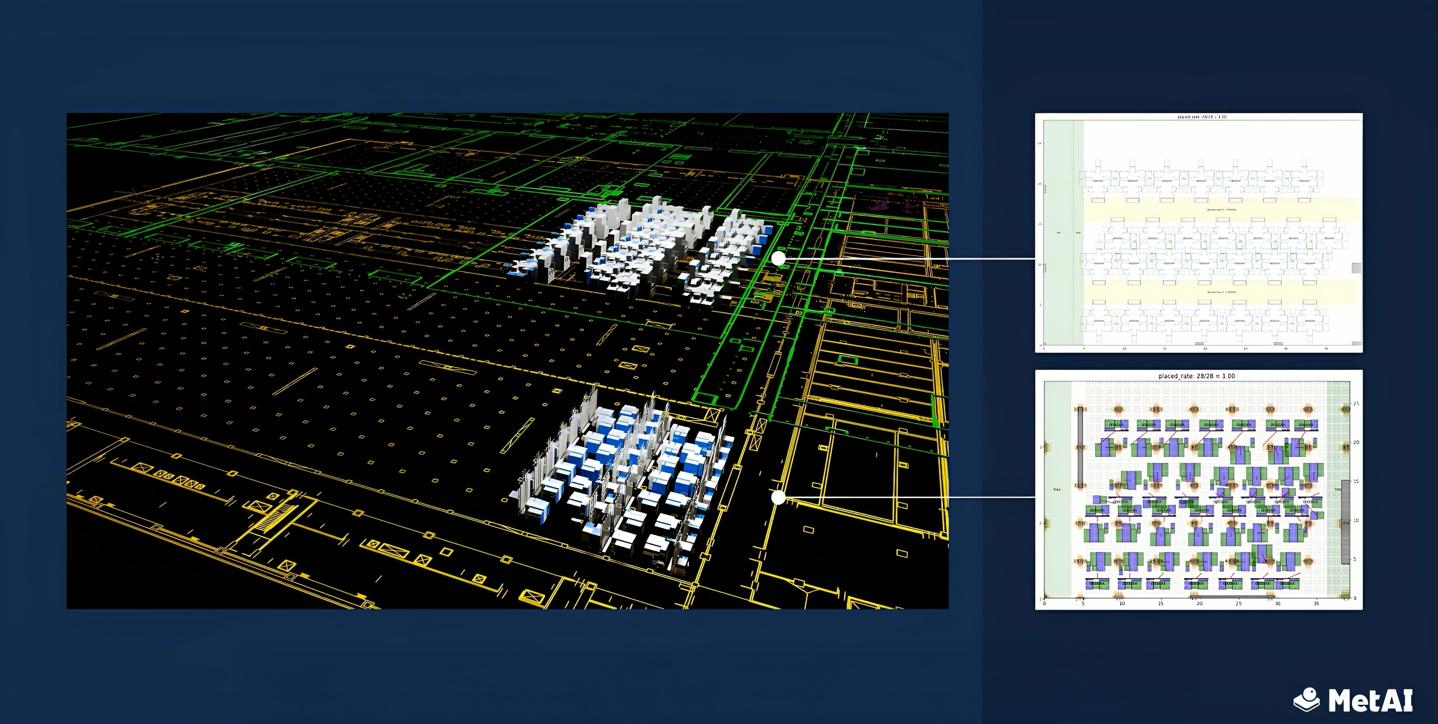
Such 3D simulations typically take engineers thousands of man-hours to create, according to Yu. MetAI claims its software can generate a digital twin in under five minutes—giving chipmakers a way to accelerate fab construction timelines as demand for AI chips continues to soar. Moreover, MetAI says this can de-risk the construction of increasingly complex fabs, which can easily cost over $20 billion and take at least 19 months from design to completion.
Global consultancy PwC wrote last year that semiconductor makers worldwide plan to pour more than $1.5 trillion to build new fabs from 2024 to 2030. Much of that investment is flowing into the U.S., where TSMC has committed $265 billion to its Arizona expansion—using MetAI’s software for its fabs there, says Yu, who declined to disclose further details citing client confidentiality. In June, MetAI added Micron Technology to its client roster to generate 3D layouts of its fabs as the largest U.S. memory chip manufacturer by revenue expands its production capacity worldwide.
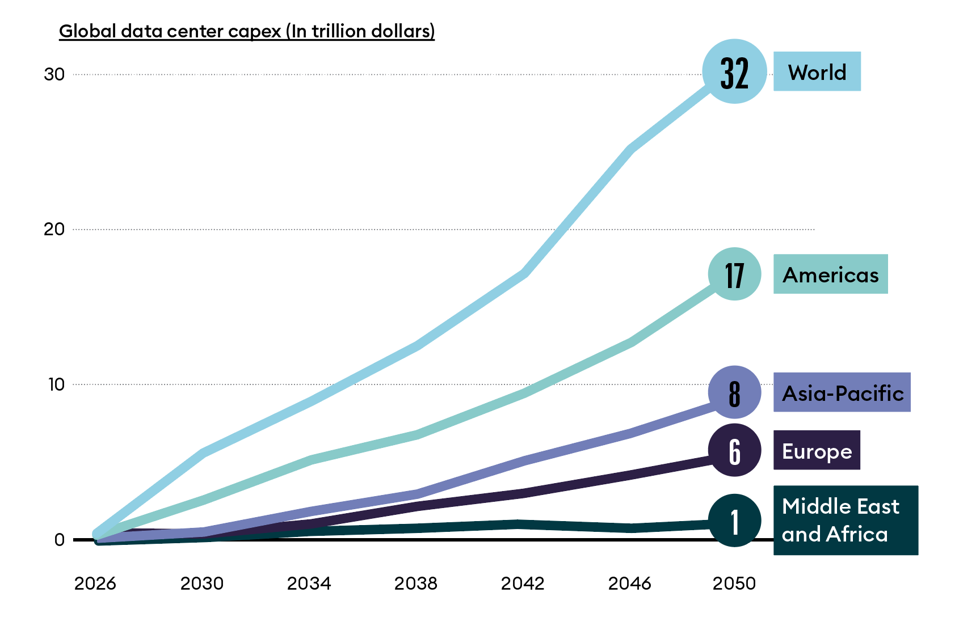
Meanwhile, Yu has started chasing another red-hot sector: AI data centers. Global capital expenditure on this crucial part of AI infrastructure is expected to hit $5 trillion by 2030, PwC estimated in a September report, with the Americas accounting for more than half of total spending. “Semiconductor fabs are our learning market because of their extreme complexity. But because there aren’t that many chipmakers globally, AI data centers are where we can scale,” says Yu. “The capex in [both of] these industries is so huge that even a 1% optimization makes an enormous difference.”
Digital twins are particularly valuable for semiconductor fabs and data centers “because they are highly instrumented environments, where the cost of downtime, inefficiency or design changes can be significant.”
Recently MetAI scored its first AI data center-related contract with Cooler Master, a Taipei-based supplier of liquid cooling systems for Nvidia. CEO Thomas Chen says Cooler Master is using the startup’s software to generate digital twins of liquid cooling systems for two neocloud computing companies. While the projects are too new to get a measure of cost savings, Chen says MetAI has reduced the time his company spends on revising designs. Instead of manually redrawing pipes and repositioning equipment whenever a customer changes the requirements, Cooler Master’s engineers can now adjust the parameters and have MetAI generate a new layout in short order.
Bandwidth Buildout
MetAI is capitalizing on an AI data center boom, in which capex is expected to surpass $5 trillion in 2030, hitting $32 trillion by mid-century.
Digital twins are particularly valuable for semiconductor fabs and data centers “because they are highly instrumented environments, where the cost of downtime, inefficiency or design changes can be significant,” says Sarah Lee, an Ontario-based senior research director of manufacturing IT strategies at IDC, in an email.
The technology itself has been around for a while, with Germany’s Siemens and France’s Dassault Systèmes among the top players in industrial simulation, but Yu says MetAI doesn’t compete with them. Their platforms function as underlying engines, he explains, handling tasks like 3D environment rendering and physics simulation. However, a significant amount of engineering work is still required to identify objects, assign physical properties such as mass, friction, light reflection and texture, and script unexpected scenarios like equipment failures. By comparison, MetAI’s software automatically tags that data; the file produced can then be loaded into Nvidia’s Omniverse to run simulations.
And while other digital twin startups can simulate a wide range of environments, none specialize in fabs and data center buildouts, claims Yu, describing MetAI’s industry expertise as an “indestructible moat.” He declined to estimate how much TSMC and Micron have saved using MetAI software, making the point instead that a one-year construction delay can result in as much as $8 billion in lost revenue for chipmakers, who frequently see fab projects fall behind schedule. Early last year, TSMC’s chief executive C.C. Wei blamed slower-than- expected progress at its Arizona project on complex compliance and permitting requirements in addition to labor shortages. Micron last year also delayed the construction schedule of two fabs in Clay, a town in upstate New York, by two to three years, reportedly due in part to manpower issues.
Yu says that for MetAI, the time is ripe to set its sights further afield. The company plans to open a sales office in the U.S. early next year to target more clients in the chip and data-center industries, while keeping research and development at home. To bankroll the expansion, MetAI is raising $25 million in a series A round at an undisclosed valuation, according to Yu. This is expected to close before year’s end and counts Cooler Master among the investors.
The upcoming funding follows MetAI’s $4 million seed round in January 2025, marking Nvidia’s first investment in a Taiwanese startup. Other local backers include factory automation firm Kenmec Mechanical Engineering and Solomon Technology, which makes 3D vision systems for industrial robots, both Nvidia partners.
Edgar Chiu, cofounder and managing partner of SparkLabs Taiwan, another early investor in MetAI, says the startup stands out for its ability to quickly create digital twins that incorporate clients’ specific technical requirements, including equipment-spacing rules at semiconductor fabs. “We really didn’t see other players that could come this close to meeting customers’ needs,” says Chiu.
MetAI doesn’t provide revenue figures but Yu says 70% of sales comes from contracts with semiconductor foundries and the rest from a mix of AI data center suppliers and warehouse clients such as Kenmec. According to the chief exec, MetAI, which charges clients a project-based fee, is on track to break even by December and he projects revenue will increase 500% to 600% year-on-year in 2027, driven by an increasing pipeline of contracts. Yu says that while he can count the number of clients on two hands, the priority is securing so-called lighthouse customers who can help the company refine its software.
Yu took a roundabout way into the digital world. His first job after earning a bachelor’s degree in finance in 2013 from National Taiwan University was as a banking associate at DBS Bank in Taipei, followed by a stint as an equity trader at the Shanghai office of hedge fund UG Investment Advisers. A gaming enthusiast since childhood, Yu was eager to break into the tech industry. In 2016 he joined Taipei-based virtual reality company Cameo, where he set up an immersive projection theater at Taiwan’s National Palace Museum. He left Cameo in 2019 to become chief financial officer at TokenBacon, but returned within the year after the local blockchain company shut down.
That experience “reinforced a lesson I carry into MetAI today,” reflects Yu. “Great technology alone doesn’t build a successful company. Finding genuine market demand and a repeatable go-to-market strategy is just as critical.”
Semiconductor fabs are our learning market because of their extreme complexity. But because there aren’t that many chipmakers globally, AI data centers are where we can scale.
The idea for MetAI began to take shape in 2022 when Yu was working at Cleantek, his family’s semiconductor-materials recycling business, as deputy general manager. He noticed that general-purpose AI models being deployed by manufacturers after the launch of ChatGPT lacked the specialized knowledge needed for complex industrial processes. Around that time, Renton Hsu, a data scientist and 3D engineer Yu had met at Cameo, approached him with an idea: using AI to accelerate the development of industrial simulations.
In 2023, the pair founded MetAI with Hsu, 38, taking on the role of MetAI’s chief technology officer. (President and chief operating officer Dave Liu, 40, joined as a cofounder a year later). “When ChatGPT came out in late 2022, people thought AI would miraculously optimize every industrial process,” says Yu. “Looking back, it’s clear that couldn’t happen without deep domain knowledge poured into the AI models. We started MetAI to bridge that AI adoption gap.”
Its first project was spun out of an accelerator program run by Taiwan’s electronics manufacturing giant Wistron; MetAI generated synthetic data used by the company to train AI models to detect defects on printed circuit board production lines. After joining Nvidia’s Inception startup program in 2023, MetAI was referred by the tech titan to Kenmec, which enlisted it to develop digital twins for smart warehouses.
A year later, Nvidia connected MetAI with TSMC, which was seeking tech solutions to support its fab buildouts in the U.S., says Yu. The team flew to Arizona and pitched their simulation technology to the Taiwanese chipmaker, eventually landing TSMC as a client last year. It was a milestone for the startup, but “working with a company that large, especially TSMC, with its reputation for exacting standards, isn’t always easy,” admits Yu. At one point, he recalls, MetAI spent three months validating its algorithms at TSMC’s request.
The extra work was an investment in MetAI’s next phase. Yu now aims to turn what MetAI learns from its projects with TSMC and Micron into a standardized platform that can be deployed for any advanced semiconductor fab, regardless of the type of chip it produces. MetAI plans to complete a prototype for selected customers in the fourth quarter, followed by a version for AI data centers in early 2027. “If we can achieve that, these markets will be optimized and eventually defined by our product,” says Yu.
Want to see more Forbes articles on your feed? Tap here to make Forbes Australia a preferred source on Google.
Look back on the week that was with hand-picked articles from Australia and around the world. Sign up to the Forbes Australia newsletter here or become a member here.