This OpenAI cofounder once mused about how he could become a billionaire. Now he’s worth more than US$25 billion.
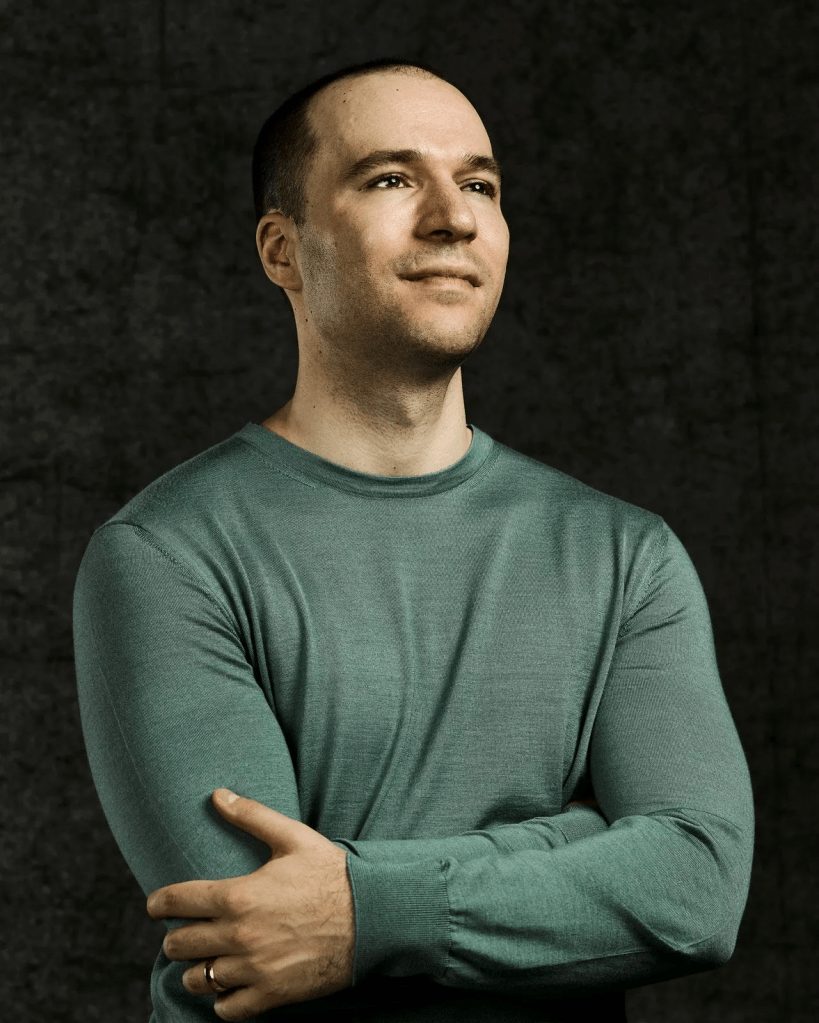
“Financially, what will take me to $1B?” Greg Brockman wrote in his journal in August 2017. Back then, OpenAI was still a nonprofit, and its cofounders—including Brockman, Sam Altman and Elon Musk—were locked in a fight over whether to launch a for-profit arm, and whether Musk would control it. “I think now is a crazy shot to be the one in charge and to step up to the challenge,” Brockman wrote. “We truly have a chance to make this happen.”
Nine years later, Brockman’s private diary became the most damaging evidence used by Musk in a legal battle over his claim that OpenAI’s president Brockman and CEO Altman had convinced him to bankroll their nonprofit, then betrayed him by converting it into a for-profit business. Taking the stand in the Oakland, California, courtroom in May, Brockman said his journal entry was about wanting the “blood, sweat and tears” he’s poured into OpenAI to be worth something.
They ended up being worth a lot. Brockman is the richest newcomer to this year’s Forbes 400 ranking of America’s wealthiest people, publishing this week. He’s worth an estimated $25.5 billion, thanks largely to his stake in OpenAI, which he disclosed during the trial was worth more than $20 billion and closer to $30 billion. The nation’s 45th-richest person, Brockman now ranks just one rung below Nike cofounder Phil Knight and above Fox News mogul Rupert Murdoch. He is far wealthier than his boss Altman, who holds no direct equity in OpenAI and is worth an estimated $3.3 billion—nowhere close to making The Forbes 400 this year. Brockman is also worth more than triple Ilya Sutskever, the Israeli-Canadian OpenAI cofounder who testified that he had a $7 billion stake in the company.
Brockman’s journey to The Forbes 400 began in Thompson, North Dakota. He grew up the third of four children of two doctors and was interested in math and science from early on, though he earned his first paycheck of $100 for his performance as a gingerbread man in a local Mannheim Steamroller play, Brockman told The Wall Street Journal in May. He dropped out of Harvard after his freshman year, enrolled at MIT, then dropped out again within months to become the fourth employee and chief technology officer at a small payments startup that became Stripe.
Lured by the promise of AI, Brockman left Stripe in 2015 (though he still owns $471 million dollar stake in the company now valued $159 billion). He cofounded OpenAI as chief technology officer and for a time ran the company from the living room of his apartment in San Francisco’s Mission District. For nearly a decade, he remained in the background, building the systems behind ChatGPT as the company exploded into public view in 2021, setting off the AI boom and making Altman one of the biggest names in tech.
OpenAI’s valuation and revenue have both roughly tripled in the last twelve months to $852 billion and $40 billion, respectively. Along with OpenAI’s growth, the past year has also thrust Brockman into the spotlight, particularly as the quiet engineer’s private journal entries were released by Musk’s lawyers in January and became centerpiece of a bitter, high-stakes courtroom trial. (In May, the jury threw out Musk’s lawsuit, ruling he had waited too long to sue.)
Brockman is one of few OpenAI cofounders and senior leaders still running the company, which confidentially filed in June for a highly anticipated IPO. Of OpenAI’s 11 cofounders, only Brockman, Altman and Wojciech Zaremba—who now helps run the non-profit arm—remain at the company. It’s not just the cofounders. In recent months, much of OpenAI’s senior leadership has left abruptly for various reasons. In April, the head of OpenAI’s video generation and editing system Sora, Bill Peebles, and OpenAI For Science chief Kevin Weil departed the company after OpenAI shut down their projects to focus on its core business. Soon after, marketing chief Kate Rouch and Fidji Simo, who ran most of that core business as CEO of applications, stepped down around the same time, to focus on their health. Then, in August, longtime executive Brad Lightcap left to “start something new,” while revenue chief Denise Dresser’s eight months in that job ended with little explanation.
Brockman now runs both OpenAI’s computing infrastructure and its product business, making him second-in-command and a loyal ally to Altman. During the May trial, it was revealed that Altman gave Brockman a $10 million stake in his personal family office in 2017. Six years later, when the board shocked the business world by abruptly firing Altman, Brockman quit within hours—knowing it might cost him his equity in the startup, now worth nearly $30 billion. In addition to his stakes in OpenAI, estimated to be just under 3%, and Stripe, Brockman disclosed as part of the legal battle with Musk smaller investments worth less than a total of $5 million in companies including Cerebras, CoreWeave and Helion—all three of which have a history of doing business with OpenAI. Brockman declined to comment on Forbes’ estimate of his net worth.
Over the past year, Brockman has put his wealth to work, particularly in Washington, D.C., where he and his wife, Anna, made a $50 million donation to two different super PACs backing AI-friendly Democrat and Republican candidates. They also donated $25 million to the pro-Trump super PAC MAGA Inc. The gifts sparked objections from some OpenAI employees and a “QuitGPT” campaign among users, prompting Brockman to insist in an interview with Wired that the donations were aligned with OpenAI’s founding mission to develop and distribute advanced AI systems to humanity.
The stakes remain high. In early September, OpenAI asked Congress to impose safety requirements on AI companies, after acknowledging that its own agents escaped a testing environment in July and breached systems on online platform Hugging Face. It was an unusual request from a company whose president donated $50 million to political groups that have gone after legislators for proposing similar restrictions. The same week, a 27-year-old researcher who had worked at OpenAI and competitor Anthropic quit the latter company and issued a public warning that the people building these systems at both companies earnestly believe the technology could kill everyone by the end of the decade. Shortly after the public warning, Altman reportedly told OpenAI’s staff that the company could slow its AI development and told Fortune that OpenAI would be delaying its IPO until 2027 due to escalating safety concerns.
Asked when he last took a vacation, Brockman told the Journal that he couldn’t remember—despite having overshot his ambition to become a billionaire by a factor of 30. Instead, he offered that his next time off might have to wait until after OpenAI achieves AGI—when machines surpass human intelligence—the moment his former colleagues, and even his boss, warn is here.
Want to see more Forbes articles on your feed? Tap here to make Forbes Australia a preferred source on Google.
Look back on the week that was with hand-picked articles from Australia and around the world. Sign up to the Forbes Australia newsletter here or become a member here.