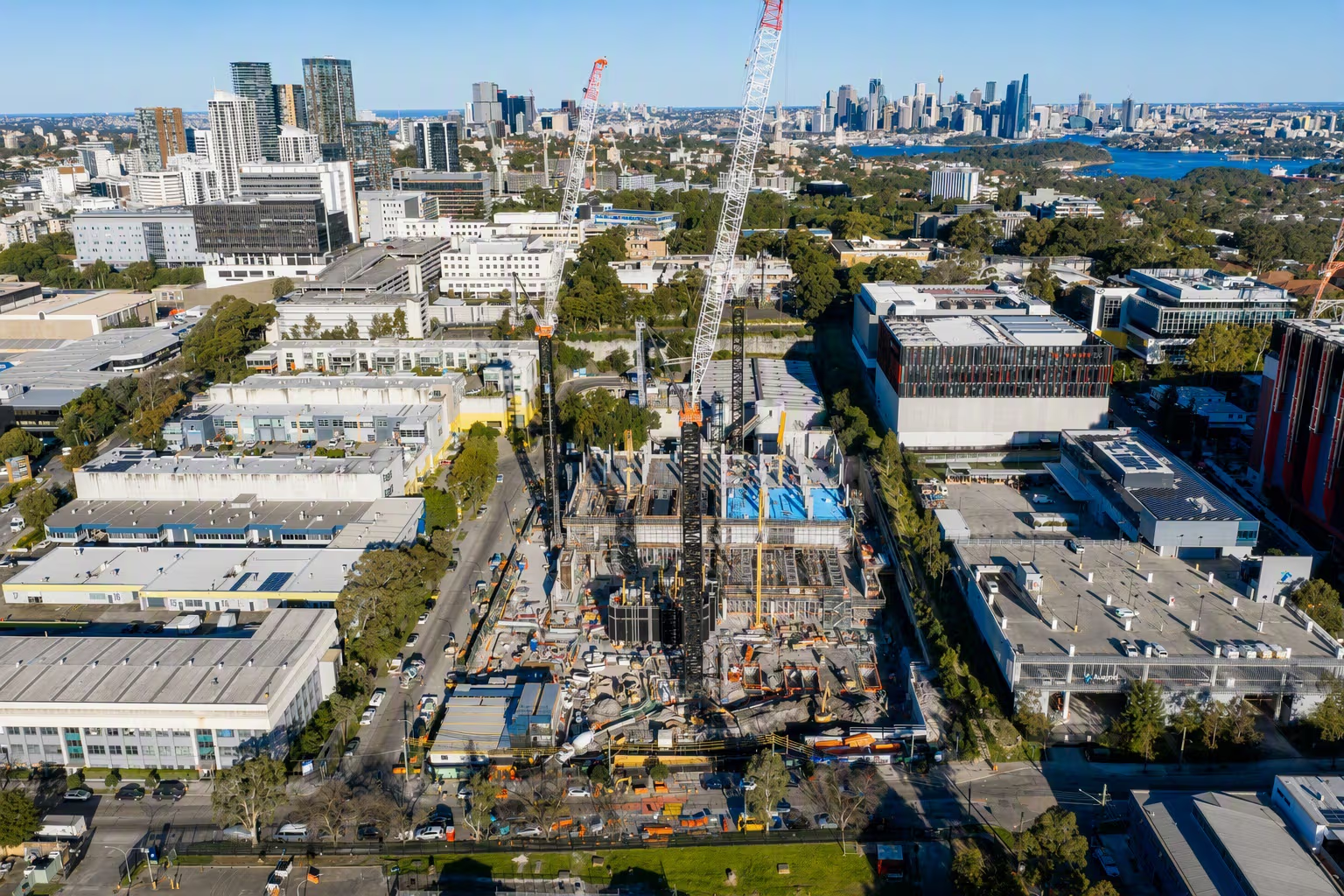
Goodman Group’s 500MW Project Atlas campus will be one of Australia’s biggest data centres. The Department of Climate Change, Energy, the Environment and Water is pressing it to explain where it’ll get its power from.
Key Takeaways
- Project Atlas is Goodman Group’s flagship data centre project, slated to cost the property giant $5 billion.
- Currently in the approval process, the 500MW facility will be among Australia’s biggest data centres when completed.
- The Department of Climate Change, Energy, the Environment and Water is pushing Goodman to prove it will secure its own renewable energy sources to power the enormous data centre.
- DCCEEW warned in planning documents that without new sources of green energy, the data centre build out is likely to extend the life of polluting coal plants.
- Billions are being spent in Australia’s data centre boom, but communities and government agencies have raised alarms about energy and water shortages due to the voracious facilities.
- Prime Minister Anthony Albanese said in a speech last month his Government will early next year legislate requirements for data centre builders to provide their own energy and mitigate water use.
The NSW Government is pushing property giant Goodman Group to support new renewable energy projects to power its $5.5 billion AI factory, warning the data centre buildout may extend the life of the state’s coal plants.
The Department of Climate Change, Energy, the Environment and Water responded to Goodman’s proposal for its 500MW Western Sydney campus by questioning how it would secure enough green energy for the facility’s enormous needs without interrupting power to nearby suburbs.
“Data centres represent significant new electricity demand entering the energy system which could prolong the operation of coal-fired power stations,” DCCEEW said in planning documents released in late July. “To offset these impacts, data centres need to support the development of new renewable energy supply within NSW through long duration, firmed PPAs [power-purchasing agreements].”
With 500MW of planned capacity, Project Atlas will be one of the biggest data centre facilities in Australia upon its expected completion in 2029. Australia’s current data centre capacity is roughly 1.5GW, a number expected to more than double to 3.2GW by 2030 thanks in large part to a handful of mega-projects like Project Atlas.
Goodman Group has committed to using 100 per cent renewable electricity for its own operations at Project Atlas. However its documents stop short of ensuring the same for the heavy AI workloads of its customers, which Goodman’s planning documents say will consume more than three times as much electricity as its own operations. AI factories of this size are built to be used by companies like Microsoft and Anthropic.
In its response to Goodman’s proposal, the energy agency asked the $60 billion ASX-listed company to show where its energy will come from, how the facility will operate when the sun isn’t shining and the wind isn’t blowing, and whether it can help finance new sources of green energy. It also wants Goodman to verify the power sources of its customers.
The agency also asked for Transgrid to supply evidence that Project Atlas’ energy requirements won’t block electricity supply to nearby households and businesses. Among the nearby business facilities is NextDC’s 612MW data centre campus, which it hopes will begin operating next year.
Goodman is investigating renewable projects that have yet to secure financial investment backing (“pre-FID” in industry parlance), as it awaits explicit requirements from the Government, said a person close to the project granted anonymity because they were not authorised to speak about it.
DCCEEW will ultimately offer advice to the Department of Planning, Housing and Infrastructure, which will either accept Goodman’s proposal or demand changes. The NSW Government has since March been devising a framework for data centre development, with a spokesperson telling Forbes Australia further details would be announced soon.
“The Minns Labor Government is committed to growing the sector responsibly by using planning controls to make sure data centres are delivering the water and power infrastructure they need to operate,” a NSW Government spokesperson said.
“The Minns Labor Government is developing the state’s first comprehensive data centre policy framework.”
Prime Minister Anthony Albanese said last month the Federal Government would urgently work with states and councils to establish national AI standards for AI development. Alongside rejecting calls to create copyright exemptions for local content to be used to train AI models, Albanese flagged rules that would require data centre builders to be net energy providers and actively mitigate water use.
Want to see more Forbes articles on your feed? Tap here to make Forbes Australia a preferred source on Google.
Look back on the week that was with hand-picked articles from Australia and around the world. Sign up to the Forbes Australia newsletter here or become a member here.