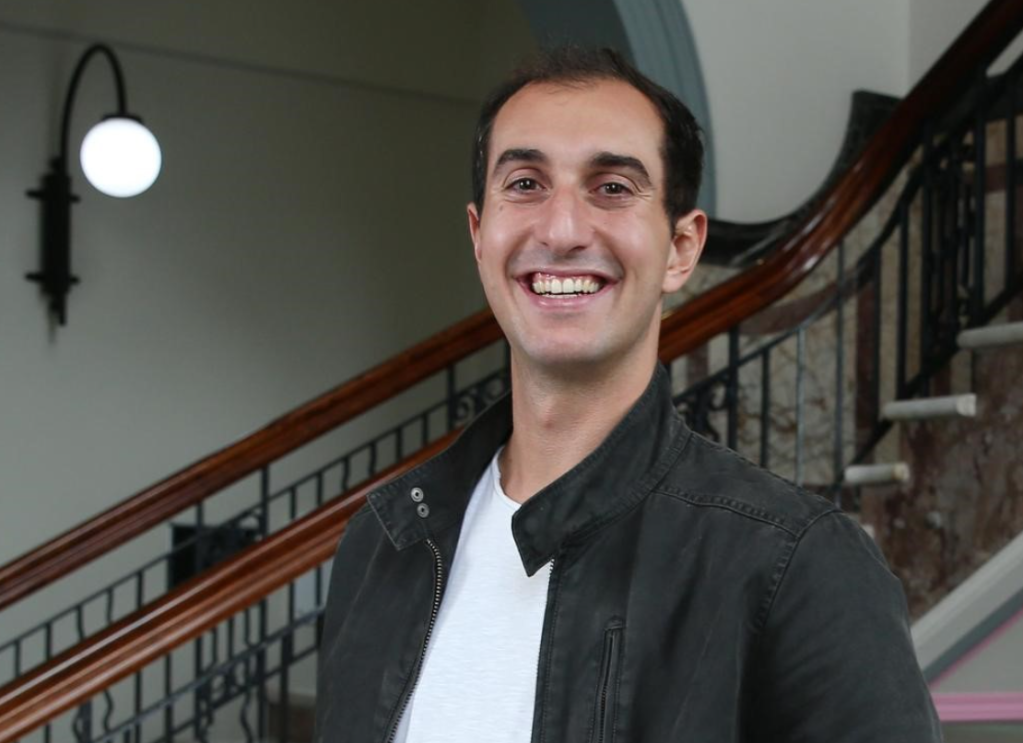
For Australian investors and founders, the big questions are which parts of biotech are becoming repeatable businesses, and which parts remain experimental theatre, writes Anthony Liveris.
You do not need to be in San Francisco to hear the signal cutting through the noise.
The J.P. Morgan Healthcare Conference is the industry’s annual echo chamber, and in January it reliably produces a blizzard of announcements. The more interesting work is filtering for what has actually changed. Heading into 2026, the mood is neither the euphoria of 2021 nor the defensive crouch of the last two years. It is discipline.
This cycle will reward operators, not storytellers.
After a multi-year reset, the global biotech machine is moving again. US public markets are showing signs of reopening. Large pharma is actively hunting for assets as patent expiries loom. Regulators are getting clearer on how they want evidence to be generated in emerging areas like AI. Capital is returning, but it is selective, increasingly concentrated, and in practice more global than the headlines suggest.
For Australian investors and founders, the question is no longer “Is biotech back?” The question is: which parts of biotech are becoming repeatable businesses, and which parts remain experimental theatre?
Here are seven themes that will shape the next phase, and what they mean for Australian capital.
1. Public markets are reopening, but only for quality
The most important signal from the US is not a single IPO or a single deal. It is a shifting underwriting posture. Investors are willing to fund biotech again, but the bar has moved. The market is behaving like a strict underwriter: later-stage assets, cleaner data packages, credible endpoints, and management teams that can explain a path to value without relying on optimism.

That matters in Australia because our private market often prices off narratives imported from overseas. In a selective market, liquidity is earned, not assumed.
The practical investor response is to remain sceptical of pharma partnership announcements from early-stage research companies, and continue to treat “execution credibility” as the primary asset. Great biology is required. It is not sufficient.
2. The patent cliff is turning big pharma into a forced buyer
A significant loss of exclusivity is approaching across the next five years. When revenue is structurally at risk, pharma buys pipelines, licenses assets, and prioritises de-risked shots on goal.
For investors, this changes what “exit optionality” means. The market will keep rewarding differentiated assets in large indications. It will also reward platforms that can generate multiple clinical candidates with a clear line of sight to partnership.
The sharp edge is worth stating plainly: acquisition appetite does not rescue weak science. It accelerates competition for scarce, high-quality assets. In a forced-buyer environment, the premium goes to teams that can show clinical momentum and manufacturing readiness, not just compelling biology. This is a bridge Australia struggles to cross.
3. Obesity has become a multi-decade platform, moving beyond GLP-1
The obesity and cardiometabolic wave is not just about weight loss. It is about cardiovascular outcomes, adherence, tolerability, muscle preservation, and combination regimens that turn a single drug class into an enduring therapeutic platform.

The next phase is emerging in real time: oral options, new mechanisms that complement or compete with GLP-1s, and therapies aiming to improve body composition, not only the number on a scale. As the category matures, payers and regulators will demand better evidence, clearer risk stratification, and tighter integration with longitudinal care.
Three second-order effects matter for investors:
- First, supply chains and delivery formats become competitive weapons.
- Second, endpoints widen. Cardiovascular and renal outcomes become core to value, not optional.
- Third, the ecosystem expands. Diagnostics, adherence infrastructure, and real-world monitoring increasingly shape adoption and reimbursement.
Australia sits in the middle of this because reimbursement decisions shape access, and access determines which business models are viable. Investors should underwrite reimbursement strategy as early as they underwrite the molecule.
4. Oncology is entering an engineering era
Oncology innovation is shifting from “find a target” to “engineer a system”. Antibody-drug conjugates, radiopharmaceuticals, and bispecifics are not just drug types, they are operational stacks.
“Australia needs transparent investable pathways. Investors do not fear high bars. They fear unclear bars.”
Anthony Liveris
This is why deal activity keeps clustering around these modalities. They can be meaningfully differentiated, they are difficult to replicate quickly, and they often come with manufacturing moats.
Radiopharmaceuticals are particularly relevant for Australia. We have scientific depth, clinical capability, and an emerging ecosystem across imaging and therapy. The opportunity is to build durable translation capacity.
For investors, the diligence upgrade is simple: treat manufacturing and supply chain as part of the product. If the plan is “we will outsource later,” the risk is now.
5. AI is becoming regulated infrastructure
AI in drug development is leaving the hype phase and entering the compliance phase. That is good news. When regulators publish principles for responsible use, it forces clarity on data provenance, validation, auditability, and human oversight.
The most investable AI stories are rarely “AI will discover drugs.” The credible stories are “AI measurably compresses cycle time in a specific step.” Target identification, trial design, patient stratification, toxicity prediction, manufacturing quality control, and pharmacovigilance are all areas where AI can create real advantage, provided the inputs and feedback loops are real.
6. China is now a major source of licensable innovation
Global pharma is increasingly licensing assets from Chinese biotechs. It is showing up across oncology and neurology, with deal structures that include serious upfronts and meaningful economics for global ex-China rights.

For investors, the implication is a competitive reality. The global pool of high-quality assets is widening, and the price of differentiation is rising. Australian companies will increasingly compete in a world where scientific excellence is distributed and speed matters.
The strategic response is to build a sharper edge: clearer clinical thesis, faster translation, and stronger execution systems. Competing on “Australian science is good” is not enough, because everyone believes their science is good.
7. Advanced therapies are maturing, but manufacturing and endpoints will decide winners
Gene editing, cell therapies, and in vivo delivery are progressing, but winners will be determined by practicality: durable efficacy, safety, scalable manufacturing, and endpoints that regulators and payers accept.
Investors should be alert to regulatory signals that shorten development pathways, such as surrogate endpoints and clearer guidance. These details sound technical, but they are financial. The accepted endpoint can be the difference between a program that compounds and one that stalls.
In Australia, advanced therapies raise a national competitiveness question: will we build local capability in smart manufacturing, or will we keep exporting early discovery and importing finished therapies at the highest price point?
What this means for Australia
Australia does not lack science. It lacks market mechanics that reliably convert science into global therapeutics while keeping a meaningful share of IP and value creation onshore.
If we want to lift Australia’s biotech trajectory, three directions matter.
1. First, speed to clinic. Trial start-up timelines, ethics harmonisation, predictable contracting, and clear regulatory engagement are not administrative details. They are how countries compete.
2. Second, transparent investable pathways. Clear guidance for novel modalities, device supply resilience, and modernised regulatory frameworks reduce risk without lowering standards. Investors do not fear high bars. They fear unclear bars.
3. Third, capital formation that matches the time horizon. Biotech is long-cycle by nature. Australia’s pools of long-dated capital are enormous, but we do not consistently connect them to venture creation and scale-up in a way that compounds national advantage.
None of this requires lowering the bar. It requires making the bar legible, then building systems that help high-quality teams clear it repeatedly.
A practical investor checklist
When assessing a biotech opportunity, focus on the questions that decide outcomes:
- Can the team name the next two value-inflection milestones, with time, cost, and kill criteria?
- Is there a credible regulatory endpoint and a plan to generate evidence efficiently?
- Does the product have an execution moat, including manufacturing and supply chain?
- Is reimbursement designed in from the start, not bolted on at the end?
- Is the partnering strategy realistic in a world of patent-cliff-driven dealmaking?
- If AI is involved, does it change decisions and timelines, or just create content?
- Can the company win globally, not only locally?
Anthony Liveris is the CEO of Proto Axiom, which provides early-stage funding and growth capital to scientific breakthroughs in Australia and abroad. He believes Australia generates world-class research, yet too often that innovation never reaches the market, and works to bridge that critical gap.
Look back on the week that was with hand-picked articles from Australia and around the world. Sign up to the Forbes Australia newsletter here or become a member here.