AfterQuery
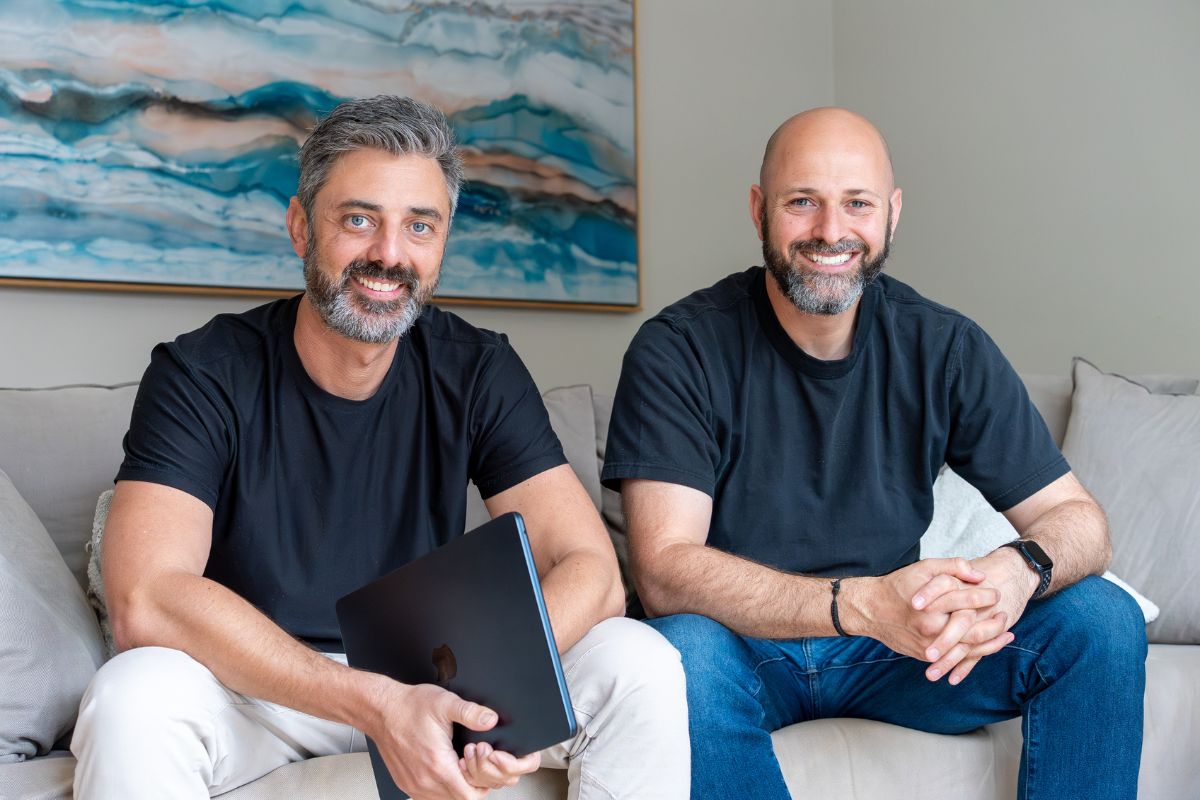
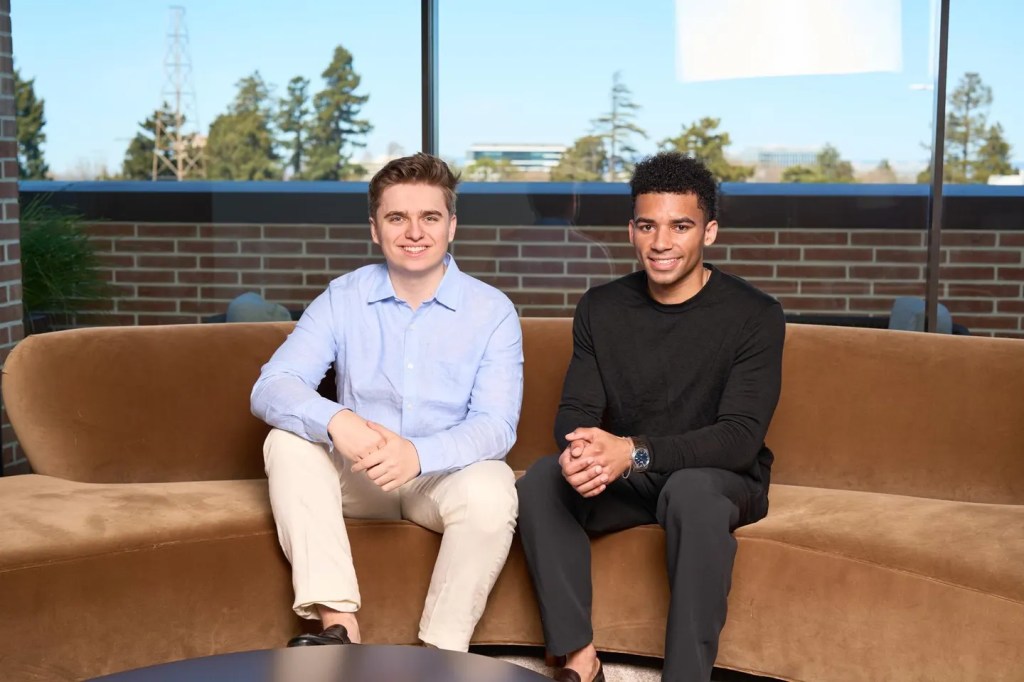
When the Winter 2025 deadline for famed startup incubator Y Combinator approached, Spencer Mateega and Carlos Georgescu, who were both still in college, pulled together an application in 48 hours. They didn’t have a product. They had a destination: San Francisco. The plan was to ride the AI wave, in the most literal sense, and decide what to build once they arrived.
The two had known each other since high school, when they met in a Google-run computer science summer program and bonded over early engineering projects. They stayed close through college, interning together at Meta before splitting off into finance and tech roles. By the time Mateega, now 23, was finishing up University of Pennsylvania and Georgescu, now 22, was studying computer science at the University of British Columbia, they were already used to working side by side.
The pair was accepted, and Mateega finished his last quarter in college while in the grueling Y Combinator program.
“One percent of my time was going back for my midterms and finals, which I did not do well on,” he recalls. Georgescu, who had another year of school, dropped out.
Their first attempt, building AI agents for finance, failed. They found that AI models struggled with real-world, white-collar workflows — not because the models couldn’t reason, but because they hadn’t been trained on how professionals actually work.
That insight led to a pivot. Instead of building applications, they would focus on making the underlying data drawn from how real work gets done — the judgement calls, messy hand offs and rethinks.
A year later, the San Francisco-based startup of 30 says it has surpassed $100 million in annual revenue run rate, fueled by demand from leading AI labs like Anthropic and OpenAI. The company also says that several months ago, it raised a $30 million Series A at a $300 million valuation, led by Altos Ventures with participation from The Raine Group, Y Combinator, and BoxGroup. Mateega said individual researchers at Anthropic, OpenAI, Google DeepMind, Meta’s Superintelligence Labs, and Microsoft’s AI division, participated in the round.
At the moment, data labeling seems like a quick way for young, technically savvy and precocious (mostly) men to become billionaires. There’s the original data labeling billionaire, Alexandr Wang of Scale AI , who was the world’s youngest self-made billionaire until October. There’s the Mercor founders, who became the world’s three youngest self-made billionaires in October. And there’s up-and-comer micro1, whose solo founder Ali Ansari has fielded investment offers at a $2.5 billion valuation.
But in the cutthroat world of human data, money can be easy come, easy go. AI labs have an enormous appetite and budget for data, but vendors can fall out of favor and make way for new vendors. For instance, Mercor, which recently fell victim to a data breach, has reportedly lost Meta as a customer, and its status with other labs is an open question.
Mateega, who is now the CEO, says AfterQuery’s approach differs from Mercor’s because rather than relying on large pools of contractors and manual workflows and touting its ‘AI interviewer’ capabilities, AfterQuery’s special sauce is in building custom software systems to validate training data.
After AfterQuery’s human experts generate data, the data is run through a series of checks to ensure that it falls within a “Goldilocks” range — difficult enough to challenge state-of-the-art systems, but not impossible. The goal is to produce data that models can actually learn from.
The company also publishes its own research to prove its data is high-quality, a key concern for AI labs. Instead of handing data to AI labs and letting them evaluate it, AfterQuery replicates what a researcher would do: train a model on the data and measure how benchmark performance changes.
“This is another thing which our peers do not do: we have researchers internally create a post-training pipeline,” Mateega said. “We objectively show to the labs before they even look at our data that the data’s high quality.”
This article was originally published on forbes.com and all figures are in USD.
Want to see more Forbes articles on your feed? Tap here to make Forbes Australia a preferred source on Google.
Look back on the week that was with hand-picked articles from Australia and around the world. Sign up to the Forbes Australia newsletter here or become a member here.