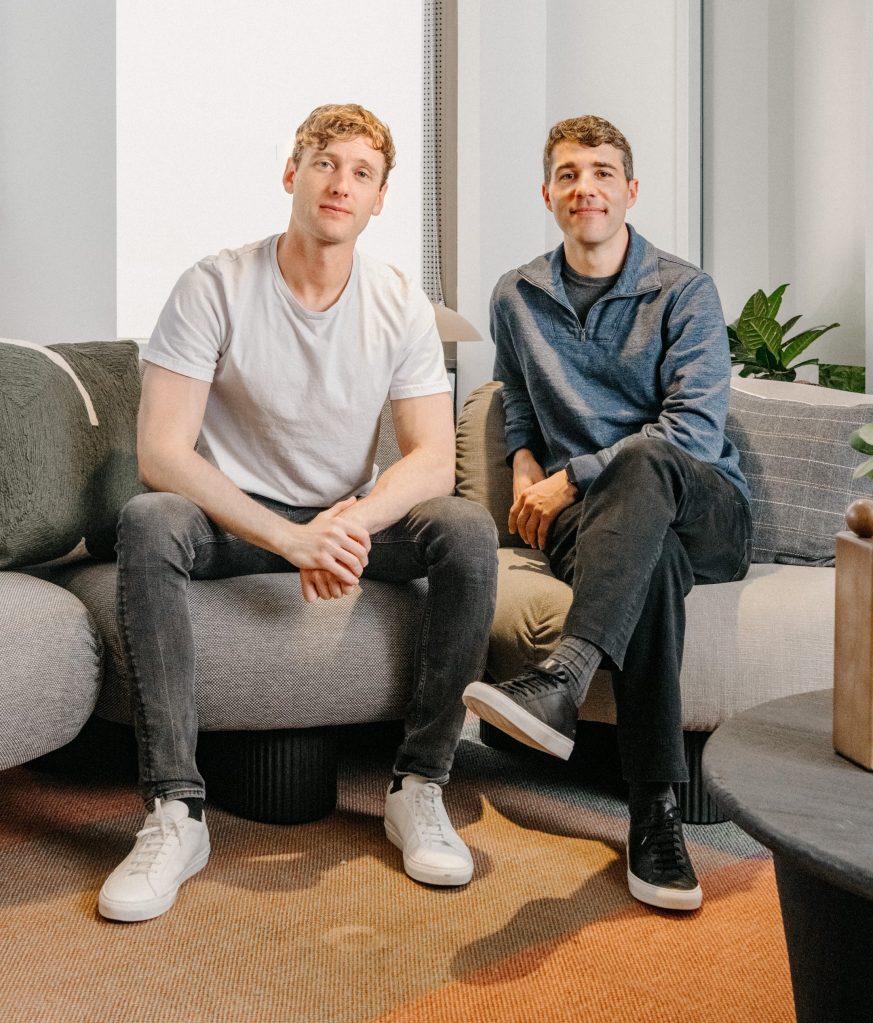
Harvey co-founders and roommates Gabriel Pereyra and Winston Weinberg built the legal AI platform from the living room of their San Diego sharehouse. Now they’ve teamed up with the actor behind Harvey Specter as the fast-growing startup expands into Australia.
In the Netflix series Suits, Harvey Specter is the ultimate closer, a fictional attorney who dominates the New York legal scene through a mix of high-stakes negotiation and unwavering confidence. While Specter is a product of television, his namesake has become a real-world focal point for disruption within the legal market.
AI-driven legal platform Harvey was founded in San Francisco in 2022, to give lawyers a technical edge. Just four years later, Harvey is operating in more than 50 countries and showing no signs of slowing down. A new office will open in Singapore later this year, and Sydney will serve as the firm’s Asia-Pacific headquarters.
“The Australian market is really focused on governance, security, and auditability,” co-founder Gabe Pereyra told Forbes Australia during an exclusive interview in Sydney. “It’s a large legal market and has some really top law firms.”
Almost half of Australia’s top 30 law firms already use Harvey, according to the company, even before the startup has established a base in the region.
In addition to the plethora of potential clients, Harvey is looking to learn from Australia’s stringent regulatory requirements, with a view to developing a blueprint to help the decacorn scale operations globally.
The 34-year-old co-founder’s first visit to Australia coincides with what AMP chief economist Shane Oliver calls a ‘Goldilocks’ window for the economy. Oliver says it is a rare moment where conditions are stable enough to allow productivity growth without the volatility of high inflation or recession.
That environment makes Australia an ideal ‘testbed’ to develop Harvey’s AI-driven product offerings.
The move toward memory
One such advancement that is currently being fine-tuned, is a feature called Memory, Pereyra says.
Instead of each interaction starting from scratch, Memory allows the platform to retain context from previous work, including matter details, drafting styles and established precedents.
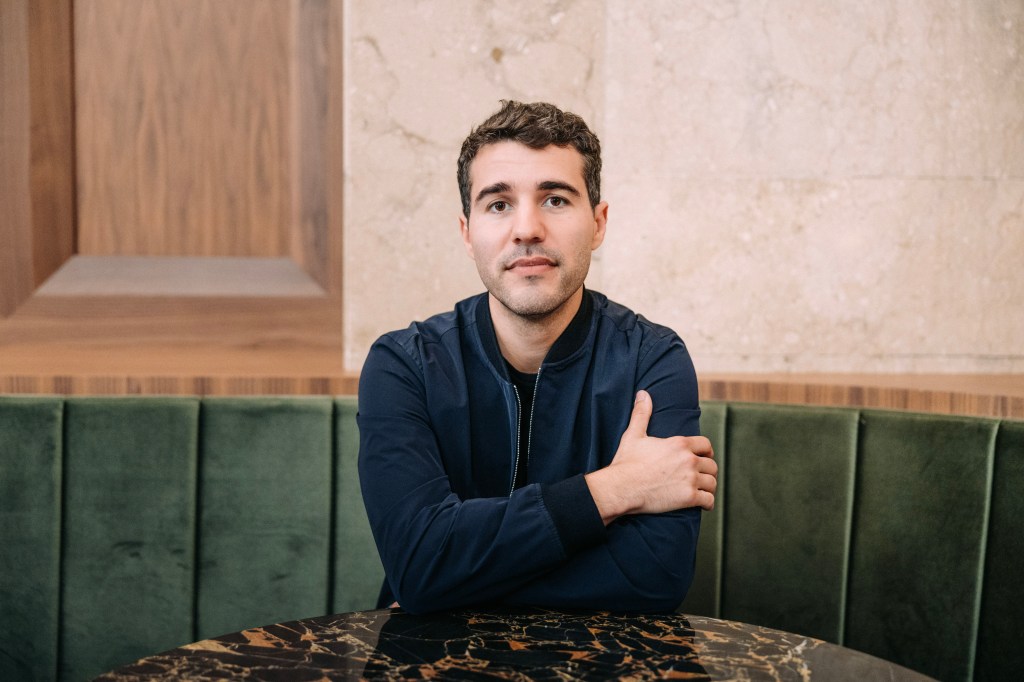
Harvey is using its Australian presence to “co-build” the feature with the industry. This involves the “listening tour” that brought Pereyra Down Under, and working sessions with innovation leaders at legal firms like Ashurst and Clayton Utz, to ensure the system addresses the highly regulated nature of legal work.
“This needs to be developed with the industry,” Pereyra says. “Everyone we’ve talked to says they use memory in ChatGPT and it is amazing.”
Customers have expressed a strong desire for similar functionality on a legal platform, Pereyra says. But this requires a balancing act between the convenience of the AI “remembering,” while also remaining compliant with strict governance and ethical obligations of the Australian legal market.
The roommates, RAG, and the Vault
While ‘Memory’ is a project the former DeepMind engineer is working on currently, getting Harvey off the ground required tackling a range of other challenges.
The ‘aha’ moment that led to Harvey being conceived did not happen in a corporate strategy session, but rather, through a collision of two different industries in a shared Southern California apartment.
In 2021, Pereyra was immersed in high-level AI research at Meta, while his roommate in San Diego, lawyer Winston Weinberg, was navigating the labour-intensive realities of the legal profession.
Their living room became a testing ground where technical breakthroughs met professional hurdles. The friends realised the advanced models being built for other industries could potentially automate the dense, manual workflows that defined Weinberg’s workday.

This led to the development of ‘The Vault,’ Harvey’s secure, encrypted environment designed to address the legal industry’s need for data privacy and accuracy. By employing RAG (retrieval-augmented generation), Harvey allows the AI to act as a digital associate with access to a firm’s private documents. Instead of relying on general public data, RAG ensures the AI retrieves and cites specific facts from The Vault, grounding every response in the firm’s actual records.
Sam Altman and OpenAI partnership
While in the early stages of getting Harvey off the ground, an opportunity to connect with OpenAI’s Sam Altman landed in Pereyra’s lap. A former Google colleague of his had joined OpenAI as one of the developers of ChatGPT. Pereyra and Weinberg used that connection to pitch Sam Altman the concept of AI lawyers. Altman saw the potential immediately, and within a week had committed funds to the San Diego roommates. The OpenAI Startup Fund went on to anchor Harvey’s $5 million seed round in November 2022.
that relationship created value beyond the financial realm, the soft-spoken Pereyra says.
“Our partnership with OpenAI gave us very early access to GPT-4—almost a year before the rest of the world saw it. And we used that time to really understand how to make these models work for the law,” he says.
The co-founders leveraged this early access to sophisticated AI models to launch the Lighthouse program – an initiative where Harvey partnered with a group of law firms to co-develop the platform. By embedding the technology within organisations like Allen & Overy and PwC, they were able to test Harvey’s nascent AI on complex legal workflows.
Growth followed at a rapid pace. In April 2023, the company raised US$21 million in a Series A round led by Sequoia Capital, followed by an US$80 million Series B eight months later. Late in 2025, Winston stated that the company had reached US$190 million in annual recurring revenue. Andreessen Horowitz led a $160 million Series F soon after, valuing Harvey at US$8 billion, less than three years after it began.
In February of this year, Forbes reported that the company is in talks to raise an additional US$200 million. Pereyra declined to comment on the raise that if it goes ahead, will reportedly push the company’s valuation to US$11 billion.
The 20-year vision
For Pereyra, the goal is not just building Harvey to enable individual attorney efficiency, but to enable legal firms to deliver work at scale. A significant, if unintended, consequence of this shift could be the dismantling of the traditional billable hour, Pereyra says. As AI handles more manual synthesis, firms may find it necessary to move toward value-based or fixed-fee models.

Also potentially on the horizon, Pereyra says, is taking Harvey’s legal disruption playbook and applying it to other sectors like procurement, compliance, or accounting. There are no concrete plans to do so right now according to the USC Computer Science major, but he wouldn’t rule it out for the future.
In the meantime, Harvey continues to add significant legal – and Hollywood – names to its roster. It recently signed Gabriel Macht as brand ambassador – the actor who portrayed Harvey Specter in the Suits series.
As the AI startup leans further into the identity that inspired its name, it is building a bridge to a broader, global market – falling in line with both the founders’, and the formidable Harvey Specter’s, unrelenting ambitions.
Want to see more Forbes articles on your feed? Tap here to make Forbes Australia a preferred source on Google.
Look back on the week that was with hand-picked articles from Australia and around the world. Sign up to the Forbes Australia newsletter here or become a member here.