A workplace lawsuit has opened the lid on the little-known ownership structure of Insight Partners, an investor in OpenAI and Anthropic: It is now partially owned by the government of Abu Dhabi.
Evelyn Hockstein-AFP-Getty Images
Insight Partners is one of the biggest startup investors in the world, managing over $90 billion thanks to its bets on companies like Twitter, Wiz, Databricks and Anthropic — comparable in size to its noisier rivals Andreessen Horowitz and Sequoia Capital. Now, a new lawsuit and SEC filings show that it is in part owned by the government of Abu Dhabi via a private, Abu Dhabi-based investment firm called Lunate.
In the secretive world of venture capital, funds rarely disclose their own backers, who are known as limited partners. Increasingly, VCs are reliant on Middle Eastern sovereign wealth as a source of capital. But Insight’s relationship with Abu Dhabi goes one step further, where its government isn’t just providing money — it has quietly owned a stake in the management company itself since January 2025. The documents indicate it is a passive minority investment. One source close to the transaction described it as “low single digits,” and another said it was less than 2%. Forbes could not determine how much Lunate paid for it.
New York-based Insight joins one of a small handful of investment firms that have sold equity stakes to funds controlled by Middle Eastern governments, including private equity firms Silver Lake and The Carlyle Group. These investments are almost always described in regulatory documents as “passive” or “non-operational,” because having a more active role could run afoul of U.S. government restrictions around foreign investment. But in practice, equity stakes in top-tier investment firms are often a step toward a bigger strategic partnership. Potential perks: first-in-line access to deals or, in the cases of Silver Lake and Carlyle, massive co-investments down the line.
“You can feel good knowing you don’t have control, but that you’re attached at the hip with some of the brightest dealmakers and business-builders in the world,” Michael Rees, co-president at investment firm Blue Owl, said at a PitchBook event. Blue Owl has been one of the most active buyers of such fund stakes, and has teamed up with UAE-based funds for such deals.
The revelation about Insight’s ownership structure was made public thanks to a lawsuit filed in December by Kate Lowry, a former vice president at the firm. She sued Insight over wrongful termination and failure to prevent harassment. The former Facebook employee had joined Insight’s Bay Area office in 2022 and alleged that she had experienced harassment, discrimination and then retaliation for taking medical leave. Lowry’s attorneys claim that her employment was terminated in May 2025 after she complained over a cut to her compensation package. The case is ongoing, and Insight has previously strongly denied the lawsuit’s “baseless allegations.”
Insight Partners declined to comment.
“There are several entities that all hide ownership and we were only able to get them to tell us who owns them by suing in federal court,” says Lowry. Her lawsuit has previously been reported but not Insight’s ties to Abu Dhabi’s government.
Most disputes in venture capital and among such mega funds play out exclusively behind closed doors. Staff and partners are tied up with non-disclosure agreements and contracts that demand conflicts be solved with private arbitration rather than with messy lawsuits that can spill fund secrets and damaging office politics into the public domain.
The last major lawsuit that revealed the inner workings of the venture capital industry came over a decade ago when Kleiner Perkins partner Ellen Pao sued her former fund for gender discrimination after she was fired in 2012. A jury ruled against Pao in March 2015 after a four-week trial, but not before it made public many of the firm’s internal communications and compensation structures.
In the decade since Pao’s lawsuit, the tech industry has ballooned in size thanks in part to an influx of foreign capital, mostly from the Middle East. Traditional backers like pension funds and endowments have faced a cash crunch, and geopolitical tensions made wealthy Chinese and Russian investors off limits for most technology funds. Insight itself grew the assets it manages tenfold over this period. Along with active investments in Anthropic and Databricks, it’s also on the cap table of startups like biotech firm Averna Therapeutics, AI startup Writer and meditation app Calm. Insight also participated in OpenAI’s mega $122 billion funding round that closed this week.
Middle East governments have invested hundreds of billions in technology. Saudi Arabia’s sovereign wealth fund was a major backer of Uber and SoftBank’s Vision Fund, and has poured at least $3 billion a year into dozens of top venture capital funds, including Insight. The United Arab Emirates makes its own investments in startups and funds, and its new $100 billion fund MGX has become a major backer of AI companies like OpenAI and Anthropic. The Qatar Investment Authority, which manages $580 billion, is also an emerging tech supporter.
The human rights records of such absolute monarchies and the 2018 murder of journalist Jamal Khashoggi in Saudi Arabia have made Silicon Valley’s reliance on such sovereign wealth funds a recurring controversy among founders and investors. Middle Eastern governments owning pieces of American venture capital funds, a signal of deeper partnership, could be even more sensitive.
Lowry’s lawsuit, which was filed in California Superior Court, San Mateo County, named not just her direct employer but also several companies linked with Insight founder Jeff Horing and other partners.
In the legal proceedings, Andrew Prodromos, Insight’s managing director and chief compliance officer, tried to carve out several of Insight’s funds and corporate vehicles from the lawsuit. But in the process he revealed closely-held secrets about the fund’s ownership that some of the firm’s portfolio company founders and at least one current employee didn’t know.
One such entity Insight’s lawyers named in the court filings is called Insight Falcon Partners. According to an April 2025 SEC filing, this company acquired a 75% stake in Insight that January. The ultimate shareholders of Insight Falcon Partners are Horing and the firm’s other partners, and a Delaware entity known as LLTCI SPV 5 LLC.
That Delaware LLC’s owners are “(i) the government of Abu Dhabi and (ii) a public company whose headquarters are in Abu Dhabi,” according to a February declaration Prodromos filed with the court.
The court filings do not name the public company that owns part of LLTCI SPV 5 LLC. Delaware, one of the world’s most opaque jurisdictions, doesn’t require disclosure of companies’ ownership. However other special purpose vehicles with the same acronym LLTCI (which appears to stand for Lunate Long-Term Capital I) appear in UAE corporate filings linked with Abu Dhabi-based investor Lunate. Sources familiar with the matter confirmed that the investment was through a Lunate fund; the firm is also an investor in multiple Insight funds.
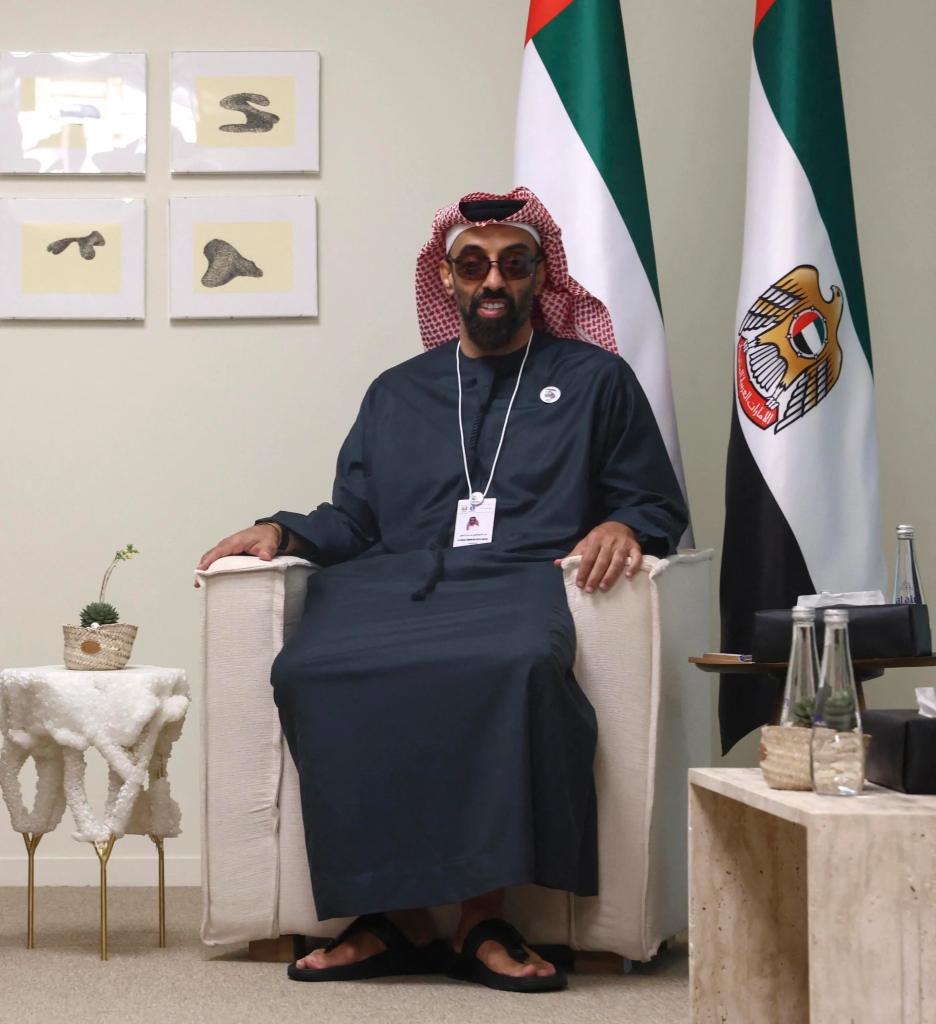
Lunate, which manages over $115 billion in assets, is owned by companies associated with Sheikh Tahnoon bin Zayed Al Nahyan, one of the most powerful figures in the Gulf kingdom. The brother of UAE President Sheikh Mohamed bin Zayed, Sheikh Tahnoon chairs Abu Dhabi’s $780 billion sovereign wealth fund and is the UAE’s state’s national security advisor. (Lunate also has private institutional backers.)
Founded in 2023, Lunate sits within a web of companies under the control of Sheikh Tahnoon, including the UAE’s largest public company, International Holding Co. In 2024, Lunate took over the management of a China-focused AI fund called 42X that was previously being managed by Abu Dhabi’s state AI company G42, which is chaired by Sheikh Tahnoon. That year, 42X sold its stakes in TikTok’s parent ByteDance and other Chinese startups, part of a deal for the UAE to use American-made chips and hardware rather than Chinese technology after Microsoft invested $1.5 billion in G42.
Lunate’s website states that it invests in venture capital, buyout and private credit. It has made over ten investments by buying ownership stakes in private fund managers. But its specific U.S. holdings are rarely made public because the SEC doesn’t mandate disclosure of indirect ownership stakes under 25%.
Lunate declined to comment.
For the VC firm, selling a stake to a powerful, deep-pocketed Middle East fund in 2025 could have helped stave off unprecedented pressure. Insight had planned to raise a new $20 billion fund from investors beginning in 2022 but took more than two years to close a smaller $12 billion fund. Insight blamed the “great reset in tech” in a 2023 letter to investors, according to the Financial Times.
The firm had been one of the most active investors in the pandemic-era tech boom, leading a $5 billion buyout for data security firm Veaam, and investing in startups like payments company Checkout at a $40 billion valuation. Checkout slashed its own internal valuation for employee shares to just $12 billion last year.
Selling equity stakes in investment firms isn’t unheard of. In a rare public deal, Josh Kushner sold a small stake in Thrive Capital to former Disney CEO Bob Iger, PE titan Henry Kravis and three other billionaires for $175 million in 2023. The UAE government’s fund Mubadala snapped up a minority stake in buyout fund Silver Lake in 2020, while venture firm General Catalyst bought back a chunk of the business it had sold to a unit of Goldman Sachs for $726 million in January 2025.
Such deals can be sensitive. Equity stakes come with additional fee income and a share of investment profits, and also give stakeholders a bigger window into an investment firm’s inner workings and a closer relationship with the firm’s management. SEC filings described Mubadala’s Silver Lake stake as passive, but the firms announced a 25-year collaborative investment strategy alongside that transaction. One of Silicon Valley’s oldest venture funds, NEA, sold a stake in itself to a Kuwait-backed firm in 2020 to help cash out some retiring partners. At least some of that stake was later acquired by Saudi’s sovereign wealth fund at an unknown date, and the Public Investment Fund’s tech arm Sanabil later revealed it was also a limited partner in NEA.
Additional reporting by Giacomo Tognini.
The story has been updated with additional detail about Lunate’s stake in Insight.
Want to see more Forbes articles on your feed? Tap here to make Forbes Australia a preferred source on Google.
Look back on the week that was with hand-picked articles from Australia and around the world. Sign up to the Forbes Australia newsletter here or become a member here.