This story is part of Forbes Asia’s coverage of Best Under A Billion 2026, which highlights 200 Asia-Pacific public companies with less than $1 billion in revenue and consistent top- and bottom-line growth. See the full list, sorted alphabetically, here.
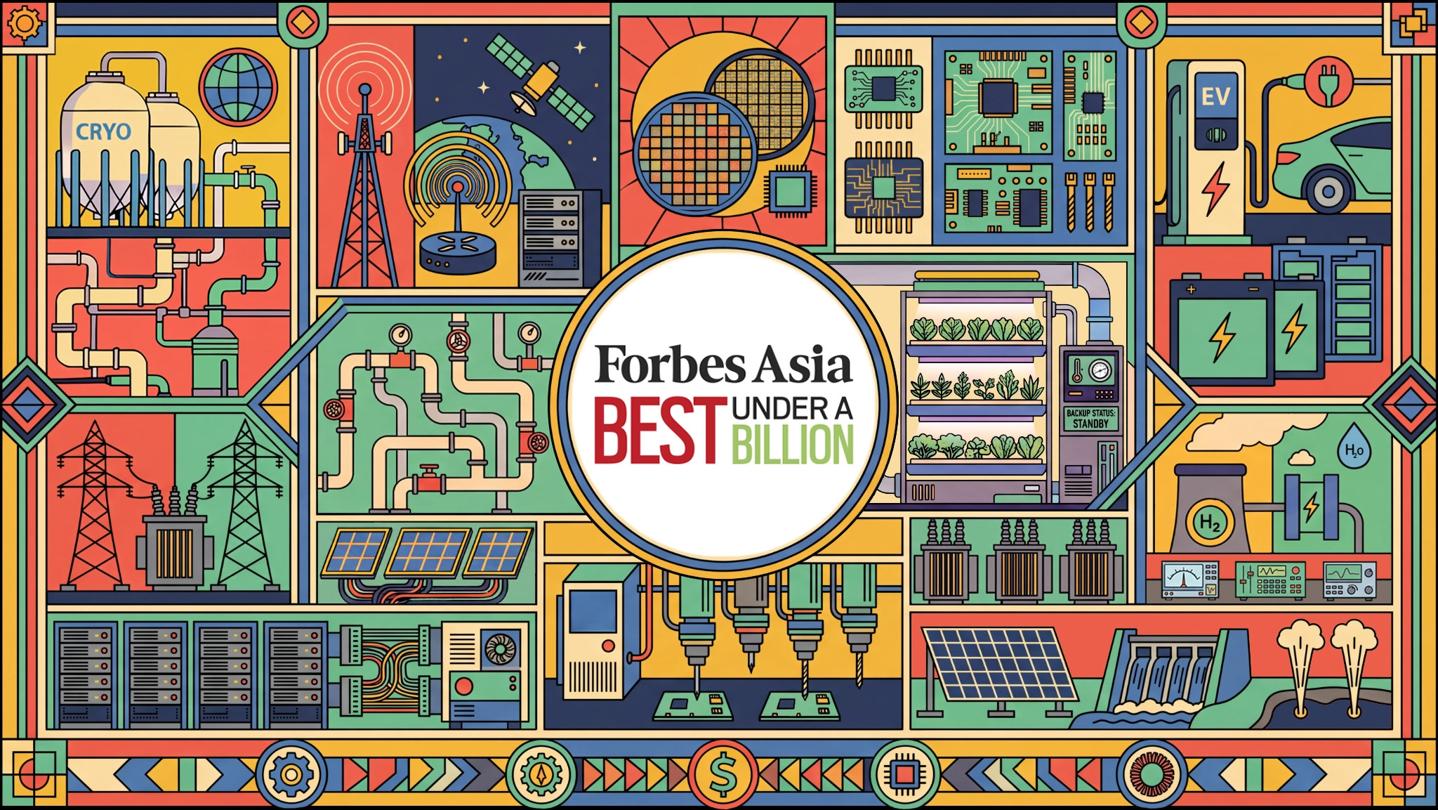
The small and midsized companies appearing on Forbes Asia’s Best Under A Billion list are successfully navigating the challenges of geopolitical tensions and volatile energy markets. These 200 publicly listed Asia-Pacific companies, with sales above $10 million and below $1 billion, delivered strong financial metrics to qualify for the 25th edition of the roster.
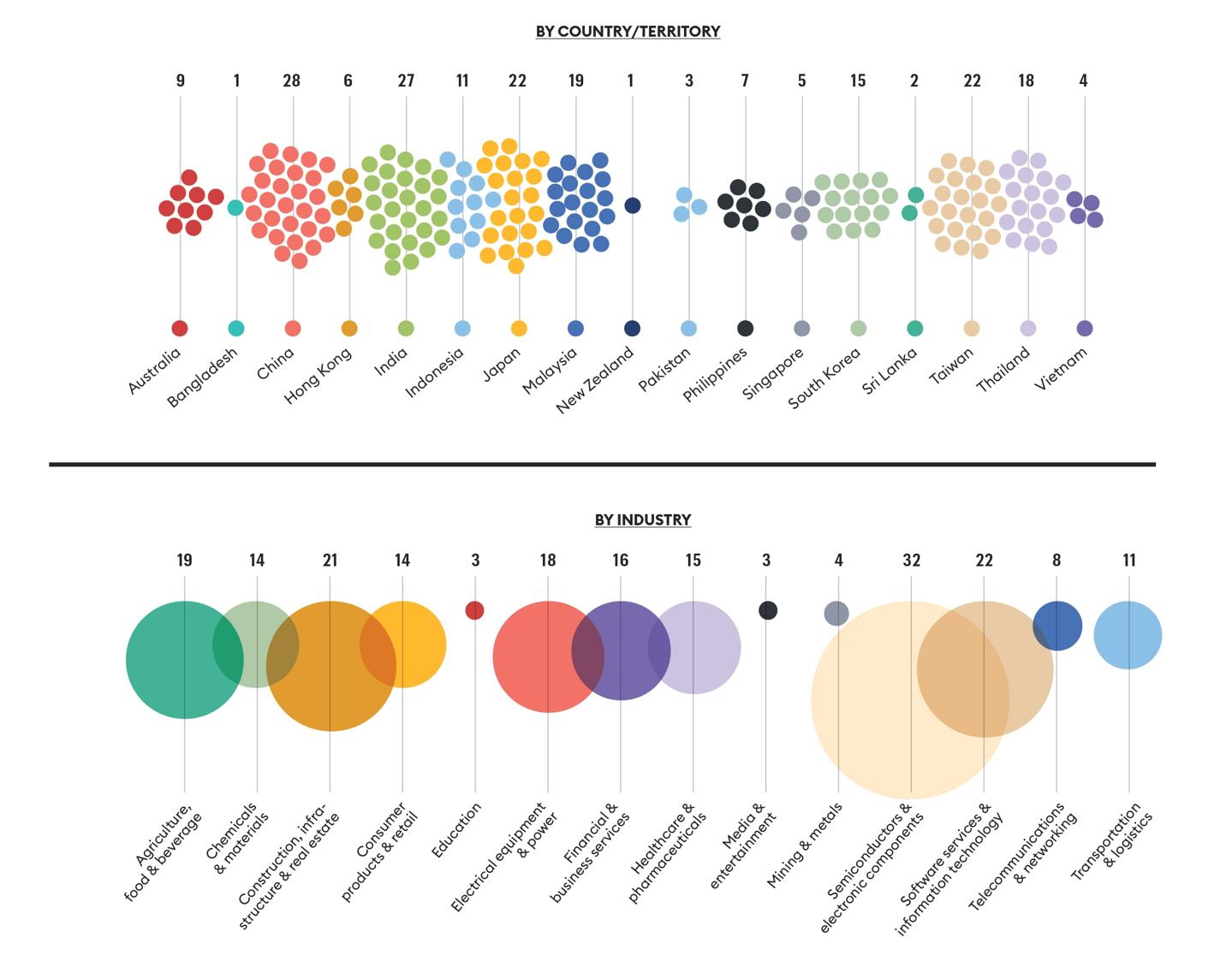
The lineup is dominated by businesses that are in step with the fast-evolving tech sector and the global AI boom. Software companies as well as suppliers of key electronic components and tools for semiconductors account for 25% of those who qualified. Others are capitalizing on the accelerating adoption of EVs and renewable energy by meeting the industries’ growing demand for specialized equipment and services. Eight firms reflecting these trends are highlighted with the list.
As in previous years, China accounts for the lion’s share of the names (28) with India a close second (27). The number of Malaysian firms more than doubled to 19, with over half benefiting from the country’s AI infrastructure boom. In total, 60 companies are returnees from 2025, including Japan’s Santec Holdings, a maker of niche optical testing equipment much sought after by AI data centers.
Highlighted here are eight companies that reflect some of the trends mentioned above:
Guangdong Dtech Technology

High-precision tools such as the micro drill bits for printed circuit boards made by Guangdong Dtech Technology are seeing a surge in demand as electronic components shrink in size. Established in 1997, the company saw its 2025 net profit nearly double to 434 million yuan ($60 million) on a 34% jump in revenue to 2.1 billion yuan. Guangdong Dtech went public on the Shenzhen Stock Exchange in 2022 and in July raised HK$4.8 billion ($612 million) in a dual listing in Hong Kong.
Inox India

Headquartered in the western Indian state of Gujarat, Inox India is one of the world’s largest makers of cryogenic sto-rage and distribution equipment by revenue for liquefied natural gas and various industrial gases. The company’s customers include the International Thermonuclear Experimental Reactor, a nuclear fusion project located in southern France. Revenue in the year ended Mar. 31 gained by more than a fifth to 16.3 billion rupees ($179 million) with net profit rising at a similar pace to 2.6 billion rupees.
Japan Electronic Materials

Based in Amagasaki, an industrial city near Osaka, Japan Electronic Materials started making probe cards, which are used to test semiconductor wafers before they are cut and packaged, in 1970. Surging semiconductor demand drove earnings growth in 2025; net profit jumped 58% to 5.5 billion yen ($36 million) on a 23% increase in revenue to 29.4 billion yen, stoking a three-fold rise in shares over the past year. The company is building its fifth factory that is expected to begin operations in 2028.
Jeju Semiconductor

The South Korean fabless company is riding high on skyrocketing demand for its low-power, low-density memory chips for 5G and Internet of Things devices. In 2025, net profit more than doubled to 39.5 billion won ($28 million) as revenue climbed 86% to 302 billion won. The company’s stock is up fivefold year-on-year. Founded in 2000, the Jeju Island-based company started out designing memory chips for mobile phones, notably for Nokia.
Kaori Heat Treatment

The problem of excessive heat from generative AI has unleashed demand for the cooling technology that Taiwan-based Kaori Heat Treatment specializes in. Founded in 1970, the company makes liquid-cooling systems that are used in data centers to extract heat from high-power chips in AI server racks. In 2025, revenue rose 64% to NT$6.6 billion ($211 million) while net profit expanded 56% to NT$998.2 million. Kaori is also benefiting from a spike in demand from U.S. data centers for its fuel cell technology.
Plover Bay Technologies

This Hong Kong-based company makes mission-critical routers that offer speedy and reliable internet connectivity. Customers include SpaceX’s Starlink, which Plover Bay’s Peplink subsidiary landed as a customer two years ago. The specialized routers combine with Starlink receivers to make internet connectivity seamless. Plover Bay posted a nearly 20% jump in net profit to $45 million and an 11% rise in revenue to $130 million for 2025. The company has announced plans to spin off Peplink and list it on the Nasdaq.
Smartgroup

To accelerate the shift to EVs, the Australian government in 2022 eliminated the fringe benefit tax payable on company cars that are electric. The policy has given a boost to the business of Sydney-based Smartgroup, which sets up pre-tax car leases and employee benefits, with 3,300 companies on its roster. In 2025, the number of leased vehicles that it managed increased 15% to a record 85,300. This surge, in turn, drove up revenue 8% to A$329.3 million ($212 million) and net profit 11% to A$80.2 million. Smartgroup’s shares rallied more than 60% year-on-year.
Southern Cable Group

Malaysia’s booming data center industry has become a growth driver for Southern Cable Group, a maker of low- and high-voltage cables, accounting for 15% of its 1.8-billion-ringgit ($411 million) revenue in 2025. The company, which also supplies to the renewable energy sector, is well-positioned, according to analysts, to benefit from Malaysia’s National Energy Transition Roadmap, which aims to phase out coal and ensure that 70% of the country’s power comes from renewable sources by 2050.
Methodology
The list features companies with a track record of long-term sustainable performance across a variety of metrics. These 200 companies were selected from a universe of more than 19,000 publicly traded companies in the Asia-Pacific region with annual sales above $10 million and below $1 billion. The companies on this unranked list were chosen based on a composite score using measures such as debt, sales and earnings-per-share growth over both the most recent one- and three-year periods, and the strongest one- and five-year average return on equity. Aside from quantitative criteria, qualitative screens were applied, such as excluding companies with serious governance issues, questionable accounting practices, environmental concerns, management problems or legal troubles in recent years. State-controlled entities and subsidiaries of larger companies were also excluded. The criteria sought to ensure a geographical diversity of companies from across the region. The list uses annual results based on the latest publicly available figures as of July 10, 2026. Stock prices on the same date were used to compute market value.
Reporting by Vaishalli Chandra, John Kang, Zinnia Lee, Phisanu Phromchanya, Ian Sayson and Yue Wang.
Want to see more Forbes articles on your feed? Tap here to make Forbes Australia a preferred source on Google.
Look back on the week that was with hand-picked articles from Australia and around the world. Sign up to the Forbes Australia newsletter here or become a member here.