The former Prime Minister of New Zealand spoke at Women Unlimited about having the courage to lead differently, navigating public life, and how self-doubt can be turned into a strategic advantage.
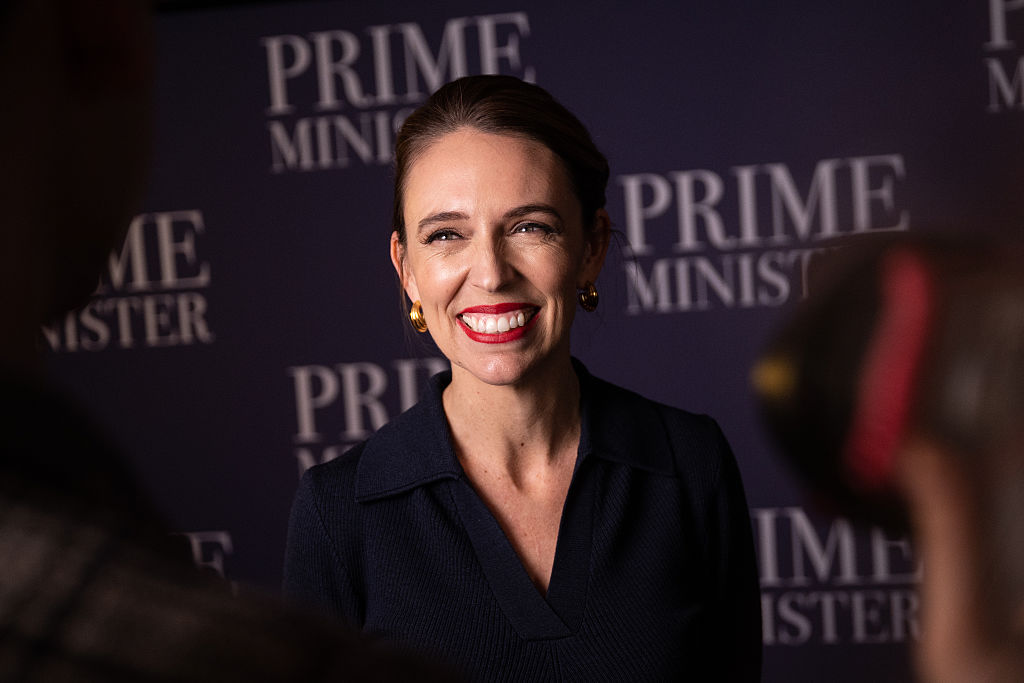
When The Right Honourable Dame Jacinda Ardern reflects on her tenure as New Zealand’s Prime Minister, she does not offer warnings about the toll of public office. Instead, she provides a pragmatic perspective on what it takes to survive – and lead effectively – at the highest level.
Speaking at the Women Unlimited event in Sydney, Ardern unpacked the realities of high-stakes leadership, sharing insights from her 15 years in a notoriously demanding profession. A relentlessly positive mindset is paramount, she told the audience, noting that polar explorer Ernest Shackleton informed her view on resilience.
“One of my favourite quotes of his is that optimism is true moral courage,” Ardern told the room. “It’s a choice and one that is particularly important in difficult times.”
“Rebel against the idea that optimism is naive. It is not. Approach anything with optimism or hope. It is actually courageous.”
The Rt. Hon. Dame Jacinda Ardern
Despite the intense scrutiny of her tenure, Ardern remains an enthusiastic advocate for women stepping into the political arena. Asked if she would encourage others to follow her path her response was immediate: “I absolutely would.” However, she offered three distinct, boundary-setting guidelines she recommends for managing the noise of public leadership:
- Protect your focus: “Don’t read media about yourself,” she advised, calling it “good advice in general.”
- Control the narrative, outsource the noise: “Do your own social media, but have someone else manage the comments.”
- Trust your capacity: “You are always capable of more than you think.”

Moving beyond the psychology of leadership, Ardern addressed its structural mechanics, specifically, how the New Zealand Labour Party successfully increased female representation in its senior ranks without resorting to tokenism. The solution was found in New Zealand’s Mixed Member Proportional voting system.
‘I didn’t want that’
“What the party did is say that when we do our list, we look across all our candidates. Fifty per cent of that list has to be women,” Ardern told the audience. By enforcing parity on the electable party list rather than individual seats, they introduced diversity into the selection of the candidates for the Prime Ministership, while also protecting each individual’s authority.
“The idea that I would go into it with the label that I was selected because I was a woman, rather than a meritocracy, felt to me like it would end up being held against me,” she explained. “I didn’t want that.”
Something else that Ardern advised the audience to reject is the paralysis that can come from impostor syndrome. Rather than treating self-doubt as a career-limiting condition to be eradicated, she views impostor syndrome as a strategic driver that can force rigorous preparation.
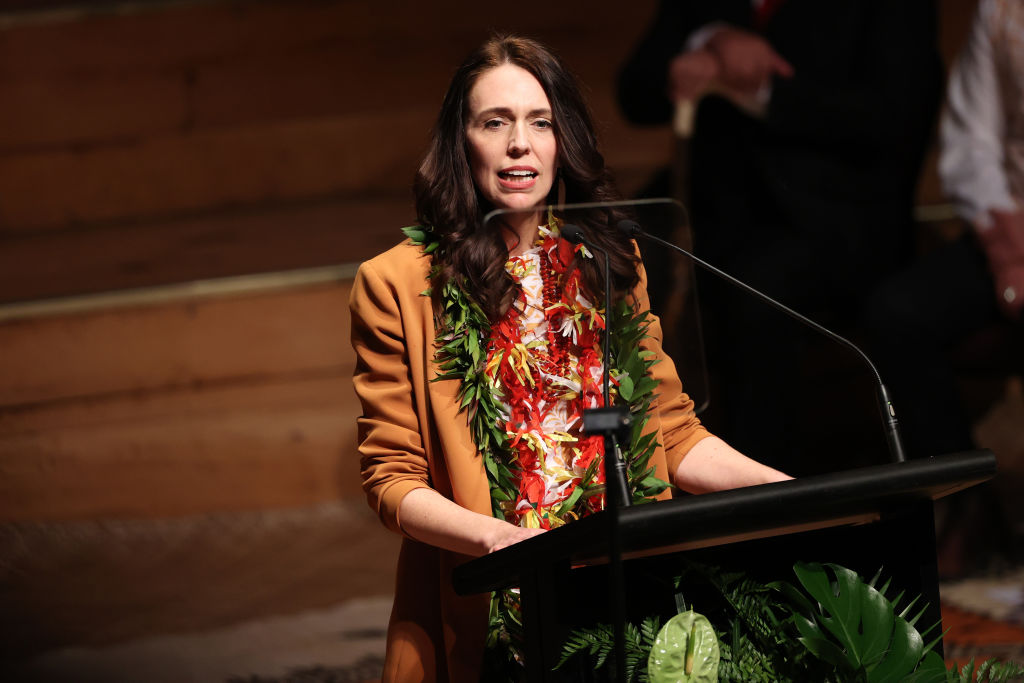
“We think about it as this really toxic trait and as something that holds you back,” she noted. “And yet, when I sat down and wrote about how I behaved in environments where I was stretching myself, it [impostor syndrome] drove a useful set of behaviours.”
“I would prepare. I’d do my research. I would talk to experts and advisors. I would bring a bit of humility. Those are excellent leadership traits, and they all came as a consequence of me having a bit of self-doubt from time to time.”
The Rt. Hon. Dame Jacinda Ardern
The key, Ardern argues, is managing when you listen to that internal voice. Even with all of her ceiling-breaking achievements, the former PM says she still feels like an impostor from time to time.
“I will never lose it. It doesn’t go away. It still sits there,” she told the audience. “But I just make sure that when someone asks me to take on something new, I don’t let it hold me back. I let it serve me when I’m in a role, because it forces me to really make sure that I’m going to give a job everything I’ve got.”
Motherhood and the illusion of guilt
As the second woman in modern history to give birth while leading a country, Ardern’s reflections on the juggle of work and family carry unique weight. She shared that she set a deliberate boundary where she would tell her staff that she was going home to bathe her daughter, and often resume work late in the evening.
Yet, despite holding the highest post in the nation, Ardern says she still could not escape working mother’s guilt.
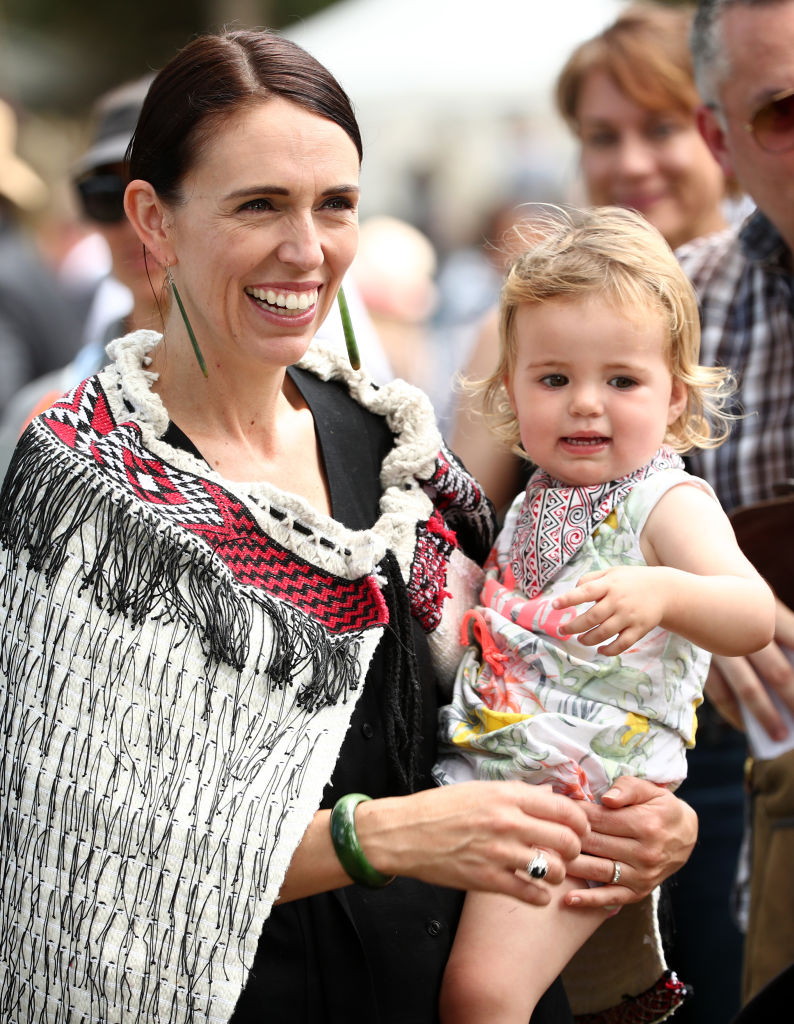
“If anything was going to give you the excuse not to feel too guilty about being away, it was probably that you’re responsible for a country,” she said with a laugh. “And yet, I still felt guilty.”
Ardern appealed to the audience to consider that guilt could be a projection.
“We feel that emotion – and we think it’s telling us something true. It’s not. I realised that so often, I was imposing that emotion that I felt – my daughter’s view of me – onto her.”
The Rt. Hon. Dame Jacinda Ardern
An experience shortly after Ardern stepped down from public office helped her see the reality of her daughter’s thought process. While walking her home from daycare, her five-year-old asked why she had left her job. Ardern listed her reasons, concluding with the silver lining that they would get to spend more time together.
She braced for her daughter to agree that she had been away too much. Instead, the reality of what her daughter had actually absorbed over the years became clear.
“She just stopped and looked up at me and said, ‘But, mum, we never give up.'”
It is a striking reminder of the example female leaders set, often without realising it, and the importance of resisting self-criticism and instead leaning into self-compassion.
“Just give yourself the grace,” Ardern said in closing. “We don’t give up, and never let anything narrow what you’re capable of.”
Want to see more Forbes articles on your feed? Tap here to make Forbes Australia a preferred source on Google.
Look back on the week that was with hand-picked articles from Australia and around the world. Sign up to the Forbes Australia newsletter here or become a member here.