The Duke of Sussex wants “mental illness” reframed as “mental injury,” arguing the shift makes recovery feel possible. Speaking at Lifeline Narrm’s InterEdge Summit in Melbourne, the Prince also took aim at social media platforms, saying the current model is failing users.
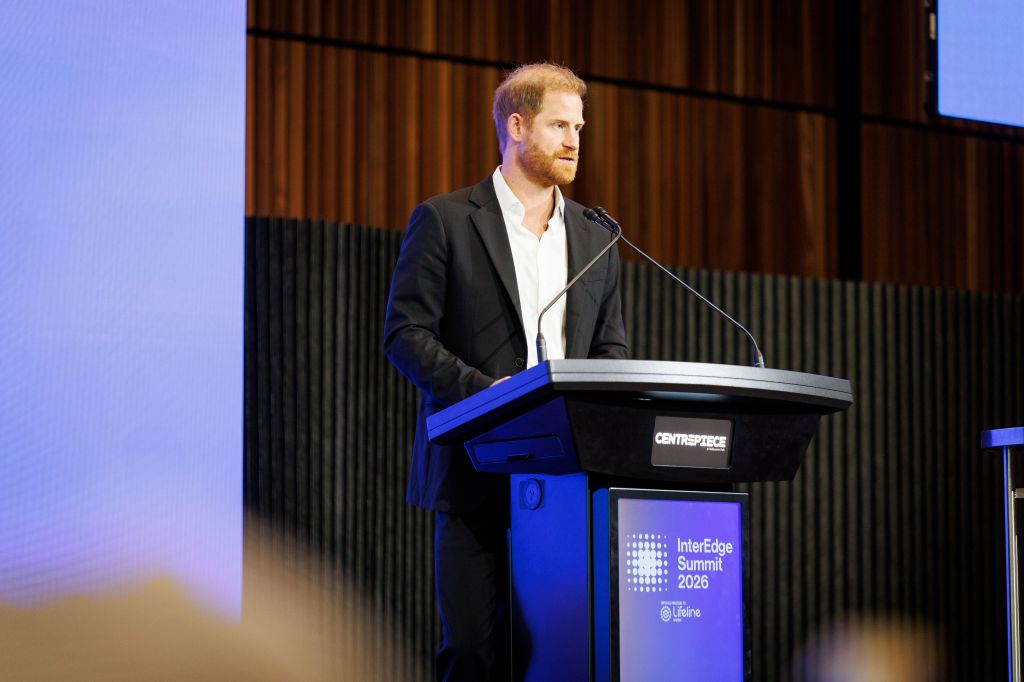
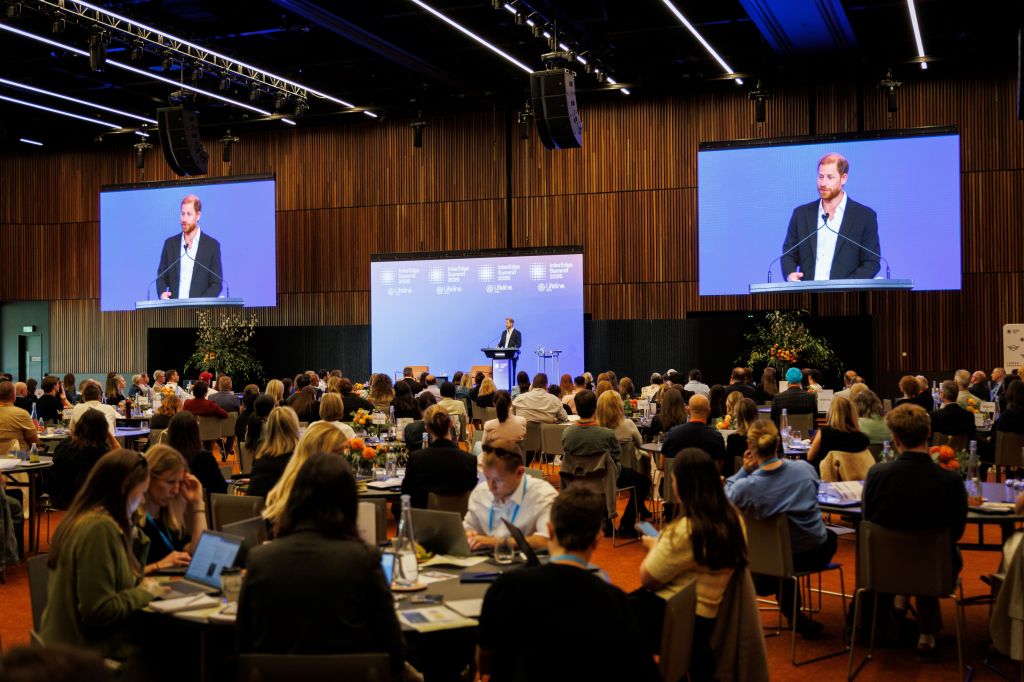
Prince Harry walks across the stage at Melbourne Park’s Centrepiece in front of a blue digital background featuring the crisp white logos of the InterEdge Summit and Lifeline Narrm. Three hundred sets of eyeballs track Harry’s every move, having just watched him deliver a 15-minute keynote on the power of mental fitness.
The Duke of Sussex takes a seat in a chestnut leather chair, and settles in for the Q&A portion of the event. In the armchair opposite sits Brendan Nelson AO, the former Australian Minister for Defence. Military service in the name of the Commonwealth is the bridge between the two men; Nelson led our nation’s military portfolio during the same period that Harry, then in his early twenties, served as a helicopter pilot in Afghanistan.
Nelson shares that in the months leading up to this moment, he emailed Harry an invitation to the Summit where all proceeds benefit Lifeline’s Melbourne chapter. Five minutes after pressing send, Nelson received a reply: “Meghan and I are in.”
Taking a stand on mental health
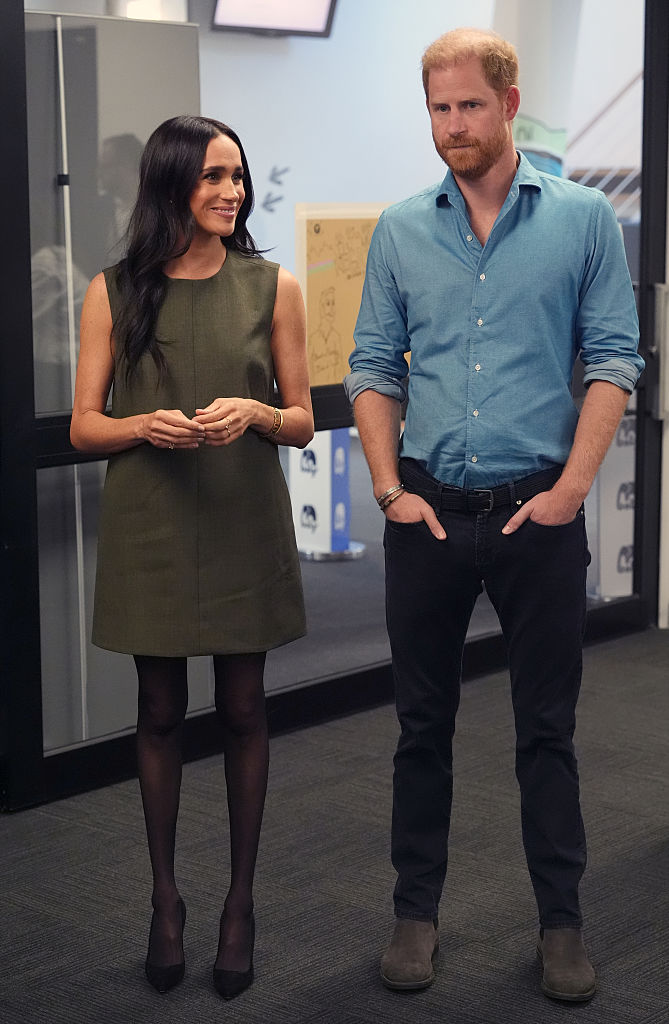
Harry made his opening address while Meghan, the Duchess of Sussex, sat at a round table at the front of the audience. Wearing white with nude heels, she slipped into the room holding her husband’s hand. Meghan took her seat as Harry climbed the stairs to the stage, and quickly leaned into his renowned, self-deprecating style.
“When I was invited to speak at this summit, I wasn’t sure whether I was expected to speak as someone who, despite everything, has their shit together. Or as someone who, despite what it may look like, actually doesn’t,” he said as the audience erupted in laughter.
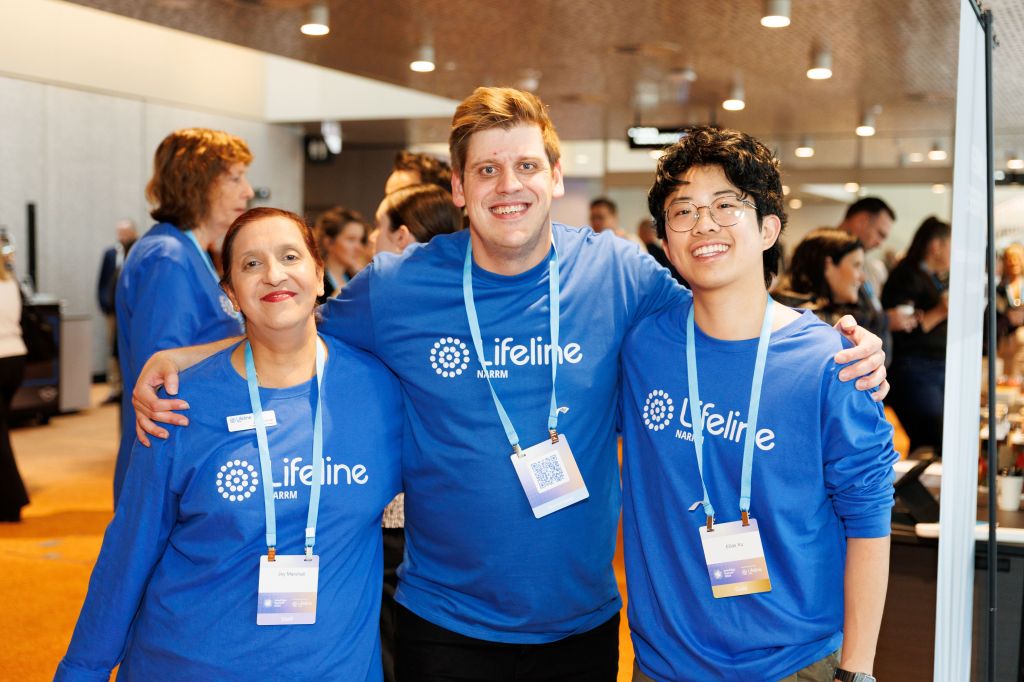
At the back of the room, 19 blue t-shirt-wearing Lifeline volunteers leaned forward to hear Harry speak. As the folks on the frontlines of emergency calls, the volunteers are well-versed in the subject matter Harry is here to talk about, and has plagued the young prince since he was a pre-teen.
“After my mum died just before my 13th birthday, I was like ‘I don’t want this job. I don’t want this role, wherever this is headed, I don’t like it,'” Harry told the crowd. The media circus was a world that “killed my mum,” he said from the podium, and he wanted out.
Overcoming the scars
Within a decade of that internal turning point, Prince Harry was as far away from the UK as possible. He described his service in Afghanistan as “an escape” – a place where he was judged by his actions rather than his title. However, his immersion into military life wasn’t without its downsides.
“My goal is to help build a world where mental fitness is as common as physical fitness.”
Prince Harry
In the years since, he has been working to challenge the traditional military mindset of “breaking you down and building you back up.” Instead, he wants to bridge the gap between old-school grit and modern mental fitness, and overturn the perception of vulnerability as weakness. To drive this systemic change, he returned to the barracks of the Royal Military Academy Sandhurst, where he was trained. His message to senior management there is one well-known in boardrooms: culture is set from the top down. Changing the perception of weakness in the military requires buy-in, and to exemplified, by leaders.
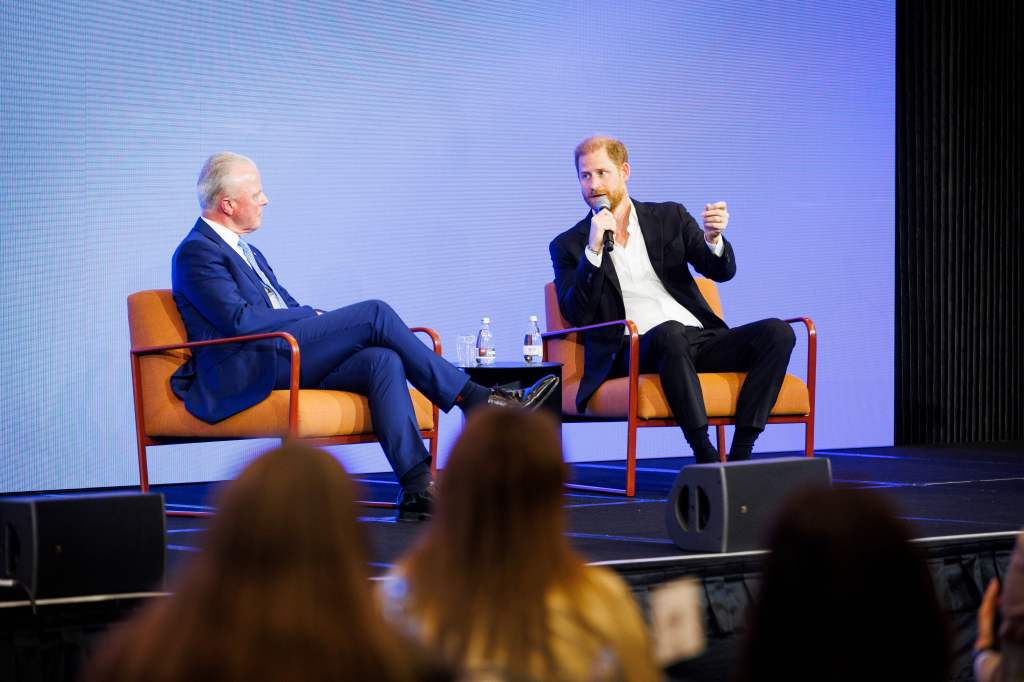
“You have to get these folks on board – the senior leadership – because they set the culture,” he told the audience in Melbourne. “If you don’t get them on board, nothing’s changing.”
The good news, according to the Duke’s observations, is that the younger generation is generally more emotionally intelligent. The bad news is that they are now up against a powerful, opposing force: the intentional design of social media.
“Many of the systems shaping our reality—our attention, our self-worth, and our relationships were not built around human well-being,” he says. “They were built around engagement.”
The digital front line
Harry used the technical sophistication of social media platforms as an indictment of their priorities. “If a platform is capable of targeting a child with specific content, it is surely capable of protecting them,” he told the audience. “If it is not doing so, that is not a failure of technology. It is a failure of responsibility.”
It was within this context of systemic failure that he addressed the local landscape. “I know that there is a lot of conversation right now, particularly here in Australia, around the social media ban and the steps being taken,” he says. “And while people will have their opinions on the ‘how’ – what is undeniable is the leadership being shown.
“Australia is leading a global conversation by saying that the status quo is no longer acceptable.”
Prince Harry
Australia’s social media ban served as a springboard for Harry’s broader argument: that the duty to protect needs to be a global imperative. He observed that as the structures around us change, the old stigmas are finally beginning to crumble.
“The world is waking up to the fact that mental health isn’t a secret to be kept, but a human experience to be supported,” he noted.
This philosophy connects Harry’s work across the globe, from his role as Chief Impact Officer at BetterUp to the Invictus Games. The last time he and Meghan visited Australia was in 2018 for the Invictus Games in Sydney. They were newlyweds at the time, and famously announced they were expecting their first child, Archie.
In the years since, the family established their home in Montecito, California and welcomed their daughter, Princess Lilibet, in 2021. While the Sussex children did not make the 13,000-kilometre, 16-hour trip to Melbourne, Harry spoke warmly of how seeing the world through the eyes of a parent has shifted his perspective.
“When a parent is overwhelmed, children feel it. When someone is supported, families feel it,” he says. “Our work lives and our home lives are enmeshed; what happens at work inevitably impacts home, and what happens at home impacts work. There really is no dividing them.”
It is his mission to help to reduce the stigma around mental illness and shift the perception of those challenges as ‘mental injuries’ – that can be recovered from.
“My goal is to help build a world where mental fitness is as common as physical fitness. I’m not here to just talk about the problems; I’m here because I believe we have a responsibility to create a culture where people don’t just survive, but actually have the space to thrive.”
Want to see more Forbes articles on your feed? Tap here to make Forbes Australia a preferred source on Google.
Look back on the week that was with hand-picked articles from Australia and around the world. Sign up to the Forbes Australia newsletter here or become a member here.