U.S. and China agreed to set up an AI dialogue and discussed a “notification system” that could be used to raise alerts about AI safety incidents related to national security issues, Treasury Secretary Scott Bessent said Sunday after a meeting with Chinese authorities ahead of President Xi Jinping’s visit later this week.
AFP via Getty Images
Key Takeaways
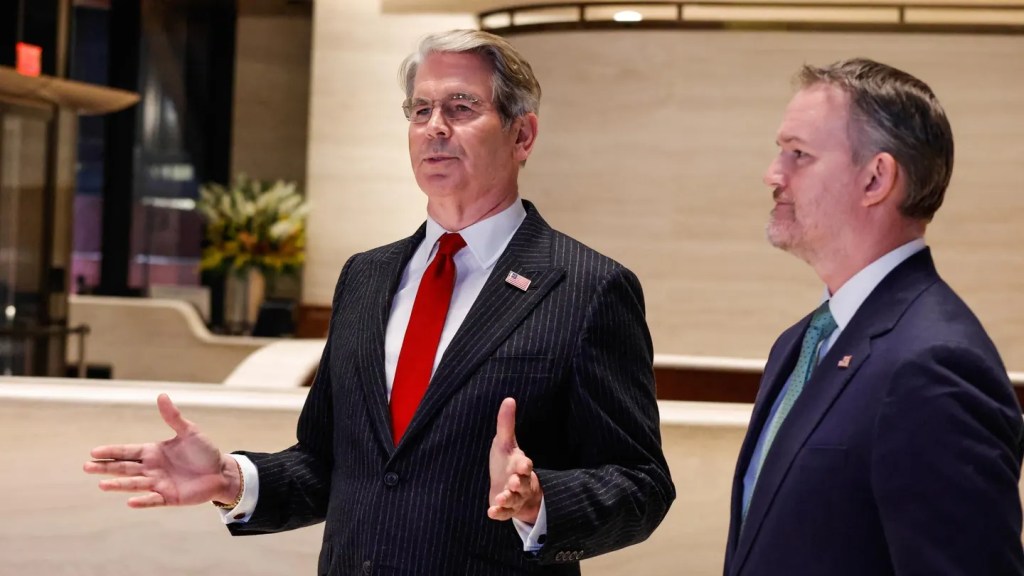
- Bessent met with Chinese Vice Premier and top trade negotiator He Lifeng at the JPMorgan Chase headquarters in New York on Sunday, where the two sides discussed both artificial intelligence and trade.
- The Treasury secretary told reporters the talks were “very successful“ and said both sides discussed setting up the “U.S.-China AI dialogue” that includes a “notification mechanism.”
- Bessent said the proposed system will deal with “incidents” and when something rises up at a “national security level from AI.”
- Bessent added that the U.S. believes just like any cross-border activity “moving from opaque to more transparency” between the world’s top two AI powers is “very important.”
- The Treasury Secretary didn’t specify a timeline but later told the Financial Times that both sides will “likely meet again in two months.”
- The discussions come amid a growing push by tech leaders and researchers for both countries to coordinate on addressing AI safety risks and a potential slowdown in frontier development.
What Did China Say?
The Chinese state-run Xinhua news agency reported that both sides held “candid, in-depth and constructive exchanges during consultations on economic and trade issues.” The report added that the discussion covered “important economic and trade issues of common concern, as well as the implementation of consensus reached in previous talks.” Xinhua’s report featured a passing mention about artificial intelligence, noting that both sides “held dialogues on AI-related issues.”
What Has China Said About slowing down ai development?
China pushed back against what it called “fearmongering” last week, after several AI researchers and top executives, including Anthropic CEO Dario Amodei and OpenAI CEO Sam Altman, issued dire warnings about AI safety. Chinese Foreign Ministry spokesperson Guo Jiakun said Beijing wants all parties to “promote an open, inclusive and benevolent approach to AI.” He then warned that “fearmongering, confrontation and vicious competition” will disrupt the process of “global governance of artificial intelligence” and will not be in anyone’s interest.
What Has Trump Said About AI And China?
President Donald Trump has largely dismissed worries about AI safety issues and potential catastrophic events, arguing that “if we don’t win AI, we’re going to be put in a very bad position.” Touting the rapid development of AI as a race with China, Trump has argued the U.S. is “leading” by a significant margin, and he wants to preserve this lead. Over the weekend, Trump announced he would create an “AI Force” and appoint an “AI Czar,” which would not “hinder or stifle the Growth” of the AI industry but “cherish it, help it, and watch over it, as it grows!” The president also claimed this force would look for “BAD” AI but noted that the “existing Criminal and Civil Justice System” can already do that “easily.” He added: “We are leading China, and the rest of the World, and I intend to keep it that way!”
Want to see more Forbes articles on your feed? Tap here to make Forbes Australia a preferred source on Google.
Look back on the week that was with hand-picked articles from Australia and around the world. Sign up to the Forbes Australia newsletter here or become a member here.