Stalled decision-making, perfectionism, withheld innovation, and wasted cognitive energy are quietly tanking corporate productivity. Dr Shade Zahrai outlines a framework to help teams face disruption head-on.

The way cows and bison deal with an approaching storm can teach us a lot about the leadership skills required in the coming age, according to organisational behaviourist, Dr Shade Zahrai.
When a storm approaches, cows huddle together and walk away from it, moving in the direction of the wind. Counterintuitively, because they try to outrun the weather, the storm eventually catches up, and they spend considerable time stuck in the worst conditions.
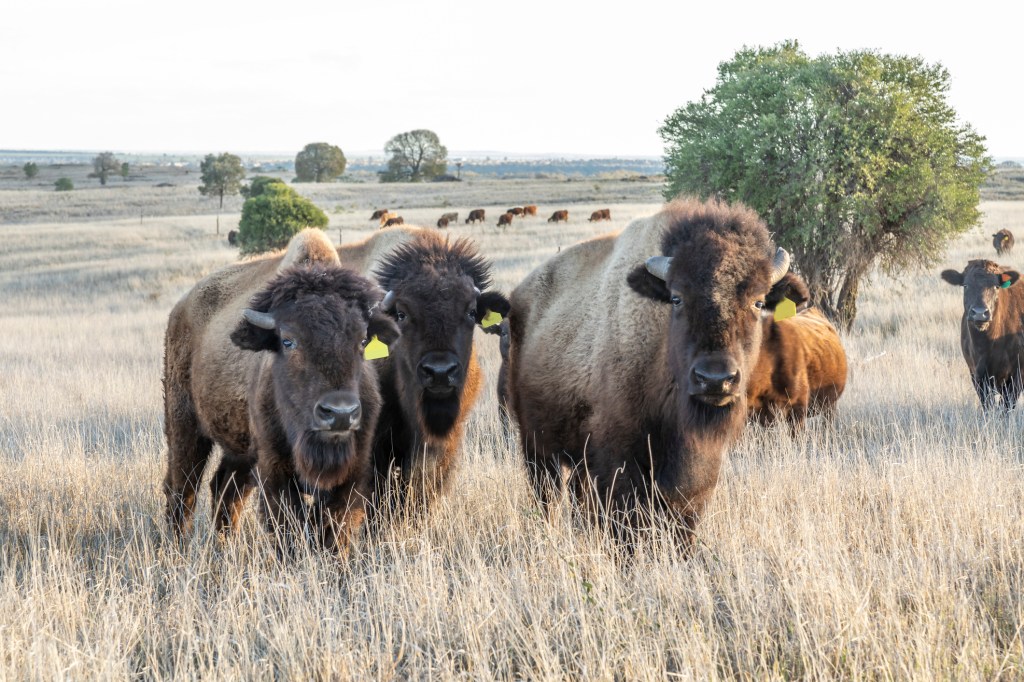
Bison, a bovine relative of cows, face the wind and walk directly into the oncoming storm. By heading towards the chaotic conditions, they pass through it rapidly and minimise their time in danger.
Physiologically, cows and bison are remarkably similar, Dr Zahrai explains in her new book Big Trust, but their instinctual response to a crisis is opposite. It is this behavioural contrast that changes everything about survival — both in nature and on the balance sheet.
Addressing the national productivity puzzle
When challenges hit, organisations can, and often do, default to running away from the storm, Dr Zahrai says. They huddle, wait for absolute certainty, and try to outrun inevitable change.
High-agility leaders, however, cultivate a bison mentality. They face the disruption head-on, iterate rapidly, and clear the crisis rapidly, because they possess the personal agency to take decisive action without waiting for permission.

This behavioural divide offers a fresh perspective on an economic puzzle in Australia.
According to data from the Productivity Commission, our national labour productivity remains sluggish. But numbers do not show up to work every morning, Zahrai argues. People do.
“When you look at what creates productivity, it is initiative, persistence, problem solving, sharing ideas, getting the job done, and finding solutions when you face a roadblock. From our perspective, we see a lot of the productivity issue as an individual challenge,” says Zahrai.
Facing the bad weather and leaning in to move through it, like bison, is the ideal way to face productivity challenges. Yet, in many companies, the norm is to adopt cow culture, to run from the storm and therefore spend longer in it.
“Decisions take way longer than they need to,” says Zahrai. “People overwork because they don’t feel like they’ve done enough, and need to prove themselves, or feel like impostors. Under confidence, people not speaking up, not sharing ideas, means innovation is not happening.”
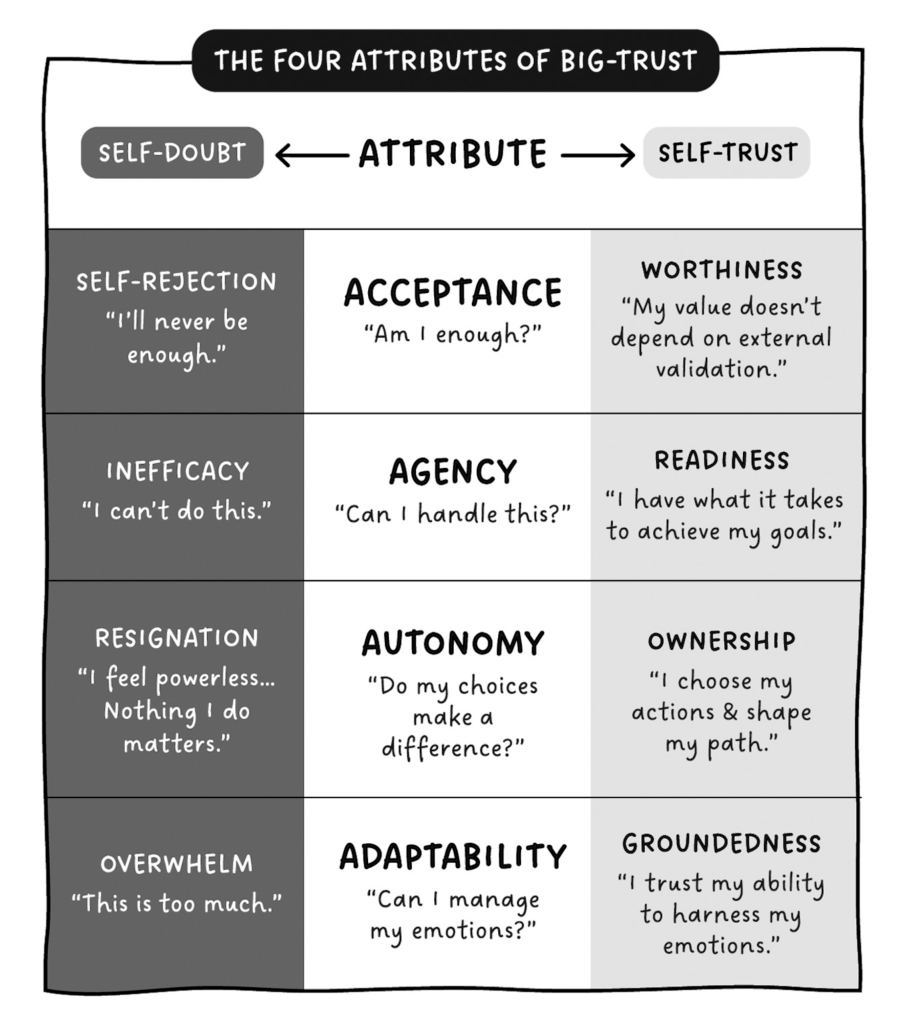
Developing a bison approach requires individuals to have trust in themselves, and to believe they are worthy, ready, emotionally intelligent, and have autonomy to effect change in the circumstances.
“Capability has the most direct productivity link, because if people don’t believe that they can do the thing, whether it’s learning how to code, whether it’s learning how to use this new AI tool, they stall, they are less likely to initiate action. They don’t take opportunities. They don’t persist when there are setbacks.”
The AI-able executive and the flashlight
As artificial intelligence continues to level the playing field for technical tasks like data analysis and coding, the corporate premium is shifting to self-efficacy and interpersonal skills.
“The technical baseline is now automated,” Zohrai notes.
“Because of the disruption that’s happening, the uncertainty in the world and in careers, people are getting so stuck in it. Their flashlight is focusing on everything they cannot control.”
Dr Shade Zahrai
The ‘torch’ analogy is one Zahrai uses often. What we shine a light on, where we focus our attention, becomes our reality, she notes. Powerful leaders are aware of spotlighting what matters and what can move the needle in their teams, but also in what they give focus to within themselves.
“The psychological element is called a locus of control. Where is your flashlight pointing? Is it on everything you cannot control, in which case you feel like a victim and powerless?

Shining a torch above you, looking down from a birds eye view on yourself, facilitates self-awareness. Understanding yourself and identifying how and why you operate the way you do can ultimately enhance self-trust.
“One of the most important skills going forward is metacognition, which is this higher-order thinking where you are looking down on the situation, observing yourself rationally,” says Zahrai.
Shining a light on the four As
To achieve that, the leader themselves needs to ask themselves whether they feel they are enough (acceptance), if they can handle the situation (agency), if their choices make a difference (autonomy) and whether they can manage their emotions (adaptability).
Authentically answering each of those questions in the affirmative, exhibiting self-trust rather than self-doubt, makes leaders more equipped to effectively lead a group through a storm of change and uncertainty, according to Zahrai.
In essence, the productivity crisis and structural challenges facing our modern workforce will not be alleviated by simply tweaking spreadsheets. They will be solved by leaders who realise that enterprise growth is dependent on individual speed and accountability.
According to Dr Zahrai, the hardest disruptions your organisation navigates today are not just obstacles; if handled with a bison mindset, they may become the blueprint for your survival.
Want to see more Forbes articles on your feed? Tap here to make Forbes Australia a preferred source on Google.
Look back on the week that was with hand-picked articles from Australia and around the world. Sign up to the Forbes Australia newsletter here or become a member here.