Each of the gold medals set to be awarded at the 2026 Winter Olympics contains six grams of the precious metal, surrounding 500 grams of silver – together worth more than $2,000, thanks in part to the historic rallies of each. But for athletes from certain countries, the value of that medal will be far greater.
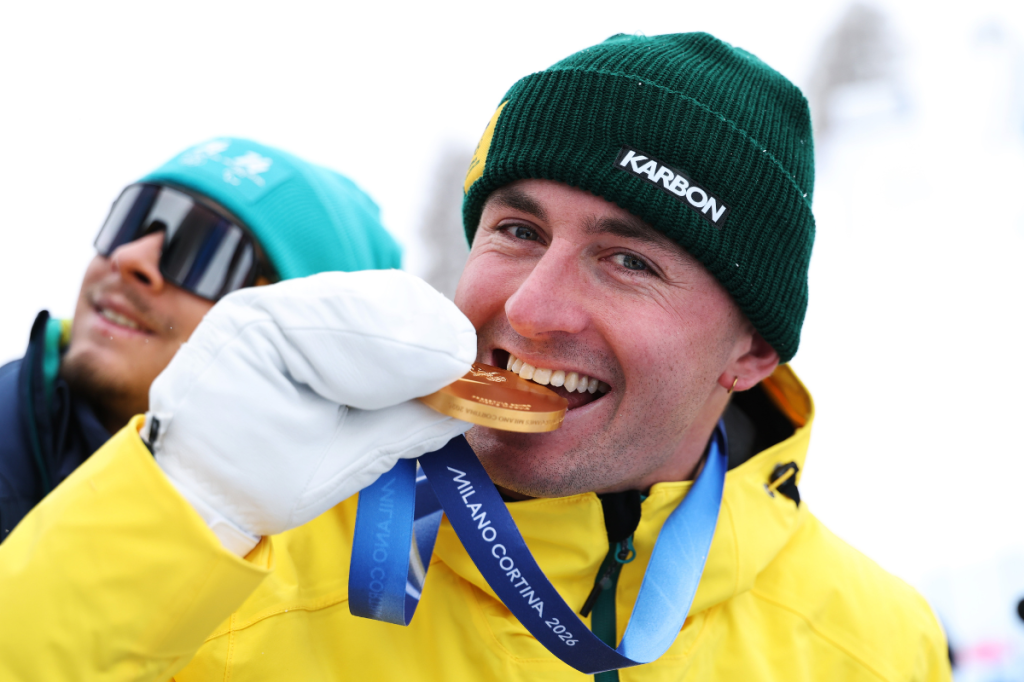
Ahead of the Milan Cortina Games, which officially begin with Friday’s opening ceremony, Forbes contacted the national Olympic committees or government sports ministries of all 92 countries and territories competing and confirmed that at least 37 of them are offering cash bonuses to any of their athletes who win medals.
The potential awards for a gold medal in an individual sport range from roughly $3,000 for athletes from New Zealand to $787,000 for athletes from Singapore, converted to U.S. dollars at Wednesday’s exchange rates. In all, 13 countries and territories are pledging to fork over at least $100,000 to any individual gold medalist. (Three other delegations – Bosnia and Herzegovina, North Macedonia and Romania – said the exact amounts of one-time payments had yet to be determined, and Luxembourg said it was keeping its bonus arrangements confidential.)
Those bonuses come on top of training stipends, grants and other benefits, such as scholarships and medical insurance, that may be given to elite athletes. (One new perk for Team USA: Thanks to a $100 million donation from Stone Ridge Holdings Group founder Ross Stevens, each U.S. Olympic and Paralympic athlete will receive $100,000 toward retirement, regardless of their results at the Games, and their families will receive an additional $100,000 after they die.)
In some cases, the payouts extend even to athletes who finish off the podium. For example, although the two Alpine skiers set to represent tiny Cyprus are long shots for the $177,000 that the island’s Olympic committee is offering for a gold medal performance, they can still claim about $94,000 for coming in fourth. Even a 16th-place finish would be worth $12,000.
Gold Standard
Athletes from these 33 delegations are eligible to receive a bonus for winning a gold medal at the 2026 Games, paid for by their national Olympic committee, their national government or a team sponsor – or some combination of the three.
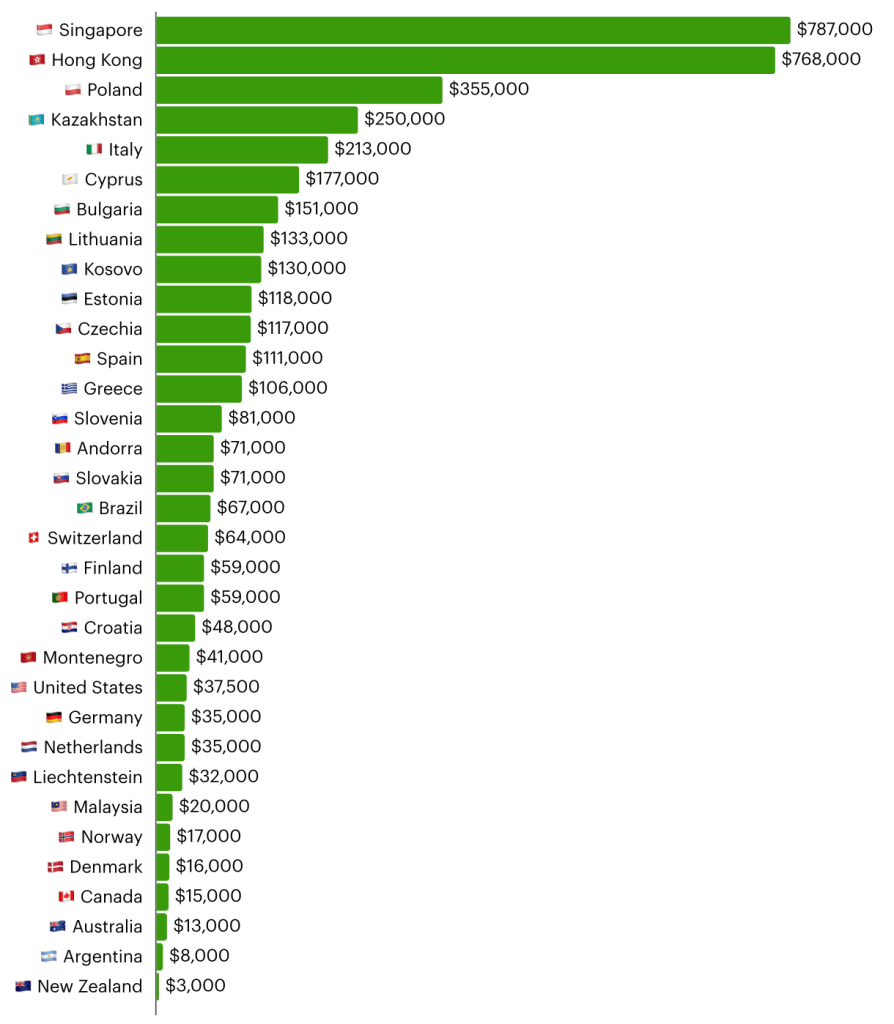
Exactly how each country calculates its bonuses can differ. In the United States, which sits in the middle of the bonus pack with a $37,500 award for gold medalists, all athletes receive the same prize from the U.S. Olympic and Paralympic Committee, regardless of whether they compete in an individual sport or as part of a team. Czechia, by contrast, works from a table listing 12 different rewards based on the number of athletes in the event. So while a skeleton champion, for example, might collect $117,000, a gold medalist in men’s ice hockey would earn about $31,000.
One other key difference is how each country takes care of athletes who win multiple medals. For instance, Americans will pocket the full bonus amount for each top-three finish whereas Finnish medalists’ compensation is capped at about $118,000, or the equivalent of two bonuses for individual gold.
Depending on the country, the bounty might be paid by either the national Olympic committee or the government—or both—and the money isn’t always limited to the athlete competing. In Slovenia, for example, the Olympic committee and the country’s Ministry of the Economy, Tourism and Sport contribute a combined $162,000 to be shared evenly between an individual gold medalist and their coach. In New Zealand, athletes don’t receive medal compensation directly from their Olympic committee, but the team’s apparel sponsor, Kathmandu, has promised to pay individual gold medalists about $3,000.
The benefits often go far beyond the one-off payments. Medal bonuses are tax free in countries such as Germany, which will award approximately $35,000 to each Olympic champion, and for Americans with total income of less than $1 million. In Croatia, once gold medalists turn 55, they are granted a monthly stipend equal to the country’s average net salary (currently about $1,600). Norwegians who win any medal automatically get roughly $17,000 annually, and North Macedonian medalists receive a monthly allowance for life—about $1,300 for topping the podium, or 1.5 times the average national net salary.
Individual gold medalists from Poland, meanwhile, can redeem not only around $210,000 in cash and tokens from the Polish Olympic Committee but also a Toyota Corolla, a furnished two-room apartment, a painting, a vacation voucher and jewelry worth up to about $800.
Not every country is so generous with its medal winners, of course. Ireland and Great Britain, for instance, don’t pay bonuses directly tied to performance beyond the general funding available to the countries’ elite athletes.
For other nations, however, the payments can quickly add up. Forbes estimated that Italy was on the hook for more than $2.7 million for its 17 medals at the 2022 Winter Games in Beijing, and with the country once again dangling 180,000 euros to Olympic champions—$213,000 at a slightly more favorable exchange rate than four years ago—its bill this year will almost certainly be hefty.
That would be just fine with the Games’ host country, though. Noting that Italian athletes will rake in a bonus for each medal they capture, with no upper limit, the country’s Olympic committee tells Forbes, “We hope that will happen.”
Here are 13 nations and territories offering six-figure payouts for 2026 Olympic gold medalists in individual sports.

Singapore: $787,000
Singapore has appeared at just one previous Winter Games—in 2018, with short-track speedskater Cheyenne Goh, who finished 28th in the women’s 1,500 meters—and it will again have a single athlete competing this year: Alpine skier Faiz Basha. Like the courses he competes on, the odds of him claiming a medal are steep, but the offer of a bonus isn’t purely theoretical, either. At the 2024 Summer Olympics in Paris, Singapore’s Max Maeder won bronze in men’s kitesurfing and earned nearly $200,000.
Hong Kong: $768,000
The Hong Kong Sports Institute—providing training to athletes in the city, which has competed independently at the Olympics since 1952—and the Hong Kong Jockey Club, a horse racing organization that is also known for making substantial charitable donations, jointly extend cash incentives to Olympians that start at $48,000 for an eighth-place finish. The territory, which sent Alpine skiers and short-track speedskaters to compete in Italy this year, has yet to medal at the Winter Games but is coming off its best Summer Olympic showing ever, with four medals—including two golds—in Paris in 2024.
Poland: $355,000
The $355,000 available to Polish gold medalists in individual sports includes $210,000 from the country’s Olympic committee, a major step up from the roughly $82,000 that the organization paid out at the 2024 Summer Games. The Polish government, meanwhile, has approved one-time cash prizes of $31,000 along with a monthly “scholarship” of nearly $5,000 to be paid over two years. Medalists are also eligible to receive a pension once they turn 40, and the head coaches behind champions will be rewarded as well—about $56,000 from the Olympic committee and another $8,000 from the government.
Kazakhstan: $250,000
Kazakhstan’s Olympians are rewarded for finishing anywhere in the top six, but the difference between third place ($75,000) and sixth ($5,000) is stark. The country was held off the podium at the 2022 Beijing Games, but it has a good shot at a medal this year behind short-track speedskater Denis Nikisha, who will serve as Kazakhstan’s flag-bearer at the opening ceremony and was the silver medalist in the men’s 500 meters at each of the past two world championships.

Italy: $213,000
As the Olympics’ host country, Italy automatically qualifies for every event, pushing its already-strong contingent to 196 athletes—a dozen more than the nation’s previous winter high, which was established at another home Games, in Turin in 2006. (Only the U.S. and Canada are sending more athletes this year.) Italy, whose medal bonuses start at about $71,000 for bronze, had 17 podium finishes in 2022, but the country is even more successful at the much larger Summer Olympics, where it notched 40 medals in Paris in 2024. Those results teed it up for nearly $11 million in payments to athletes, according to Forbes’ calculations.
Cyprus: $177,000
Cyprus’ slim chances at a medal rest on Alpine skiers Yianno Kouyoumdjian and Andrea Loizidou, its lone two representatives in Italy this year. The country has never finished on the podium at the Winter Olympics but has appeared at every Games since it was first recognized by the International Olympic Committee in 1979. Cyprus, which before that sent athletes to compete at the Olympics for Greece, has been slightly better in the summer, with sailor Pavlos Kontides winning silver in 2012 and 2024.

Bulgaria: $151,000
As Bulgaria takes aim at its first Winter Olympic medal since 2006, national Olympic committee president-elect Vesela Lecheva has said the country’s team this year will be its best ever. The optimism for a strong showing on the international stage is being tempered, however, by a dispute between Lecheva and her predecessor, Stefka Kostadinova, who lost the organization’s election last year but was able to stall Lecheva’s appointment. As the two wrestled for control, the International Olympic Committee voiced support for Lecheva and suspended payments to the Bulgarian Olympic committee. “I never thought that I would spend a whole year fighting in court,” Lecheva recently told Bulgarian National Television, with the lawsuits ongoing.
Lithuania: $133,000
For athletes who finish in the top eight at the Olympics, Lithuania’s government provides monetary rewards linked to its “basic social benefit,” an amount that is used in social security calculations and is set at about $87 for 2026. The prizes for the Milan Cortina Games start at roughly $7,000, or 77 times the basic social benefit. Coaches, meanwhile, earn half the athlete’s payout for any medal-winning performances.
Kosovo: $130,000
Kiana Kryeziu and Drin Kokaj are the only Kosovar athletes competing in Italy, and the country is still awaiting its first medal as it makes its third appearance at a Winter Games. But if the two Alpine skiers can beat the odds and win gold, they will collect about $118,000 from Kosovo’s Ministry of Culture, Youth and Sport and another $12,000 from the Kosovo Olympic Committee. And in case they need any more motivation for a fast run, any Kosovar athlete who breaks an Olympic record will be awarded roughly $236,000.
Estonia: $118,000
Although Estonia’s total population is less than 1.4 million, the country will have a robust 32 athletes competing in 11 sports in Italy this year—0.002% of the population, or nearly 35 times the United States’ 0.00007% ratio with its 232 athletes. Estonia has had its greatest success in cross-country skiing, with seven medals since it started competing independently in 1992, but it claimed its only medal of 2022 with Kelly Sildaru’s bronze in women’s slopestyle, which earned the freestyle skier just over $50,000.

Czechia: $117,000
The Czech Republic—or Czechia, as it is officially known at the Olympics—is among the countries that bestow equal prizes to Olympians and Paralympians, starting at about $58,000 for bronze in an individual sport. Behind Boston Bruins superstar David Pastrnak, the Czechs should be contenders in men’s ice hockey in the first Games to feature NHL players since 2014, but the country also has two returning legends in its delegation: seven-time speedskating medalist Martina Sablikova and Ester Ledecka, who has won three Olympic golds between snowboarding and Alpine skiing but will focus on snowboarding this time around because of a scheduling conflict.
Spain: $111,000
In 21 previous appearances at the Winter Games, Spain has won a total of five medals, but it is among the favorites this year in ski mountaineering, a new addition to the Olympic program in which athletes ski up a mountain, continue the ascent on foot and then ski back down. If the Spaniards finish in the top three in the men’s or women’s sprint events, the athletes will receive between $35,000 and $111,000. But the calculation differs slightly for the mixed relay: Each member of the team would pocket between $30,000 and $89,000.
Greece: $106,000
Greece’s government has committed to paying roughly $106,000 for a gold medal, $71,000 for silver and $59,000 for bronze this year, but if the two Alpine skiers or three cross-country skiers competing at Milan Cortina can produce the country’s first-ever Winter Olympic medal, they would receive even more. The Greek Olympic committee decides after a Games what to award medalists, but for comparison, using the current exchange rate, it doled out about $35,000 for gold, $24,000 for silver and $18,000 for bronze at the 2024 Summer Olympics in Paris, where Greece won eight medals.
Look back on the week that was with hand-picked articles from Australia and around the world. Sign up to the Forbes Australia newsletter here or become a member here.
This story was originally published on forbes.com and all figures are in USD.