Australia’s richest person joins forces with the world’s richest to leverage local critical mineral assets and strengthen the Australia/US relationship. They will both potentially make billions in the process.
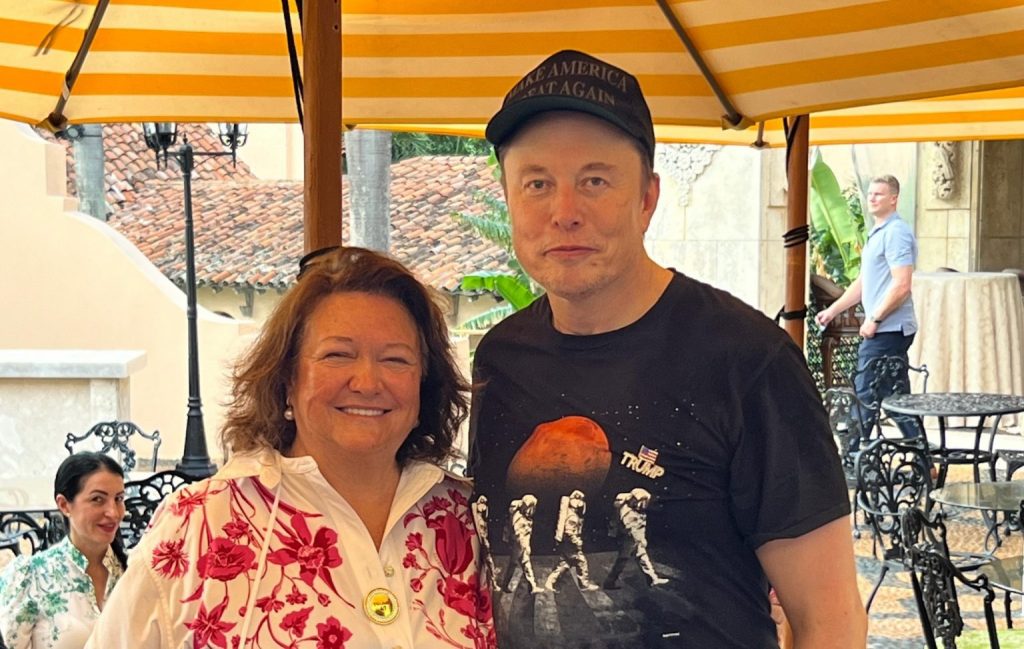
The long-awaited SpaceX IPO has dominated headlines this week, and brought to light the increasingly cosy relationship between Australia’s richest citizen – Gina Rinehart – and the world’s wealthiest person – Elon Musk.
Hancock Prospecting executive chairman Rinehart praised Musk overnight – calling him exceptional, rare, sensible and hardworking – and confirmed she has taken a significant position in the oversubscribed SpaceX IPO. While the exact figure was undisclosed, reports from the WSJ suggest Rinehart invested AU$1.4 billion into NASDAQ-traded SPCX.
In just two days, the stock has risen almost 50 per cent, potentially boosting Hancock’s stake to more than $2 billion, and rocketing Musk’s net worth to $1.3 trillion (almost AU$2 trillion).
What Rinehart admires about South African born-Musk’s $3.5 trillion rocket and satellite organisation is that it is the only global company “building integrated hardware and software across its core segments of space, connectivity and AI,” she said in a statement. The West needs to continue innovating and leading in technology, Rinehart says, and believes Musk is just the man to get it done.
“Elon has done what very few people in history have done – he has not just imagined the future, he has built companies capable of delivering it, and helped to keep American technology at the forefront,” Rinehart states.
Hancock financials reveal that the Perth-headquartered company is not only writing cheques to SpaceX, but is also investing strongly in the US defence sector, and shifting its mining operations toward coveted – and geopolitically invaluable – rare earth minerals.
It is these, that may be of more interest to Musk than even Rinehart’s billions.
What Gina has that Elon wants
The commodities Rinehart is procuring – both through her own mining operations and via capital Hancock has deployed into other companies – are light rare earth elements, most notably Neodymium and Praseodymium (commonly referred to as NdPr).
When refined, these elements are the foundational ingredients required to manufacture permanent Neodymium-Iron-Boron (NdFeB) magnets. Advanced technology companies – like SpaceX and Tesla – need these immensely powerful magnets when building satellites and electric cars.
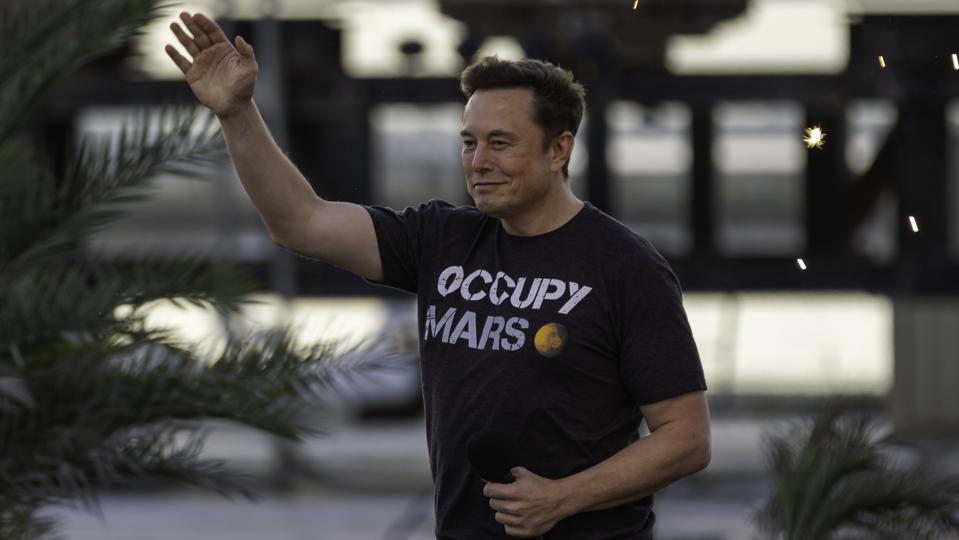
SpaceX and Tesla. Rinehart is invested in both. Getty Images
Inside Hawthorne, California-headquartered SpaceX, the demand for NdPr is constant. Every satellite launched into Musk’s expanding Starlink constellation requires NdFeB magnets to power the valves, actuators and controls in Hall-effect thrusters. Falcon 9 and Starship booster rockets also rely on permanent magnets to function under extreme atmospheric and gravitational forces.
The strategic overlap extends into Musk’s automotive and robotics plays, too. Tesla’s Model 3, Model Y, and Cybertruck electric vehicles utilise permanent magnets to spin internal rotors. Looking forward, Tesla’s NdFeB demand is expected to increase because its Optimus humanoid robots use high-power joint actuators to maintain balance.
Hancock CEO Garry Korte confirmed the symbiotic relationship between Rinehart and Musk’s companies, noting he sees “the possibility of mutually beneficial arrangements between SpaceX and Hancock Prospecting’s significant critical minerals investments, as demand grows for the materials and infrastructure needed to support advanced technology.”
The US Australia rare earth alliance
Korte and Rinehart are making investments now in order to benefit from increased demand for rare earth elements in the future, and provide a non-Chinese alternative that US companies can procure from.
Three weeks ago, Hancock increased its equity stake in ASX-traded Arafura Rare Earths to 17.5 per cent, on the heels of the Australian federal government’s approval of construction sites in the Northern Territory. ‘Nolans’ as the Alice Springs area project is known, is poised to become Australia’s first fully integrated “ore-to-oxide” rare earth mine and separation facility, and supply up to 5 per cent of global demand. It will be one of the very few facilities outside China capable of processing NdPr oxides in-house.
California’s Mountain Pass mine can process rare earth minerals, too. Rinehart became the majority investor in the NYSE-traded entity MP Materials late last year. Her 8.4 per cent stake is valued at more than a billion dollars.
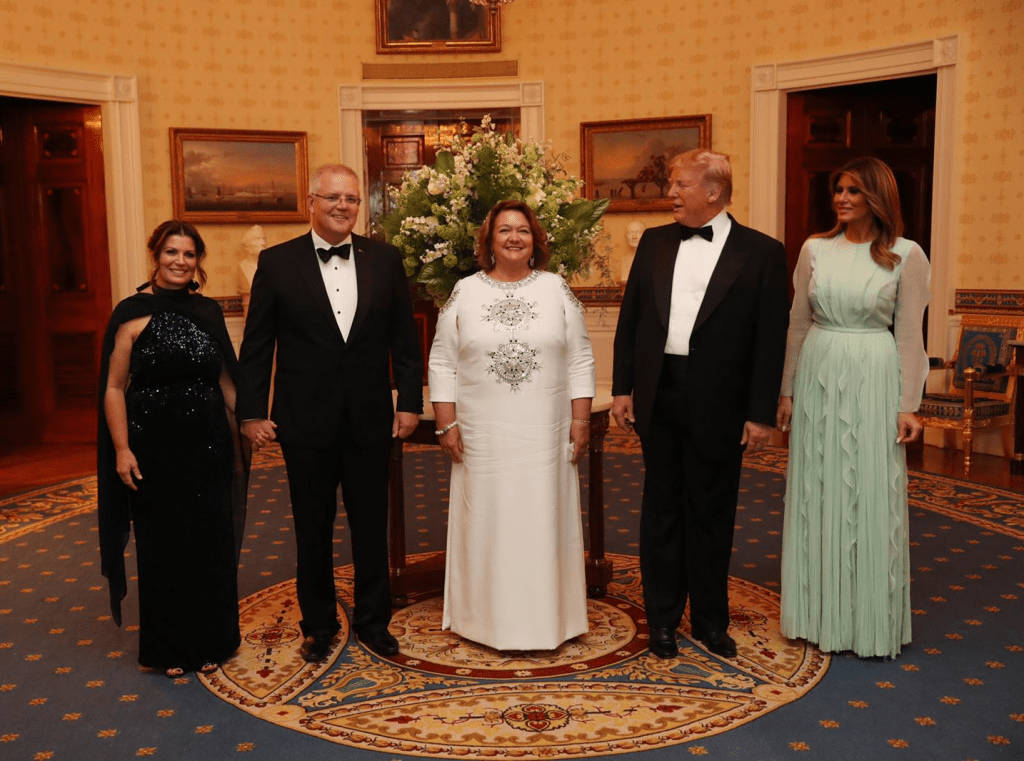
Investing in the high-demand supply of rare earth elements is not new to Perth-born, Pilbara-raised Rinehart. She has held a billion-dollar-plus position in publicly traded Lynas Rare Earths since 2024, which extracts NdPr in Western Australia and sends it to Malaysia to be processed.
What is new, is her investments in the demand side of the rare earth equation.
Less than a month ago, Rinehart spent $130 million on US defence stocks including Northrop Grumman, Lockheed Martin, Raytheon (now RTX) and L3Harris Technologies – which use permanent magnets in aerospace, defence and weapons systems.
Meanwhile, Hancock significantly reduced its holdings in Chilean lithium producer SQM over the last four weeks. Instead, Rinehart is leaning further into Australian-derived lithium – heavily sourced by Tesla and other entities that use electric batteries – announcing a new $1 billion lithium project in the Pilbara.
The takeaway
By using her mining cash reserves to buy directly into U.S. defence contractors and SpaceX, Rinehart has secured a significant role in the demand-side of the West’s tech supply chain. Musk potentially has a reliable pipeline of non-Chinese raw materials he needs to expand his now publicly traded empire, while Rinehart ensures that West Australian resources remain tied to the next generation of space and defence infrastructure.
The bigger picture is a sovereign technology partnership for Australia and the US, and independence from potential rivals. US firms get a more resilient supply chain for satellite, defence, and automotive industries. Australia ensures its local rare earth and mining resources are pivotal to the development of global infrastructure and the next frontier.
Want to see more Forbes articles on your feed? Tap here to make Forbes Australia a preferred source on Google.
Look back on the week that was with hand-picked articles from Australia and around the world. Sign up to the Forbes Australia newsletter here or become a member here.
See where Gina Rinehart ranks today on Forbes Australia’s Real-Time Rich List.