Driven by net-zero targets, the first locally built electric long haul trucks are now rolling off the production line. Melbourne’s Linfox transportation empire is at the front of the queue.
Standing on the edge of major Australian interstate freeways, the dominant sensory experience is a relentless, low-frequency roar of multi-tonne diesel prime movers keeping the nation’s supply chains moving. But that auditory indicator of local commerce is on the verge of a new dawn.
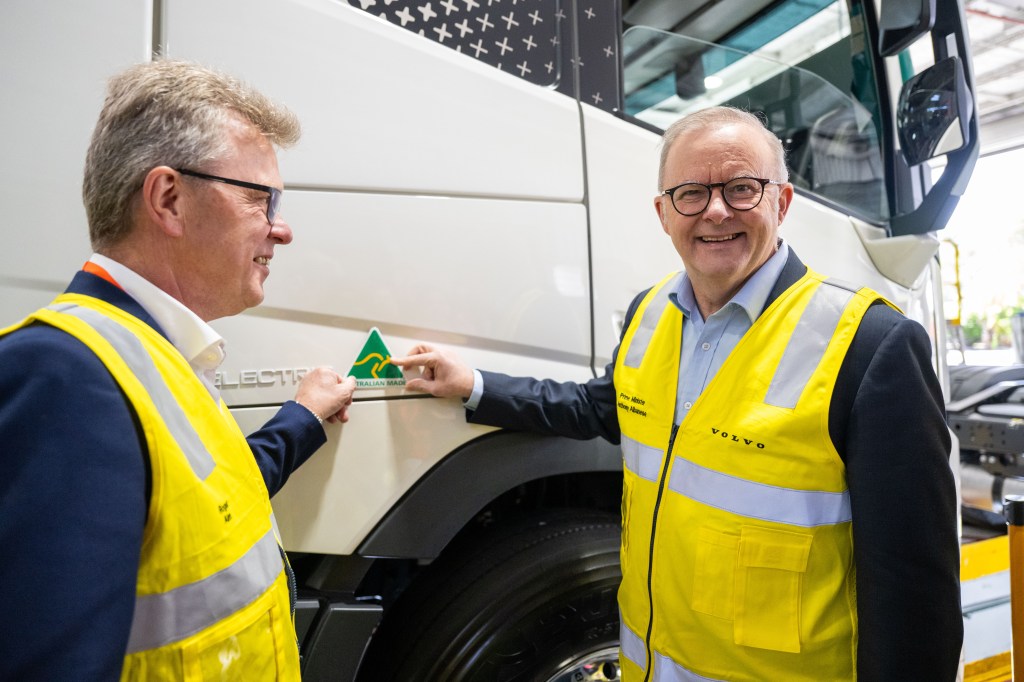
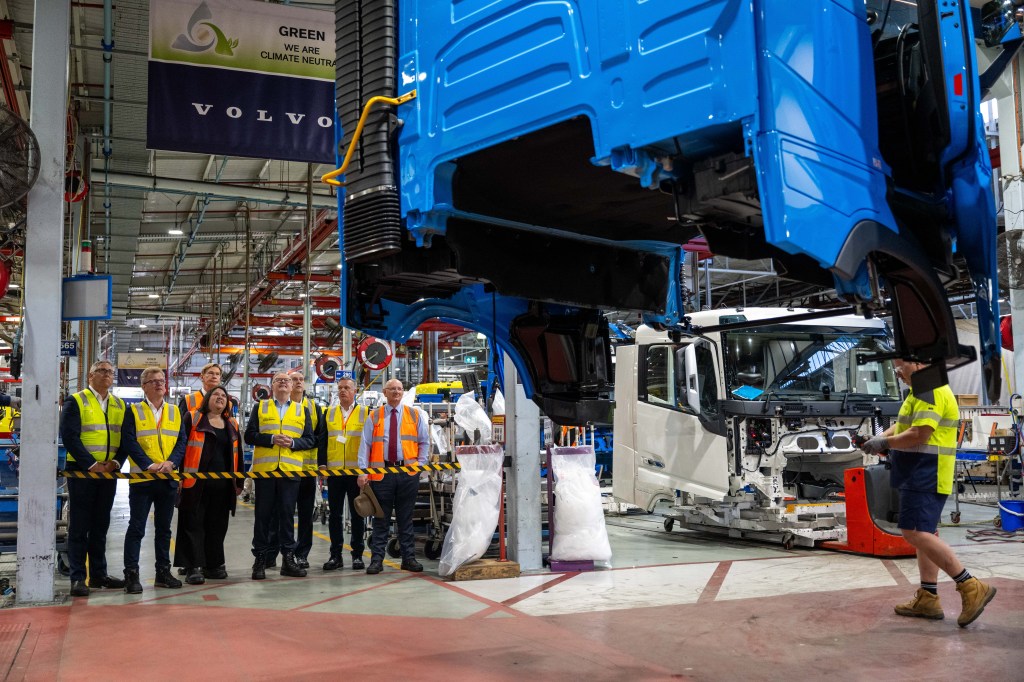
“Electric-made trucks built right here in Brisbane will keep Australia moving now and into the future,” Prime Minister Anthony Albanese told an audience at Volvo’s Wacol manufacturing facility this week. “We have all the resources to be a clean energy superpower – under the ground and in the sky – and projects like this show just what’s possible.”
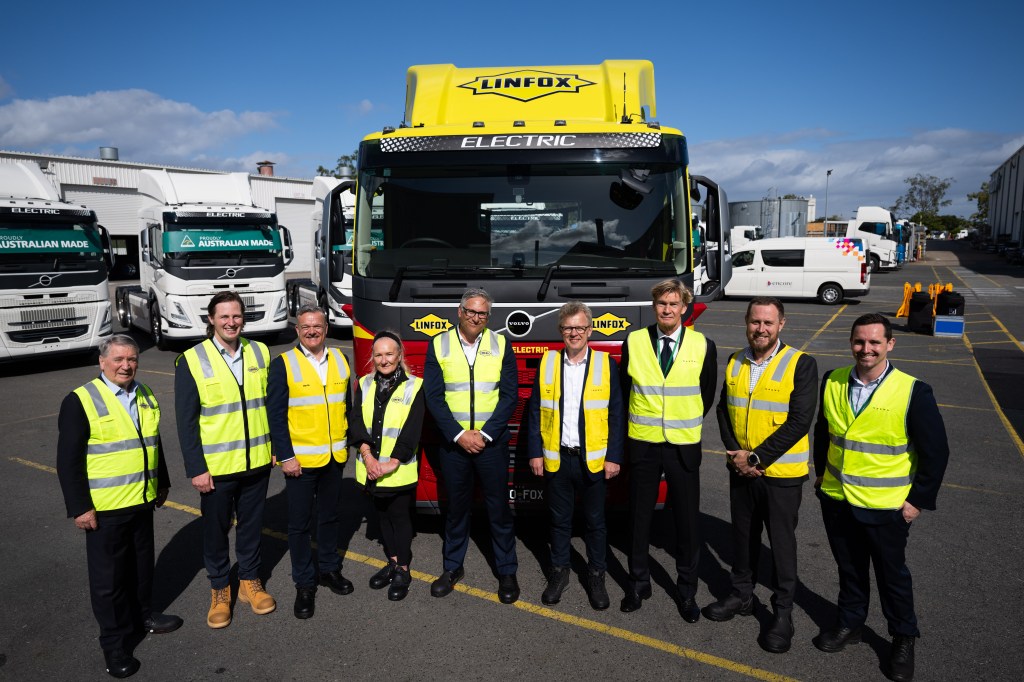
What is possible, and now proven by Volvo, is the local manufacture of electric prime movers. Ten vehicles have been delivered to the Swedish OEM’s first Australian customer, Linfox, and 20 more are soon to come. The electric trucks do not just have an environmental and geopolitical fuel advantage, they also provide a better experience for truck drivers.
“We want to be a net-zero company,” Roger Alm, the global president of Volvo Trucks, tells Forbes Australia. “But there is also a driver-care perspective. Driving an electric truck is a big difference to driving a combustion engine truck, because there is no noise, and there is no vibration. The driver environment is more beneficial, and their work-life balance will increase.”
Electrifying a polluting industry
For an economy bound by vast geographical distances, dimming the roar – and emissions – of diesel long-haul trucks, is a significant pivot. According to data from the Department of Climate Change, Energy, the Environment and Water (DCCEEW), transport is the second-largest source of greenhouse gas emissions in Australia, accounting for 23 per cent of the nation’s total footprint.
Within that mix, heavy-duty trucks and buses generate 24 per cent of transport emissions, or roughly 22 million tonnes of greenhouse gases annually. Prime movers, of the size that just rolled off the Volvo production line in Brisbane, emit almost 11.7 million tonnes of CO2 every year.
With net-zero targets to meet, solving the ‘long-haul truck problem‘ is a priority for state governments, which regulate the roads they drive on, as well as the Australian federal government, which issued the 2030 and 2050 decarbonisation mandates.
Late last year, the Albanese government invested $70 million into Volvo’s long-haul electrification initiative through the Clean Energy Finance Corporation (CEFC), and is providing discounted financing to trucking companies in an effort to defray the high upfront cost of purchasing new, greener $500,000+ trucks.
“We want Australia making more things here, and we want businesses to have the confidence to choose cleaner technology that saves them money,” says Minister for Climate Change and Energy of Australia, Chris Bowen.
The government estimates the electrified-Volvo facility will provide 1000 new jobs over time, and that logistics and transportation companies will have lower energy and maintenance costs after making the initial investment.
“This investment backs Australian-made electric trucks, skilled manufacturing jobs in Queensland, and cheaper-to-run vehicles for freight operators,” says Bowen.
The payload penalty
The next steps, Volvo Group Australia President Martin Merrick tells Forbes Australia, is for Australian road rules to be updated to allow electric trucks to carry a full payload. This remains a friction point standing in the way of electric fleet adoption.
Heavy-duty battery packs add between one and two tonnes of weight compared to a conventional diesel drivetrain, making electric trucks hit their legal axle mass limits with less cargo. Under current Australian road laws, operators adopting zero-emission vehicles are restricted to a cargo payload that is between 15 and 25 per cent less than diesel trucks.
“We want our customers to get the full utilisation, get the full payload,” says Merrick. “Customers can operate these trucks anywhere right now, but due to current legislation, the payload would be less. That’s the challenge we have and once we get harmonised legislation, these trucks will do exactly the same job as a diesel truck.”
Electrifying a 10 tonne prime mover
Having a charging network capable of recharging 10-tonne trucks is another challenge that is being overcome. Lindsay Fox-founded Linfox announced its industrial fast-charging network of 25 stations last month. The first of those charging systems is now operational at Linfox’s Laverton, Melbourne depot.
“Today’s milestone is a prime example of what the industry can achieve in partnership with local manufacturers and government. These Australian made electric prime movers will ensure we continue to service our customers with a reliable fleet that is safe, secure, efficient and sustainable,” says Linfox CEO Mark Mazurek who attended the rollout in Wacol.
Corporate demand is shifting, according to Volvo’s global leadership, increasingly driven by global compliance and emissions reporting requirements.
“We know that many customers in Europe who have been driving electric trucks now say, ‘We have bought our last diesel truck’,” says Volvo president Alm. “Now it’s only electrification for the future.”
Want to see more Forbes articles on your feed? Tap here to make Forbes Australia a preferred source on Google.
Look back on the week that was with hand-picked articles from Australia and around the world. Sign up to the Forbes Australia newsletter here or become a member here.