
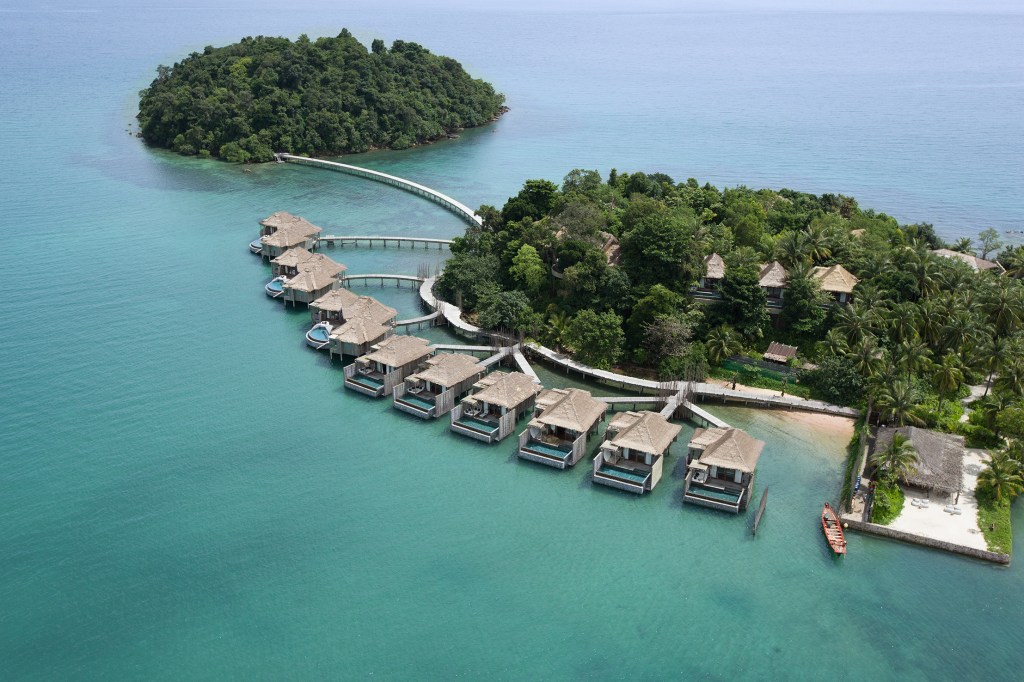
Hotelier Rory Hunter turned his purchase of a $15,000 Cambodian island into a globally celebrated eco-resort. Now the entrepreneur is betting that the same sustainability-led approach can help reshape Australia’s build-to-rent market.
This story features in Issue 24 – out now. Tap here to secure your copy.
Rory Hunter had no intention of buying an island off the coast of Cambodia.
It was 2005, and the twenty-something advertising executive was on his way to Saatchi & Saatchi’s New York office after a successful stint with the advertising giant in Auckland.
But first, he took a brief trip to Indochina, where he got word of an untouched archipelago off Cambodia’s coastline, consisting of a clutch of beaches, virgin rainforest and oceans teeming with fish.
“It all sounded a bit too good to be true,” says Hunter.
Hunter checked his Lonely Planet guidebook, but found no mention of the archipelago.
Google Earth had only just launched, but if he zoomed in, he could see the satellite images of Cambodia’s Koh Rong Archipelago and its two islands, like thumbprints in the water. Koh Ouen and Koh Bong.
“It looked amazing, so I found a fisherman who agreed to take me out there for two weeks,” he says.
“Every day was a different beach, a different island. I slept on the roof of the boat each night, and the place was completely untouched.”
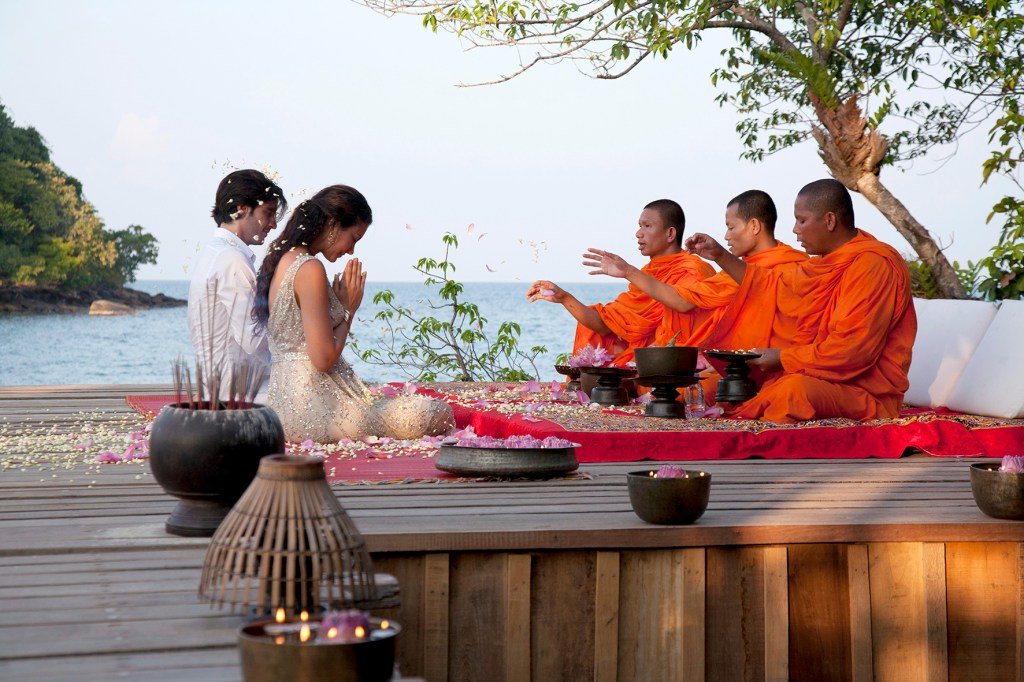
On the last day, Hunter stopped at one of the islands to see if he could buy some food from the family. It turned out they were the owners.
“As the first foreigner they had ever met, and who had ever been out there, they asked me if I wanted to buy the island for US$15,000,” says Hunter, who sold his first business, a digital agency, to a marketing agency when still at university.
“As an entrepreneur, the idea seemed a little bit too good to say no to.”
Hunter sealed the deal with a thumbprint on paper, witnessed by a local navy officer.
Building the dream
Hunter put the New York job on hold. He toured the island, properly this time, with the clear-eyed focus of a new owner. There was a cluster of tiny villages, all subsistence-based, but no schools or substantial infrastructure. Most of the fishermen had fled during the Khmer Rouge’s murderous regime.
“There were 15 or 20 years of rubbish on the island itself, in the water and on the reef system,” says Hunter.
Hunter saw the potential for a “triple- bottom-line business” – one designed to serve profit, people and planet.
Finance was secured, renowned US landscape architect Bill Bensley came on board, and discussions were underway with luxury tourism group Aman Resorts to manage the hotel.
But when the GFC hit, “the capital vanished and so did the dream”.
However, Rory and his wife, Melita Koulmandas, decided to give it another shot, founding their own management company, Song Saa Collective, in 2008. It would consist of an ethical luxury resort, Song Saa Private Island, with a protected marine area.
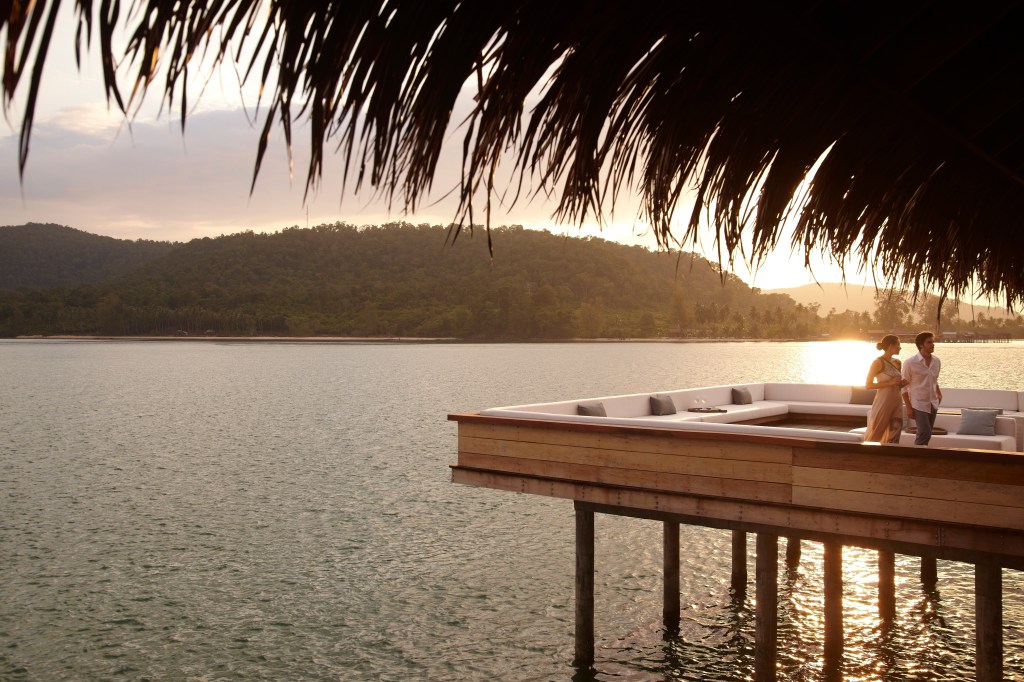
“I could quickly see that the only way for something like a hotel to work was for it to be small and high-end – more of a Maldives-style development,” says Hunter.
“It was a small island, so you couldn’t get the scale. You had to have a smaller number of rooms but a higher room price.”
The marine protected area was Cambodia’s first, and Hunter worked with the local village to create a fisheries management team.
Prince Albert II of Monaco’s foundation later helped finance the expansion of the reserve into a 400sq km protected marine national park.
“There were a few families that were left on the island, and I basically said, ‘Listen, we’d love for you to stay’, and so they did, and they ended up working with us all the way through the different stages of that island,” he says.
Hunter also introduced solid waste management, built and operated a primary school, and brought US doctors to the islands on annual medical missions, with about $1 million in supplies.
Song Saa Private Island resort opened in December 2011 with around 200 staff and rates of roughly US$2,000 a night, placing it at the top end of the luxury market.
“There were no other hotel management companies at the time doing sustainability to the extent that I really wanted to do it,” he says.
Walking away from Song Saa
As time went on, however, Hunter realised the magnitude of the challenge he was facing.
He had initially planned to expand the model to the rest of Asia from his base in Hong Kong, where he had moved with his family.
“My thinking was that if we get this right, we could then scale it, build a really meaningful business, but also have a really significant environmental and social impact,” he says.
But the world had other ideas.
“You’ve got these ideals and aspirations, but they don’t exist in a vacuum, and so what we wanted to do in Cambodia wasn’t necessarily what happened,” he says.
“We didn’t have overarching regulatory frameworks you can operate in, and it turns out corruption trumps ideology every day of the week.”
In retrospect, Hunter marvels at his youthful optimism. “As a 51-year-old man, it blows my mind at how naive I was at the time, I honestly thought by demonstrating this inclusive form of tourism that it could then change the sort of growth trajectory of how Cambodia’s tourism developed.
“But it just doesn’t happen like that in these countries. And in that sense, Cambodia broke my heart.”
The COVID-19 outbreak was the final straw, decimating global hotel revenue and putting paid to Hunter’s expansion plans. He exited the Song Saa business in 2020 and decided it was “time to come home”. “I realised that if I’m really going to have an impact, it needs to be in a country where there are the right regulatory frameworks, where there’s the right values alignment, and where there are functioning capital markets,” he says.
Hotels, too, bring their own freight of unique problems, Hunter realised.
“The challenge with hotels is that they’re very seasonal, they’re very high fixed-cost businesses, they’re very cyclical, and they’re very prone to externalities, and you couldn’t get a bigger externality than COVID-19,” he says.
Further complicating the picture was a series of personal tragedies, including the breakdown of his marriage and the loss of a child. Hunter opted to sail home rather than fly, skippering his Oceanis 43 for 37 days from Victoria Harbour in Hong Kong to Far North Queensland. Melita would stay on and run Song Saa, where she remains the CEO.
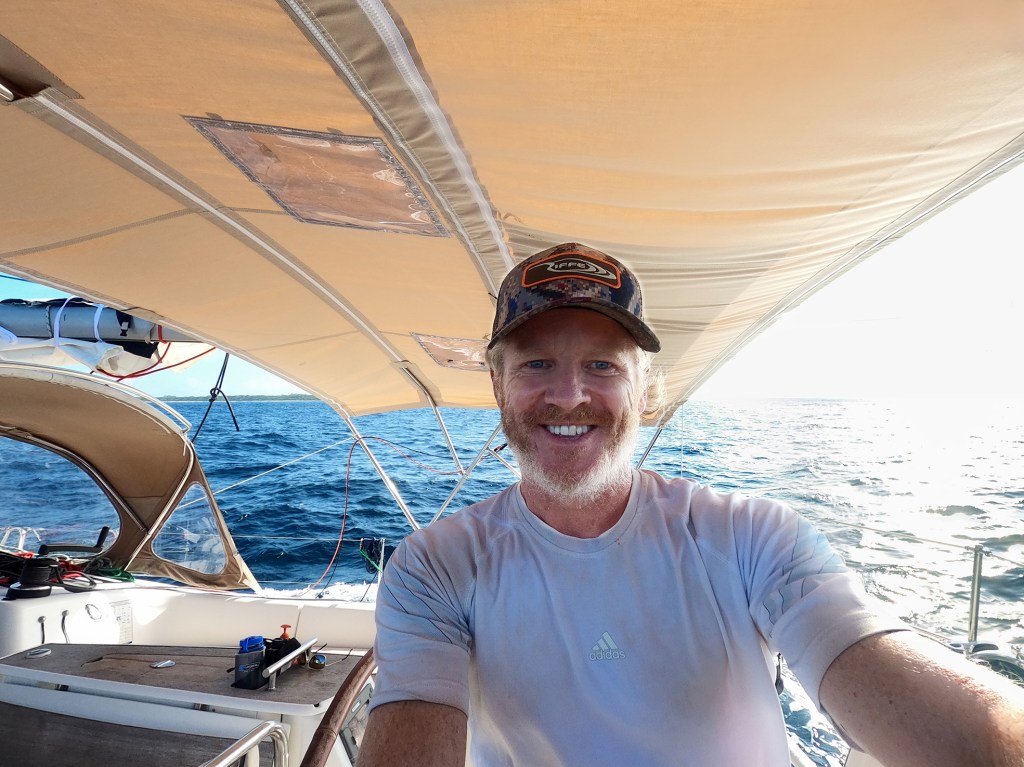
“I thought the ocean would be a nice place to grieve. I thought it’d be a good way to demarcate the ending of one chapter, the beginning of another,” he says.
And was it? Hunter smiles and shakes his head.
“When I left Victoria Harbour in Hong Kong, I sailed into a storm, and that was my first night solo sailing,” he says. “Thankfully, I survived, but no, it wasn’t. It was exhausting; it was brutal.”
Re-building on home soil
Once back on home soil, Hunter took six months to recover and regain what he calls his “entrepreneurial juices”.
Eventually, he became interested in Australia’s nascent build-to-rent (BTR) sector. He liked the idea of a developer maintaining ownership of an apartment block to rent out and manage over the long term. “Long-term ownership is what lets us look at a project through the lens of value rather than cost,” says Hunter.
“With build-to-sell, you need a great render, but once it is sold, as the developer, you are long gone.”
In 2023, Hunter founded MODEL, a vertically integrated build-to-rent platform that develops buildings, oversees investments, and manages the apartments. The MODEL sweet spot, according to Hunter, is apartment buildings of between 150 and 300 residences across Melbourne, Sydney and Brisbane. Two projects in Melbourne’s inner-city Abbotsford are in the wings, with construction due to start at the end of the year.
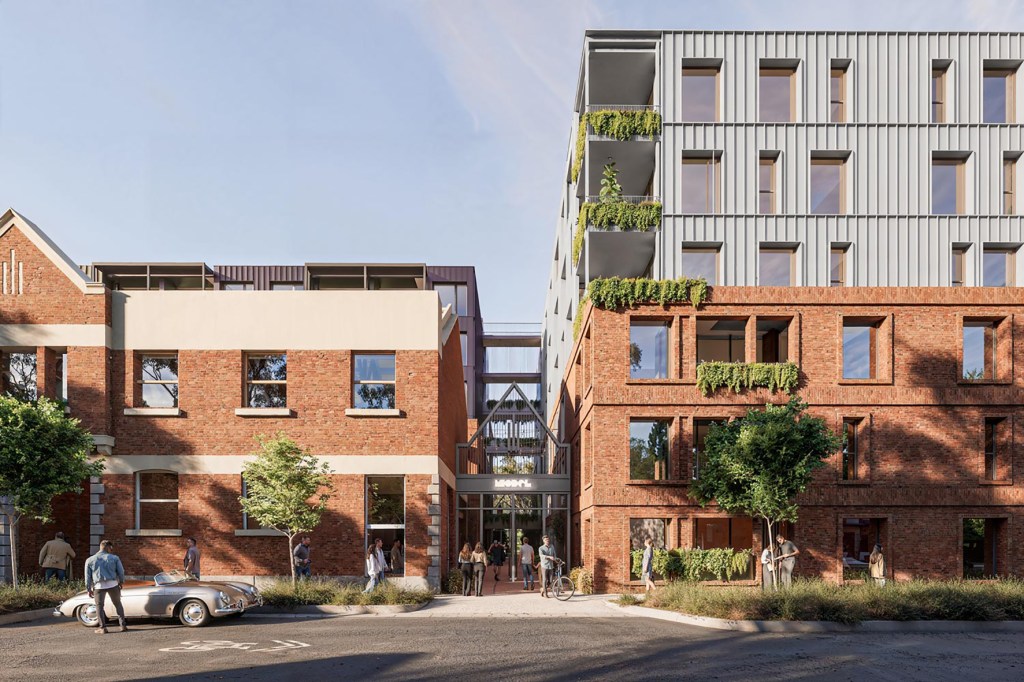
Each will offer Passivhaus Certification – a globally recognised set of standards for energy efficiency – and a 6-Star Green Star Rating. Hunter has four additional sites planned for the next two years.
“Ultimately, in terms of commercial real estate, if you invested in sustainability 10 years ago, it’s a highly desirable building, but if you didn’t, you ended up with a stranded asset; nobody wants to lease it, nobody wants to own it,” he says.
A $600 million Regenerative Decarbonisation BTR Fund has been set up to deliver the first two seed projects in Abbotsford.
Debt and equity partners are “lined up”, but at the time of this interview, finance had yet to close, so Hunter declined to give specifics on partners.
“We’ve got over a billion dollars in the pipeline, with a view to growing that to about $5 billion in the next four years. We’re unashamedly ambitious in our growth and how we’re going about it,” he says.
Nevertheless, while the BTR sector is gaining traction in Australia, it remains small and it is not without its challenges.
Construction costs have escalated in recent years; there is uncertainty around interest rates and persistent inflation, which makes investors skittish; sustainable buildings are expensive; and Australia’s planning laws are renowned for their complexity and protracted timelines.
However, can developers confidently fund and deliver new projects in this environment? Do the finances stack up?
“Higher interest rates, planning complexity and construction costs make projects harder to deliver, but they also limit new supply,” he says.
“While it’s hard to get projects out of the ground, once you do, you have a defensible moat created by the very same challenges, including planning and construction cost.”
Hunter concedes his $5 billion pipeline target is ambitious, but if his time in Cambodia taught him anything, it’s that Australian developers have it pretty good here.
“Building a business is always hard,” he says.
“But I think Australians have this perception that it’s really difficult here.
“It’s just not, and while it’s not easy, it’s just nowhere near as hard.”
Want to see more Forbes articles on your feed? Tap here to make Forbes Australia a preferred source on Google.
Look back on the week that was with hand-picked articles from Australia and around the world. Sign up to the Forbes Australia newsletter here or become a member here.