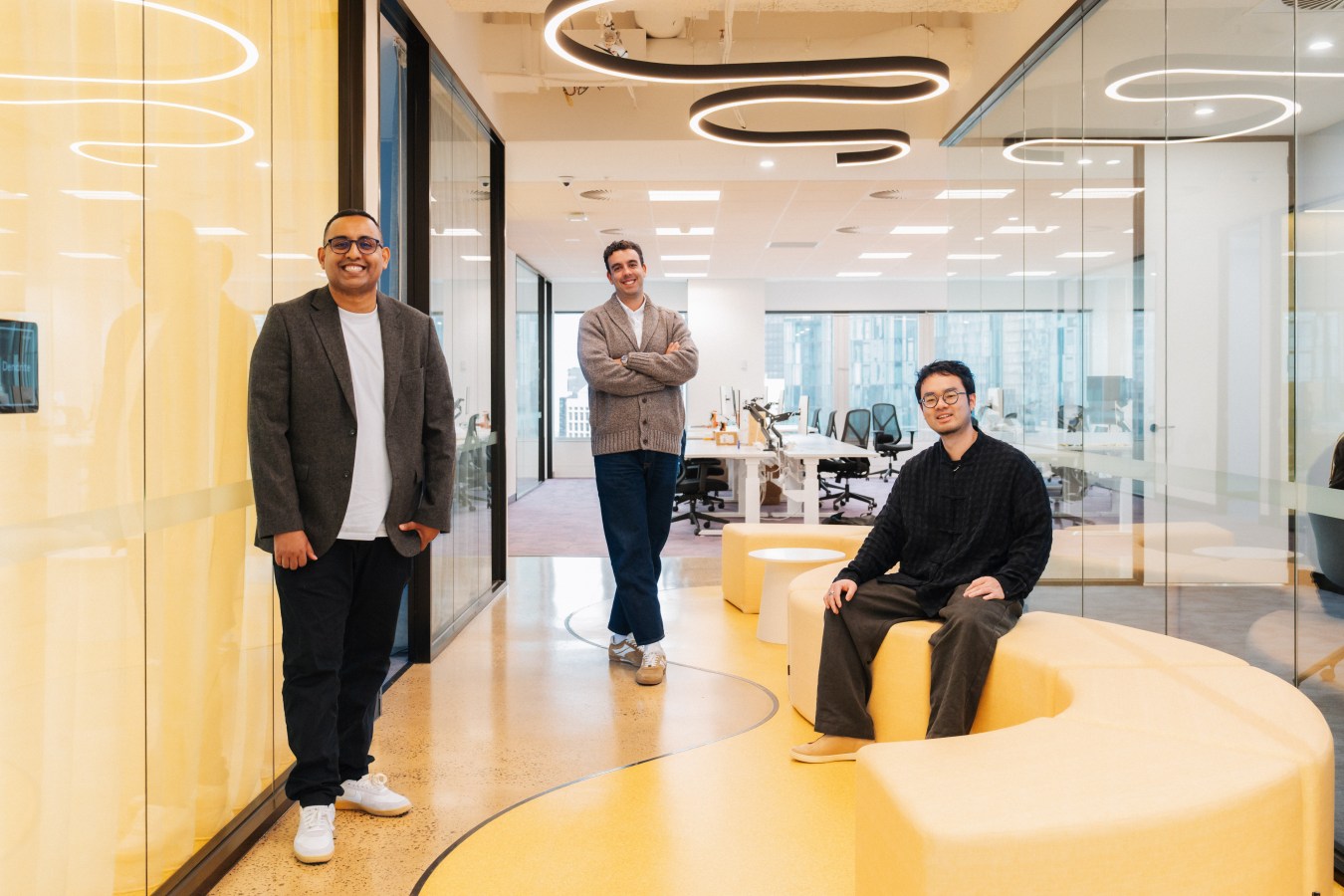
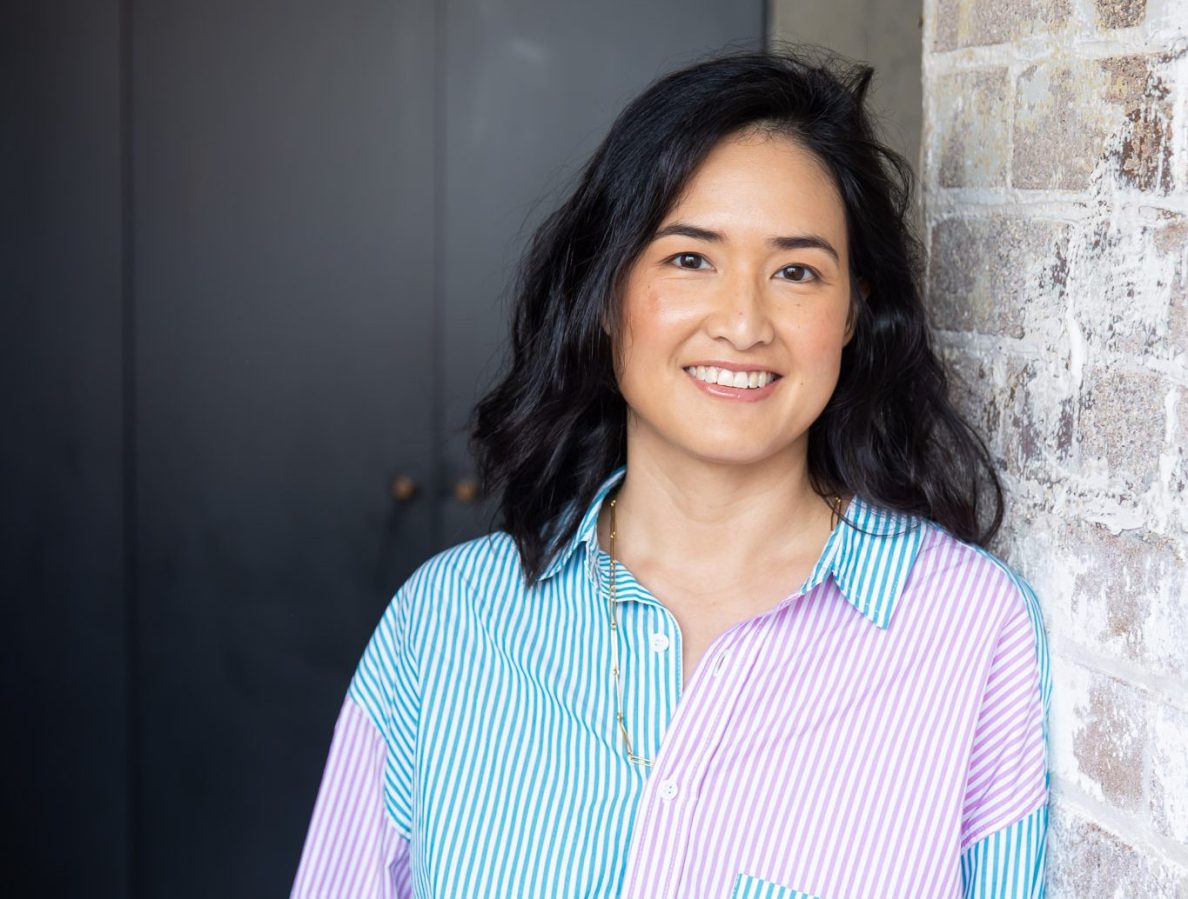
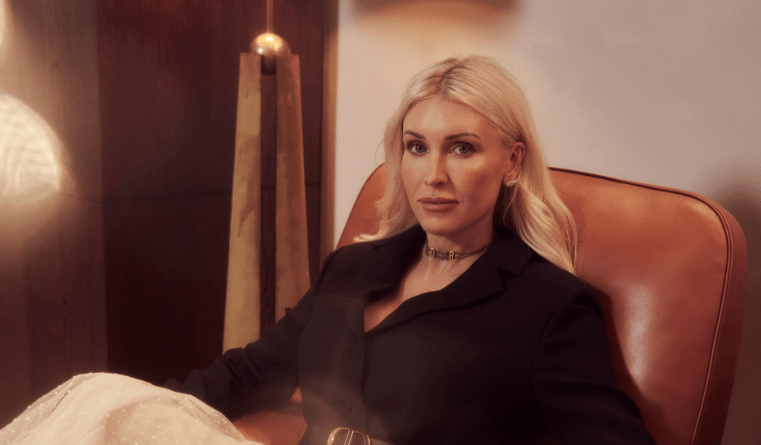
Harrison.ai founders Aengus and Dimitry Tran say their $789 million startup is reorganising to prepare for a commercialisation drive at home and abroad – but that R&D remains in Australia.
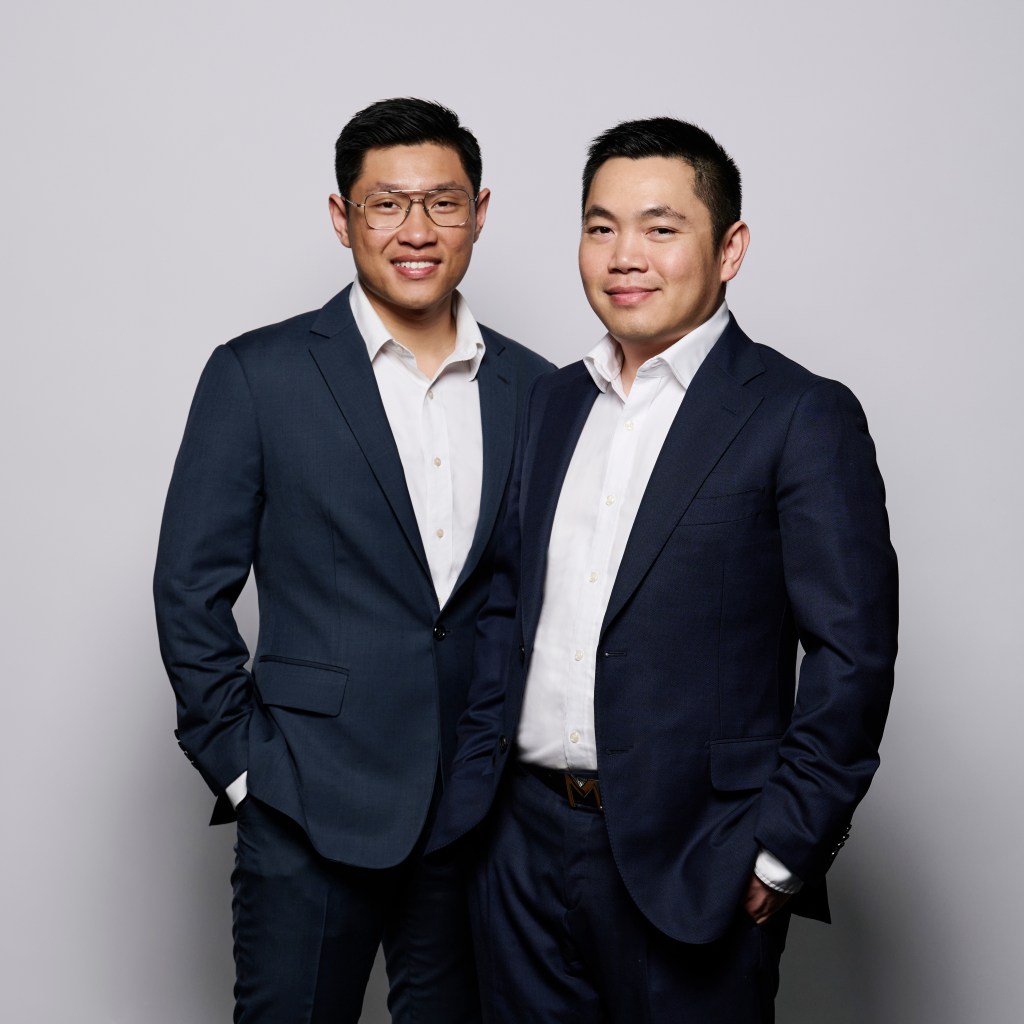
Harrison.ai cut 15 per cent of its workforce earlier this year in a restructure founders Aengus and Dimitry Tran say will allow it to put more resources behind a global growth push.
The founders said Harrison.ai’s contracted annual recurring revenue has quadrupled in the past 18 months to $40 million, and that the decision to cut 34 roles from its Australian office in April was part of its growth strategy rather than cash flow concerns.
“It’s been six to eight years of really deep research and development, and the technology is getting to the level of maturity where acceleration of commercial growth is what we’re prioritising,” Aengus Tran said.
“Just like any high-growth company entering the go-to-market phase, we need to look at the skill mix… to set ourselves up for that hyper-growth period.”
Harrison.ai announced a $179 million Series C last February, which the founders revealed for the first time was at a valuation of $789 million. The startup’s AI can identify hundreds of maladies by reading X-rays and other scans, which the founders hope will help ease the chronic under-capacity of radiology departments around the world.
The ABC was first to report an unspecified number of layoffs at Harrison.ai earlier in the year. The publication noted Harrison.ai was expanding in the US with a venture called Frontier Radiology as it was making cuts to its Australian workforce.
Harrison.ai has just under 200 employees following the restructure, which cut a small number of roles in international offices in addition to 34 in Australia.
“We are on track toward profitability within the next two years, and it’s really just a choice on how much we want to invest in R&D and growth,” Aengus said. “We are very disciplined as an organisation, thinking through how we grow but not growth at all costs.”
“We are very much an Australian HQ company still,” Aengus said. “All the critical capabilities, the sovereign capability and AI medtech development is still 100 per cent being done out of Australia. Our supercomputer is here in Sydney, we train all our AI models here, and our R&D team is very much in Australia.”
The federal government-funded National Reconstruction Fund (NRF) invested $32 million in Harrison.ai’s Series C last year. Aengus and Dimitry say the workforce reductions do not contradict the NRF’s mandate to stimulate advanced manufacturing within Australia, noting its headcount in Australia is four times larger than its biggest overseas operation, which is in India.
Aengus added that, when the time comes, the duo also want Harrison.ai to be an “iconic Australian listed company” – though there are no plans for either a Series D or an IPO.
Australian capabilities and US expansion
Harrison.ai has a cluster of 60 Nvidia B200 chips – which run between $40,000 and $60,000 apiece – which it used to train its second foundation model, Harrison.Rad 1.5. The startup says the model can interpret chest, musculoskeletal, abdominal, spine and pelvic X-rays, and then draft a radiology report for the clinician.
Founded in 2018, Harrison.ai raised a $29 million Series A a year later from Blackbird, Scott Farquhar and wife Kim Jackson’s Skip Capital, and Hong Kong’s Horizon Ventures. Its AI is used in over 1,000 healthcare organisations across 25 countries. That includes over 150 hospitals in the UK, the company says, while over 40 per cent of its revenue comes from the US.
Robyn Denholm, chair of Tesla, has been a Harrison.ai board director since 2023. Denholm’s family office has also invested in the startup.
Aengus spoke to Forbes Australia from the startup’s Surry Hills headquarters, while Dimitry beamed in via video link from Palo Alto. He moved to the US last year to grow the company’s business there, first spending a year in Boston before moving to the west coast.
The company has a two-pronged plan of attack in the States. First, to sell its software into networks, hospitals and clinics across the country like it does in other markets. Second, teleradiology. The company has helped form Frontier Radiology to compete in the market – which sees hospitals who are short of radiologists send patient scans off to a third-party clinic that interprets the imaging.
Frontier Radiology is currently staffed with 20 radiologists, a number Dimitry said will grow quickly.
Complying with US regulation that requires medical practices to be physician-owned, Harrison.ai does not own Frontier Radiology nor manage its clinical operations. But it is its exclusive technology provider, and Frontier Radiology is branded as “a member of Harrison.ai Services.”
The total teleradiology market was worth US$1.25 billion in 2025, according to Market Research Future, a figure expected to double in the next decade.
“If a health system is ready, like Massachusetts General Hospital, they’re innovative and they have the capacity to absorb the AI innovation, then they can absolutely take the software as a service offering,” Dimitry said.
“Some health systems in the more sparsely populated states in the U.S. don’t have the bandwidth to keep up with technology. Due to significant radiologist shortages, all they can do is keep their head above water to serve the patient the next day. And I think this [Frontier Radiology] is something that is tailor made for them.”
Want to see more Forbes articles on your feed? Tap here to make Forbes Australia a preferred source on Google.
Look back on the week that was with hand-picked articles from Australia and around the world. Sign up to the Forbes Australia newsletter here or become a member here.