AI-native startups are growing their annual revenue 240 per cent faster than non-AI peers. But there is evidence AI is concentrating success rather than spreading it.

As far as Australian startup success stories, few are bigger than A Cloud Guru. Founders Sam and Ryan Kroonenburg sold it for $2 billion in 2021, just six years after it was spun up as an operation out of their bedrooms.
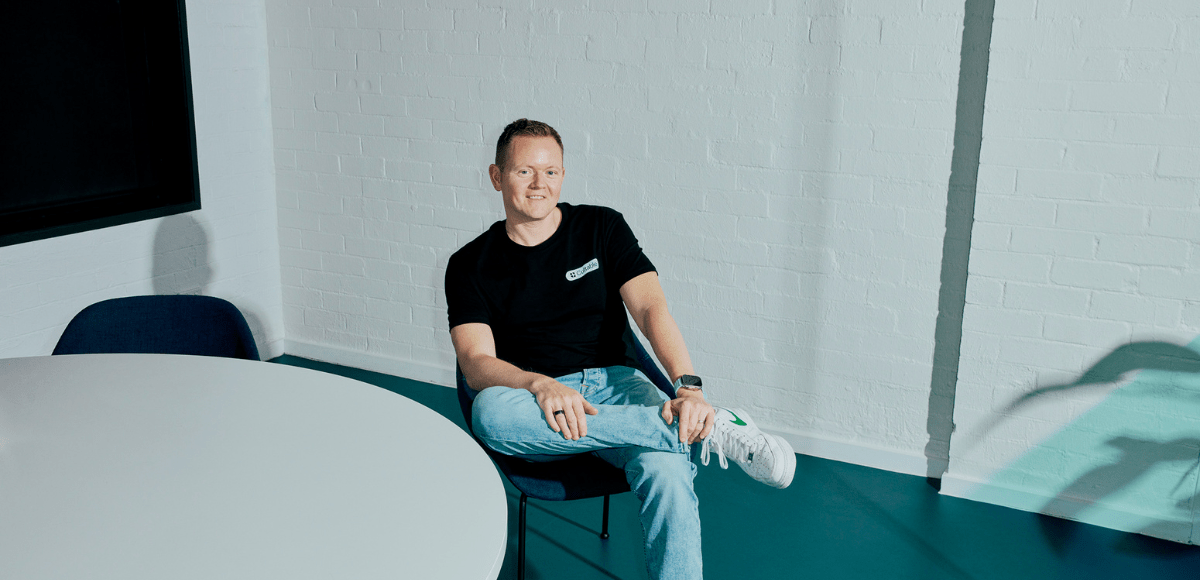
Sam Kroonenburg’s second act is Cuttable, an advertising startup that uses AI to generate, test and pump out digital ads across Meta’s social media platforms. It is growing faster than A Cloud Guru ever did, Kroonenburg says.
“We were six years from me and my brother working in our spare rooms of our houses to unicorn company with a multi billion dollar valuation and 600 employees,” Kroonenburg said. “Cuttable is growing more than twice as fast as Cloud Guru did.”
There are many plausible reasons why. It could be Kroonenburg’s business acumen has sharpened after building a successful company, or that digital advertising is a hotter thematic than education. But the man himself chalks it largely up to artificial intelligence.
“When I started Cuttable, my thesis was you could build a billion-dollar company with a very small, nimble team, and that’s absolutely proving to be true,” he said. “We probably ship as much product, new capabilities, new features in Cuttable as Cloud Guru did when it was an engineering team 10-20 times the size of ours. We can move very fast.”
The startup on Thursday announced a $20 million Series A, led by Airtree, and revealed it counts lululemon, Kathmandu and Cotton On among its 440 customers.
Cuttable is an “AI-native” startup, meaning one built from the ground up in the AI era rather than retrofitted for it. AI agents are fused into their foundations, making code writing cheaper, product development quicker and delaying the need to hire specialised talent. Some, like Cuttable, reckon their business is only made possible by AI.
Such startups in Australia are seeing average annual revenue growth of 156 per cent, 2.4 times greater than local startups overall, according to previously unreleased research from Amazon Web Services. Sixty per cent of them generate over $400,000 in revenue per employee, double the rate of non AI-natives.
Not all AI startups are created equal, however. AWS’ head of startups Tiffany Bloomquist compares the current moment to the advent of the cloud. Good companies “lifted and shifted” their operations into data centres, making them slightly more efficient. Great ones completely re-architected themselves around cloud computing.
“When companies are able to embed AI into the core of the product that they’re building, maybe even build the model themselves, that’s where we really see that revenue growth,” Bloomquist said.
But there is a catch.
Cloud computing was itself a boon for entrepreneurs. By removing the need for founders to outlay cash on servers and real estate in which to house them, Blackbird founder Niki Scevak said at a recent Google event in Sydney, a costly barrier was reduced. AI thus far is having the opposite effect for some.
Startups that need to build their own models or AI infrastructure to compete now need to spend far more money rather than less, Scevak said.
“All of a sudden, the pendulum swung the opposite way,” Scevak said. “That’s expressed negatively in so much capital going into fewer and fewer startups, and the number of seed rounds going down over the last couple of years, not going up as you might expect with the greatest change in the history of technology.”
The data tells its own story. The median amount of capital raised in Australian seed financing reached an all-time high of $6.1 million in the first quarter of this year, according to Cut Through Venture, yet total small-round activity is trending down. An average of 72 under-$5 million deals were cut per quarter in 2024 – that number fell to just 31 in the second quarter of this year.
Gotta go fast
Some Australian startups, like Metacognition, are attracting large early-stage funding to sate their compute-hungry ambitions. But even in cases where teams don’t need to spend 10 figures to build proprietary AI, investors are attracted to exceptional talent – and are willing to pay a premium.
“AI makes the best people dramatically better, and so the people who know how to use it the best are getting extraordinary outcomes,” said Airtree partner Jackie Vullinghs. “The average person using it in an average way is getting a meaningfully worse outcome.”
“Really talented teams can do much more faster, and so you kind of want to get in at the beginning. It’s just a supply-demand thing.”
Vullinghs said one startup Airtree works with went from 0 to $1.8 million in revenue within four weeks, while another hit $5 million run rate in five months. Both are operating in stealth and declined to be identified.
Legora, a Swedish startup Airtree has invested in, hit US$100 million annual recurring revenue in 18 months, Vullinghs said, and US$200 million six months after that. It also announced fresh funding on Thursday – at a valuation of US$12.5 billion. Airtree invested seven months ago at a US$5.6 billion valuation.
Part of why AI-native companies are able to generate revenue so fast is because they are more likely to sell globally from the get-go, according to AWS’ research. But that opportunity itself produces a challenge. Successful startups must now compete with peers around the world, all racing for the same opportunity.
Australia’s Heidi medtech startup is illustrative. It last month raised at a $1.26 billion valuation, says it operates in over 190 countries, and is Blackbird’s fastest-growing startup ever. Yet it must compete with global customers from Abridge and Ambience Healthcare, competing Californian startups worth US$5 billion and US$1.25 billion respectively. It can run faster thanks to AI – but so can its competition.
“Ultimately, if you don’t raise money, someone else will,” Vullinghs said. “And someone else will win.”
Kroonenburg declined to disclose specifics on Cuttable’s revenue, but said he expects it to jump 2,000 per cent this calendar year. Speaking about AI’s economy-wide impact, he expects an explosion of small- and mid-sized companies with soaring revenue and valuation figures. Is it possible that the next few years will see the ultimate AI white whale: A one-person, billion-dollar startup?
“I don’t think all companies will look like that,” Kroonenburg says, adding, “I can’t see any hard constraint that would stop that from happening.”
Want to see more Forbes articles on your feed? Tap here to make Forbes Australia a preferred source on Google.
Look back on the week that was with hand-picked articles from Australia and around the world. Sign up to the Forbes Australia newsletter here or become a member here.