
Morris of Rutherglen has survived corporate owners, changing tastes and the threat of being dismantled, but the unlikely saviour of the 167-year-old business was one of the industry’s nouveau upstarts.
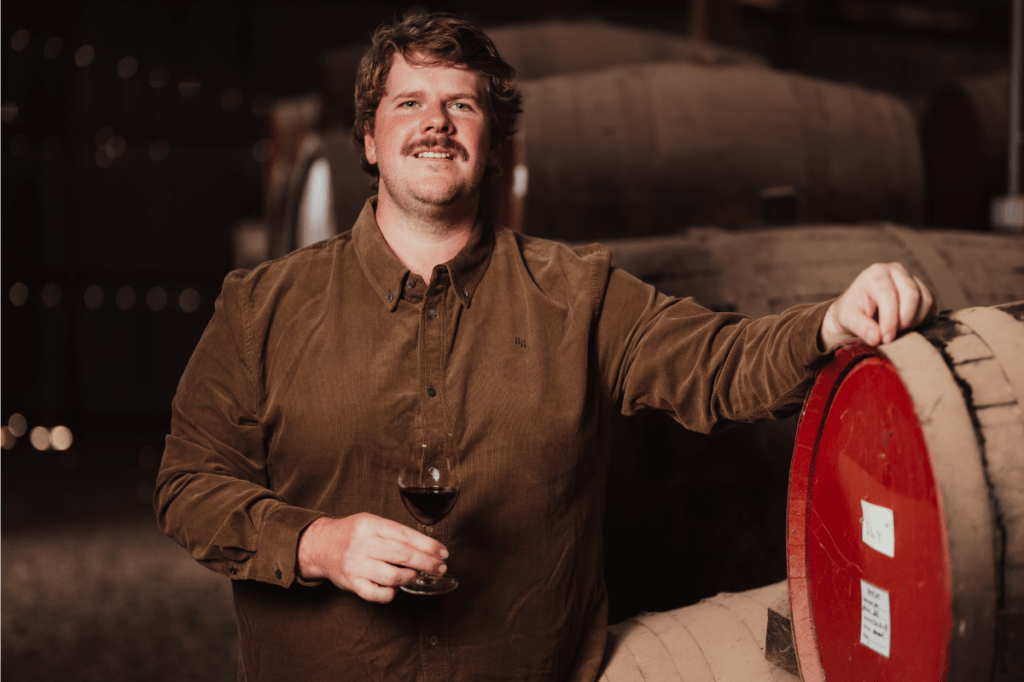
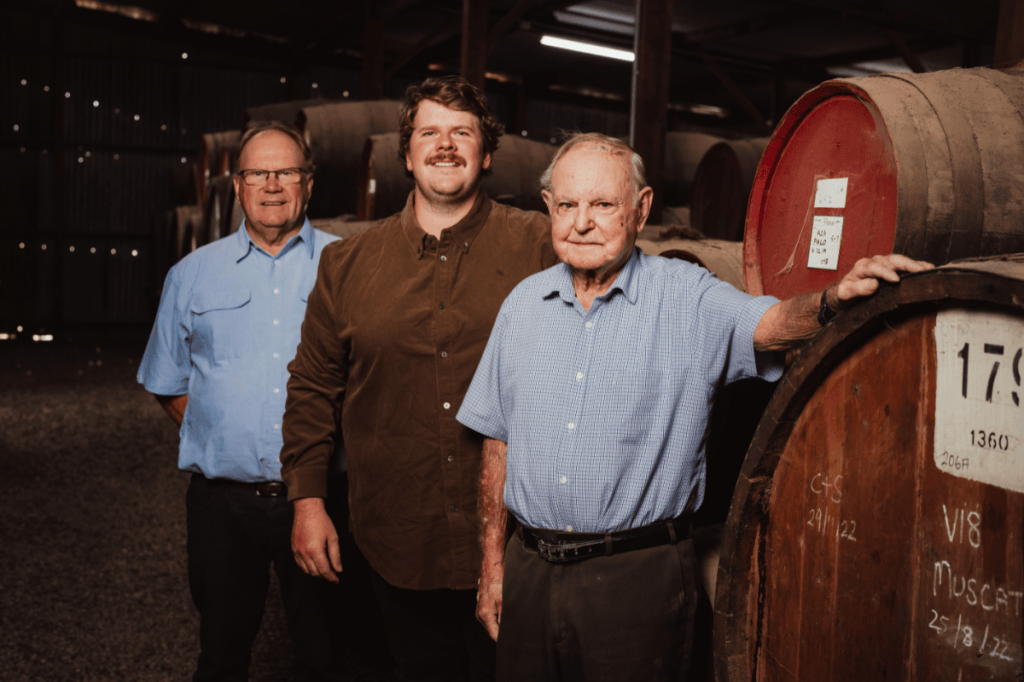
Madden Morris is a sixth-generation winemaker at Morris of Rutherglen, even though his family hasn’t owned the 167-year-old business since 1970. In fact, he’s the third generation of Morris to run it as a paid employee since his grandfather sold out to household-goods multinational Reckitt & Colman 56 years ago.
“We might not have skin in the game, but we’ve got our name in the game,” says Madden, 32, who took over from his father, David Morris, as chief winemaker in 2024.
Madden is charged with balancing the family tradition of being the country’s most-awarded producer of fortified wines with the need to find new consumers in a market where everyone else is chasing them with newer, lighter varieties.
“Then they say, ‘We’ve been thinking. We’d like an extra million dollars.’”
David Morris
“It’s the old adage of you never drink what your grandparents drank … but once people taste these wines, it’s a different story,” Madden tells Forbes Australia. And indeed, as we sip on a 98-year-old Morris muscat that tastes like warmed honey. We are literally drinking what his grandparents drank. And you can see there are no great flavour hurdles there.
Morris Wines was founded in 1859. By the 1930s, it was the largest winemaker in the southern hemisphere, with its fortified wines becoming a benchmark for the industry.
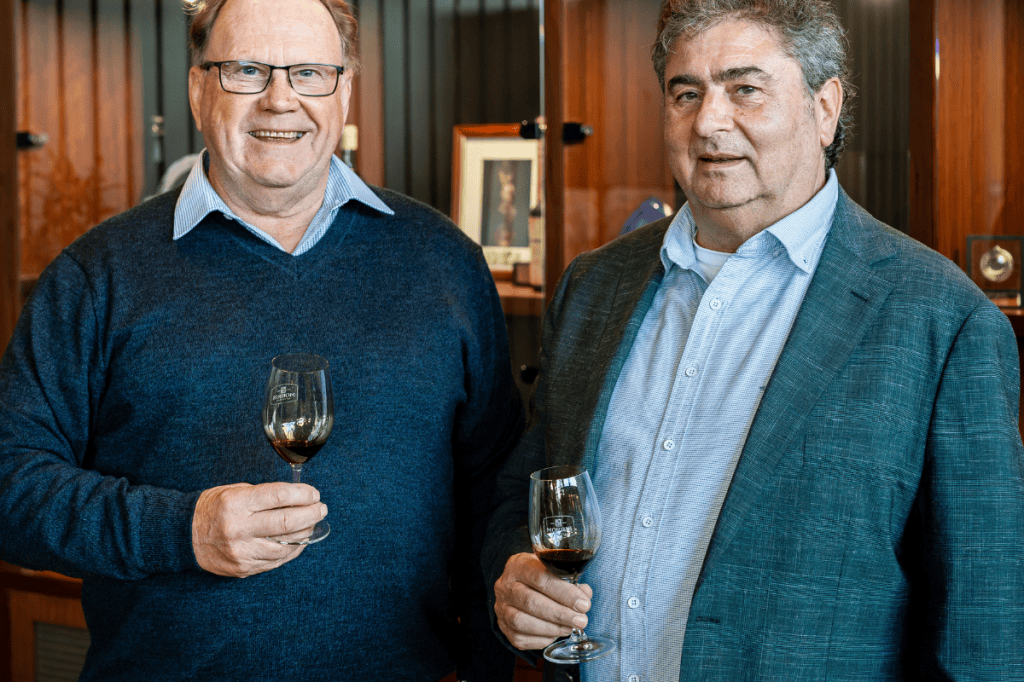
But, as fortified wines declined, Morris Wines faced being sold into oblivion. Its unlikely saviour was Madden’s father’s old drinking buddy, John Casella, who had turned a small family vineyard in Griffith, southern NSW, into one of the world’s biggest wine brands – and who knew a thing or two about bringing new drinkers into a category.
No brand ambassador
David Morris was 13 when his dad, Mick Morris, sold the farm, 56 years ago.
Morris Wines got rolled into Reckitt & Colman’s wine division, which also included the flagship Orlando label. Straight out of Roseworthy Agricultural College, David Morris found work as a junior winemaker at the Orlando winery in Griffith that had previously been owned by his father.
It was in Griffith that Morris got to know young winemaker John Casella who was working for the Sergi family’s Warburn Estate, aka Riverina Wines. They were part of a group of young winemakers who often socialised.
In 1989, Reckitt – think Mortein and Rice-A-Riso – sold its wine division to French spirit maker Pernod Ricard.
At first, David Morris thought it might be a good thing for Morris Wines to be in the hands of a drinks company. “But everyone knew Pernod only wanted the Orlando Wyndham wine division to get a distribution arm for their spirits,” says Morris.
“They wanted big brands. So, any small winery in the Orlando portfolio got shut down.” Morris Wines was big enough to survive, but there was always a feeling its demise could be imminent. The only thing keeping Mick Morris in charge was goodwill. The family could be removed by an executive in Paris.
“They’d rotate their CEO about every four years,” says David. “And in those four years, a CEO would usually come here once to check on their asset. They’d be in and out quickly. Here it is. See you later.”
When Mick Morris retired in 1993, there was no guarantee David would be tapped to take over, but he got the nod.
It was a similar situation to legendary winemaker Thomas Hardy and Sons, which merged with BRL in 1992. Bill Hardy stopped making wine in 1995 and flipped to being a brand ambassador. Similar figurehead roles had fallen to members of esteemed wine families like the Seppelts and McWilliams.
None except Mick Morris had hung around as winemakers in their sold-off family businesses. [Charles “Mick” Morris died in August, aged 98.] And, here was his son extending that into the
next generation. David Morris loved being in charge of everything. “Putting it into the consumer’s mouths and seeing people enjoy it. That’s the most rewarding part of winemaking,” he says.
A marginal business
At first the relationship with Pernod was good. The spirits company fell in love with wine as its Jacob’s Creek brand conquered the world, he says. But the head office executives liked to remind Morris that there was more margin in one case of Jameson whiskey than a pallet of Jacob’s Creek.
The first move to sell Morris Wines came in 2007. Morris fielded a lot of calls from people who were trying to ascertain exactly what he had in stock. A huge part of the value of a wine business is aging in the cellars, with an enormous difference between a two-year-old cask of port and a 20-year-old.
A lot of the callers divulged the price Pernod was asking. Morris thought they were dreaming.
Nothing happened, but then in 2010 the company rang him to ask if he’d be interested in buying back the company himself. They named a price. David and his brother Peter Morris rustled up 50% and found some friendly capital to stump up the rest. It was all set to settle and a press release was drafted.
“Then they say, ‘We’ve been thinking. We’d like an extra million dollars.’”
That was more than 10% of the previously agreed price, Morris says. “I said, ‘Thanks, but no thanks.’ It was a kick in the guts.” Six years later, Pernod again wanted out. But David and Peter Morris had invested the money they’d had in 2010 into a large local cattle property, so were no longer able to bid.
With no immediate buyer, Pernod thought the easiest exit was to just sell the assets, one cask at a time. Buyers started coming through to taste and test the barrels in the cellar.
Morris of Rutherglen was going to disappear. David Morris hit the phone. One of the first people he called was his old friend from Griffith, John Casella.
Casella had turned Yellow Tail into the biggest-selling red in the US. But he also had a deep appreciation of the industry’s history and a sentimental attachment to the past. In 2014, he’d bought the famed Peter Lehmann Wines in the Barossa Valley, then Coonawarra’s celebrated Brand’s Laira winery from McWilliams in 2015.
Oak and dagger
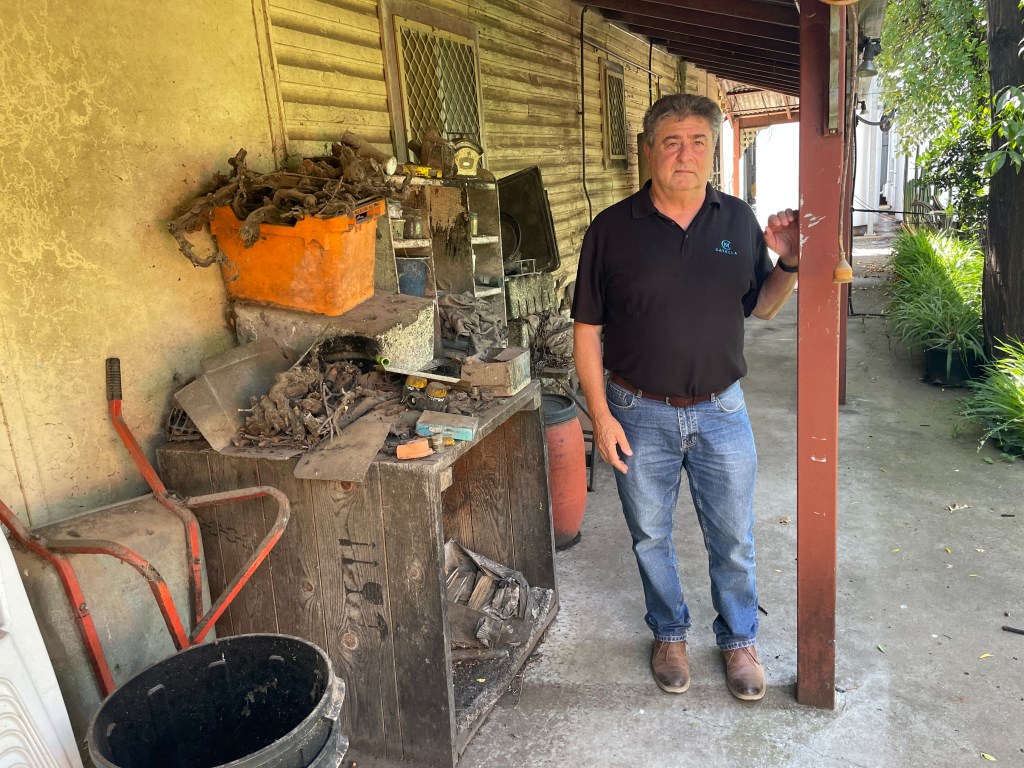
Casella came straight down to Rutherglen to check out the winery. He loved the history and the legacy. [He’d also never forgotten that Mick Morris had loaned his parents some money when they bought their block in the 1960s.] Pernod was only asking for the stock’s value. It was cheap in his eyes. He couldn’t believe they placed no value on the brand. But he knew that if Pernod found out a rich lister was interested, they’d suddenly find that value.

So Morris and Casella hatched a plan in which David Morris would drive to Adelaide to negotiate the deal. Madden took a day off uni to help him with the driving. Nobody must know where they were going. And after a long day of negotiating, David shook hands on a price.
Casella moved an undisclosed sum of money into David Morris’s bank account so Morris could show Pernod that he had the cash. “I was rich for a day,” he quips. Madden was at a friend’s house when the deal was announced. “There were two simultaneous press releases. One from Pernod saying it had sold back to the Morris family, and then one from Casella saying, ‘We’ve bought Morris Wines’.”
Are you ready?
After the sale, Madden Morris started working for Casella Family Brands in Griffith. He thinks he may have been subconsciously following in his father’s footsteps: “Moved to Griffith, did some winemaking up there, met my partner there. Dad had done the same.”
But succession into the top job at Morris – which Casella had renamed Morris of Rutherglen to tap into that historic vibe – was by no means certain.
Madden remembers coming to work at Casellas one day in 2024. His boss asked him to come outside. “Your dad sent an email that he’s looking to retire. We want you to go down there. Do you feel like you’re ready?”
Madden said he was.
Casella’s Blue Ocean
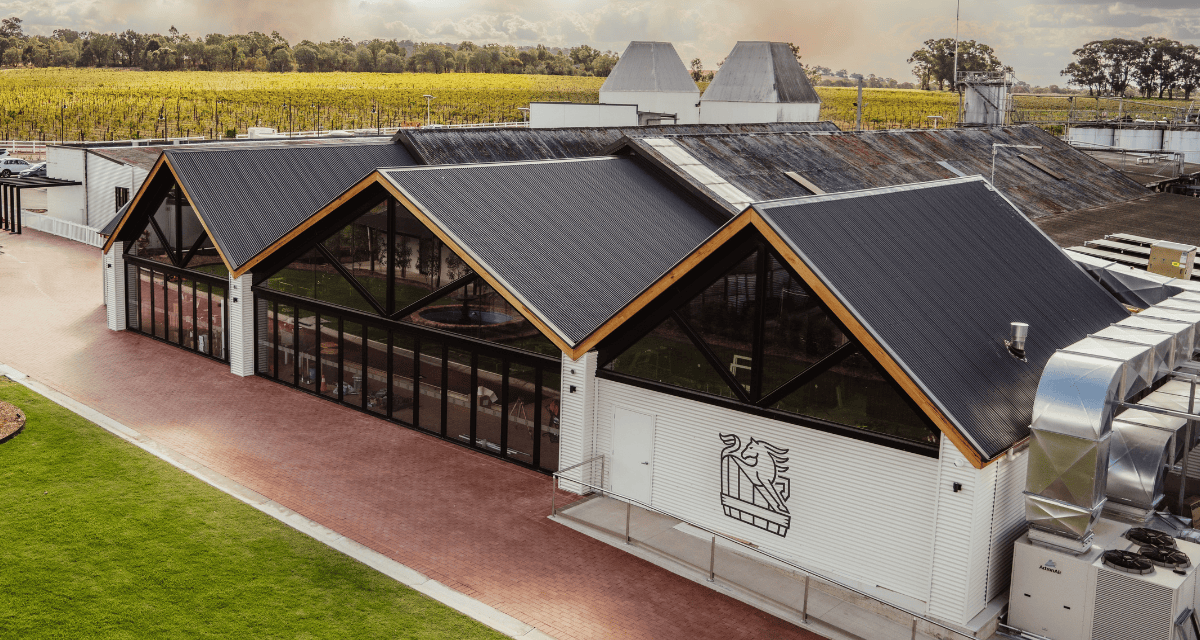
John Casella is walking through the Morris barrel hall in Rutherglen. He points to the roof. “See all the reinforcing that we’ve put in. Pernod spent nothing on it. The place was falling down.”
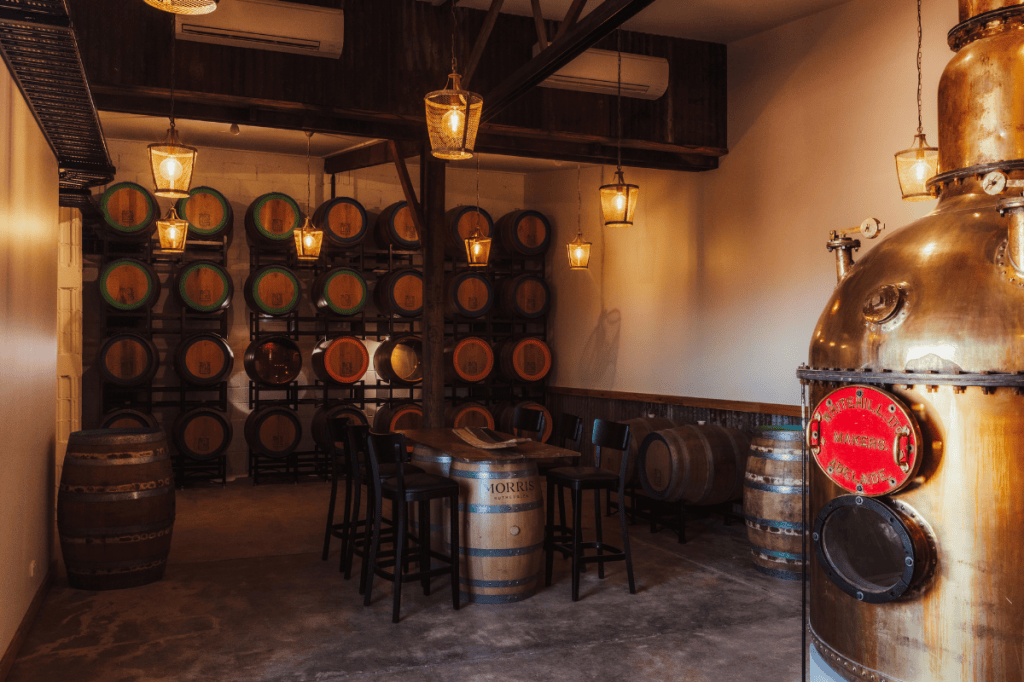
Another reason Casella bought the Rutherglen winery was that it had an old still lying around, and Casella wanted to get into whisky. The barrels from Peter Lehmann, Brand’s Lairer and now Morris could all feed into a whisky business where the type of reused cask is crucial.
He’d also built one of Australia’s largest boutique breweries at his headquarters in Yenda, near Griffith, so they had access to “wash”, the unhopped beer that is distilled into whisky. Casella paid for two replicas of the old still to be made and since 2018 they’ve been producing Morris of Rutherglan single malt.
Casella’s son, Frank, 25, has come into the marketing arm of the business. “The great success story in Yellow Tail is where we brought people into wine, and we turned them into wine drinkers,” says Frank at a recent gathering at Morris of Rutherglen.

Frank Casella wants to do the same with Australian whisky. “Something like 2% of all whisky drunk in Australia is made in Australia. We’re looking to bring people into the category through Morris.”
Lara Gardner, Casella’s marketing lead, spirits and ready-to-drinks, says that when they entered the market, Australian single malts were selling at between $150 and $180.
“But John wanted to release a real quality Australian single-malt at an accessible price point, so he was like, ‘Let’s try and recruit more drinkers into the category’, and that’s why we priced the Signature Single Malt at $100 for a 700ml bottle.”

And it seems to have worked. Despite being the new kid on the block, Morris of Rutherglen whisky has been vying with Tasmania’s Lark distillery for second position on the Australian charts behind Melbourne’s Starward distillery.
Madden Morris loves it when the boss, John Casella, tastes one of his fortifieds and says, “Wow! I own this.”
“But you’ve got to innovate and you’ve got to be sustainable, and the whisky’s
obviously a big part of that for us,” says Morris jr.
And Casella is patient. “We’ve got to be careful we don’t follow fads. Consumers will move away and then will come back, so we need to leave products that people have historically consumed that they can come back to. It’s a matter of following trends but not making the trends the core of the business.”
Want to see more Forbes articles on your feed? Tap here to make Forbes Australia a preferred source on Google.
Look back on the week that was with hand-picked articles from Australia and around the world. Sign up to the Forbes Australia newsletter here or become a member here.