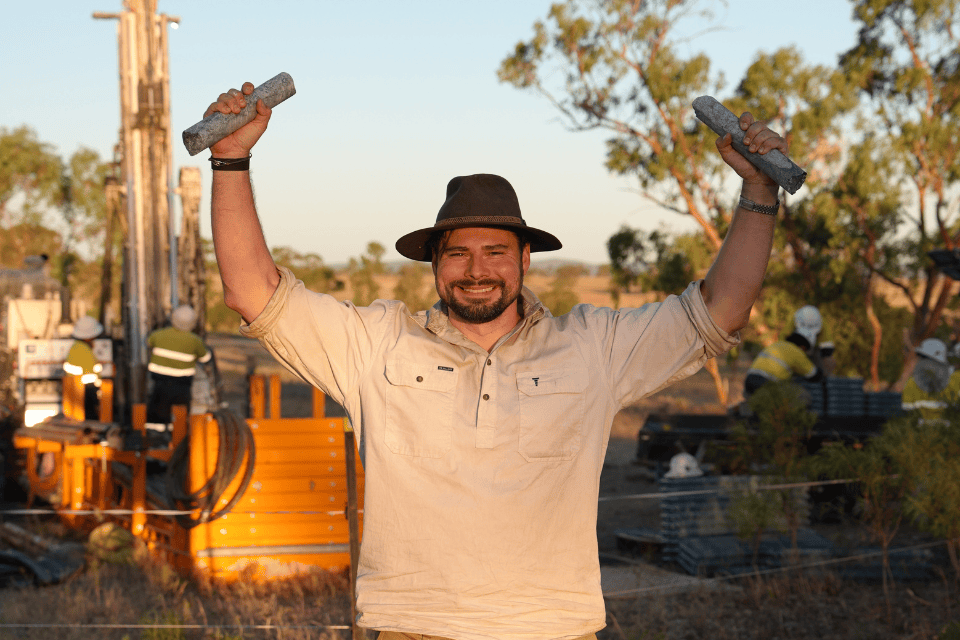

A discovery on ground twice dismissed by earlier explorers has yielded a verified three-kilometre copper-gold system. And Roman Teslyuk’s AI has drawn up a “treasure map” marked with 4,500 more Xs.
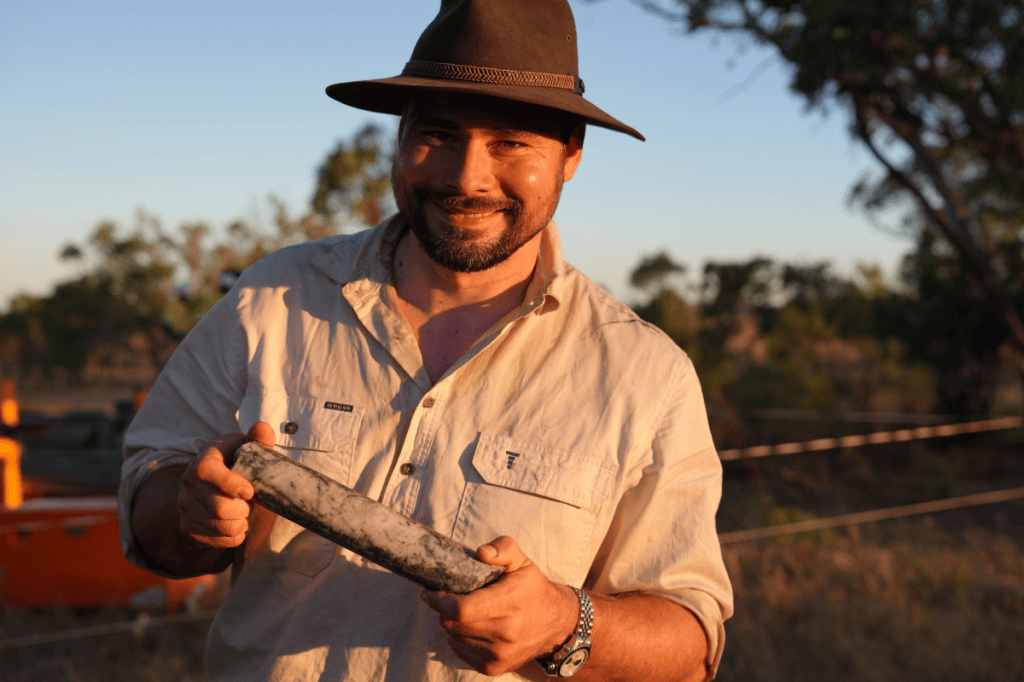
Roman Teslyuk admits to feeling a lot of imposter syndrome for the first seven years of his mining exploration start-up Earth AI. He got the first emotional release from that feeling in late 2023 when drilling proved the minerals were exactly where the artificial intelligence model he built said they would be. Then it did it again … and again.
The company raised a $20 million Series B in 2024 on the back of those finds. But there were still the doubters.
Today he’s announced a confirmed copper, gold and platinum system running more than three kilometres, and potentially up to eight, through ground in New South Wales that explorers first drilled in 1969 and dismissed as small and patchy.
“The common scepticism is that, ‘You can find sites and you can find some single samples, but nobody has ever shown a deposit that has high grade of mineralisation over a continuously large footprint,’” Teslyuk tells Forbes Australia.

“What we want to show is: ‘Here you go. Don’t believe our words. Here is the proof, and it’s all JORC [Joint Ore Reserves Committee] compliant, and it’s released on the ASX rules. There’s a standalone proof that you don’t have to trust our own word. There’s a third-party validated example of our success.’”
Earth AI is a tech start-up that went through the famous Y Combinator accelerator. Yet it also owns drilling rigs and has crews out in the bush drilling samples where the computer tells them to.
He had to move his headquarters to California to be closer to his Silicon Valley investors. But his operations remain firmly in Australia where he is chasing minerals somewhat more valuable than silicon.
Every find, every failure, makes the machine a little bit smarter. Such that his company’s internal risk-weighted estimates value its pipeline at $35 billion. But he’s still got a way to go to prove out those numbers.
The Insight
The 34-year-old Ukrainian-born geologist came to Australia to do his PhD in 2015. He soon learned Australia had the world’s largest archive of mineral exploration data. “We’ve been keeping these exploration archives, full data sets, since the 70s – so 50-plus years, billions and billions of failures and successes of geologists. And I thought ‘If I can take all this knowledge, learn on what people have done in the past, we can be much more accurate about predicting where to look in the future.’”
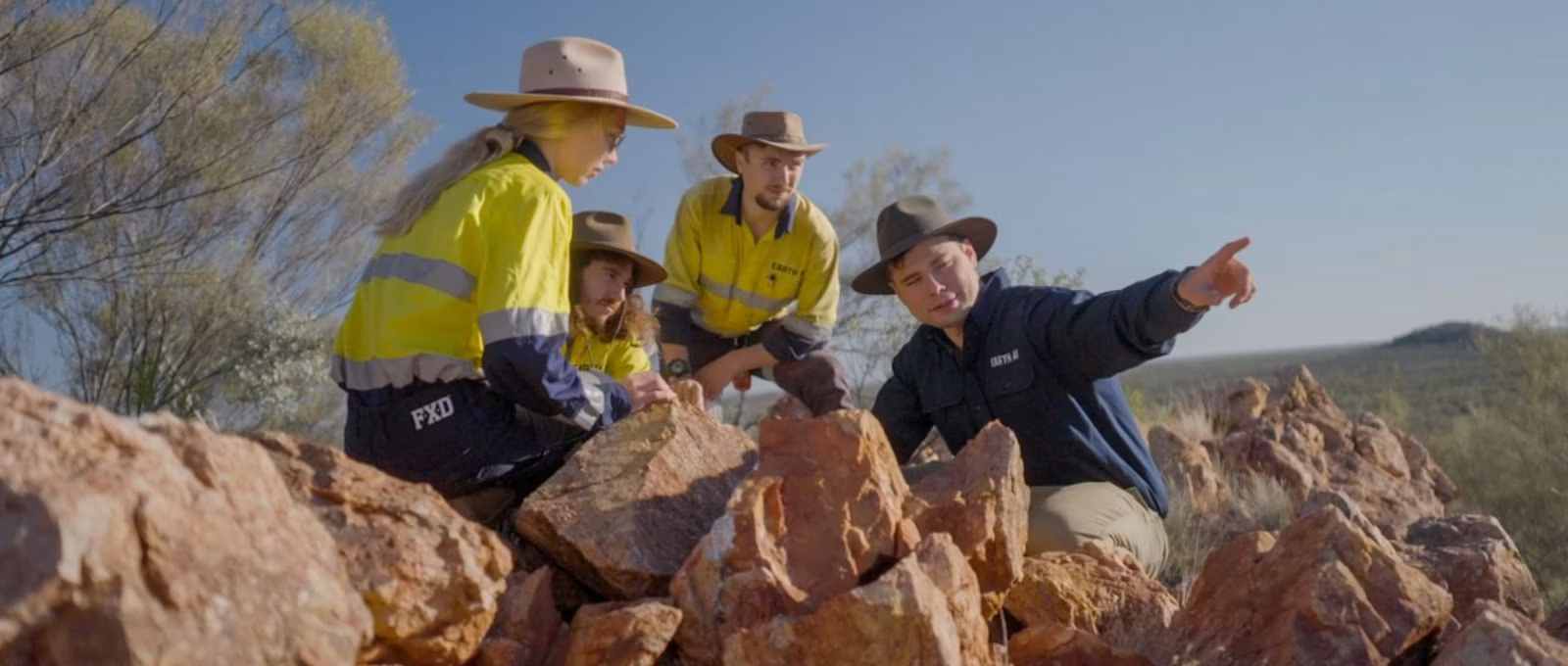
He spent two weeks trying to do it manually before realising he could teach a computer. He taught himself machine learning, dropped out of the University of Sydney and started Earth AI.
In 2017, after doing some pilots with junior miners, he realised he needed to be able to go out into the bush and dig where the machine told him. He raised a little seed capital through AirTree and Blackbird, bought a four-wheel-drive plus some picks and hammers.
“Our model doesn’t predict the metal itself, it predicts the thermal systems that create the metal deposits,” says Teslyuk. “Magma comes up into Earth’s crust, turns into rock, like a granite, but there’s like 2 per cent that is volatile, and it has metals, it has water.”
These hydrothermal waters, full of dissolved metals, make their way to the surface, cool and drop the metals.
“We look for these conduits and then we trace them down and find deposits.”
It worked. Teslyuk says their success rate hit 75 per cent. “The industry average is about half a per cent,” he wrote in a recent post. “We were finding deposits that didn’t fit the textbooks, things academics insisted couldn’t exist in certain places. We drilled anyway and proved them wrong.”
He realised drilling was massively expensive so he bought an old drill for $30,000 and after years of trial and error figured out how to get crews out on country for less money.
By 2022, he’d raised a total of $8 million through to a Series A.
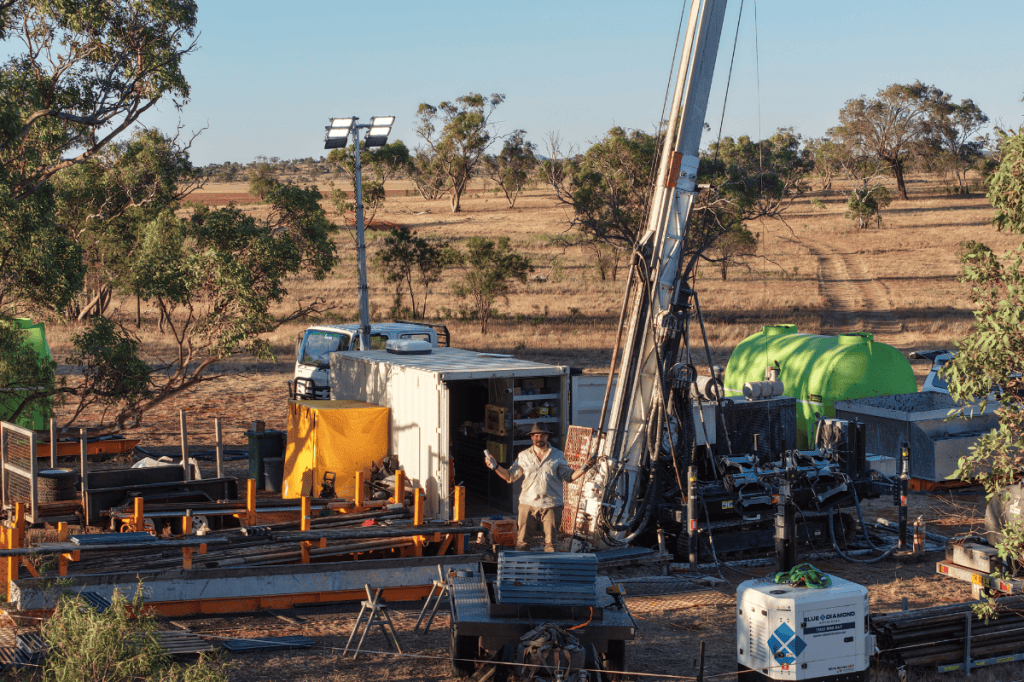
“We start drilling commercially and in 2023 we find our very first deposit, which was big emotional release because it was like an imposter syndrome for many years.
“I have all these claims that I find mineral deposits, but I haven’t drilled into one yet … We find the first one, it was molybdenum near Armidale [northern NSW]. Then a short time after, like January 2024, we find another one, which is nickel, magnetic nickel, on Fontenoy Project [near Young, southern NSW].”
The copper-gold zone at Fontenoy, known as Meridian, was first drilled in 1969 and again in 1997, mostly to shallow depths. Geologists back then thought the deposits came from a patch of little volcanoes – “black smokers” – creating a discontinuous spread of minerals. But Earth AI’s latest AI model, Alphaus, reinterpreted it as an enormous fault line that had been filled with ancient mineral-rich magma.
The first drill hole went in five weeks later, on 22 February this year. The company has since drilled 13,621.6 metres into Meridian alone.
It found the three-kilometre-long incline of copper, gold and platinum-group metals started as shallow as 30 metres and went down as far as 480 metres. Under a deal with Legacy Minerals, Earth AI has taken an 80 per cent equity position on the site.
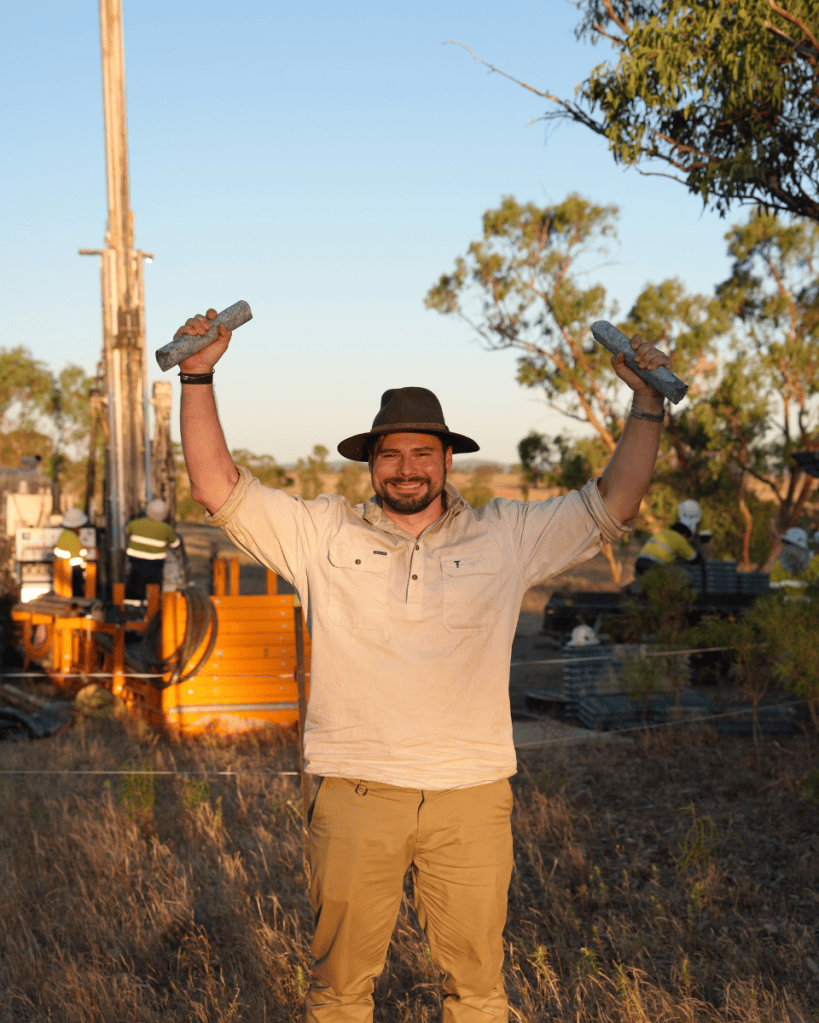
“Our model is not too different from a venture fund,” says Teslyuk. Earth AI now has a portfolio of 25 sites, six of them with confirmed deposits. But the AI has now spat out what he likens to a “treasure map with 4,500 Xs marked on it”.
The stats say that most won’t work out. He needs a few to succeed famously to pay for the failures.
Show us the money
For a software company, Earth AI has access to a lot of dirt.
“We have mineral rights over 4.1 million acres, that’s half the size of Switzerland,” says Teslyuk. “Our business model is generating these new opportunities really, really cost-efficiently, taking them through the geological evaluation and permitting to the stage where we can sell it to major companies at a kind of discount or a little premium to their net present value.”
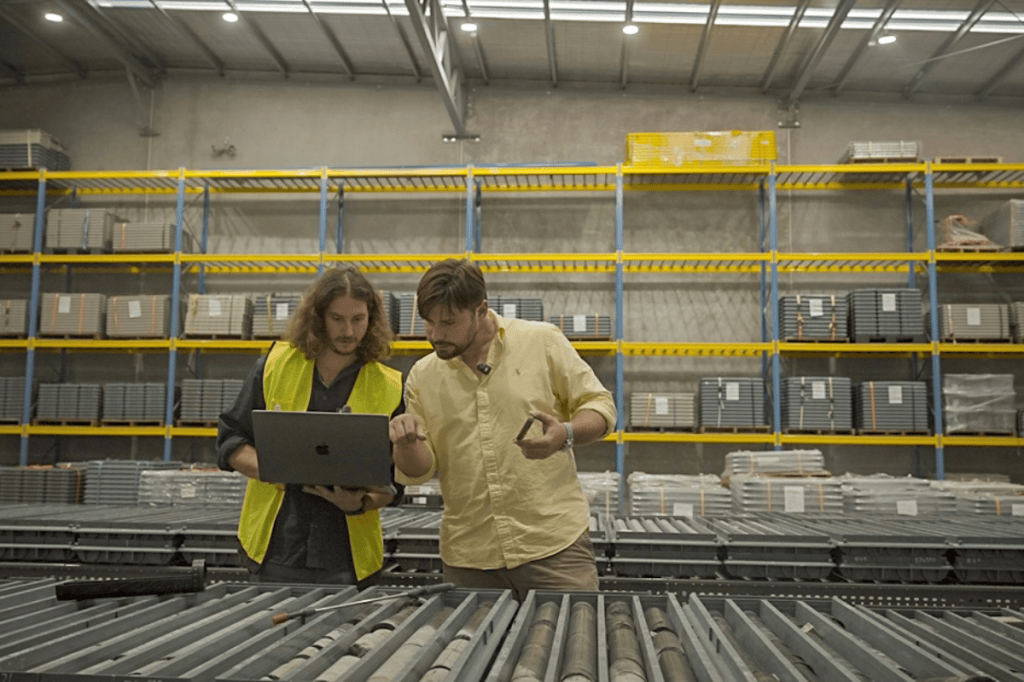
Laboratory tests were a bottleneck. They were taking up to five months to analyse samples so Teslyuk set up his own. They can now do urgent samples in a day. The AI needs the information to tell the rigs where to drill next.
“We’re building a factory. It’s not just AI on its own. It is AI plus geology, plus drilling, plus laboratory, plus permits. And we run this all the time. We drill 24-7, 365 days a year. We have six deposits, Polaris, Meridian, so that’s gold and copper, platinum, palladium. We have Indigo, that’s zinc and indium. We have Caravelle, that’s tungsten. We have molybdenum from back near Armidale. There’s gold as well at Hackley.”
He expects to be announcing more deposits soon. “The more we do, the less this argument can stand that we were just lucky – lucky once, lucky twice, lucky six times. That argument is gonna be hanging over our head until we sell that first mine. All of our internal estimates for the portfolio and 25 projects mean nothing today. But once we have one that’s successful or a couple that’s monetised, then all this portfolio is gonna light up and we’ll be able to say, hey, we have trillions of dollars in the pipeline, and people are gonna believe that.”
“There’ll be a new kind of gold rush of high-grade things that people haven’t found before that are just lying there on the ground because they’re not visually striking.”
Roman Teslyuk
“Like, right now, our risk-weighted estimate of the project pipeline is worth about $35 billion. It’s just our internal estimate. Once we make that solid sale, then people are gonna be actually putting some actual value to this estimate.”
The ground keeps shifting. Some minerals have fallen sharply in value since he began, while others, like tungsten, have surged from roughly US$225 per metric tonne unit in 2020 to about US$2,650 today, an almost twelvefold increase. Tungsten has critical defence applications, so its importance has been rammed home in the last six years of supply chain disruptions and war. And bans on it being exported from China to the US.
So US companies are paying even more because they’re not allowed to buy most of what’s on the market, says Teslyuk.
Earth AI had found some tungsten in the early days of the company, near Condobolin in western NSW. But tungsten wasn’t worth very much at that time, so they moved on.
Suddenly, however, tungsten was hot again. “So we’re like, ‘Shit!’ We move our rigs back to Condobolin and we’re drilling these tungsten projects.”
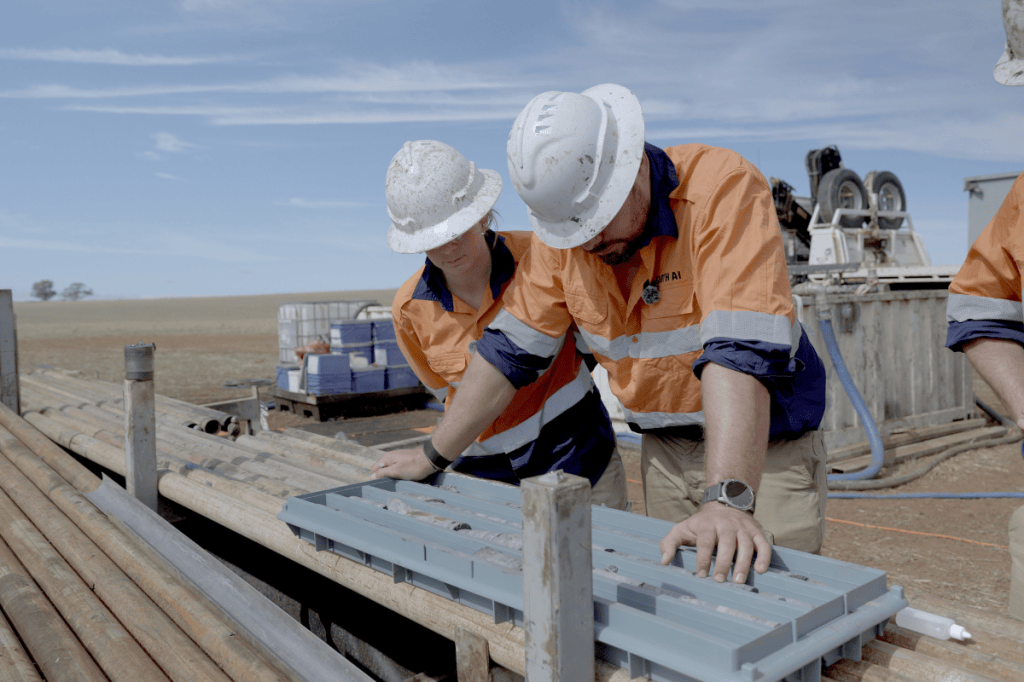
As the AI was trained on more real-dirt data, it kept predicting more and more at the Condobolin site. “When we make one improvement and the model learns from that first tungsten discovery, then it can use those learnings and find me more sites around that area.
“We have now another five projects with tungsten there, and they are all similar systems … So we’re drilling a bunch of these … We found more tungsten we’re gonna announce pretty soon.
“Then, when you take these high-grade predictions and apply them to other places across Australia, we have 4,500 new sites now [as targets for exploration].”
Teslyuk pulls out a chunk of high-grade tungsten-bearing quartz. The mineral within the quartz is not obvious to the casual observer. It looks like gravel pebbles. He points out that most of the new “critical minerals” are the same, so they’ve been easily missed by prospectors in the past.
“There’ll be a new kind of gold rush of high-grade things that people haven’t found before that are just lying there on the ground because they’re not visually striking.
“If you ask a major [mining company] ‘Where do you find new mines?’ They would say, ‘You gotta drill deeper holes under existing mines because that’s the only way’. But I think with critical minerals, there’ll be a lot of brand-new mines that are just super, super lucrative, right there on the surface.”
Earth AI won’t be taking the projects through to actual mining, he says. “But if we find something that’s ginormous, like the new Escondida [the world’s largest copper mine in Chile] that’s $10 billion annual revenue, I think it would be stupid to sell it.”
Want to see more Forbes articles on your feed? Tap here to make Forbes Australia a preferred source on Google.
Look back on the week that was with hand-picked articles from Australia and around the world. Sign up to the Forbes Australia newsletter here or become a member here.