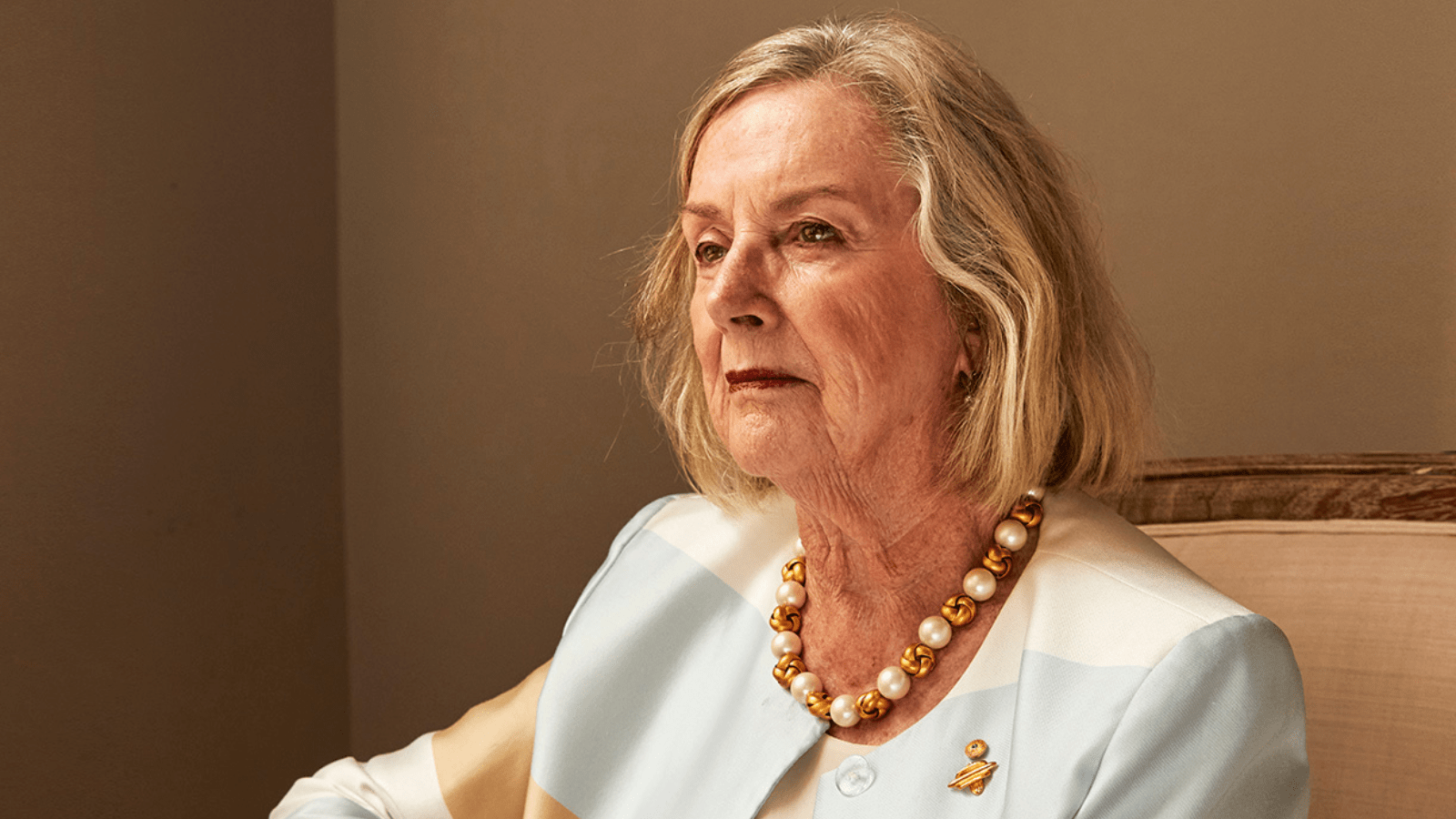

Miranda Kerr made her modelling debut in 1997 at just 13 years of age and by 2013 was the second-highest earning supermodel in the world. In 2009, Kerr became a pioneer of the now multibillion-dollar organic skincare industry, launching KORA Organics. Months after turning 40, the girl from Gunnedah is committed to growing her business into a global household name and believes she has the strategy to execute.
Issue 5 of Forbes Australia is out on Monday. Tap here for full access to this feature and much more by becoming a Forbes member.

Miranda Kerr supermodel-turned-entrepreneur looks relaxed at her farm in the Hunter Valley. She’s a little late for our interview – her son Flynn was nagging her to workout with him. “I will, after this,” she says before telling Forbes Australia that she’s stepping into a new era: In April, she turned 40, and in 2023 her certified organic skincare business KORA Organics turned 14.
Kerr, who famously was the first Australian woman to don angel wings on the Victoria’s Secret runway, launched KORA back in 2009 after her mum, Therese, had been diagnosed with cancerous tumours in her spleen in 2006, inspiring the family to turn to organics.
“When I came up with the concept of KORA Organics, I never thought of myself as an entrepreneur. I was just trying to create products that I wanted to use myself and couldn’t find,” Kerr says. “We [the Kerr family] were shocked to see how toxic certain products readily available on the market can be – that was my lightbulb moment.”
Pioneering organic skincare
In 2006, Kerr connected with a chemist who worked in the certified organic and natural space and heeded a warning: creating results-driven, certified organic products is possible, but it’ll cost you. It’s extra for the research and development (for Kerr and KORA, this was a three-year process) – and extra again for the higher-quality ingredients and sustainable packaging. For example, one ounce of organic rose essential oil is around $500. An ounce of non-organic rose essential oil can cost $280.

But Kerr knew she was onto something. “It was a leap of faith, but it was something that the people deserved,” she says. “That’s what I wanted to use on my skin – I feel like everyone deserves to have it available to them.” And her fame would help get it off the ground. She launched KORA with the help of health and beauty brand expert George Moskos, who at the time was well-known for helping celebrities – particularly models – launch these kinds of businesses.
“Miranda and I were pretty close buddies,” Moskos, now the founder of cannabis skincare brand, Greencare, says. “We were hanging out a lot – she was seeing a good friend of mine. We all collaborated and devised a plan to build her profile.”
The idea for an organic skincare business came naturally to the pair, given Kerr’s beliefs, Moskos says. “Miranda was a great believer in organic products – she really liked noni berries.” The Noni Glow Face Oil was the first product the team launched and remains a best-seller (along with the Turmeric 2:1 Brightening and Exfoliating Mask, Turmeric Glow Moisturiser and Noni Bright Vitamin C Serum). Moskos exited KORA in 2012 with a seven-figure payout
KORA was initially available for purchase through David Jones alone – a natural step, given Kerr was the department store’s Fashion Ambassador at the time.
“I remember when Kora Organics first launched – it was one of the first brands to pioneer the organic beauty category,” David Jones Beauty Buyer, Ben Mitchell, tells Forbes Australia. “The team often talks about the Miranda days and recently reflected on her return to Australia two years after launching [KORA, in 2011]. She was in town to release seven new products in the Kora Organics skincare line and celebrate the success of her best-selling book ‘Treasure Yourself’. The crowds were a sight to behold, and Miranda demonstrated she had so much more to offer beyond the runway.”
I don’t know if it was an Australian mentality or just growing up in the country, or just my personality. I always felt like I didn’t want to put anyone out.”
– Miranda Kerr
David Jones’ Mitchell says KORA is still the largest organic skincare brand at the department store and has “consistently performed well” since its launch. “With a strong new product development pipeline, refillable packaging options, and game-changing products… It is easy to see why the brand has strong appeal with KORA loyalists and new customers alike,” he says.
Shedding her wings
Between 2009 and 2015, Kerr kept KORA relatively close to her chest, with products sold only through KORA’s site or David Jones. “It was doing well locally,” she says. During that time, Kerr continued to climb the modelling ranks. In 2013 Forbes estimated Kerr was the second-highest paid model, earning a US$7.2 million pay cheque thanks to her contracts with Victoria’s Secret, Mango, David Jones, Lipton and Qantas. A year later, she tied third with Kate Moss and Kate Upton, raking in US$7 million in contracts.
In 2016, Kerr decided to shed her wings and shift her focus from full-time modelling to full-time business and in 2017, she took KORA to the US via a partnership with beauty juggernaut Sephora, which had been keeping tabs on the growth of the organic skincare market.

“We saw a big shift start to move [in the organic skincare market] from 2018 and [it] has continued to accelerate,” Sephora Category Manager, Skin and Hair, Alyssa Casale, says. “Clean [Sephora’s organic beauty segment] at Sephora is a substantial part of the skincare business and continues to grow. We also see a strong demand for Clean within our other categories, such as makeup and fragrance.”
Today, Kerr, CEO of KORA, owns 95% of the company and estimates she’s invested US$14
million of her own money into it since its inception. She has not taken a single cent out. That’s a small chunk of her estimated net worth, which media reports have suggested is around $173
million. Her husband, Evan Spiegel, who became a billionaire at the age of 25, is estimated to be worth US$2.3 billion, according to Forbes at the time of writing.
Six years after its international launch, KORA Organics is sold in more than 30 countries and stocked in 1,000 stores – including in every country Sephora operates.
Related
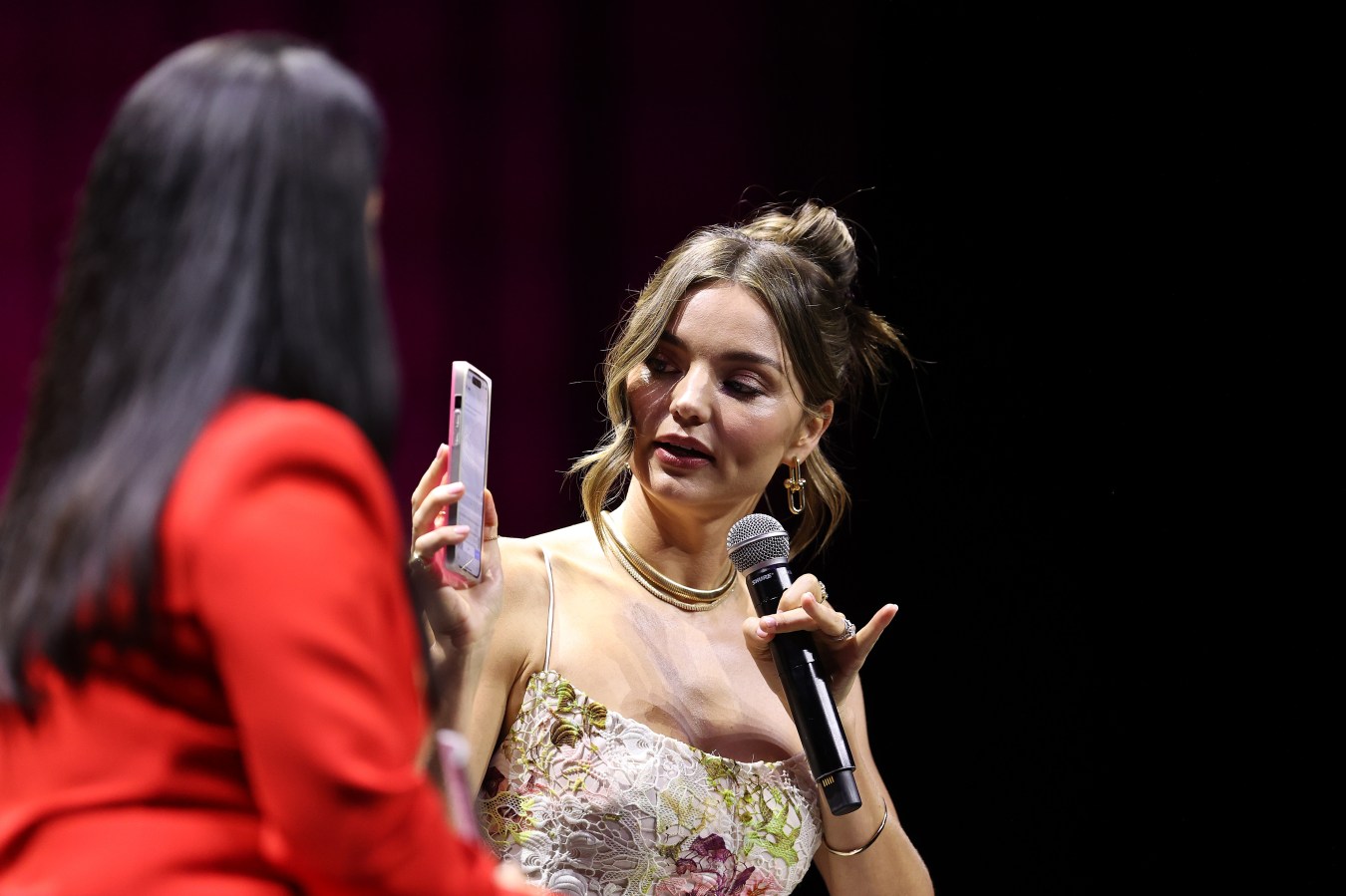

KORA Organics confirmed the company’s global revenue has grown 400% between 2017 and 2022, though KORA declined to disclose the business’ actual revenue. Between 2017 and 2022, KORA’s team says the Australian side of the business doubled its revenue. And the plan is to double revenue again between 2022 and 2027.
“Oh, at least,” Kerr says. “I’m trying to get [KORA] to be a household name.”
The global organic skincare market was valued at US$9.75 billion in 2022 and is expected to reach a value of US$17.6 billion by 2028, at a compound annual growth rate of 8.8%, according to a Skyquest analysis. The report explains growth is being driven by growing awareness of the benefits of organic ingredients, an increasingly health-conscious consumer base and a shift towards sustainability. It also says organic facial skincare is the largest category within the organic skincare market – meaning Kerr’s KORA is sitting right in the sweet spot. After years of global expansion, she’s ready to take advantage of the growth in the market and expand the product range, too.

“We have all of our product development planned for the next five years – including two products this year,” Kerr says. KORA has already launched one of those products: what Kerr and the KORA team claim is the world’s first certified organic retinol (vitamin A). (But actually, there are others out there, for example, La Mav’s Bakuchiol 100% plant-derived vegan retinol alternative). The next will come in September, and the company plans to launch two products each year (in April and September) for the next four years.
While Kerr may have been a pioneer in the organic skincare space, today, KORA is flanked by heavyweight competitors – and it is by no means the biggest organic skincare brand out there.
There’s Jessica Alba’s The Honest Company (which went public in 2021 and is now worth US$140 million), Aveda Corporation (which was sold to Estée Lauder in 1997 for US$300 million) and Bare Minerals (was acquired, along with two other brands, for US$700 million in 2021), to name a few.
But Kerr has a growth strategy in place: “We are strategic with our marketing and where we invest our time and money,” she says.
The business does not invest in advertising. Instead, it invests heavily in clinical trials to prove the efficacy of its products. The trials are all about customer education – Kerr hopes that by having science backing her products, consumers will understand the benefits of certified organics.
I like to implement what I feel would be helpful to me, though when it’s your company, you can never fully switch off.
– Miranda Kerr
“I think that education is key,” she says. “I’m not saying that you should always do everything organic 100% of the time. I’m saying I’m providing options for you because your skin is the largest organ.
“I believe in external and internal beauty. I cook with turmeric, but I also use it on my skin for its brightening and anti-inflammatory benefits. If you can get the results you need using certified
organic products, why wouldn’t you? To me, it’s like a no-brainer.”
Customer satisfaction and loyalty are also hugely important to KORA’s success; if you’ve ever sent KORA Organics a direct =message, chances are you’ve received a response from Kerr herself, who says she dips in and out of the brand’s Instagram channel (which boasts nearly 460,000 followers compared to her 14.1 million personal followers) to understand her consumers better.

Barefoot in the boardroom
As a business owner, Kerr tries to practice what she preaches, which is balance and wellness – “I like to implement what I personally feel would be helpful to me – though when it’s your company, you can never fully switch off.”
But she says her management style is to lead with empathy, which has manifested in days off for staff birthdays, summer Fridays, generous leave policies and remote work flexibility in Australia, particularly as the company employs 90 per cent women – many of whom are working mothers. For her US staff, it was announced that staff would receive 10 personal and carer’s leave days each year – the same as required in Australia but four days more than any state requirement in the US.
Throughout the interview, you get the sense that KORA is Kerr’s baby – in fact, she tells me this is ‘her baby’ five times. She’s all in: “I’ve put all my eggs into one basket.” That scared her at first, but husband Spiegel encouraged it.
“He’s [Spiegel’s] the whole reason I launched internationally. He was using KORA on his skin and was like, ‘Why isn’t this available here in the US?’ He’s had very dry skin all his life, and now the Noni Glow Face Oil transformed his skin. He uses it every morning.”
She continues to seek his guidance on business. “He has incredible advice,” she says. “He is the most intelligent man I have ever met. I say that he’s the brains of our family, and I’m the heart. That’s why we make such a good team – we balance each other. Our weaknesses and our strengths complement each other. We both want to grow and evolve every day – we want to be better parents today than we were yesterday. We want to be better people.”

Together, through the Spiegel Family Trust, Kerr and Spiegel have worked with the Sydney Children’s Hospital, funding a new operating theatre; Jenny’s Place, helping women and child victims of domestic violence or homelessness in the Newcastle area find safety; Youth Express, delivering a range of programs that arm young people with the tools to engage in education, community and work; and the pair made meaningful contributions to bushfire relief efforts in 2019-20.
Kerr also supports Kids Helpline, the Royal Hospital for Women and the Save the Koala Foundation (she famously tied herself to a tree in 2009 to shine a light on the Koala Foundation’s ‘No Tree, No Me’ campaign). Speigel has also donated more than US$280 million in Snap stock, and he and co-founder Bobby Murphy have pledged to donate 13 million shares to the Snap Foundation.
“I believe giving back is so important, no matter how big or small the gesture,” Kerr says.
What does certified organic mean?
The ‘clean’ beauty industry is notoriously difficult for consumers to navigate – there is
no regulation around what is considered ‘natural’ or ‘clean’. But the ‘certified organic’ industry is different: according to KORA Organics, it’s the most heavily regulated ingredient system in
the world.
KORA products are certified by Ecocert/COSMOS, which according to the Ecocert website, ‘guarantees natural and organic cosmetics with criteria respectful of Man and the environment’.
“Everything from the ingredients to the manufacturing facilities to the packaging materials must be reviewed, approved and audited by Ecocert/COSMOS,” KORA’s website states.
“By having our products independently reviewed and accredited to this standard, our customers can trust that our products are what they claim to be.”
According to KORA Organics, there are no toxic chemicals like sulphates, parabens, synthetic fragrances, synthetic colours, glycols, silicones or formaldehyde (or formaldehyde derivates) in its products. There are also no animal products or by-products – it’s vegan and cruelty-free.
KORA is also climate-neutral and claims to be one of the first companies to offer refillable skincare pods to reduce waste.
Look back on the week that was with hand-picked articles from Australia and around the world. Sign up to the Forbes Australia newsletter here or become a member here.