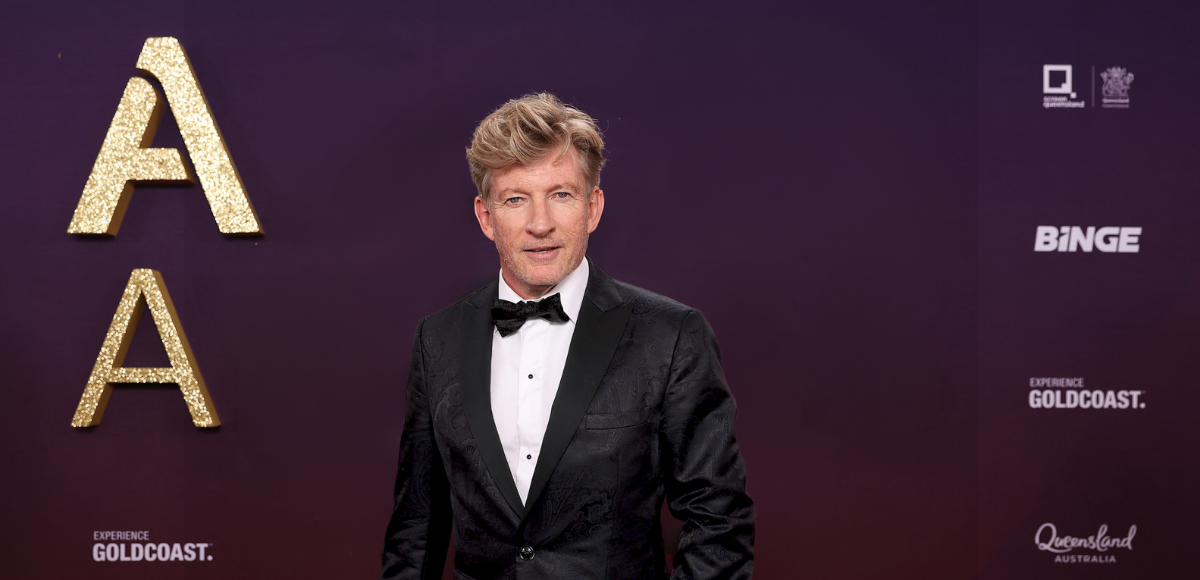

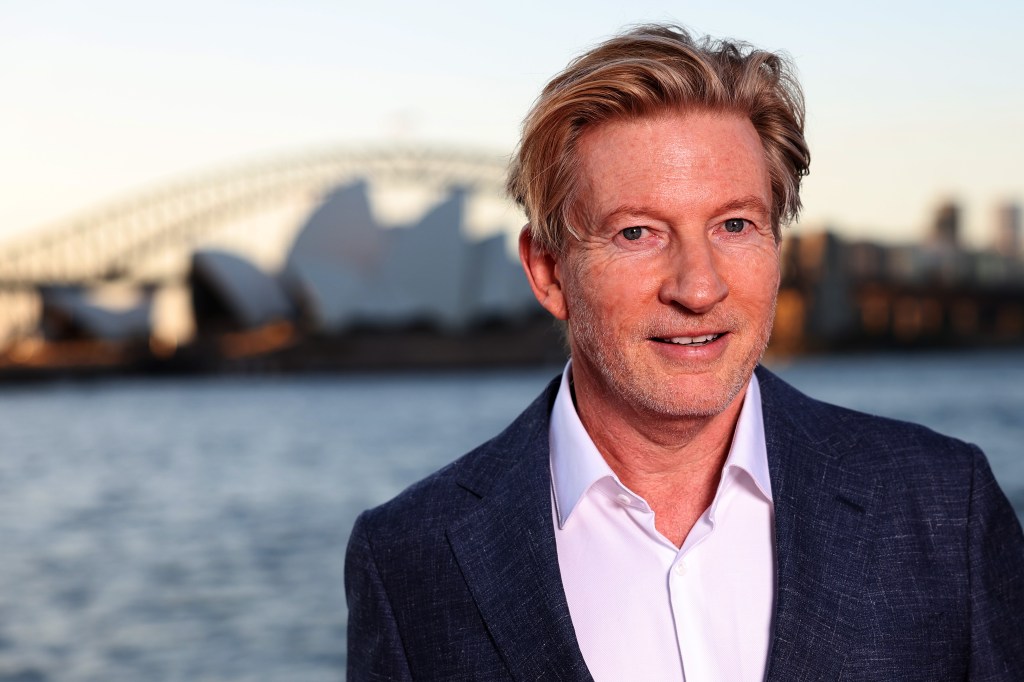
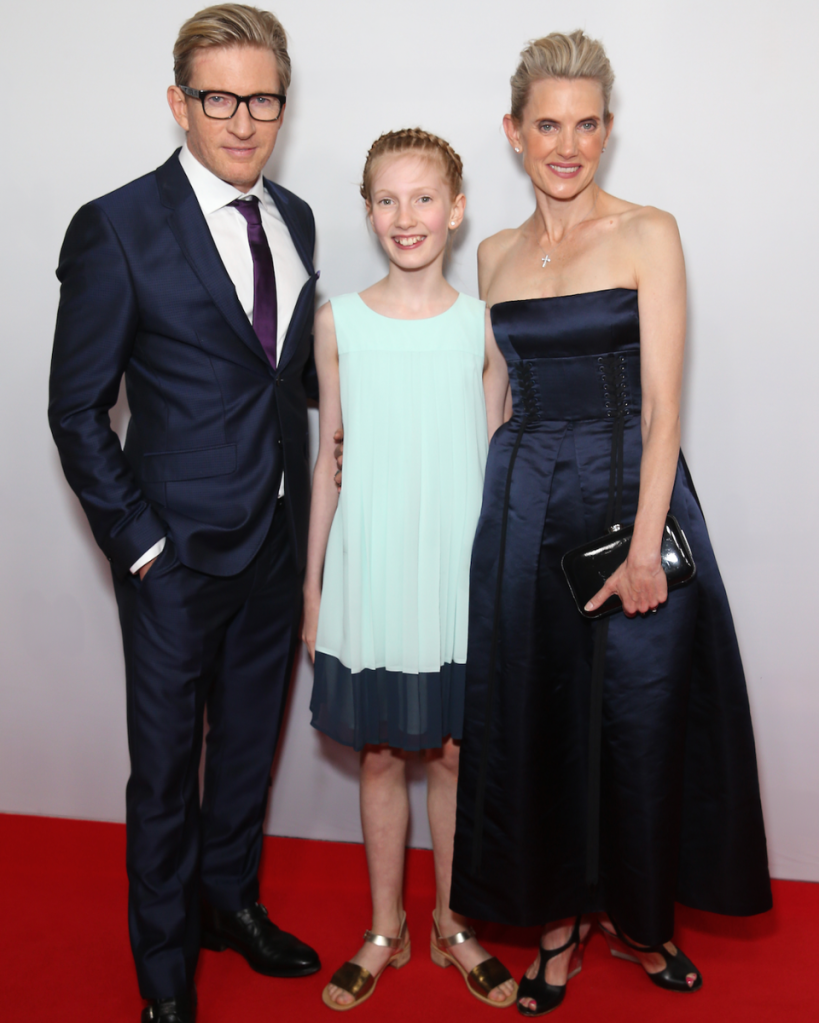
From screen roles such as Faramir in Lord of the Rings, Dilios in 300 and appearances in Pirates of the Caribbean, Moulin Rouge, and notably the heartthrob “Diver Dan” in TV’s SeaChange, David Wenham is one of Australia’s most recognisable actors. He spoke to Stewart Hawkins about inspirations, aspirations, David Attenborough, Nick Cave, and the day simple sunshine gave him the greatest joy.
This story features in Issue 22 – out now. Tap here to secure your copy.
What is your favourite place and why?
My daughter once wrote to David Attenborough, and he responded in a handwritten letter. I was amazed that he took the effort to reply in person. But [my daughter] asked him, what his favourite place was, and he said his back garden, which was just perfect. The very little garden I have at home, I’m very happy there.
I’m also happy in art galleries or libraries. There’s not one particular one. The [Sydney] Botanic Gardens is a place that’s very dear to me. I lived up the road for nearly 30 years and would walk through it and find great solace and happiness there. It was a place where I could find peace.
Who or what has been your greatest inspiration?
I had a wonderful opportunity to meet David Attenborough. I had dinner with him with a handful of people. David Attenborough is an extraordinary human being but sitting down with him was even more extraordinary than I actually would have thought. The man is so humble. He is driven by such wonderfully pure human goodness that it’s impossible not to be affected by it. I’d met him after he had replied with the letter to my daughter. He said, for however many years, he puts aside an hour every day, and he writes handwritten letters to people who have written to him. That did have a huge effect on me. I went home and I’ve literally got thousands of letters that people have written to me over the years, regarding many films, but particularly Lord of the Rings.
But after meeting David Attenborough 20-something years after I filmed Lord of the Rings, I would then, three or four times a week, take out five letters. I’d open them up, and I would send something back to these people more than 20 years after they wrote to me – sent them back out into the ether. Maybe one in every fifty may have got to the person, but it just felt like it was the right thing to do.
How do you keep your head together?
I don’t know if I have got my head together. A journalist, the other day, said, “You’ve got a very busy mind, don’t you?” And I said, I do. I am always thinking.
Walking is very important for me. I use walking as a form of creative inspiration, but I also use it as a way of finding peace and solace.
What was your finest hour?
To be present at both my daughters’ entry into the world. I don’t think there’s a more profound moment than watching a child enter this world.
Is there something in your life that if you could go back and change it, you would?
I never look back.
I very rarely even watch films or television that I do.
For me, the creative fulfilment is in the doing and the making of the work. I don’t necessarily need to see the product of the work because I’m there for the creation of it, and I move on. I’m very happy with that. I probably have only seen maybe, if I hazard a guess, a tenth of the work that I’ve done onscreen. Not because I don’t think it’s any good or I don’t want to see it. It’s just that I don’t feel the need to because I have moved on. There are films I’ve done that I know now I could have approached in a completely different manner, and the performances possibly could have been better. But I can’t do anything about that.
And lots of moments through my life that could have been different, but all those different moments in my past have made me the person I am. I’m content with that. I can’t change any of that, but I can actually, hopefully, affect what’s in front of me.
What piece of literature or movie or performance has moved your soul, shifted your heart?
There’s certainly been many, many performances and books and movies that have done that. I saw Keith Jarrett play twice. Once in Venice and once in Los Angeles. Both of those were pretty extraordinary experiences to be in a concert hall and just be present as he walked on stage with literally nothing prepared and improvised an incredible concert.
Watching Baryshnikov dance solo on stage with just a cello and a cello player playing Bach’s Cello Suites.
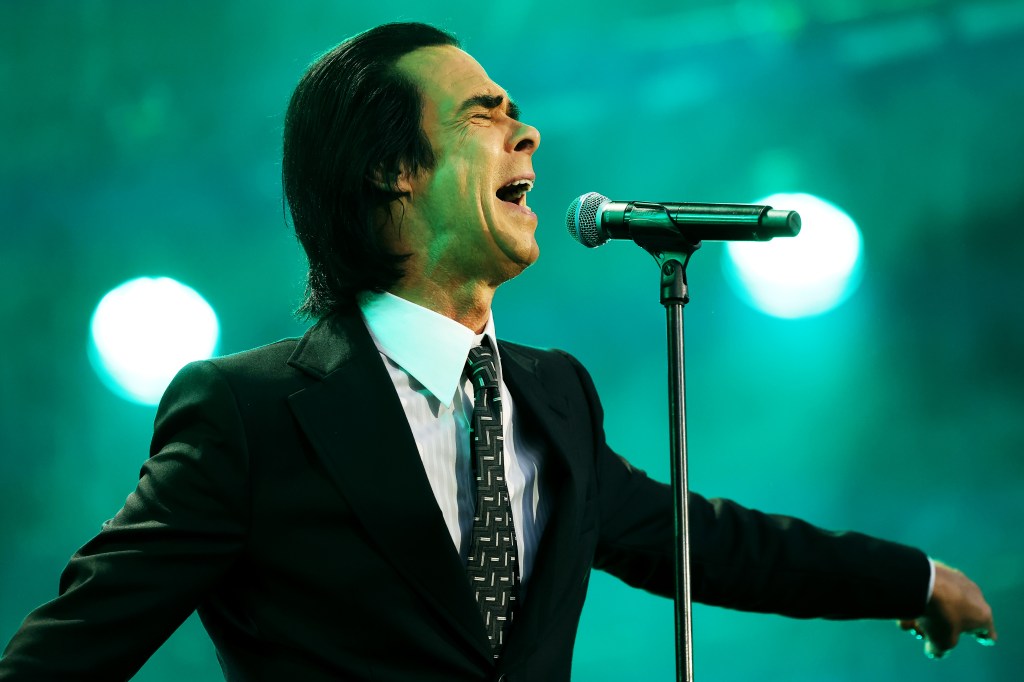
Seeing Nick Cave and the Bad Seeds play, I saw them very recently.
It was just before I began rehearsals on the production of An Iliad [Sydney Theatre Company]. [Cave’s] performance was very instructive as to how I then went into the rehearsal room for this project.
What is the performance of yours that you’re most proud of?
Hopefully, the one I’m about to do. Who knows? But that’s my intention. There was one performance of Cyrano de Bergerac at the Melbourne Theatre Company – one night where I thought everything came together, every little facet of the production just came together in such a beautiful, serendipitous way to create what I thought was a piece of theatre magic.
What is it about theatre that really excites you?
I really am at my happiest when I’m creating. Being in a rehearsal room to me is, is an absolute joy. Even if it’s challenging, even if I’m searching, even if I’m really grasping to find something, I find it extremely creatively fulfilling. Theatre is extraordinary because it can only exist if there’s someone sitting in the audience, and it relies on an audience. Whereas film doesn’t.
Film and television, you do it in complete isolation, but theatre needs that audience and that magic thing that can occur between the performer and the audience. Why do I do it? It’s a tricky one. I’ll look at it through the lens of the production that I’m in rehearsal for at the moment. It’s a piece that I was drawn to because not only is it going to hopefully be an entertaining night in the theatre, but I think it could be a provocative night as well.
Why did you become an actor?
I owe a great deal of debt to one of my teachers at school, I went to a Christian Brothers school, and his name was Brother Hume. I was a very, very, very disruptive student, specifically in his class. Not exclusively his classes, but it was him who said to my parents at a parent-teacher night, “Look, I have the class in the palm of my hand, but then your son will go do something, and I just can’t control the class.” And he said, “Have you ever thought of sending your son to acting classes?” And so, from about the age of 12, I went to acting classes on Saturday mornings. I met Nicole Kidman. We were both thirteen, or I was a year older than Nicole, and that opened up a world to me, and I found my people.
Watching Baryshnikov dance solo on stage with just a cello and a cello player playing Bach’s Cello Suites.
Seeing Nick Cave and the Bad Seeds play, I saw them very recently.
It was just before I began rehearsals on the production of An Iliad [Sydney Theatre Company]. [Cave’s] performance was very instructive as to how I then went into the rehearsal room for this project.
What is the performance of yours that you’re most proud of?
Hopefully, the one I’m about to do. Who knows? But that’s my intention. There was one performance of Cyrano de Bergerac at the Melbourne Theatre Company – one night where I thought everything came together, every little facet of the production just came together in such a beautiful, serendipitous way to create what I thought was a piece of theatre magic.
What is it about theatre that really excites you?
I really am at my happiest when I’m creating. Being in a rehearsal room to me is, is an absolute joy. Even if it’s challenging, even if I’m searching, even if I’m really grasping to find something, I find it extremely creatively fulfilling. Theatre is extraordinary because it can only exist if there’s someone sitting in the audience, and it relies on an audience. Whereas film doesn’t.
Film and television, you do it in complete isolation, but theatre needs that audience and that magic thing that can occur between the performer and the audience. Why do I do it? It’s a tricky one. I’ll look at it through the lens of the production that I’m in rehearsal for at the moment. It’s a piece that I was drawn to because not only is it going to hopefully be an entertaining night in the theatre, but I think it could be a provocative night as well.
Why did you become an actor?
I owe a great deal of debt to one of my teachers at school, I went to a Christian Brothers school, and his name was Brother Hume. I was a very, very, very disruptive student, specifically in his class. Not exclusively his classes, but it was him who said to my parents at a parent-teacher night, “Look, I have the class in the palm of my hand, but then your son will go do something, and I just can’t control the class.” And he said, “Have you ever thought of sending your son to acting classes?” And so, from about the age of 12, I went to acting classes on Saturday mornings. I met Nicole Kidman. We were both thirteen, or I was a year older than Nicole, and that opened up a world to me, and I found my people.
Want to see more Forbes articles on your feed? Tap here to make Forbes Australia a preferred source on Google.
Look back on the week that was with hand-picked articles from Australia and around the world. Sign up to the Forbes Australia newsletter here or become a member here.