
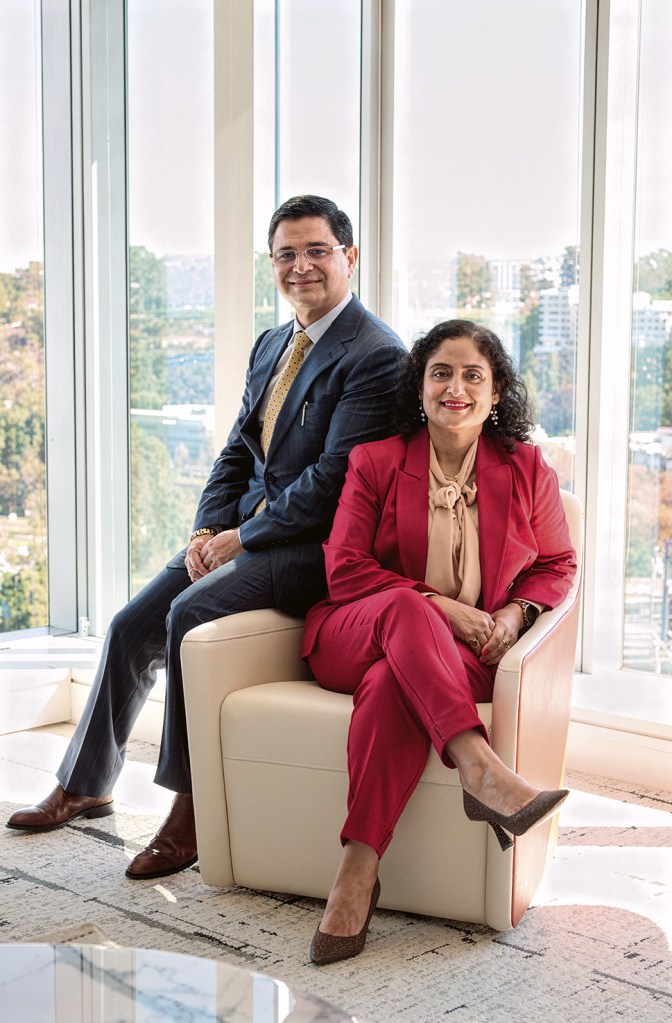
Vikas Rambal built the world’s largest ammonia plant, walked away with hundreds of millions, lost everything that mattered – then did it again. And Australia barely noticed.
This story features on the cover of Issue 22 – out now. Tap here to secure your copy or become a Forbes member here.
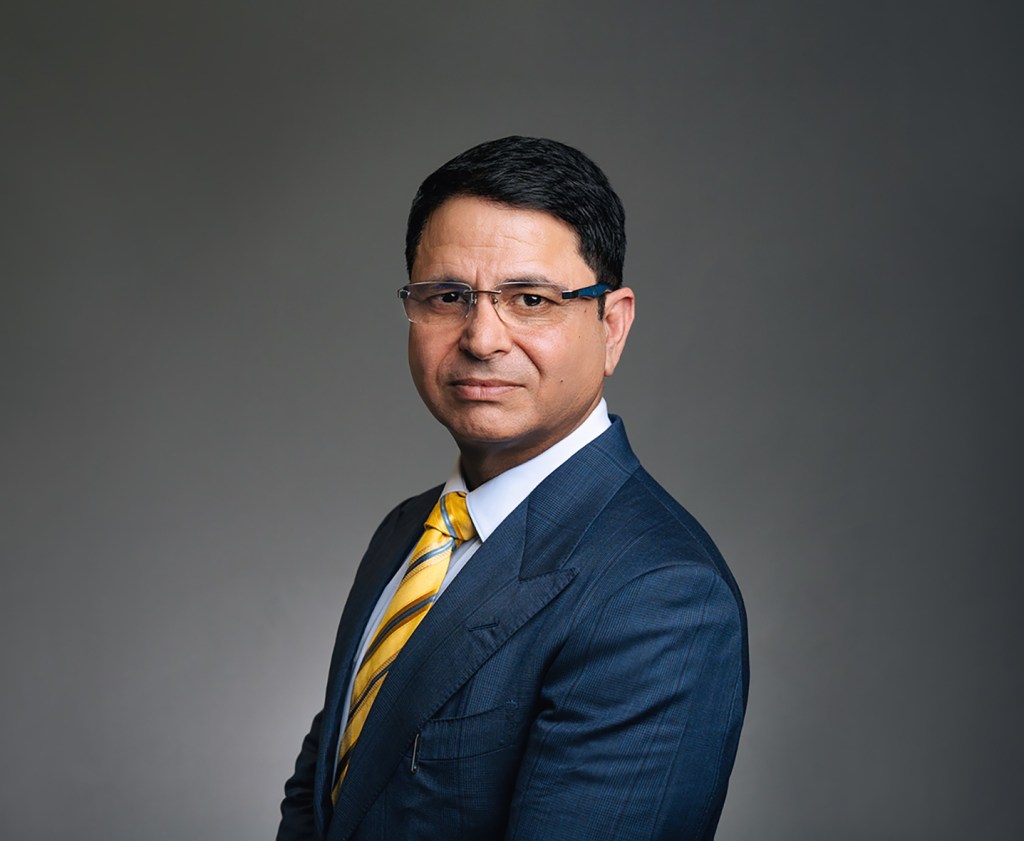
Vikas Rambal can’t believe that nobody seems to have heard the stories about what he’s built.
First, he was one of two twenty-somethings who came to Australia from India in 2000, raised US$320 million, and built Australia’s first ammonia plant, that was then the world’s largest.
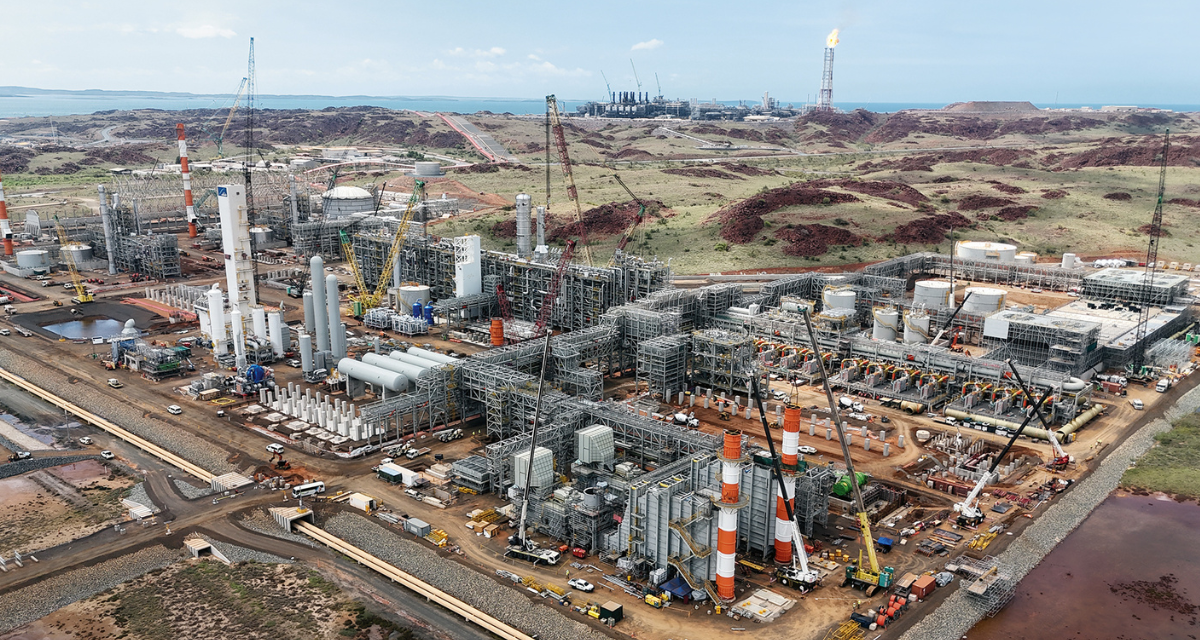
While that ended in tears, the now Perth-based engineer and entrepreneur is at it again. Over the past year, great Meccano sets of prefab plant have been crossing the Indian Ocean on freighters that look like seaborne oil refineries.
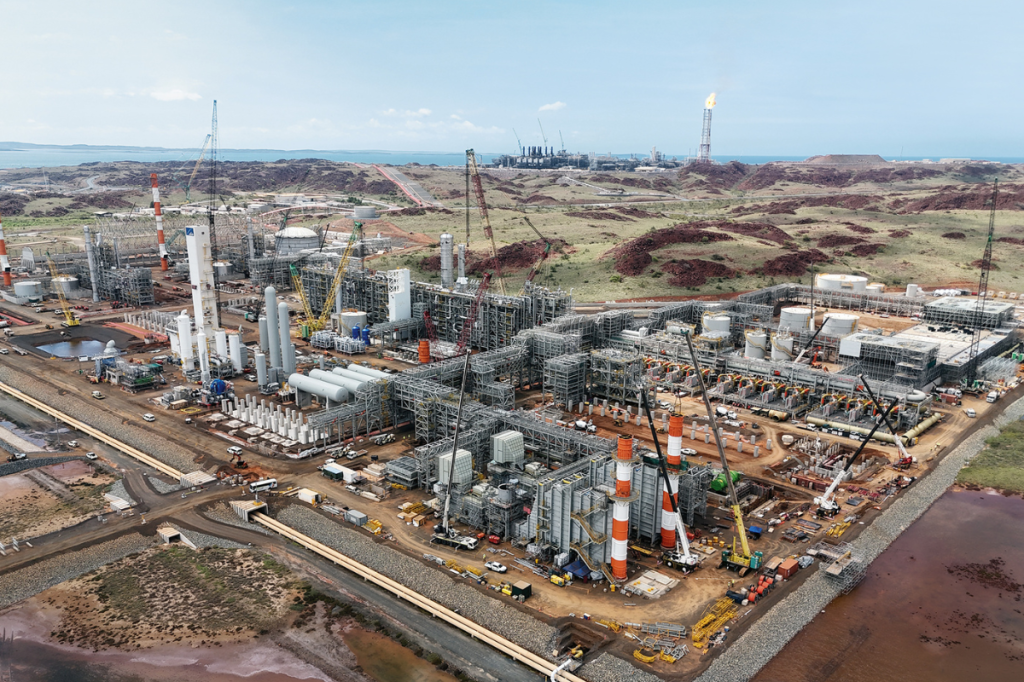
The freighters are carrying pieces of the even larger $6.4 billion fertiliser plant being built on the Burrup Peninsula in Western Australia’s north west, which, before the Strait of Hormuz was blockaded, was projected to generate a staggering $1.5 billion in annual revenue.
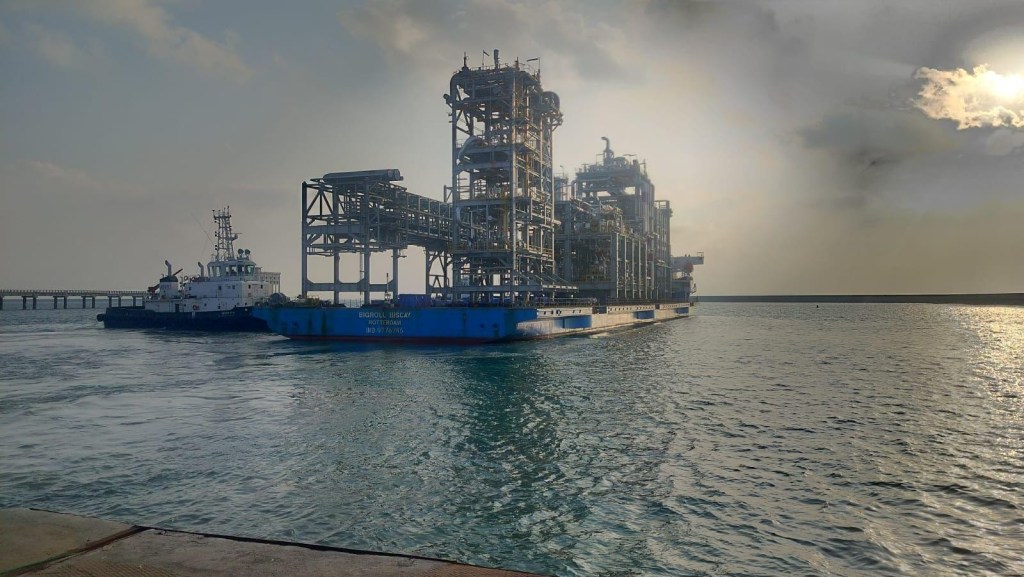
Thirty per cent of the world’s nitrogen fertiliser comes through the Strait of Hormuz, so global urea prices have skyrocketed. If prices stay where they are, at about US$1,000 landed in Australia, his plant would generate US$2.5 billion in annual revenue when it opens – scheduled for mid-2027.
Rambal owns 55%.
The Iran war has exposed Australia’s vulnerability. Modern agriculture is heavily reliant upon nitrogen fertiliser and Australia makes none of it, despite its abundance of the natural gas feedstock from which it is made.
And still no one seems to be talking about it, or his company, Perdaman Group, or him. He didn’t even make the Forbes Australia 50 Richest list this year because of its strict methodology, but his wealth has been valued by others at $5 billion.
“I think, ‘I should have been given the Prime Minister’s red carpet’,” Rambal tells Forbes Australia. “This is an Indian-Australian business relationship blueprint.”
When Rambal exited his part ownership of that first plant, also on the Burrup Peninsula, in 2007, he was emotionally spent following the death of his father, and a dispute with his co-founder, Indian businessman Pankaj Oswal.
Oswal had bought him out for “hundreds of millions of dollars”. He never had to work another day in his life. He wanted to return to India and grieve his father and his lost plant, but his wife, Maegha, wouldn’t let him. She threatened to build another plant herself if he wouldn’t.
What they did next was to build a diversified empire spanning property, pharmaceutical manufacturing, and immigration law. Along the way, the Rambals have been burned by bankrupt partners, lost those “hundreds of millions” and learnt many lessons.
And none of it would have happened but for a chance meeting on a Perth street after Rambal had fallen for the overtures of a conman.
Choosing growth
Vikas Rambal has vague memories of Kashmir, his ancestral home, which his family fled when he was in Year One. As a Kashmiri Pandit – the Hindu priestly caste – his government-geologist father, Perdaman Rambal, had seen trouble looming and got his family out of the disputed state.
“I came from a highly educated family, but we lost everything when we came out of Kashmir,” he says. His mother, father, and grandmother squeezed into a one-and-a-half-bedroom home in nearby Jammu.
“Dad focused on one thing, which I’ll remember him for forever; he didn’t compromise on my education. He focused whatever money he had on my education, like the best private schools and best universities.
“He tries to find a way to convince you. He’s not bludgeoning you into something, although you wouldn’t want to negotiate a price with him. You will give up almost all of your money if you do.”
Joe McCarthy, Kellogg Brown and Root
“Did I live my normal childhood life? No. My dad wanted me to study 12 hours a day. I was a good cricketer also, but cricket was a costly affair.”
Rambal remembers asking for a bat if he got top marks in the crucial Year 10 exams. “I scored very high marks, but that bat never came.
“We weren’t able to afford it. But I can tell you, DNA is thicker than water. Even if the money’s not there, your loyalty, the values, and all the work that the family did contributed to me.”
His mother wanted him to be a doctor, but his biology marks let him down. He remembers with pride, though, the 149 out of 150 for mathematics.
He found himself studying petrochemical engineering at Nagpur University, from which he was recruited to Bharat Petroleum, the nationalised oil business that had been Burmah Shell until 1976.
“I was lucky to be trained in that atmosphere,” he says. The company had a clear career path mapped out, but Rambal was impatient. He quit after a year.
When he called his father, via a neighbour’s phone, to tell him, his dad welcomed the news: “What is your new job?”
Vikas told him he had none, and Perdaman slammed the phone down and didn’t speak to his son again for months.
Rambal got a job at Deepak Fertilisers and Petrochemicals and worked shifts for three years, learning to run a plant that turns natural gas into ammonia fertiliser. He grew confident in his abilities. “But still there was something in my mind and heart,” he recalls. “It’s not enough for me.”
The scion of the prominent textile-manufacturing Oswal family, Abhay Oswal, was launching into the petrochemicals industry and needed engineers to build a huge fertiliser plant from scratch. Rambal was head-hunted over.
“I never negotiated a salary,” he says. “I chose growth and opportunity over money. In six years, I had done three jobs: I trained myself with the best company – like being a co-pilot on an [Airbus] A380; then I was ready for the pilot’s job; then I got to know how to build an A380 from the ground up.”
You can’t stop progress
In Hindi and Sanskrit, vikas means progress. And, as his name suggests, Rambal was somewhat unstoppable.
His former boss at Oswal, Pradeep Kumar, remembers that you didn’t have to tell him twice how to do something. “Once, when we were loading a most tricky job in the ammonia plant, the synthesis converter catalyst. He did that job in 10 days, which normally requires 15 days. So I was very happy with him.”
By 1999, aged 28, Rambal was general manager, commercial, at Oswal’s New Delhi headquarters. The company was exploring natural gas opportunities in Russia, Venezuela, and Peru.
But he got an invitation from an expat Indian to come to Australia to explore a solar-energy proposal.
“If I left with the money, people would not understand why I came. ‘I built a plant, I sold it, took the money, came home.’ It didn’t gel.”
Vikas Rambal
“I’ll be honest with you, I didn’t tell my company,” he confesses. “I used my own funds because I thought this was a good opportunity. I love laughing at how dumb I was.”
“He [the expat] said, ‘Put $100,000 in the bank account. Government will give us land, blah blah.’ I was so naïve.”
The new associate took him to meet some officials at the Western Australian Department of Resource Development, and the bureaucrats looked at them blankly. Rambal realized he’d been conned and called the whole thing off.
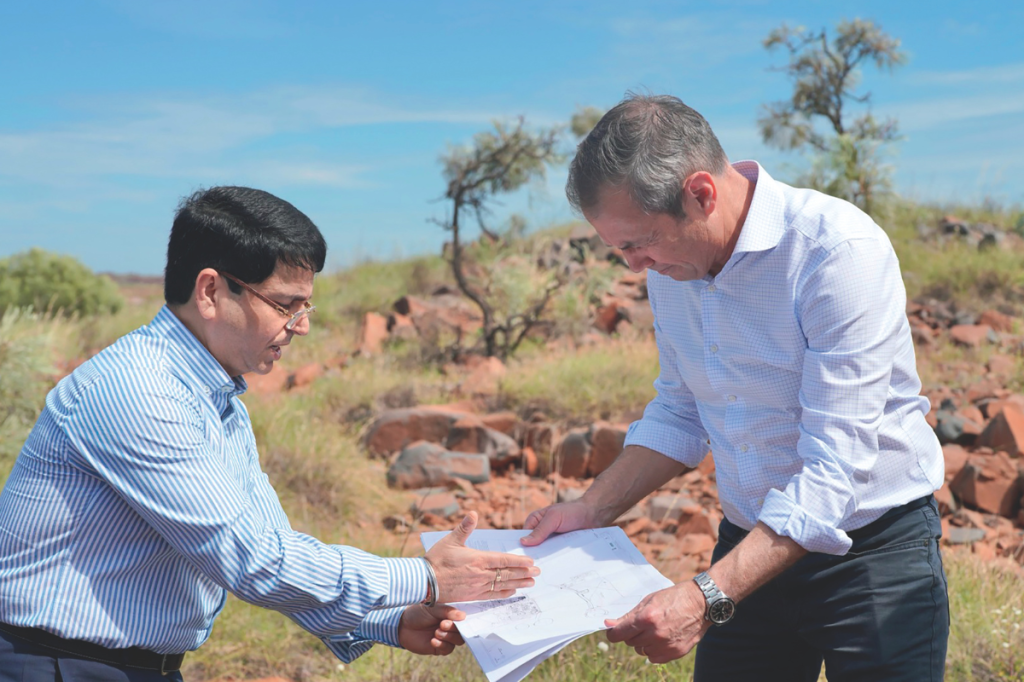
He went outside and sat on a bench on St Georges Terrace in central Perth, when one of the bureaucrats, Walter Law, walked past. They said hello, and Law asked Rambal what his regular line of business was. Petrochemicals.
“He then shook my hand and said, ‘What do you need?’ I said, ‘I need local gas.’”
Rambal soon found himself with an invitation to fly to the Pilbara. He called his wife, worried it was some sort of kidnap plot. “No one will kidnap you,” she recalls telling him. “You don’t have enough money.”
He found himself meeting politicians, inspecting sites, and returned home weeks later with some new friends in government and a memorandum of understanding with Apache Energy.
His boss’s son, Pankaj Oswal, got involved. They came back to Australia in 2000.
Rambal was struck by Perth with its ghostly quiet limestone neighbourhoods under hard-blue skies. “People used to ask me, I said, ‘Honest to God, just keep your house open. No locks needed.’ I had a convertible car. I said, ‘Keep your roof down. No one will touch you. It’s the safest country ever.’”
Arm twisting
Joe McCarthy was “execution manager” for Kellogg Brown and Root in Houston, Texas, tasked with evaluating potential customers asking to license the company’s ammonia technology.
He didn’t want to meet the two tyre kickers from India down in the lobby – kids with nothing but an idea. But the sales guy talked him into it. And when McCarthy met them, he was impressed. Usually, dreamers with big plans talked about what they wanted to do. These guys talked about what they were going to do.
“They thought there was no way that this was not going to happen,” recalls McCarthy. “That impressed me – but on the other hand, I didn’t understand how they could get the job done. They’ve got nothing behind them. ‘Who’s got the money?’ is the first question you ask.”
Rambal hung around in Houston for weeks after that meeting. “He stays with things,” says McCarthy. “He doesn’t give up. He likes to get to yes. And what I’ve noticed about him over a long association now is that it’s not just repeating the same thing.
“He tries to find a way to convince you. He’s not bludgeoning you into something, although you wouldn’t want to negotiate a price with him. You will give up almost all of your money if you do.”
“It comes down to discipline. You don’t give up. Opportunity will come one day, and when it does, you should be smart enough to open the door.”
Vikas Rambal
After securing the KBR technology, Rambal needed a contractor to build it – and provide an unlimited make-good guarantee, such that if something went wrong, it was on them. Without that, the banks wouldn’t come on board, but such guarantees require more arm-twisting than small fry can usually apply.
Rambal, however, twisted hard enough on the Canadian company SNC-Lavalin. And after 36 trips to London over several years, the deal was done.
Rambal looks back at it now with a sense of astonishment. “Two kids came here. One was 25, I was 29. And we raised US$320 million from National Australia Bank, ANZ. We created the world’s biggest ammonia plant, and no one talked about it.”
Death and deals
Rambal had owned 30%, and Oswal 60% when they formed the company, but their shares were halved when Norwegian fertiliser giant Yara came in as the offtake partner in 2005.
The 2,200-million-tonne-a-year plant [the next-largest in the world, produced 1,500 million tonnes, according to Rambal] opened in April 2006. In that same month, Rambal’s father, Perdaman Rambal, was diagnosed with terminal cancer. The son dutifully rushed home.
Rambal’s father died on June 1, 2006. The dates are etched in Rambal’s mind. It was the same month that the Burrup plant’s first exports left the country.
Rambal won’t go into specifics of the dispute with his co-owner. “Our values were different. Our way of working was different – how I want to run the organisation, how the organisation grows.”
Maegha remembers the stress of the time. “We had spies on us,” she says. The boys had to explain the bodyguards to their schoolmates.
In January 2007, Oswal bought Rambal out for cash in a deal reported to be worth about $300 million.
[Pankaj Oswal and wife, Radhika, remained prominent in Perth social circles until the ANZ Bank placed Burrup Fertilisers in receivership in December 2010. The bank and Oswal settled, and Yara bought the plant – now known as Yara Pilbara – in 2012, in a joint venture with Apache Energy, valued at $850 million.]
Thinking big, thinking small
Rambal suddenly found himself with a bucket of money and a hole in his life. His father was his biggest mentor. The plant had been his identity.
He wanted to go home, but to what? He didn’t care.
“I lost my emotions,” he says. “I don’t use these words lightly – ‘depression’, ‘anxiety’ never existed in my life, but I was not the same guy.”
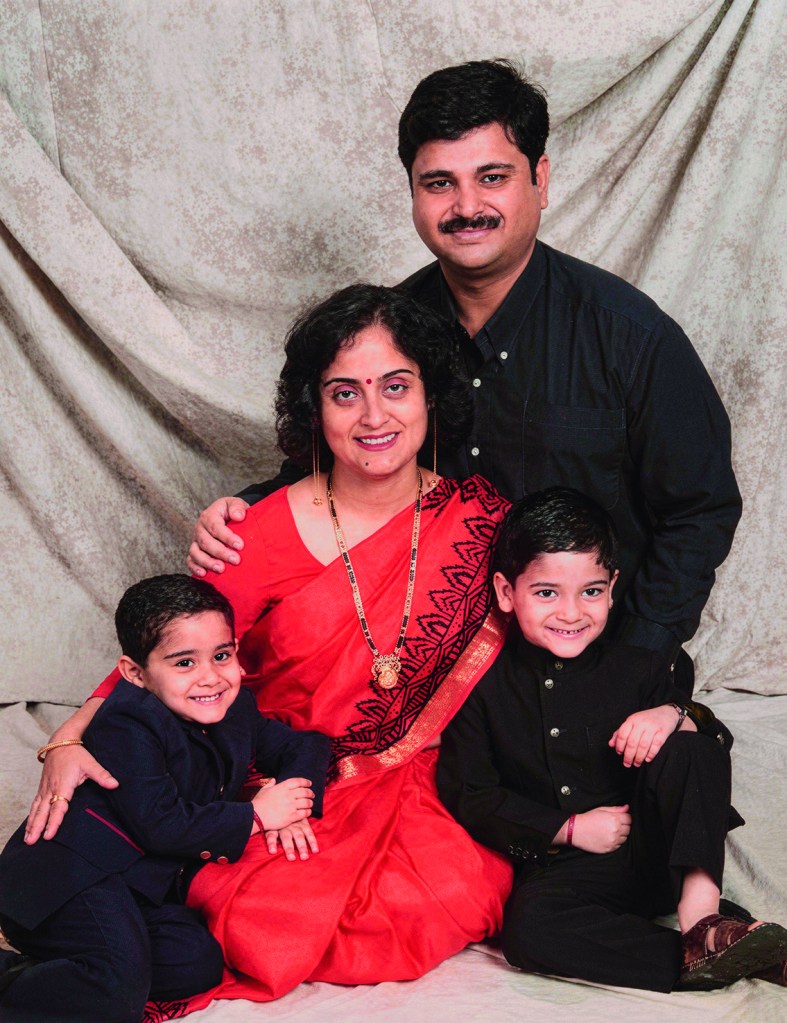
Maegha says Vikas had become something of a stranger to his sons in the years of building the plant. “He used to come home once a month, and the kids used to get scared. ‘Who is the stranger in the house?’
For him, that project was his baby, and then, all of a sudden, it was gone. That’s a big shock – he lost interest in everything.”
He told Maegha he had done it all for the boys. For their legacy, and now it was all gone. “I said, ‘No, it’s not gone. You’re going to build another one,” she recalls. “He said, ‘I can’t. My mental state is not stable.’”
She told him that if he weren’t in a fit state to do it, then she’d go and do it herself. “I can sacrifice the kids. I can send them back to India,” she recalls saying. “Because this is our reputation. Everybody knows us, not him [Oswal]. Every minister, everyone. How can we leave this country? What will they think about us?
“I’m not an engineer, but I will hire people to get advice, and I will build it.”
Rambal remembers his wife focusing on the legacy. She knew it was the chink.
“It goes back to my family roots,” Rambal says. “On my mum’s side, my grandpa was a freedom fighter with [Indian independence leader and future prime minister Jawaharlal] Nehru. I belonged to a family where country, belonging, and legacy were very big things. That triggered me. I understand now, that’s why I don’t give up. I don’t let anything go.”
For two weeks after striking the deal with Oswal, however, he remained in despair.
“But after 15 days, something clicked,” he says. “It was Australia Day, January 26. We started reinventing me. I joined my gym. It hurt me that I have to have an identity.
“If I left with the money, people would not understand why I came. I gave this country a good seven years of my life, but for what? ‘I built a plant, I sold it, took the money, came home.’ It didn’t gel.”
He was determined to build another petrochemical plant of some sort. But in early 2007, China had begun sucking up huge amounts of gas, and prices had risen close to tenfold since he’d come to Australia.
But he had an idea. “I thought, if you convert coal into gas, it will cost $4 a gigajoule. It’s much better than buying gas at $8 to $10 a gigajoule.”
With a company named for his father, Perdaman, he developed plans for a urea plant in WA’s coal hub, Collie, 180km south of Perth, that would be the first of its kind in Australia and, once again, the largest in the world.
He got a supply agreement with billionaire Ric Stowe’s Griffin Coal in Collie. But in 2010, Griffin went broke and was sold to Indian company, Lanco Infratech, which then suffered a similar fate.
“I’d got all the environmental approvals, federal approvals, and development approval. All the lenders. I was on the brink of converting that project [when] this company went belly up.”
Rambal couldn’t find another coal supplier at a workable price, and in 2014, he walked away from Collie. He’d blown most of the money he’d made from Burrup.
Maegha remembers they cut back from two cars to one, stopped the newspaper subscription and gave up takeaway coffee. Every dollar now counted.
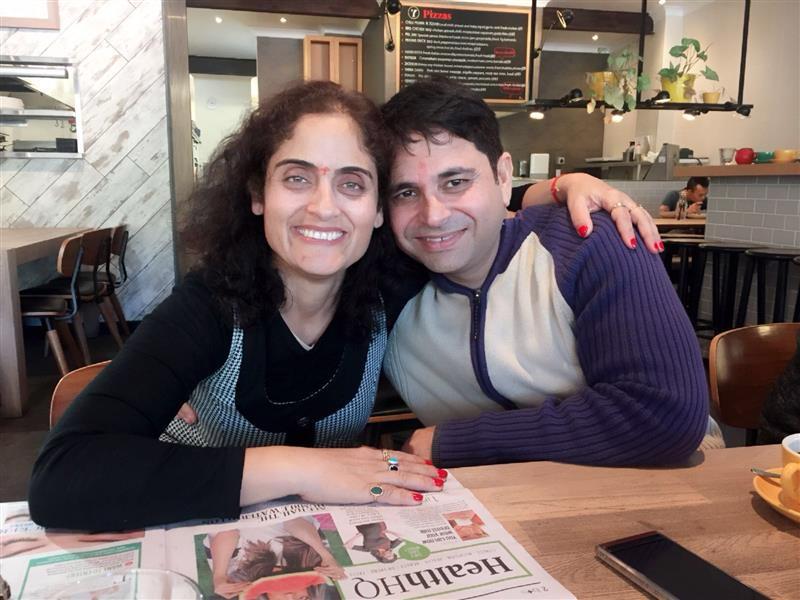
And she prompted him to start thinking smaller.
“The only thing that goes in my head is big projects,” says Rambal. But Maegha started them looking at real estate, and they used his good relationship with the CBA to borrow money to buy one shopping centre, then a second.
At least they could now afford the school fees. Investments in a renewable energy business, an immigration business followed, then a pharmaceuticals factory in India. “We are six companies now, a diversified company.”
But the big-project guy was always there, looking for that next opportunity. It came in 2017, when Woodside Petroleum CEO Peter Coleman reached out to Rambal. Woodside owned 25% of the undeveloped Scarborough gas field off the north-western coast of Australia and was negotiating to buy a further 50% from ExxonMobil. Woodside needed customers locked in.
The field, due online in 2026, had to sell at least 15% of its gas domestically. Rambal showed Woodside the plans and engineering he’d already done for the Collie plant, all ready to be re-purposed.
“I was at least 12 months ahead of schedule. They saw that it was a real project. Woodside had many opportunities to sell the dom [domestic] gas, but they selected Perdaman based on their due diligence.
“I thank the Woodside board every day that they trusted my dream. And now it’s paying off for everyone.
“It comes down to discipline. You don’t give up. You just keep going. Opportunity will come one day, and when it does, you should be smart enough to open the door.”
Once again, it was going to be “world’s biggest” – 2.3 million tonnes of urea a year. Huge volume was the only way to counterbalance Australia’s labour costs.
In 2019, he convinced his former boss, Pradeep Kumar, to take a pay cut to join him at Perdaman. Rambal recruited British multinational services company EY to find equity partners while French bank Société Générale went looking for debt finance.
Rambal had intended to keep 65% of the company for Perdaman, but, as costs blew out during the COVID-19 pandemic, he realised he’d have to give up more. He toyed with the idea of making the plant smaller.
“But the moment I did that, the cost of production went so high it was uncompetitive. So I went back to my scale. I had to raise more capital.”
In April 2023, US investment firm Global Infrastructure Partners [GIP] took a 45% stake in the project [before GIP was taken over by US giant BlackRock] for $2.1 billion. And 32 international banks came in with $2.4 billion in loans, enabling construction to begin on the $6.4 billion plant.
Across the Indian Ocean in Chennai, 8,000 workers have spent 26 million person-hours fabricating massive modules for the plant – a feat he says has never been achieved at this standard in India before.
“Everyone goes to China, Vietnam. We did it in India,” he says. “The feedback we are getting is that the quality is second to none.”
Perdaman’s next project will be a 30-megawatt solar farm [enough to run 8,000 homes] to run the plant with fewer emissions. But that big-projects guy can’t stop there. Next will be a 1,000 megawatt solar farm, he says. That’s enough to power Wollongong or two Geelongs.
Even as the Burrup Peninsula plant rises from the Pilbara dust, Rambal’s gaze is already on the horizon. Perdaman has applications in for solar farms in India. Gas producers have approached it from all over the world with off-take ideas, says Rambal.
“We tell them we can’t do anything now. Come back in six months.”
Rambal wants Burrup to be a blueprint for industrial collaboration between Australia and India.
“In India, we say karmabhumi – your destiny land. Australia is my karmabhumi. I kiss this land every day,” he says. “My kids grew up here and are Australians, but we still have our birthland, India.”
His eldest son, Ishan, studied mechanical engineering and accounting at the University of Western Australia, while Vashist studied chemical engineering and finance. Both are working in the business.
Cricket brings out the cultural differences. The sons and Maegha cheer for Australia, their father for India. “We have big fights over Ricky Ponting vs Sachin Tendulkar,” he says.
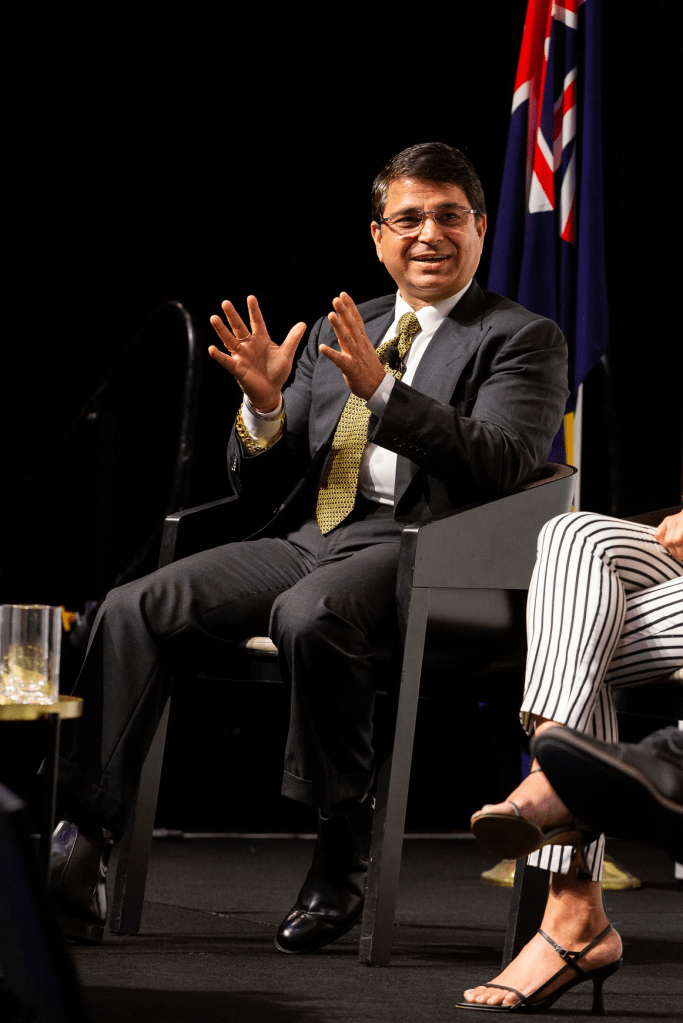
Rambal’s vision extends beyond family to the nation and the next generation of engineers. “I want young people to see that it can be done,” he says. “I’m not a politician, I’m not a Bollywood actor. This is about showing that you can build something real, something lasting, that links countries, creates jobs, and trains people in new skills.”
Build a single luxury hotel, however, and you get more media. Promise a hydrogen plant and, well … “There’s no bigger story than this, mate.”
Fossil Fuel or Fossil Food?
Urea is a nitrogen fertilizer made from natural gas whose invention was said to hyave enabled the feeding of half the world’s population. Without it, modern agriculture would collapse.
Here is how it’s done:
- Nitrogen is plentiful in the atmosphere but needs to be “fixed” for plants to use.
- The process begins by converting natural gas into hydrogen, which is then combined with nitrogen from the air to make ammonia.
- Ammonia is reacted with carbon dioxide to produce urea.
- Urea is the product that farmers spread on their paddocks to get the nitrogen to their crops’ roots.
Perfect Match
When Maegha Rambal first met her future husband – brought together at the behest of family matchmakers – she wasn’t impressed. He was a bit chubby. But her father urged her to consider his many favourable attributes.
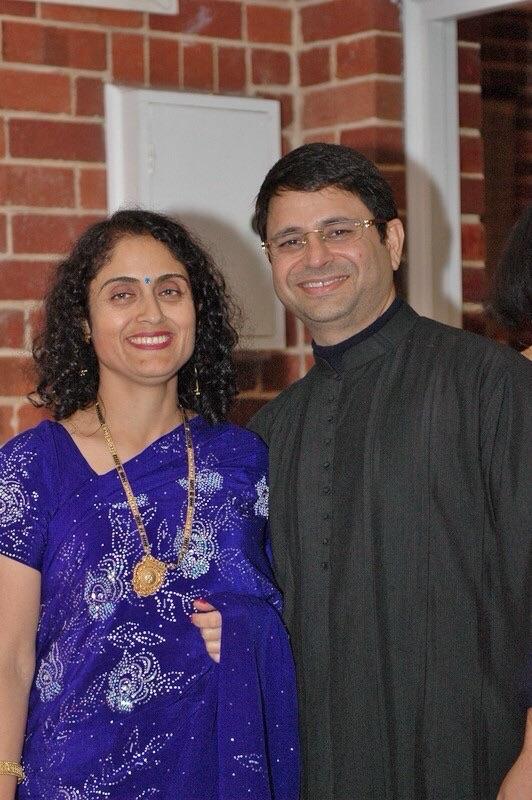
Also of Kashmiri Pandit origin, Maegha was a senior public servant – a gazetted officer – having graduated with a master’s in mathematics. She yielded to her father’s will, and they married in 1997.
She gave up work but made it clear that she wanted to live abroad and pushed him to pursue opportunities. “I wanted to explore something more in my life,” she says.
They’d had two boys, Ishan and Vashist, before that opportunity arose.
The family moved to Perth in April 2001. Maegha remembers the deathly quiet of their suburban Applecross street. Not even a bird chirping. Just two crying babies. A few days in, with Vikas having flown to Luxembourg seeking investors, the house alarm went off. She didn’t know what it was. Fire? Burglar? She rushed onto the front lawn, crying.
Not a single neighbour came out to see what was wrong. This place was strange.
With no servants, she had to learn how to take two crying boys to the shops, how to cook the unfamiliar food.
“I was crying all the time to my mother-in-law on the phone, ‘I don’t know what to do.’”
Rashpal Kaur, Perdaman’s “organisational and methods analyst” chips in to the Zoom call with Forbes Australia: “You need to understand, Maegha was a very high-ranking gazetted officer. She’s not a normal person. If you look at her education, she’s a mathematician, and what she sacrificed. It’s so commendable. And that’s why chairman loves her to bits.”
Want to see more Forbes articles on your feed? Tap here to make Forbes Australia a preferred source on Google.
Look back on the week that was with hand-picked articles from Australia and around the world. Sign up to the Forbes Australia newsletter here or become a member here.