
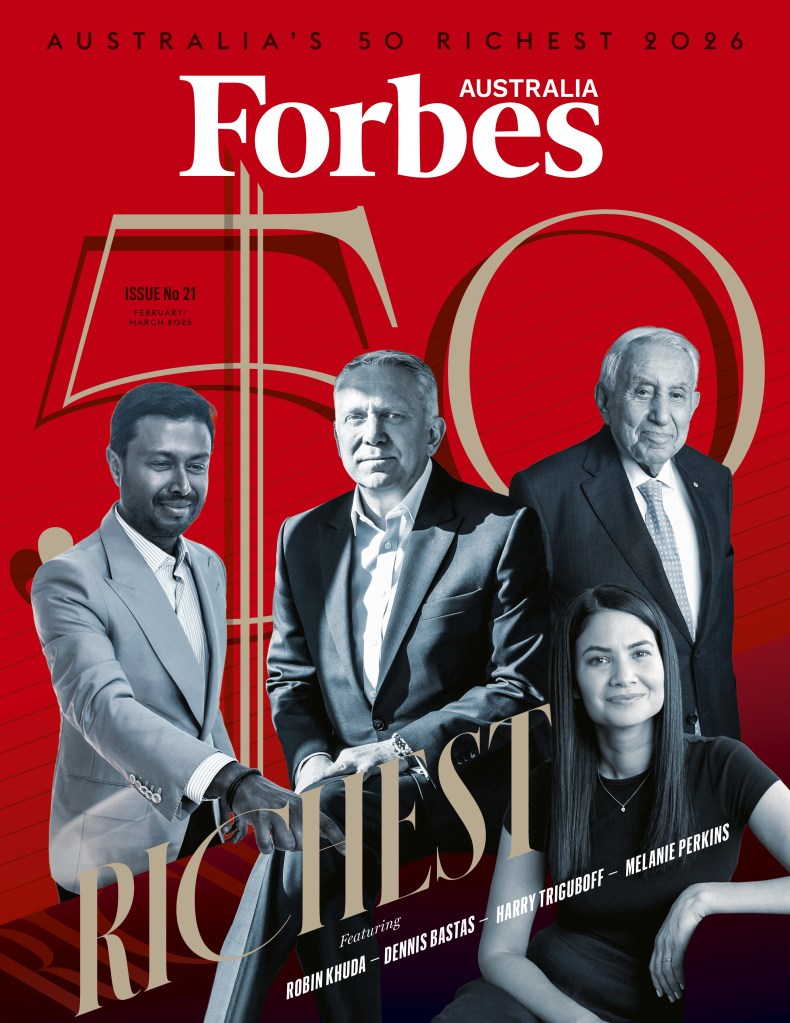
Fresh faces are shaking up the Forbes Australia 50 Richest list – self made, fast-moving and sometimes surprising. Meet the newcomers rewriting the rules of wealth and ambition in a rapidly changing economy.
This story features in Issue 21 of Forbes Australia. Tap here to secure your copy.
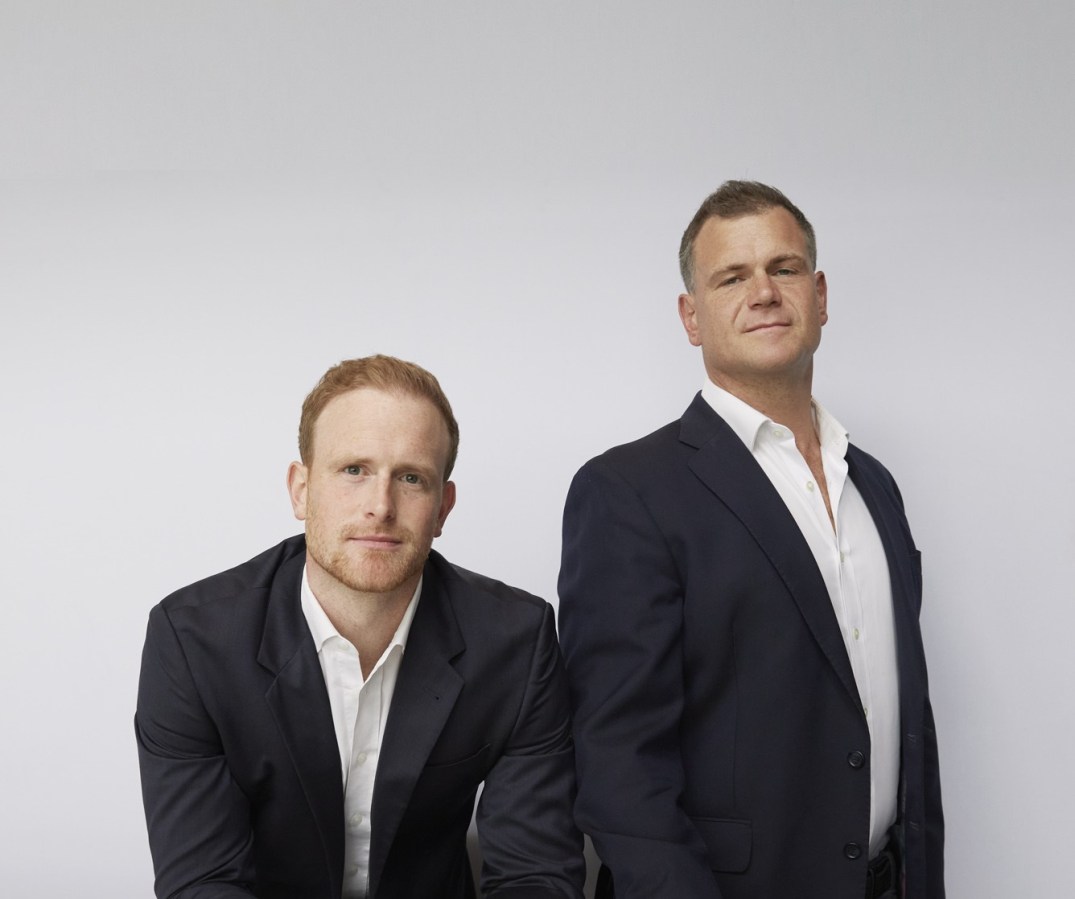
Daniel and Will Roberts
Daniel and Will Roberts built their fortune by turning green electricity – in the wrong places at the right time – into greenbacks, on an industrial scale.
The Sydney brothers are founders of IREN, a Nasdaq-listed company that began as a Bitcoin-mining business that arbitraged white-elephant green energy, before sidestepping into AI data centres.
They enter the Forbes Australia 50 Richest at number 43 with an estimated wealth of $1.7 billion.
Daniel Roberts first encountered Bitcoin in 2013, buying at US$1,000 and selling at US$500 when the price collapsed. Unperturbed, a later pre-sale investment in Ethereum proved more lucrative.
A rabbit hole deep dive into monetary history led him to conclude that governments were debasing fiat currencies, and that crypto represented, in his view, “clearly, objectively the best monetary asset we have ever seen as a human race”.
By the time that belief hardened, both brothers were already embedded in the financial system they were questioning. Will, still in his 20s, was a vice president at Macquarie Group. Daniel, then 32, was co-owner of Palisade Investment Partners, helping grow it into a $6 billion infrastructure manager that owned airports, ports, wind farms, and pipelines on behalf of super and pension funds.
That infrastructure lens proved decisive. Daniel noticed that every institutional meeting increasingly revolved around sustainability — not as branding, but as risk and social licence to operate.
He found it hard to reconcile his own green leanings with Bitcoin’s enormous energy appetite. Producing a single coin required roughly nine years of average household electricity consumption, with a new coin minted every ten minutes.
In 2018, the brothers quit their jobs and set out to solve that problem.
“We realised that the world was going to crave these power-dense data centres built deliberately for raw processing power,” Daniel said.
While the AI boom was still years away, it was pretty clear that such data centres would have other uses. “Was it AI, high-performance computing, data analytics, or machine learning? All these applications didn’t need the bells and whistles of really low-latency, high-tech capital-city data centres that were very expensive. They just required raw power.”
Because the computing would be cloud-based, geography didn’t matter. The Roberts brothers put on backpacks and circled the globe looking for places where renewable energy had been overbuilt – often thanks to government incentives – and had nowhere to go.
Europe was politically fraught. Iceland’s geothermal riches didn’t solve the problem. The breakthrough came in Canada, via a shuttered pulp mill in Canal Flats, British Columbia, sitting next to surplus hydro capacity.
In a regulated market like BC, excess supply perversely pushes prices up. The Roberts solution was simple: soak up the power, pay the market rate, ease prices for everyone else, and rebuild towns hollowed out by mill closures. They co-located beside old industrial sites, reused existing electrical infrastructure, rehired and retrained workers.
Related
In Mackenzie, population 3,400, their new company, Iris Energy, created jobs and money where both had vanished. Mayor Joan Atkinson called the company “a very responsible corporate citizen”, noting its $100,000 annual community grant and repeated visits from the founders. “They’re the kind of company you want to move to your town.”
The same playbook scaled in Texas. Childress County sat amid 32 gigawatts of wind and solar generation, yet its transmission lines were capable of exporting just 12 gigawatts. The power existed. The demand didn’t. Iris built next to the electrons.
When power prices spiked, the company shut down Bitcoin mining and sold electricity back to the grid – at higher margins than the crypto mining. When supply overwhelmed demand, Iris got paid to consume it. Roberts explains how the cost of mining could be “negative US$28,000 a coin”. And they were still left with the coin to sell at market rate.
It’s no accident that Roberts talks in gigawatts, not gigabytes. Or that the company was called Iris Energy, not Iris Data.
The brothers floated Iris Energy on Nasdaq in November 2021 at US$28 a share, valuing it at US$1.55 billion – a week after Bitcoin peaked. The share price collapsed to US$1.06 by the end of 2022.
The brothers had lived through drawdowns before. “In terms of the Bitcoin thesis, we were unperturbed,” Roberts said. “But clearly it was a challenging time when you’re investing other people’s hard-earned money.”
But that low ebb also coincided with the release of ChatGPT into the wilds in November 2022. As artificial intelligence demand exploded, Iris ordered NVIDIA H100 GPUs. Its first major AI customer was Poolside AI. Then came scale.
In 2023, while the company was pivoting, Daniel Roberts took a hit playing Aussie rules that broke a rib and revealed a 7cm kidney cancer. Surgery removed the kidney entirely. “They got it all,” he said. “There’s nothing left, and life goes on, but it’s a big wake-up call.”
By late 2025, the pivot was complete.
Re-branded as IREN, the company had signed a five-year, US$9.7 billion deal to supply AI processing power to Microsoft, planned to add 120,000 chips across North America, and was targeting at least $5.25 billion in revenue by the end of next year. Bitcoin was once again a tailwind.
Since its 2022 lows, the stock has bounced wildly. As recently as April 2025, you could have bought it as low as US$5.12 a share. In November 2025, two days after announcing the Microsoft deal, you could have sold it as high as US$76.87. A 15-fold difference, seeing its market capitalisation almost reach US$20 billion.
It sits at about US$13 billion at the time of writing. The brothers hold 6% each, with control of 35.4% of the voting shares.
“It’s not work for me,” says Roberts. “It’s a passion – you’re at the forefront of where civilisation is going.”
Dennis Bastas
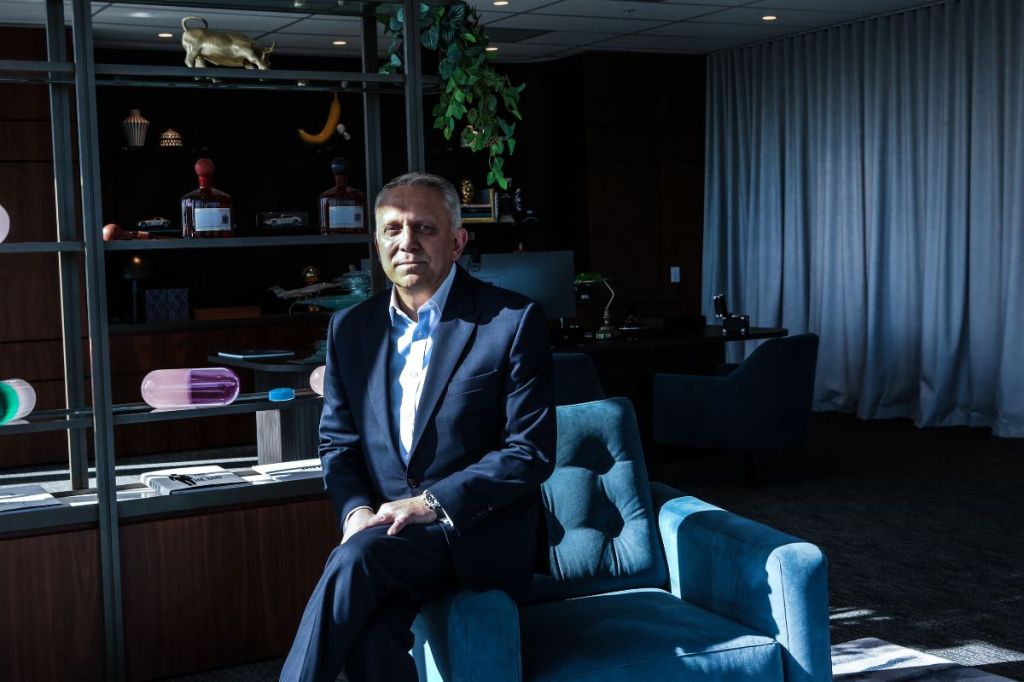
Dennis Bastas doesn’t do organic. When he buys a company, he doesn’t want growth to chug along a few points over inflation. He expects it to feed his other businesses and, in turn, be fed by them.
That’s how he’s managed better than 30% annual growth since he bought a small pharmaceutical company in 2015 and turned it into the $3.6 billion juggernaut that sees him debut at number 21 in the 2026 Forbes Australia 50 Richest.
In the string of acquisitions that have made his DBG Health the “largest pharmaceutical business that has ever existed in Australia”, Bastas says there’s a common theme; an “almost a constant sense of being at war”.
“Business is warfare by any other means. We are now 20 times the EBITDA of the business that I acquired back in 2015. You can’t do that unless you’re taking business from other people,” Bastas said on The Interview podcast.
It’s not about product, it’s about the customer, he maintains. “It comes from getting up every day and going, ‘Who aren’t we doing business with, and why?’ That’s a challenge I put to our people. We are never satisfied. I’m never satisfied.”
Bastas puts a lot of what he’s achieved in such a short time down to a mix of prescience and luck. The cosmetics arm of the business, started in 2020, for example, has grown 30-fold. He never saw that coming. But he does it all thinking about synergies. He bought a cosmetics business because he loved their social media team and thought it could add value across the entire business. Having got the generic drug business running smoothly, he’s started on branded, patent-protected cancer drugs.
“I didn’t build the infrastructure for one company. I built it to be a partner with 20 to 30 companies and as the preferred channel to the Australian market. So when we look at acquisitions, they have to fit, and they benefit the whole organisation.”
Bastas, 59, left university with degrees in engineering from Monash and industrial design from RMIT, wanting to pursue a creative career – maybe designing cars. He was set to study design at the Royal College of Art in London when the business of his Greek migrant father hit a rough patch, and he could no longer afford the fees.
He went to work at Myer in logistics, then at Village Roadshow in developing their internet. He realised business was actually creative, and that he loved it.
He left Village Roadshow thinking he would buy some biopharma labs to become the infrastructure for what he saw as the industry of the future, biotech. But when a deal to buy the Walter and Eliza Hall Institute’s manufacturing arm didn’t come off, he pivoted his capital – and his investors – into generic drugs.
After exiting that business in 2012 with $375 million in the kick, he paid $380 million for Arrow Pharmaceuticals in 2015. In 2023, he took 100% ownership, in what he sees as the start of Dennis Bastas 3.0.
“If I were just coming in here today and watching it all just grow organically, I’d probably sell out. But that’s not where we’re at. It’s not a bad day for me when I come in, and things have gone to hell, and we’ve got to figure out a way through them – that’s what being alive is about.”
Robin Khuda
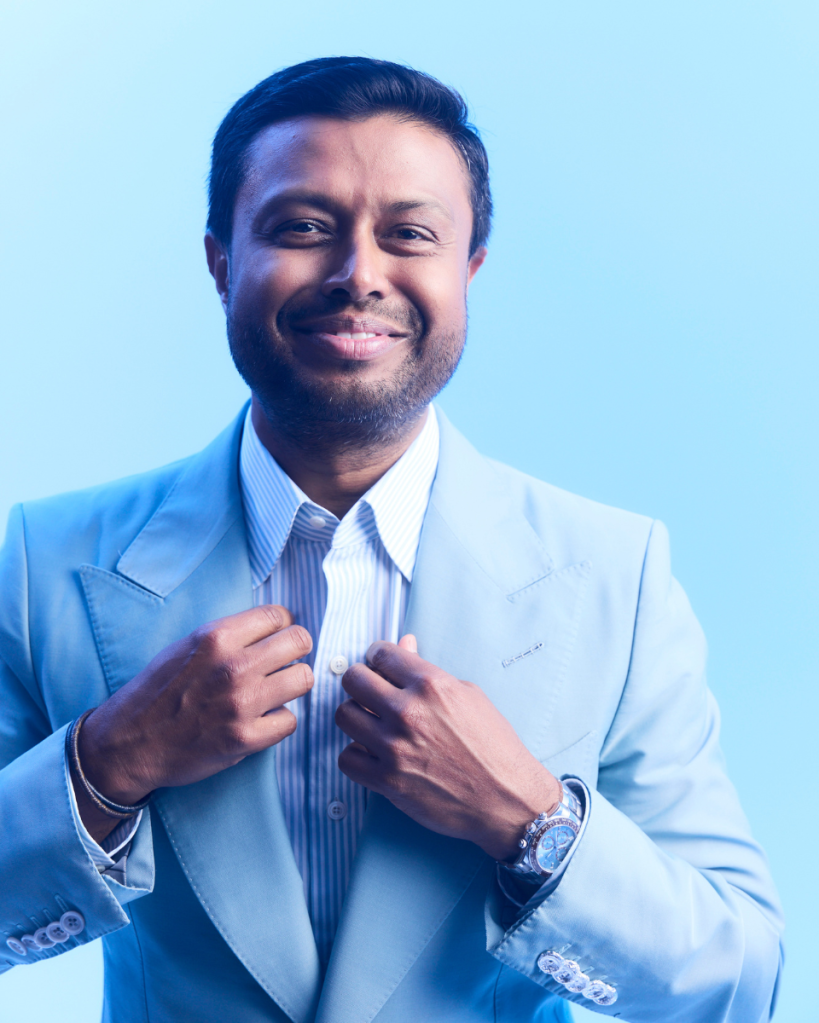
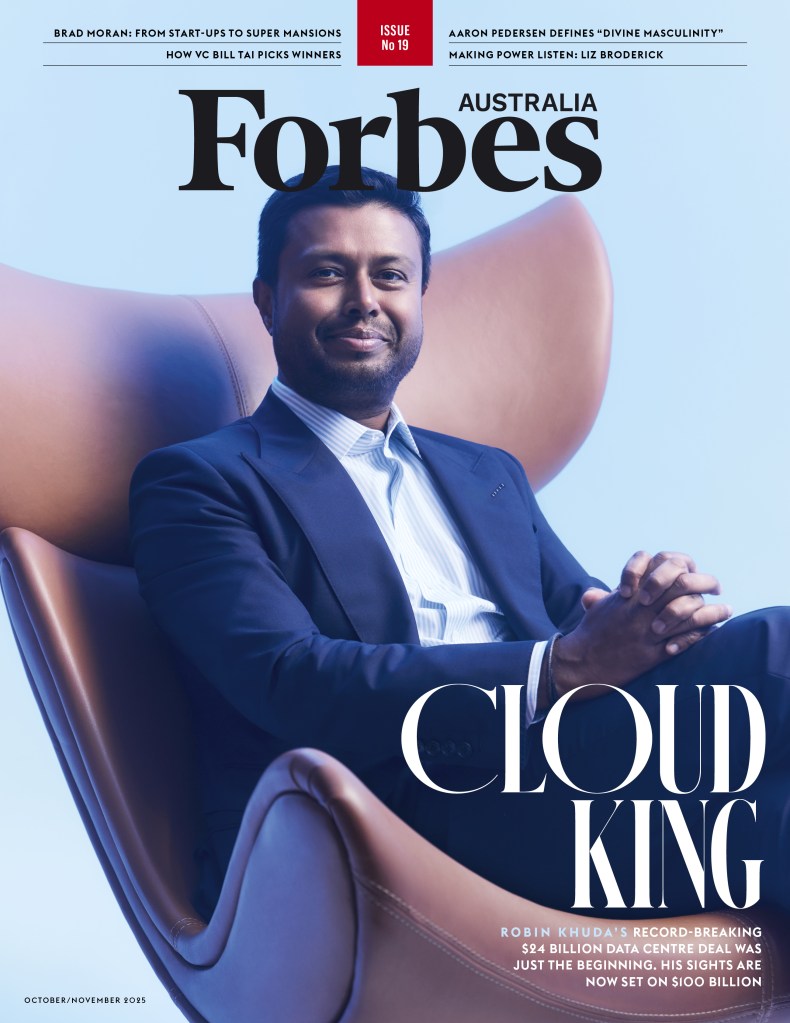
Robin Khuda is the immigrant founder who nearly bankrupted himself building data centres when no one else could see the future – then sold a chunk of the company in a $24 billion private equity deal, one of the largest Australia has seen.
Born in Dhaka, Bangladesh, in 1979, Khuda arrived in Australia aged 18 and washed dishes in a Rocks hotel to pay his way. Permanent residency and a steady job were the height of his ambition.
Khuda trained as an accountant at Grant Thornton before moving into telecoms finance at Optus, where he learned to translate engineers’ needs into numbers that boards would fund. That knack, part technical and part persuasive, became his edge. After roles spanning capital investment, sales and M&A, he joined PIPE Networks during the wreckage of the global financial crisis, helping steady the company before its $400 million sale in 2010. He took no equity, but he caught the entrepreneurial bug.
His next stop was employee number one at the datacentre start-up NEXTDC. Where founder Bevan Slattery gave him both equity and conviction, cloud computing was still considered speculative, but Khuda could see what the hyperscalers – Amazon, Microsoft, Google – would eventually demand: scale, speed, efficiency and reliability, at a level that existing data centres simply couldn’t deliver.
When the NEXTDC board baulked at re-engineering the business model and expanding into Asia, Khuda walked.
In 2015, aged 35, he founded AirTrunk. The vision was audacious: hyperscale data centres, five to ten times larger than the competition, built 40% faster and cheaper, designed explicitly for the world’s biggest cloud customers. To get there, Khuda tore apart conventional engineering assumptions, dissecting everything down to individual UPS components. He poured in millions of his own money, even dipping into his super, while investors largely passed.
The breakthrough came in early 2016 when a global hyperscaler agreed to back him. Khuda promised two enormous data centres in Sydney and Melbourne in just 15 months, and then spent the rest of the year scrambling to raise $400 million to make it happen. The money didn’t come. Investors still couldn’t see it. By Christmas 2016, AirTrunk was paying 20% interest on emergency debt, and Khuda was seeking insolvency advice.
In February 2017, salvation arrived via Goldman Sachs and private-equity firm TSSP, which funded what was then the largest pre-revenue capital raise in Asia-Pacific history. Khuda survived with 24% of the company and delivered. AirTrunk missed its deadlines by a few weeks. Then, he never missed another. AirTrunk expanded across Australia, Singapore, Hong Kong and Japan. In 2020, Macquarie Asset Management and Canada’s PSP bought 88% of AirTrunk at a $3 billion valuation, netting Khuda about $360 million. Four years later, Blackstone led the $24 billion buyout of Macquarie and PSP, with Khuda taking an estimated $1.68 billion off the table and cementing his 38th place on the Forbes Australia 50 Richest.
Still CEO, Khuda is already talking about a $100 billion valuation for AirTrunk, and backing his home turf with a $100 million philanthropic commitment to lift girls from Western Sydney into STEM.
He and wife Melea Walker-Khuda bought an almost $20 million house in Sydney’s Mosman, a few hundred metres up from Balmoral Beach, and have amalgamated next door into their “forever home”. Permanent residency, tick. A steady job, tick.
Want to see more Forbes articles on your feed? Tap here to make Forbes Australia a preferred source on Google.
Look back on the week that was with hand-picked articles from Australia and around the world. Sign up to the Forbes Australia newsletter here or become a member here.