
A chance meeting in a pub saw the team that built Australian braintech start-up Synchron spinning out into a bigger brain opportunity.
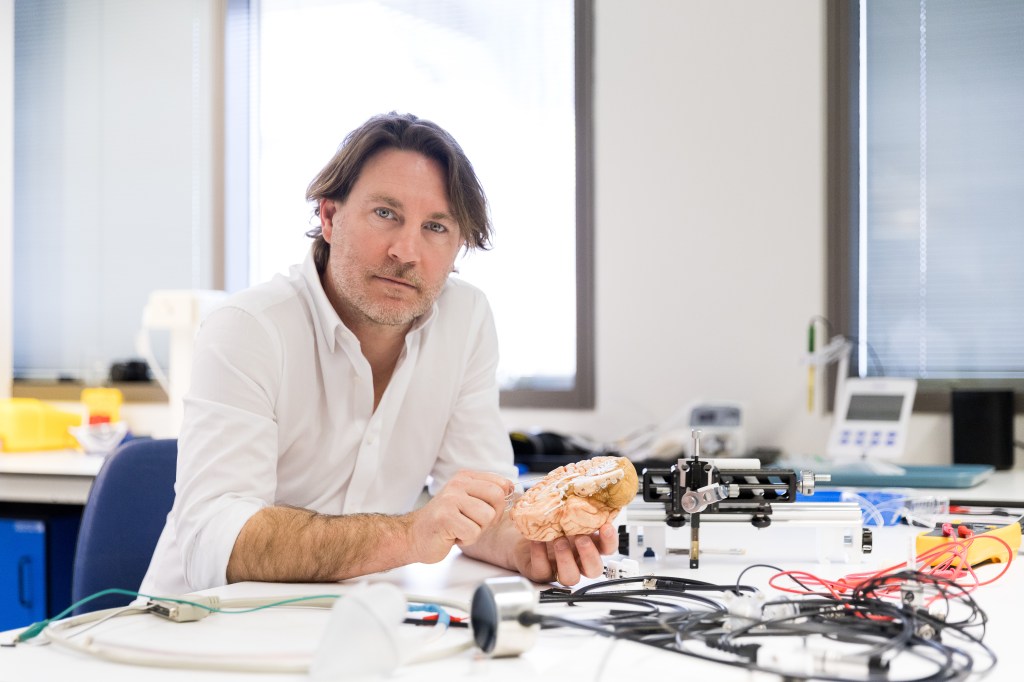
When Nick Opie was helping lead the world in developing a brain-computer interface that could remain in humans for years, he was already thinking about the next frontier.
As co-founder of Synchron, Opie had helped design and build technology that allowed people with severe paralysis to control a digital device using just signals from their brains.
Opie got his device into humans long before – and in greater numbers than – Elon Musk did with his Neuralink device.
It was a remarkable achievement for a Melbourne start-up, and it saw Synchron attract investment now totalling $545 million, with backers including Jeff Bezos and Bill Gates. But the gravitational force of that money also pulled the company to New York where it is now headquartered.
But Opie didn’t go. He left Synchron, on the quiet, in early 2024.
It was just time to do something different, he says, and he and co-founder Tom Oxley are still on good terms.
But Opie has ended up bringing over key team members from Synchron into his new venture, Ultra Bionics. In this, his first media interview since leaving Synchron, Opie and his cofounders reveal where they’re at on the brain-tech frontier.
While Musk and OpenAI founder Sam Altman haven’t been shy in talking about their transhumanist dreams of having artificial intelligence connected to brains, Opie has kept his ambitions more prosaic.
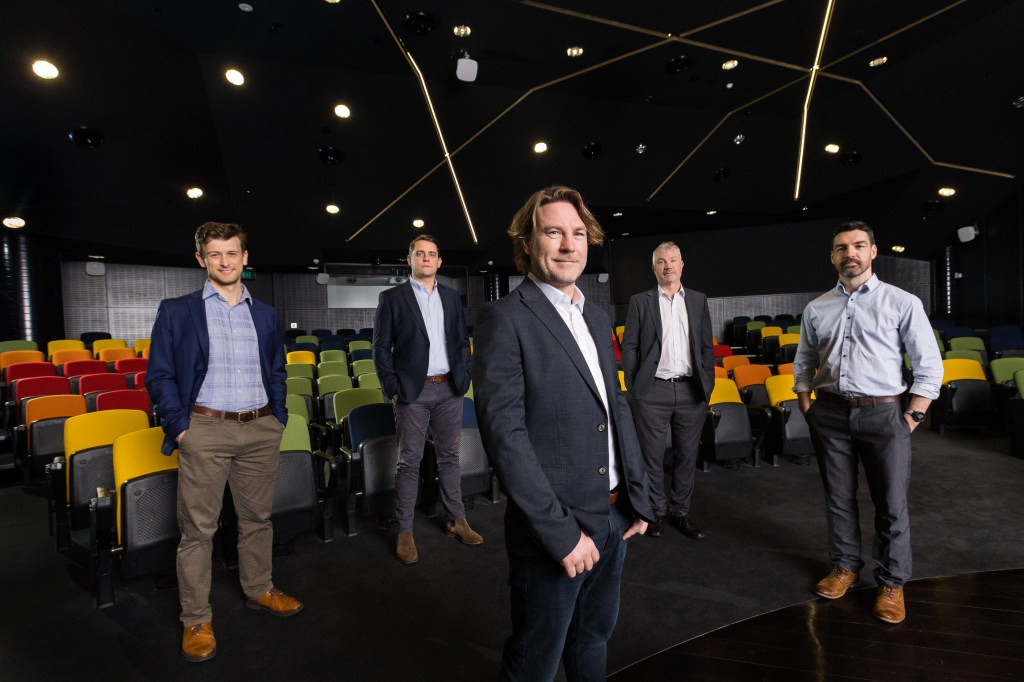
The A Team
Synchron was singularly focused on Tom Oxley’s vision of getting signals from the brain into a computer, but Opie was always fascinated by the idea of signals going in the other direction, from the computer to the brain.
He’d earned his PhD in 2011 while working at Bionic Vision Australia, the bold attempt to make a bionic eye in Melbourne, where he learned the rudiments of having a machine – a camera – talk to the nervous system. He co-founded Synchron with Oxley in 2012 while still working on the bionic eye.
A few months after Opie left Synchron, it announced it was shutting down its Melbourne office. The research team that had created the Stentrode – Synchron’s key device that goes up a vein into the brain where it reads brain signals – were all offered jobs in New York.
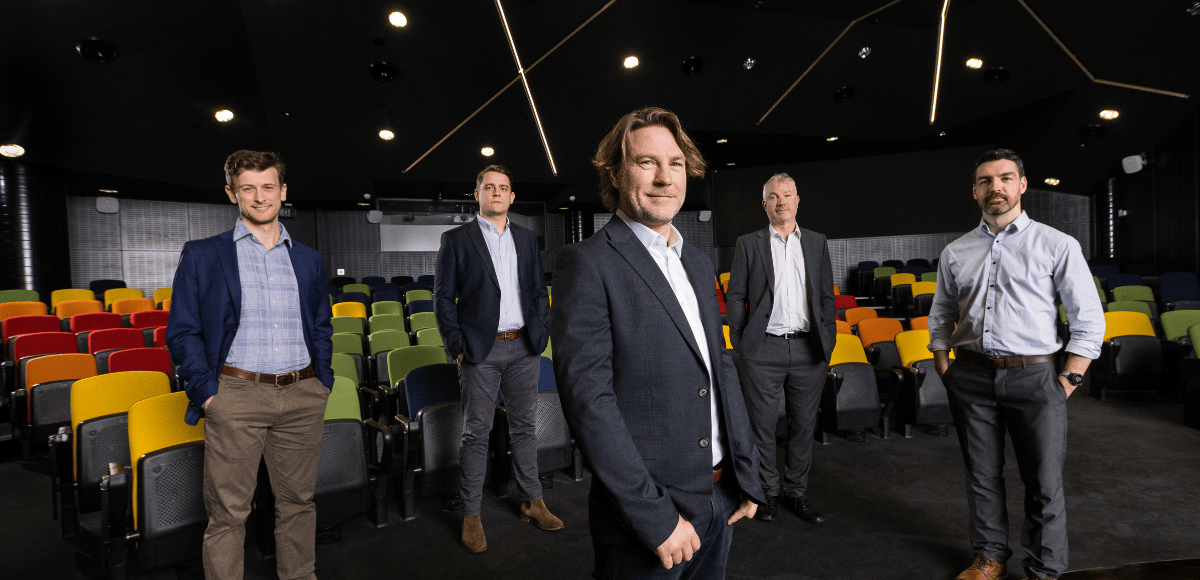
In August 2024, they went for farewell drinks at the Lincoln Hotel, Carlton, and invited Opie along. He got talking to key members of Synchron’s “advance technology team” – Stephen Ronayne, Peter Hurley, Angus Begg and Michael Haines.
At Synchron, their job had been to come up with the hypothetical next generation of devices. Opie just happened to be there to buy them a beer.
“We got chatting about what was next for us,” recalls Haines, a mechanical engineer who’d been at Medtronic before Opie had lured him to Synchron in 2022.
Now Opie was telling them how keen he was to keep innovating and building things.
“We were all toying out what our next move was going to be,” recalls Haines. “The New York offer was on the table, and we were looking at other opportunities around Melbourne.”
But they all loved the idea of keeping the team together.
All four of them were soon holed up for a night at the Werribee Park Mansion on the south-western outskirts of Melbourne thinking about what was doable – what was worth all the sweat and tears they knew lay ahead.
The day after they left Werribee, Ultra Bionics was registered as a company with Opie, Ronayne, Begg, Hurley and Haines as co-founders.
When asked what the idea was that they were going to run with, all five answered similarly: that they cared more about working together than the exact target.
“When we sat around and thought about it, we’re an incredible team,” says Opie. “We have all these ideas. Let’s get together and develop something that’s going to be even more impactful.’”
They’d seen evidence mounting that ultrasound applied to different parts of the brain appeared to help a multitude of conditions as diverse as chronic pain, obsessive compulsive disorder, Parkinson’s and Alzheimer’s disease.
“The piece that was missing, that fell in our wheelhouse, was that nobody was using an implantable,” says Opie.
What they landed on
High-intensity ultrasound is already being used to destroy malfunctioning brain circuits. The ambition now is to use low-intensity ultrasound to talk to the brain and change activity. Currently, patients in trials of ultrasound for brain disorders need to be treated in a clinic. They put on a big helmet, and ultrasound waves are directed through their skulls.
And that takes a lot of power.
“We’re going to trick all this up,” says Opie. “All we need to do is put [the ultrasound generator] in the skull, so the power we need is tiny.”
The aim is to constantly be able to change the activity of targeted brain cells — turning their signalling up or down — from within the skull.
Ultra Bionics is targeting Parkinson’s disease first because it has the most data on ultrasound being able to positively alter those brain signals. But there are up to 60 other brain disorders for which ultrasound has promise which they see as future targets.
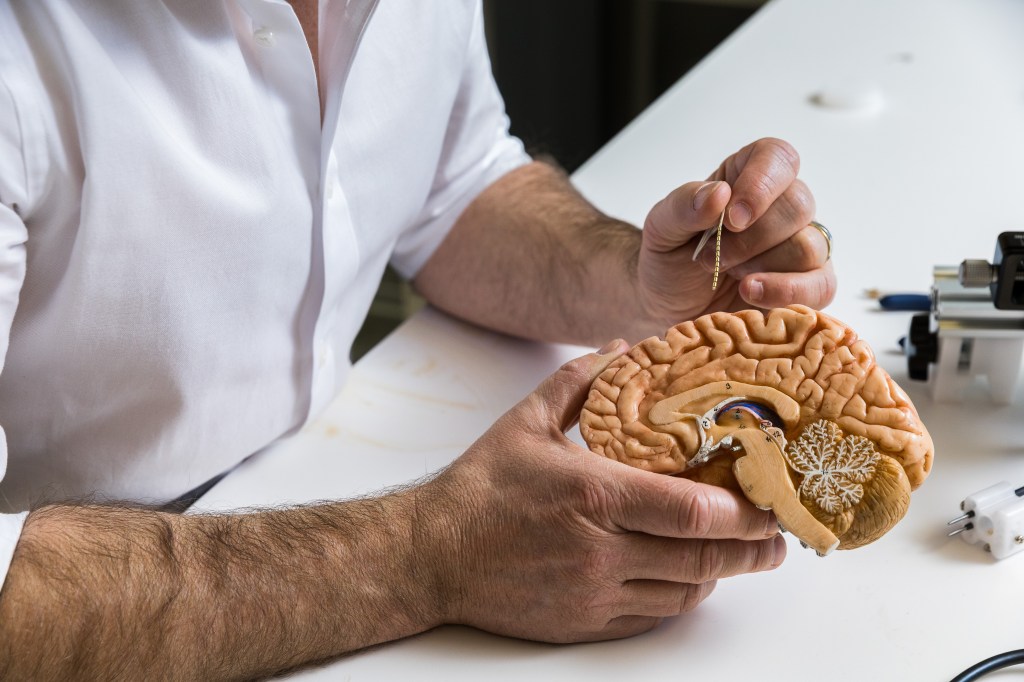
They plan to use a tube, maybe as thick as the lead in a pencil, probably inserted into the third ventricle – a fluid-filled space in the brain. They envisage the insertion will entail a 30-minute outpatient procedure in a cath lab.
Distinct from ultrasound, electrical stimulation is already a routine treatment for Parkinson’s and other movement disorders like tremors and Tourette Syndrome. In such cases, the “deep-brain stimulation” is delivered via an implant to one small, fixed area of the brain, says Opie.
Ultrasound can be much more flexible, he says. “We can steer the ultrasound energy to almost anywhere in the head. So as someone’s disease progresses and changes, we can adapt and we can provide stimulation to the left side, the right side, both sides at once, wherever we want, which is going to be fascinating.”
The daily Eureka!
Ultra Bionics has attracted other ex-Synchron staff. Having all done it before, says Opie, “we have been able to certainly take many years and many millions off the journey, just by knowing the order we should do things. Things like a clinical trial, for example, that takes a long time to get through ethics and to get approvals. So, we’re starting it now.”
It is currently being tested on animals, and they hope to have first human trials, “within two to three years”.
“We came into this not knowing how we’d build it,” says Haines, “But now, through our own designs and working with external suppliers and manufacturing partners, we’ve proven out a pathway to get an implantable device that is functional long-term and can deliver the right energy that we need to get a neural modulatory response.
“Every day is a breakthrough moment. Lots of sequential small breakthroughs unlock the next bit of what we’re doing. But what we’ve done is prove that this type of technology is feasible, which is not something that’s ever been done before.
Opie says they are “actively patenting the space”, but he hasn’t seen any competition emerge doing the same thing.
When Opie has asked ultrasound experts why nobody was doing it from within the skull with an implantable device, “the answer was just that it’s not their field”, he says.
“They’re big on ultrasound. They know how to steer it. They know what brain areas to hit … They just don’t know how to make implantable medical devices.
“It’s fortuitous that they’ve generated all this knowledge and left a little gap exactly where we like to play.”
Ultra Bionics raised almost $2 million in seed capital in 2024 with Blackbird and the University of Melbourne Genesis Fund on the cap table. It is starting a $6 million raise which it says will be enough to get through stage-1, in-human, trials which it plans to begin by the end of 2028.
Opie hopes that more mature Australian venture capital markets mean the company will be able to stay in Australia longer than Synchron.
Musk, Altman and the race for trans-humanism
The rivalry between OpenAI co-founder Sam Altman and Elon Musk has spilled from artificial intelligence into a new frontier: the battle to connect AI directly to the human brain.
And while Musk is betting on surgically implanted electrodes with his Neuralink, Altman is backing the same approach as Nick Opie’s Ultra Bionics: ultrasound.
Altman’s brain computer interface start-up, Merge Labs, has raised US$250 million in a seed round at a valuation of US$850 million.
That’s barely a fifth of the US$1.2 billion raised so far by Neuralink which was reported by Business Insider to have been valued in secondary markets at US$42 billion.
Merge Labs emerged from stealth mode in January, describing itself as a research lab dedicated to “bridging biological and artificial intelligence to maximize human ability”.
It wants to use ultrasound brain implants to have computers talk to brains.
It is a transhumanist vision. If they can interface with the brains’ billions of active neurons at scale, a Merge Labs statement says, “…we could restore lost abilities, support healthier brain states, deepen our connection with each other, and expand what we can imagine and create alongside advanced AI”.
Merge Labs said it intends to do this by developing “new technologies that connect with neurons using molecules instead of electrodes” to “transmit and receive information using deep-reaching modalitieslike ultrasound”.
Want to see more Forbes articles on your feed? Tap here to make Forbes Australia a preferred source on Google.
Look back on the week that was with hand-picked articles from Australia and around the world. Sign up to the Forbes Australia newsletter here or become a member here.