From a $99,900 jet-powered speeder bike to a $39,900 aircraft that folds into a pickup truck, a new generation of personal flying machines is accepting orders, completing test flights and preparing for delivery.
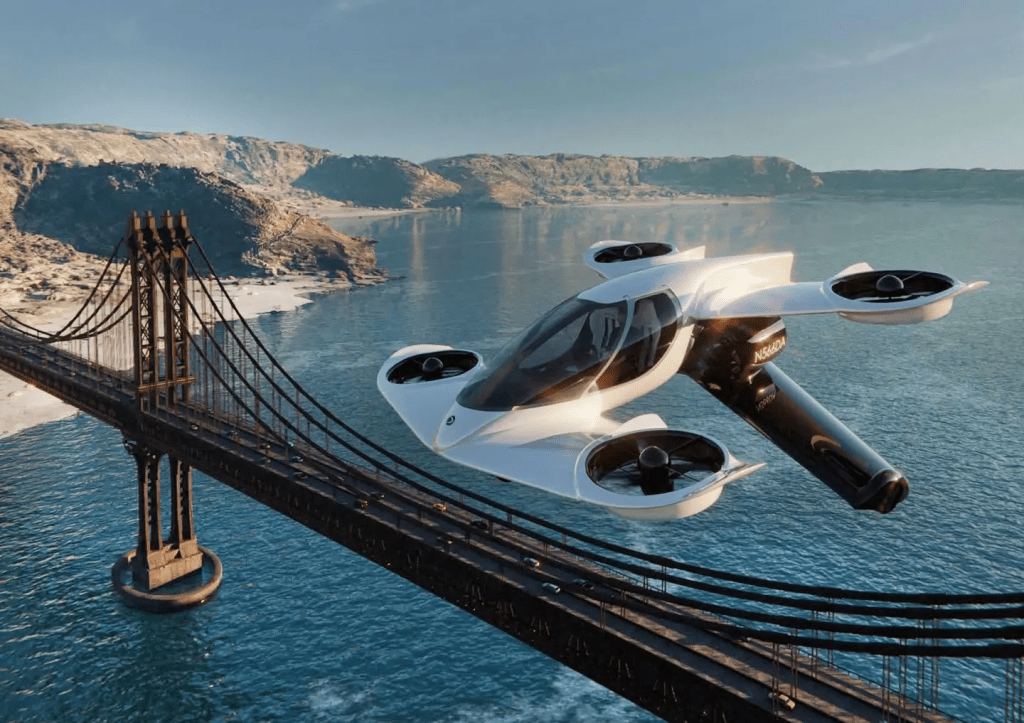
Last year, I introduced the Volonaut Airbike, a jet-powered hoverbike with a price tag of $880,000 that looked like something out of Star Wars. It was eye-catching, expensive, and designed for thrill-seekers who wanted something unique. I was surprised to see more affordable competitors appear so quickly.
Some of these new personal aircraft resemble motorcycles, others look like oversized drones, and a few are starting to look like the flying cars people have imagined for years. They use different technologies, but all share the goal of making personal flight smaller, easier to use, and less dependent on airports or traditional aviation.
We won’t be flying to work anytime soon. There are real challenges like certification, batteries, safety, training, weather, and manufacturing, and there are plenty of them. Still, some of these aircraft have already carried people. Companies are already taking deposits, and a few have even sold units to private owners. Personal electric flight is no longer just a future idea; it’s happening now. The real question is not if, but which of these machines will actually become practical.
The $99,900 JetBike Bringing Speeder-Bike Flight Closer To Reality

LEO Flight might have built the closest thing yet to the flying motorcycle many people dreamed of as kids. The company was started in 2021 by engineer Pete Bitar and automotive designer Carlos Salaff. Together, they created the JetBike, a small single-seat aircraft that you ride like a motorcycle. Salaff previously worked on concept and production cars at Mazda before starting SALAFF Automotive, and Bitar has experience in advanced propulsion and aviation technology.
LEO’s engineering and manufacturing take place in Pendleton, Indiana, while design and creative work happen in New York. You can see this mix in the JetBike, which looks more like a carefully designed consumer product than a typical experimental aircraft with exposed parts.
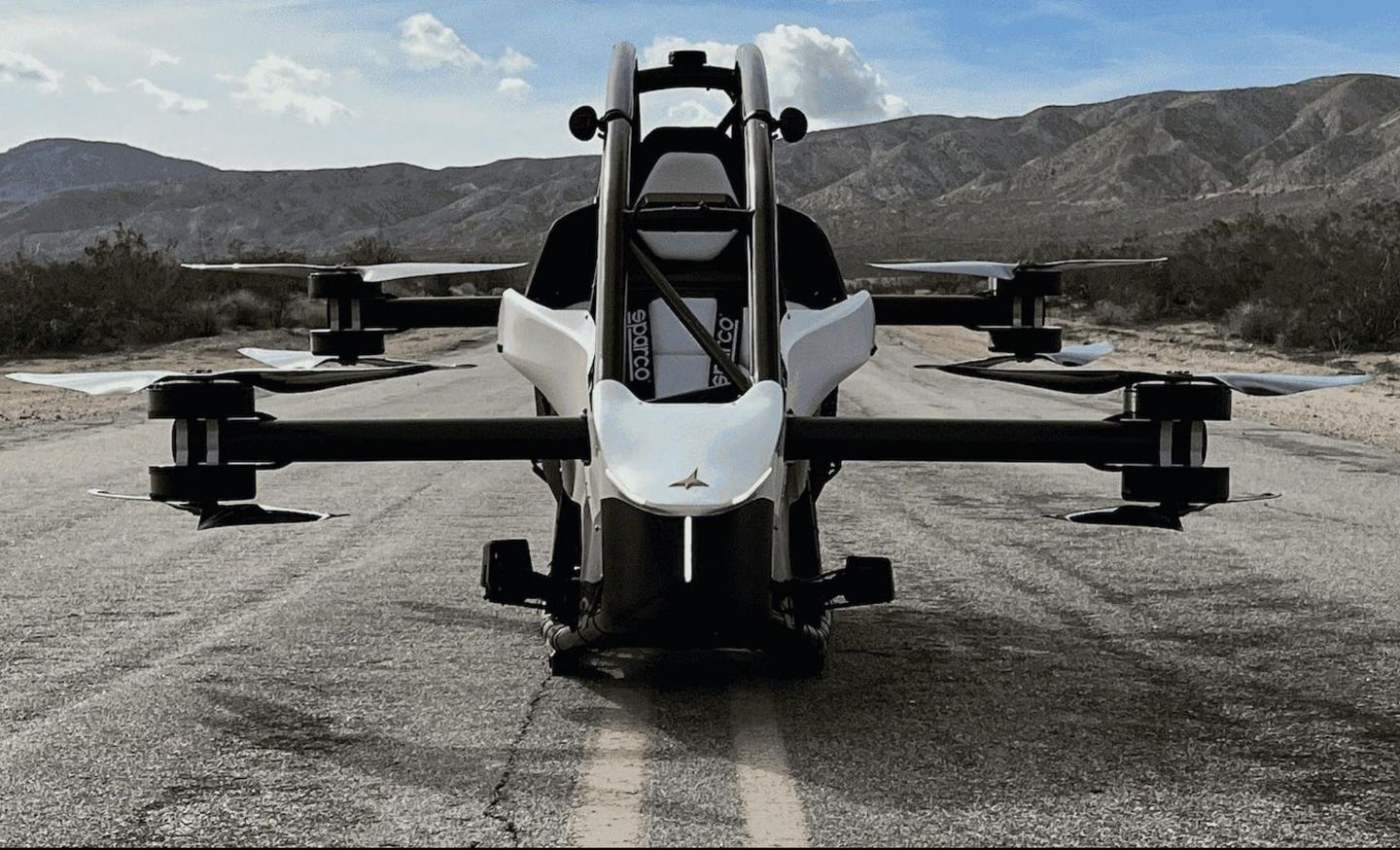
Instead of large exposed propellers, the JetBike uses enclosed electric propulsion units arranged around the aircraft, keeping the moving parts away from the rider. It measures roughly 6.5 feet by 6.5 feet, making it easier to transport than a conventional aircraft. A protective roll structure surrounds the rider, and LEO says its battery can be charged at home.
LEO has intentionally limited the performance. According to the company, the JetBike will reach about 60 mph, fly for roughly 10 to 15 minutes and remain at low altitude. It is being designed around FAA Part 103 ultralight rules, which could allow qualifying operators to fly without a traditional pilot certificate.
When I interviewed LEO Flight co-founders Pete Bitar and Carlos Salaff, Bitar explained why that low-altitude operating envelope is deliberate. “Traditional aircraft are designed to take you high above the landscape. The JetBike is designed to immerse you in it. Flying close to the terrain creates an experience that’s far more immersive. The canyon or the countryside moves around you instead of looking down at it from high above.”

The JetBike is priced at $99,900, which is much less than the $880,000 Volonaut Airbike. Salaff clarified that LEO has not sold out its first production slots, despite earlier reports. “Five early adopters have reserved early production positions. Those reservations secure a place in line, but they’re not completed aircraft purchases, so we wanted to set the record straight.” He explained that these early adopters include pilots, fans of automotive racing and powersports, entrepreneurs, and people who have dreamed of personal flight for years.
Bitar explained the appeal in simpler terms. “It’s probably the closest thing on the planet to feeling like Darth Maul ripping across Tatooine on a speeder bike.” When talking about safety, he said, “Safety comes from the entire architecture: the propulsion system, flight controls, protective structure and training program all work together.”
The next big step is to finish building the production aircraft as LEO works on securing its supply chain and approving manufacturing partners. Bitar and Salaff said, “If development progresses as expected, we’d like to transition to production and customer deliveries around the end of this year or early next year.”
LEO is also working on the LEO Coupe, a bigger enclosed aircraft described as an electric flying car designed for a new kind of luxury travel. While there aren’t many details yet, the Coupe makes it clear that the JetBike is just the start of a whole line of personal aircraft, not just a one-time project.
The $39,900 Aircraft That Folds Into A Pickup Truck
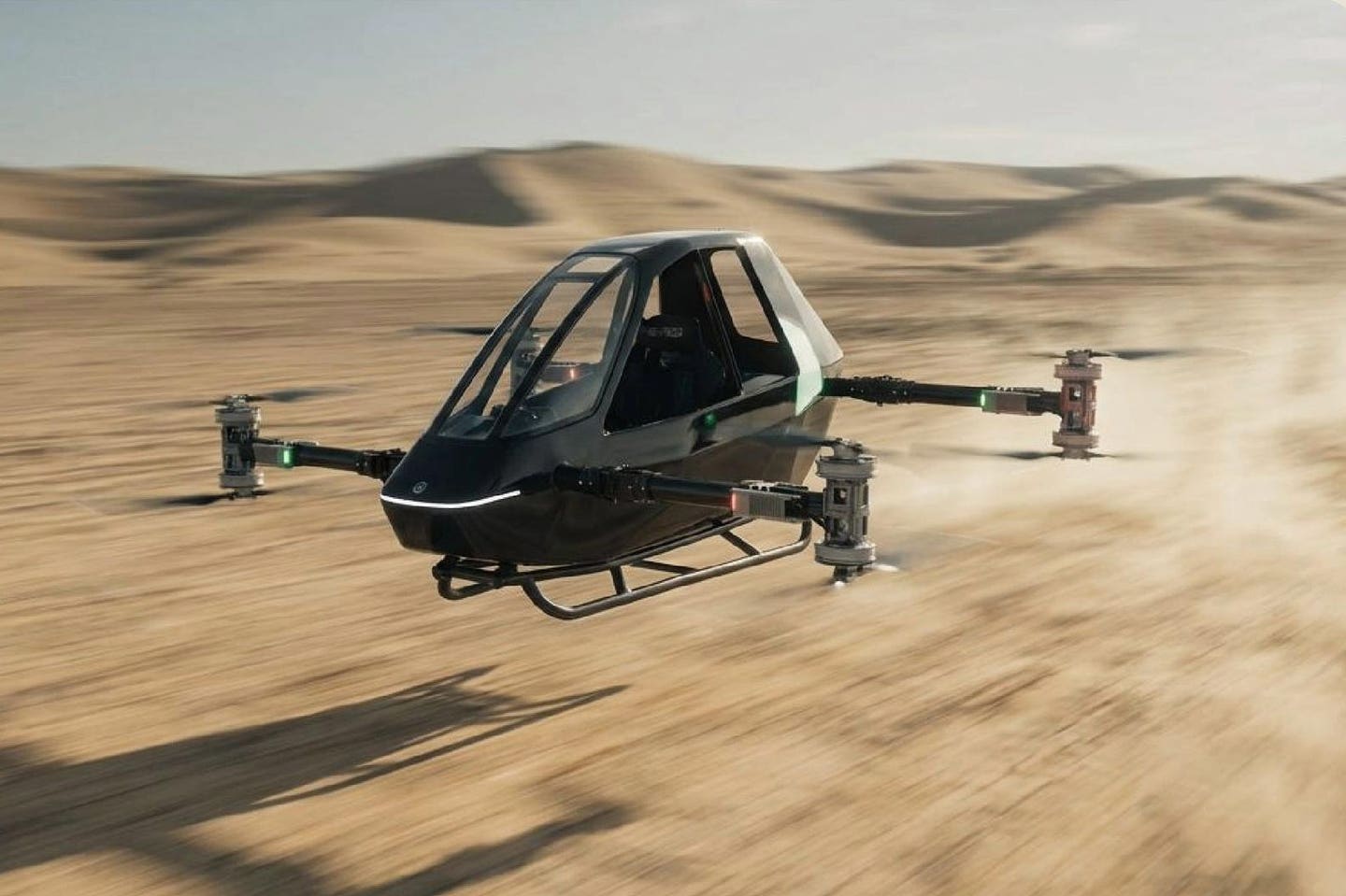
RICTOR is taking a practical approach to personal flight. Instead of pursuing the idea of a flying motorcycle, the company aims to create an aircraft that is affordable and easy to use in daily life.
RICTOR is part of Kuickwheel Technology, a Chinese company recognized for its electric bikes and scooters. The CY X4, shown at CES 2026, marks RICTOR’s first big step into aviation. This single-seat ultralight eVTOL starts at $39,900 with a $5,000 deposit and features eight folding carbon-fiber propellers on four axes.
According to RICTOR, the X4 can carry up to 100 kilograms, or about 220 pounds. Its flight-control system automatically adjusts the motors to keep the aircraft stable as conditions change. The main advantage comes after landing. RICTOR says the X4 folds down to about 1.2 cubic meters, so it can fit in a standard pickup truck bed and might be stored at home without needing a hangar.
This portability could make owning the X4 much simpler. RICTOR believes more people will be interested in personal flight if they can keep the aircraft at home, move it by road, and use it without an airport. Kuickwheel’s CEO Liu Feng, says in a statement that the company is not competing with air-taxi makers like Joby or Archer, but wants to create a new type of light aerial mobility for individuals. RICTOR also recently unveiled the Skyrider X1, a genuinely amphibious flying motorcycle
The Flying Car Built By A Founder Who Tests It Himself
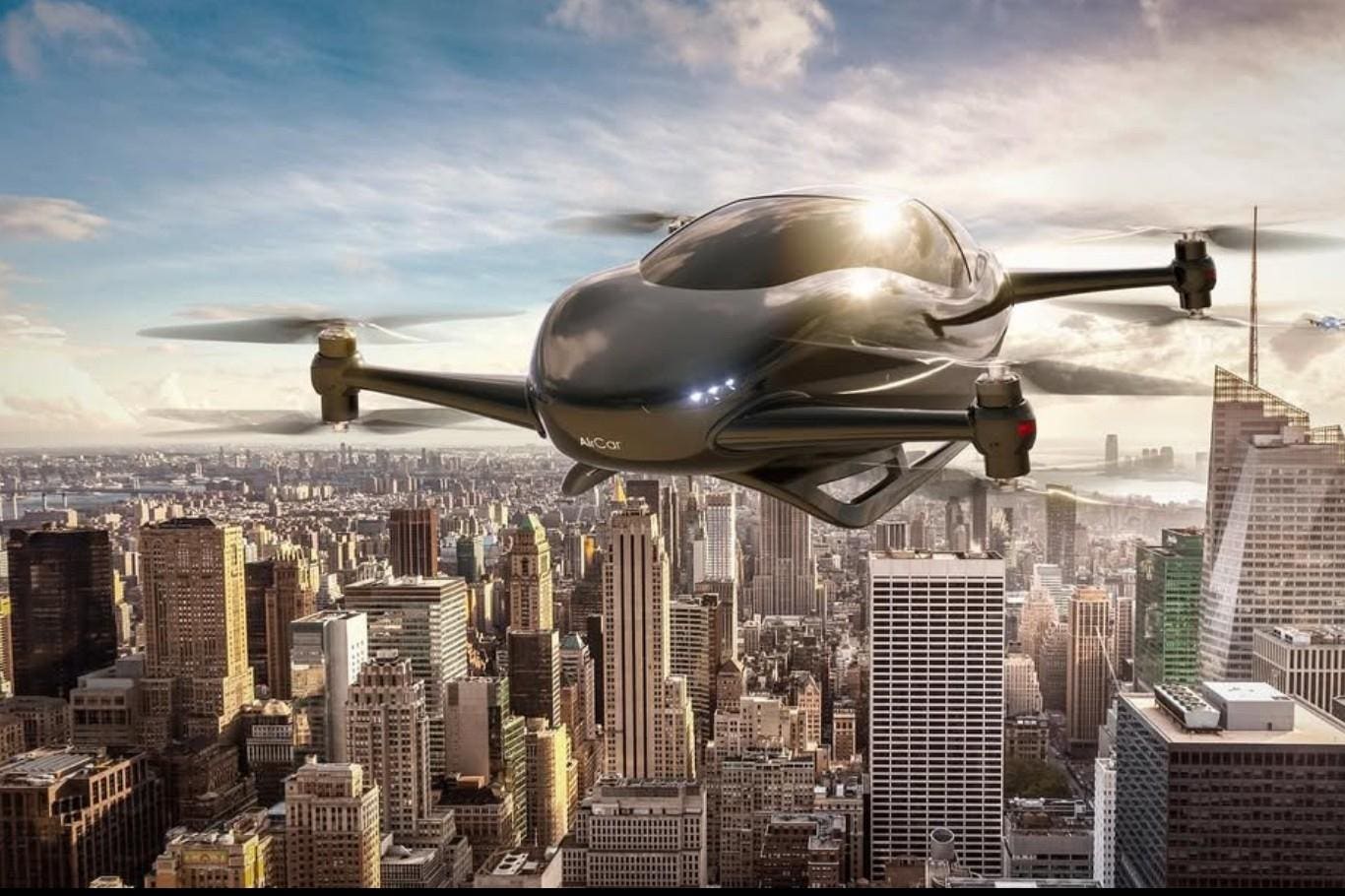
AirCar is a Turkish company led by engineer Eray Altunbozar, who has been working on personal electric aircraft since 2017. Unlike many others in the industry, he has actually flown his own prototypes.
In April 2025, Altunbozar flew both the single-seat and two-seat AirCar models in back-to-back test flights at the Bilişim Vadisi technology center. The company reports it has done over 1,000 manned test flights while working on the production version of its two-seat LightSport model.
“Once you are inside the aircraft, the human body becomes another flight-test instrument,” Altunbozar told me in our interview. “Simulation and telemetry can tell you that an aircraft is stable, but they cannot fully tell you whether it feels stable and inspires confidence.”
These test flights have helped AirCar improve things like control sensitivity, cockpit visibility, vibration control, battery monitoring, and system backups. The company says the two-seat model will have a range of about 50 miles, a top speed of around 70 knots, and can carry up to 500 pounds.
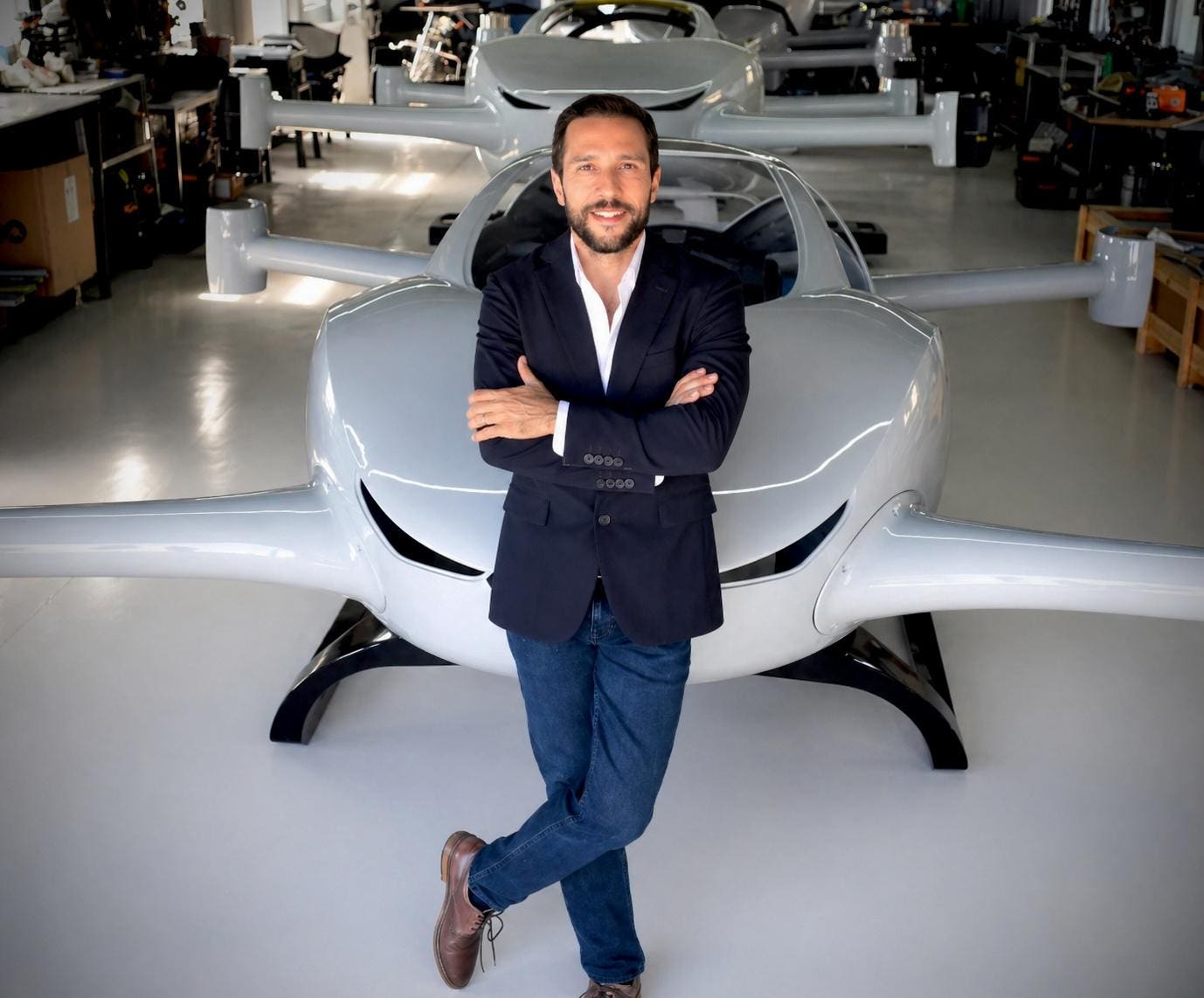
AirCar is seeking approval under the FAA’s expanded MOSAIC framework for light-sport aircraft. However, Altunbozar makes it clear that easier controls do not take away the responsibilities of flying. “We are not designing a machine that an untrained person should purchase on Friday and fly on Saturday,” he said.
He expects the first customers will be owner-pilots, aviation enthusiasts, and technically minded early adopters who are willing to complete the necessary training. AirCar aims to make its first deliveries in late 2027, but early 2028 is also possible as it finishes testing, prepares for manufacturing, and completes the required regulatory steps.
The Flying Car Designed To Leave From Your Driveway
Doron Merdinger, the founder of Doroni Aerospace, did not follow a typical path into aviation. Before starting the Florida company in 2016, he spent years working in design and manufacturing. He ran the Israeli silverware company Hazorfim and used technologies like CAD/CAM and early 3D printing. With Doroni, his goal was to build an aircraft that would feel familiar to people with experience in the automotive industry.
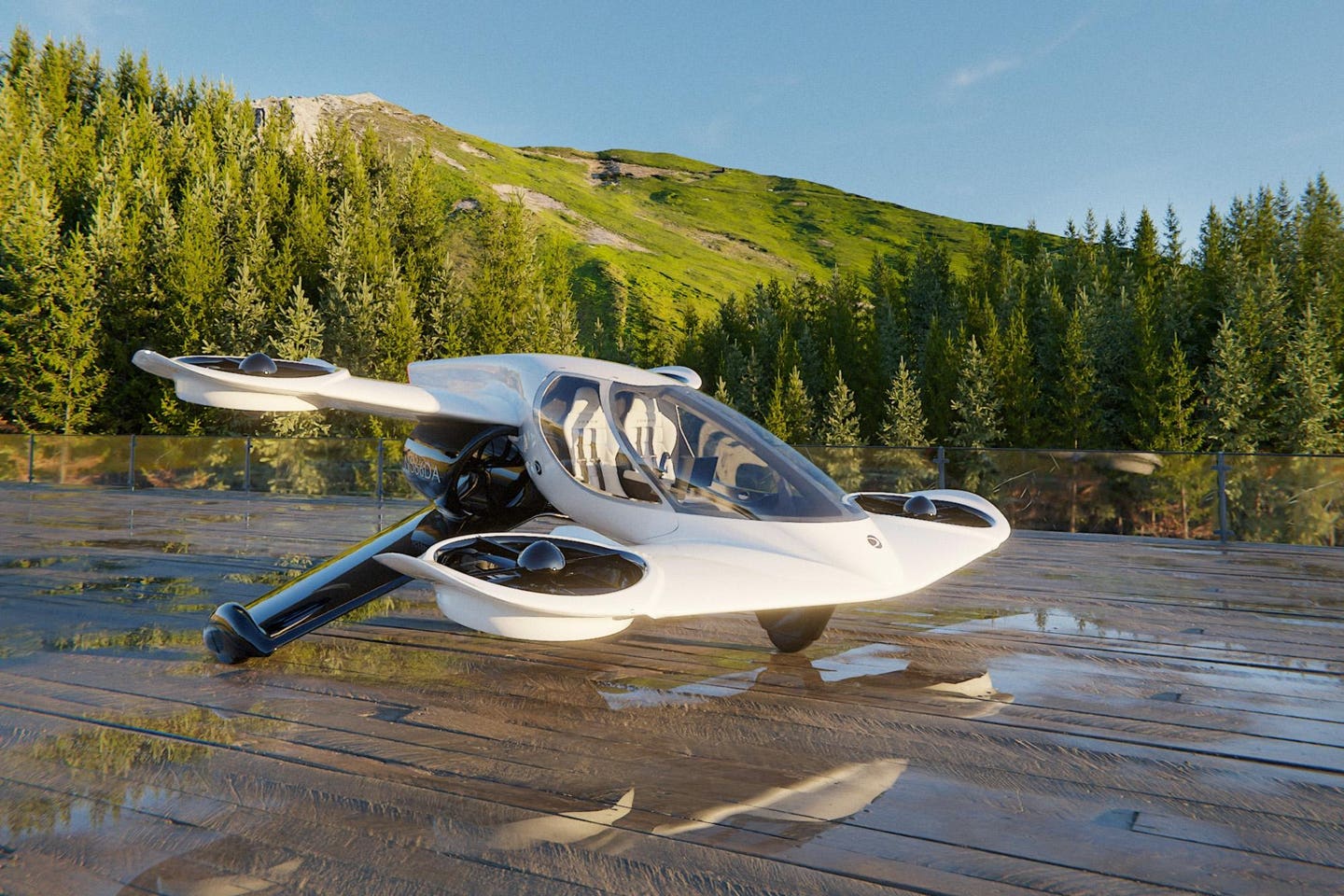
Merdinger flew the first manned test flight of Doroni’s H1 prototype himself in July 2023. The next model, the H1-X, is a more advanced two-seat eVTOL. It features enclosed ducted fans, a tandem-wing design, and a wide canopy. Doroni aims for the H1-X to reach a top speed of about 120 mph, cover around 100 miles, and carry up to 500 pounds.
Merdinger still remembers the first time the prototype lifted off. “What I remember most is the moment the aircraft became weightless,” he told me in our interview. “For years, I had seen this machine in my mind. We had designed it, built it, tested its systems and watched it fly unmanned. But sitting inside it and feeling the wheels leave the ground was completely different.”
Doroni’s most attention-grabbing promise is an ownership model far from traditional private aviation. The H1-X has an 18-foot wingspan, and the company wants owners to keep it in a two-car garage and charge it with Level 2 EV equipment.
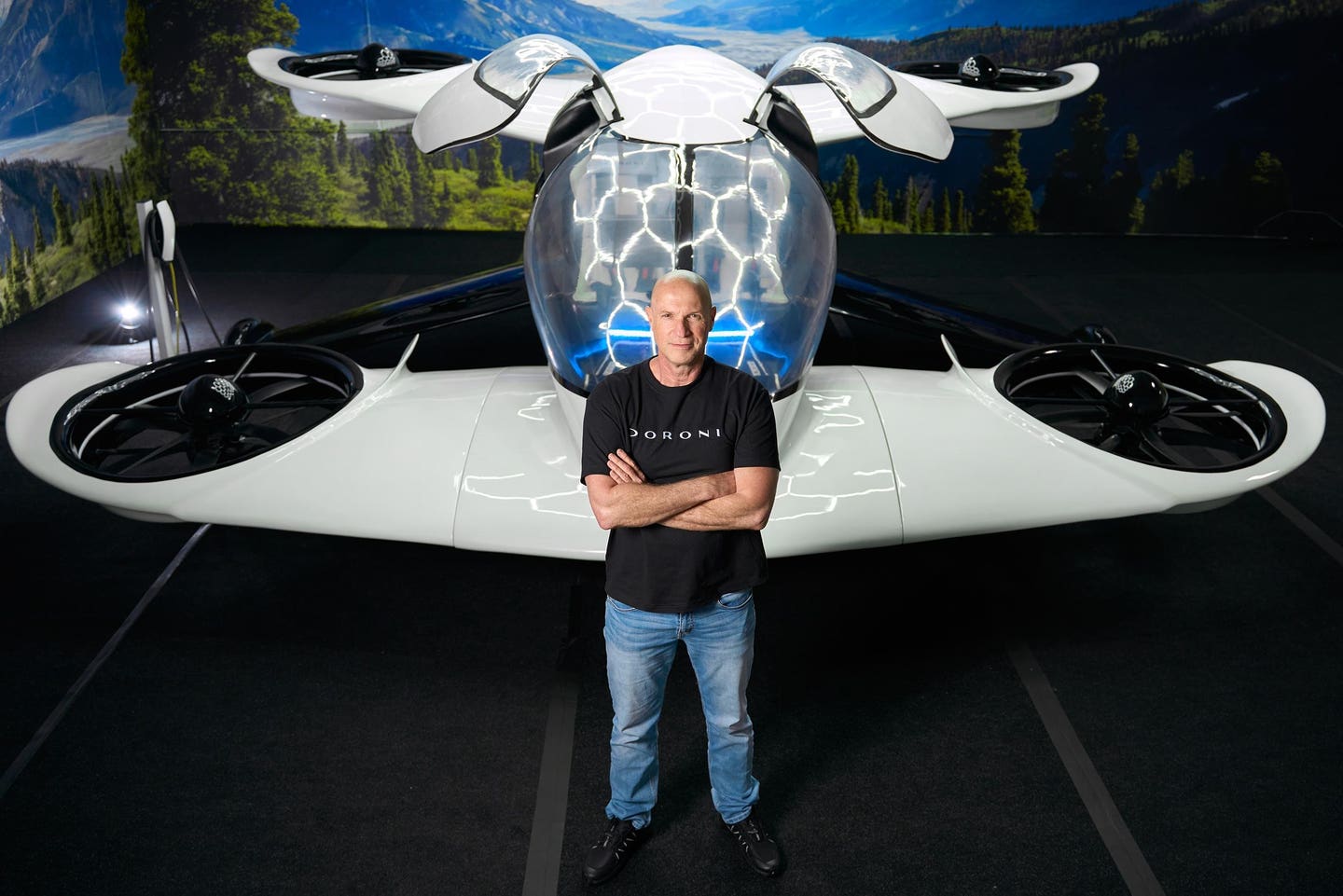
Merdinger cautions people not to take the company’s “driveway” description at face value. “Does that mean every customer will immediately be able to open the garage door and take off from a suburban driveway? No. Where you can take off and land will depend on local zoning, property restrictions and other applicable regulations.”
He thinks early owners will mostly fly from private property, rural estates, residential airparks, or general aviation airports. The bigger goal is to make it easier to own a personal aircraft by reducing the need for special infrastructure.
Doroni is working on the H1-X as part of the FAA’s MOSAIC Light Sport Aircraft program, but there is still a lot of testing, regulatory approval, and manufacturing work to do. The company needs to finish a production-ready aircraft, confirm its flight and safety systems, set up manufacturing and quality control, and create training and operating procedures for future owners.
Doroni aims to start delivering to customers around 2028, but Merdinger says the timeline is flexible. “Our target is around 2028, but the date itself does not determine when I am comfortable handing someone the keys. The aircraft does.”
Proof That Personal Aircraft Can Reach Customers
Flying-car startups face natural skepticism after decades of futuristic promises that never reached buyers. A successful prototype is one thing. Manufacturing reliable aircraft and delivering them to customers is another. A few companies have begun to cross that gap.
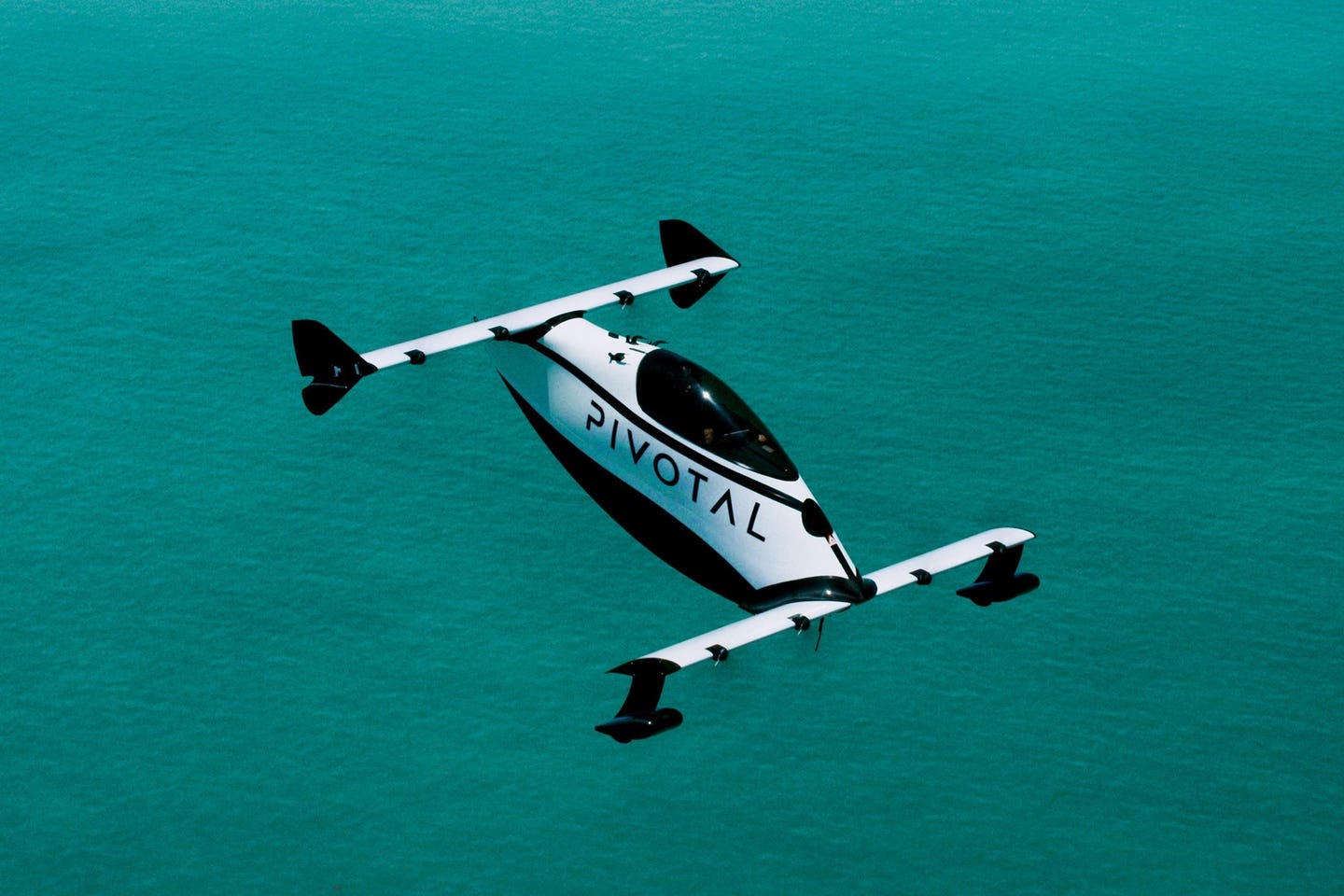
Pivotal, the Silicon Valley personal-aircraft company backed by Google co-founder Larry Page, spent more than a decade developing its single-seat aircraft. BlackFly began reaching customers in 2023. Its successor, the Helix, went on sale at CES 2024 with a starting price of about $190,000.
Nick Tucky, Pivotal’s Vice President of Sales and Business Development, told me in an interview that its buyers include lifelong dreamers, entrepreneurs, outdoor enthusiasts and people entirely new to aviation. “Everyone who buys a Pivotal aircraft wants to fly a Pivotal aircraft. There are no aircraft collectors.”

Helix can be flown under FAA Part 103 without a pilot license, but every owner must complete Pivotal’s training program, which moves from pre-arrival study and simulator instruction to supervised operations and solo flights. Most finish in about five days. As Tucky explained, “While our technology simplifies the mechanics of flight, pilots still need to develop the judgment and discipline required to operate safely.”
That experience with private owners has also taught Pivotal what lies beyond the sale itself, including onboarding, maintenance guidance and continued support. “In many ways, the biggest learning curve isn’t learning how to fly the aircraft. It’s learning how to think like a pilot,” Tucky said.
Meanwhile, California-based Alef Aeronautics has taken a more literal approach to the “flying car,” building a road-legal vehicle that can also lift off vertically; the company says it began hand-assembling its first customer units this year, backed by more than 3,500 pre-orders worth roughly $1 billion.
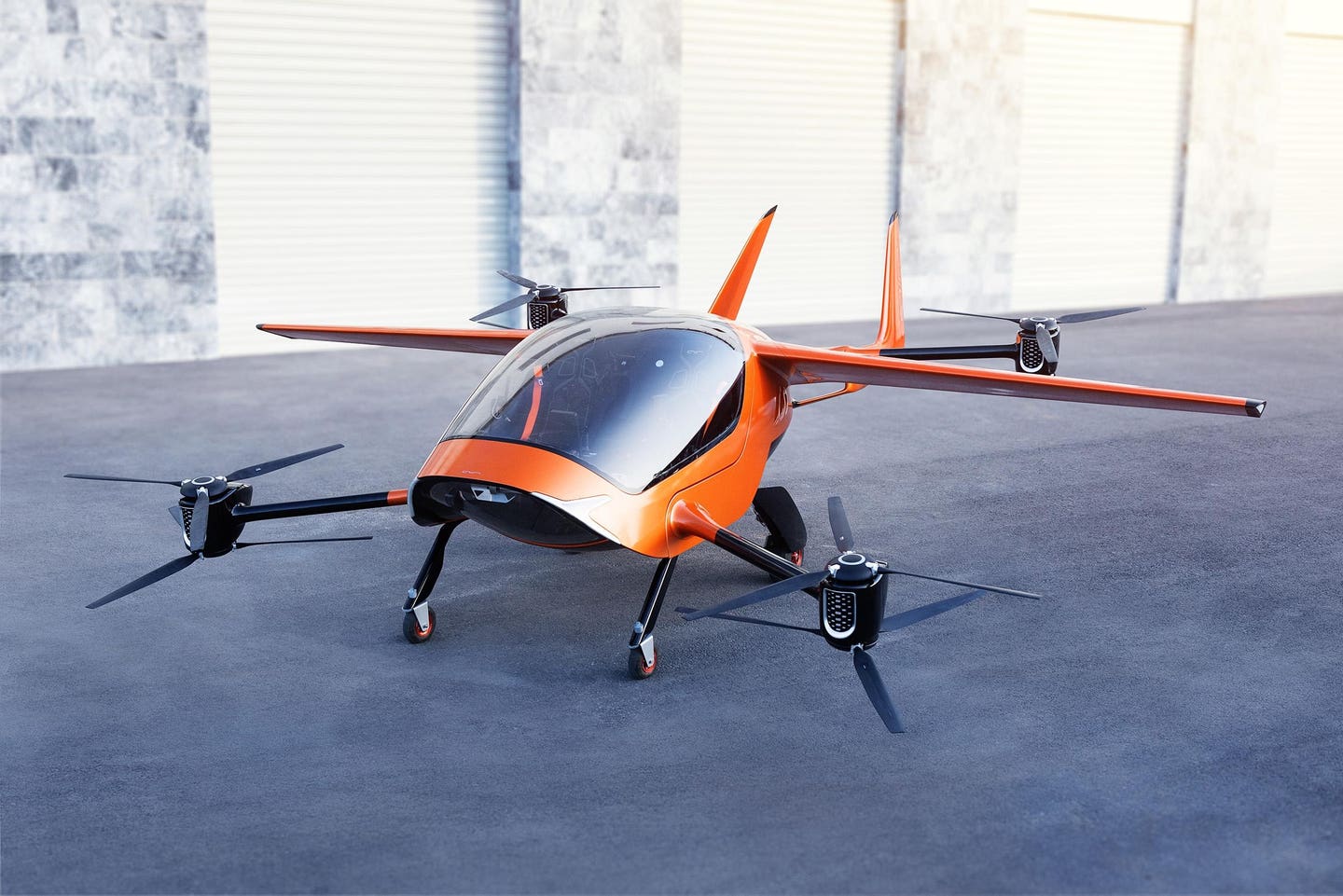
AIR, an Israeli aviation company founded in 2018, is taking a unique approach with its two-seat AIR ONE. By March 2026, the company reported that orders for its personal and cargo aircraft had topped $1 billion, with thousands of orders for the AIR ONE. AIR is already making unmanned cargo versions and is working to get the necessary approvals for its personal aircraft.
Pivotal and AIR highlight two aspects of the industry. While personal electric aircraft are starting to reach customers, it can still take years to finish development even after a successful test flight.
This difference is important when looking at newer models like the JetBike, X4, AirCar, and H1-X. Their technology has moved beyond theory, but making a demonstration aircraft into a dependable product for customers is still a challenge.
The Personal Flying Machine Market Is Getting Crowded
LEO Flight, RICTOR, AirCar, and Doroni are among many companies working to make personal flight available to consumers. After years of prototypes, some aircraft are now reaching customers, with production slots filling up and manufacturing underway.
Jetson ONE is one of the most advanced models so far. This single-seat electric aircraft is already being delivered in the United States and Europe. Jetson reports that its 2026 and 2027 production runs are sold out, and it is now taking orders for 2028 at $148,000. The aircraft can reportedly fly for about 20 minutes and has a software-limited top speed of 63 mph.
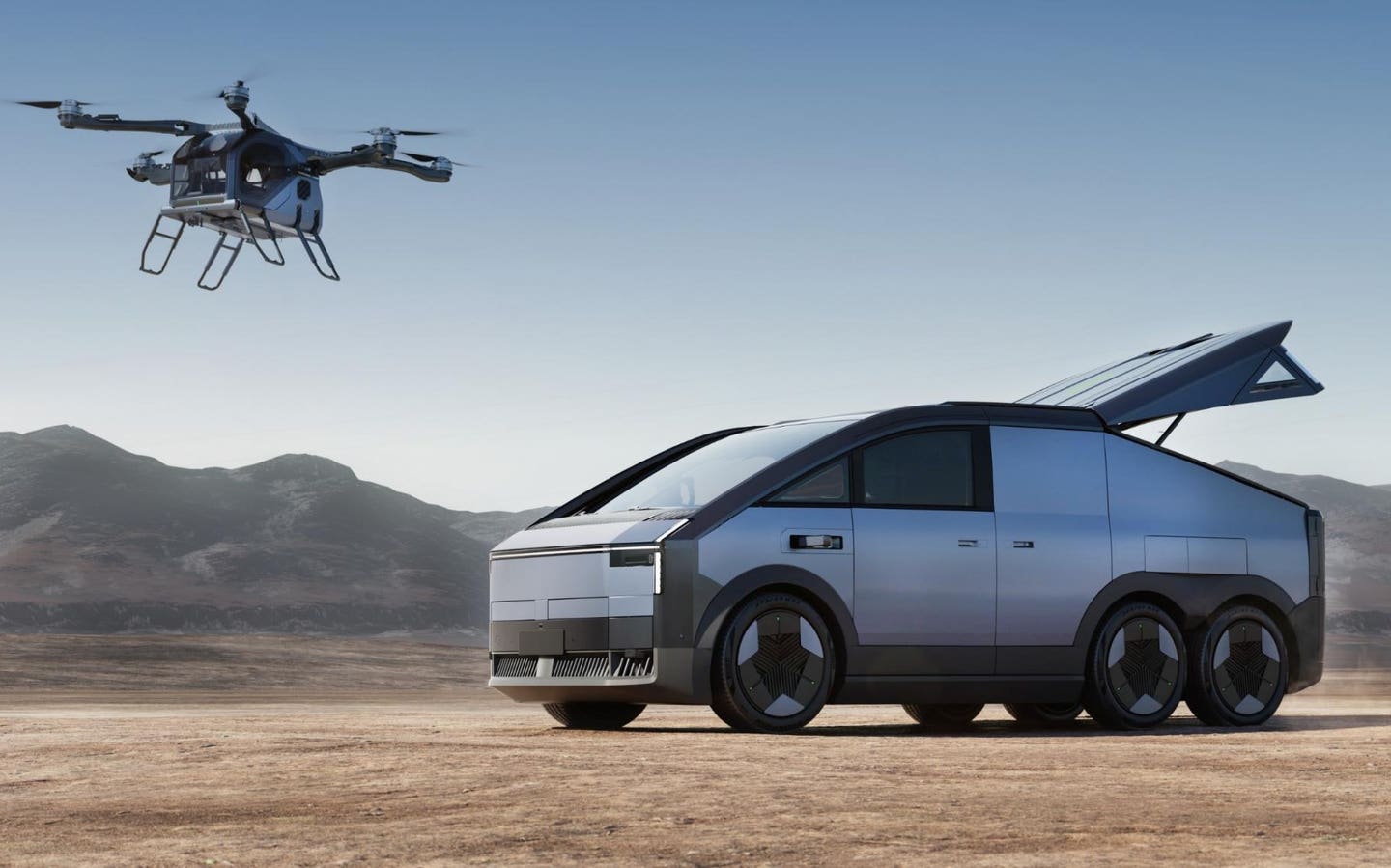
China is pursuing the market on a much larger scale through ARIDGE, XPENG’s flying-car division. Its Land Aircraft Carrier combines a six-wheel road vehicle with a detachable two-seat electric aircraft stored in the rear. XPENG says orders have exceeded 7,000 units and its Guangzhou factory has begun trial production, with large-scale manufacturing planned for 2026.
These aircraft have advanced beyond the many flying-car concepts that came before them. Some are being delivered, others have sold out future production, and factories are being prepared to build them at scale.
Want to see more Forbes articles on your feed? Tap here to make Forbes Australia a preferred source on Google.
Look back on the week that was with hand-picked articles from Australia and around the world. Sign up to the Forbes Australia newsletter here or become a member here.