Just days after announcing a new partnership with American artist Jeff Koons, Swiss watch brand Hublot is revealing the first fruits of the collaboration: two dramatically different watch creations that bring Koons’s artistic language to the wrist.
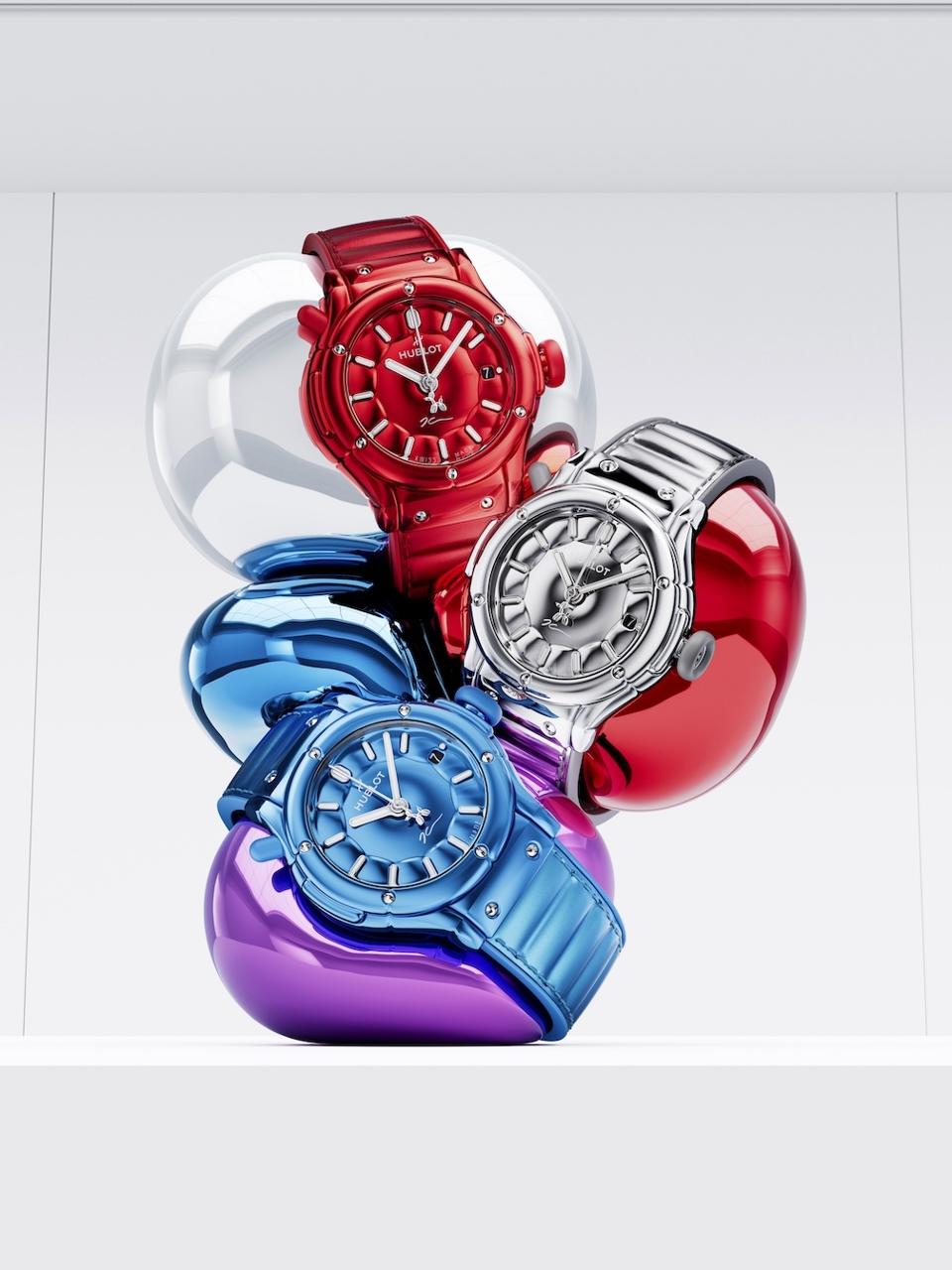
The star of the new releases — and certainly the more immediately recognizable — is the Hublot Classic Fusion Balloon Dog by Jeff Koons. Inspired by the artist’s famed Balloon Dog sculptures, the new watch is offered in three versions: red, blue and silver. Each is limited to 200 pieces and priced at $25,100.

The collaboration is a natural one for Hublot, which has long ventured beyond traditional watchmaking to work with artists and designers. Since 2011, the brand has partnered with an eclectic roster of creative talent spanning street art, architecture and design. Now it turns to Koons – whose contemporary art often yields a polarizing love/hate response.
For more than four decades, Koons has transformed familiar objects into meticulously executed works that play with scale, material and perception. His Rabbit, Puppy and highly polished Balloon Dog sculptures have become part of the contemporary-art lexicon. Balloon Dog, created between 1994 and 2000 as part of Koons’s Celebration series, takes something inherently temporary — a balloon animal — and renders it permanent.
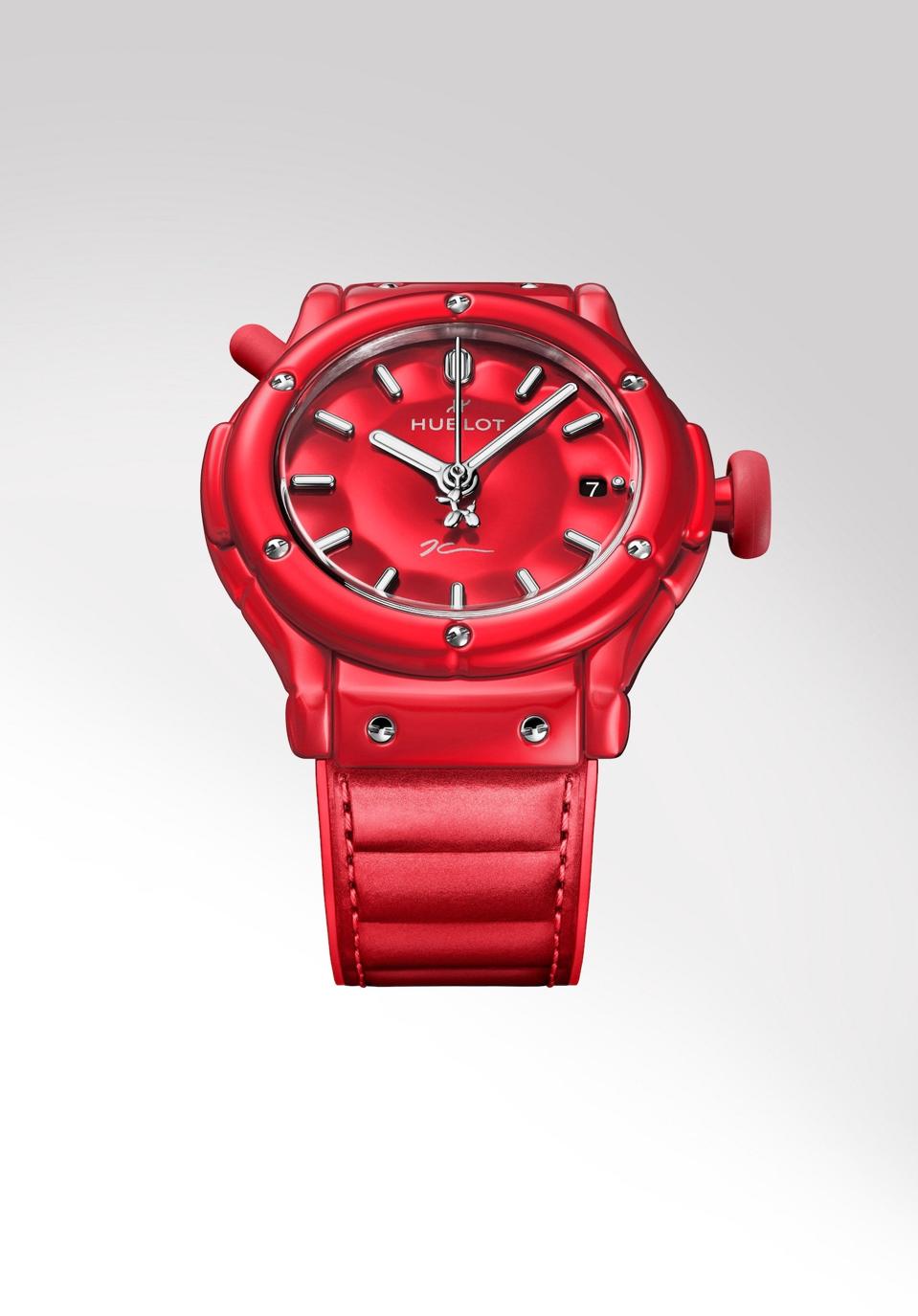
Rather than simply putting a Balloon Dog image on an existing watch, Hublot reengineered its 42mm Classic Fusion to give virtually every component the appearance of being inflated. The typically relatively flat Classic Fusion case takes on rounded, convex surfaces, while the sapphire crystal, dial, indexes, hands and even Hublot’s signature screws have been given more bulbous forms.
There are whimsical details, too. The crown resembles the inflation valve of a balloon, a flexible “balloon tail” protrudes from the case at approximately 10:30, and the seconds hand carries a tiny Balloon Dog counterweight. Even the metallic leather strap has a padded appearance designed to continue the inflated theme.
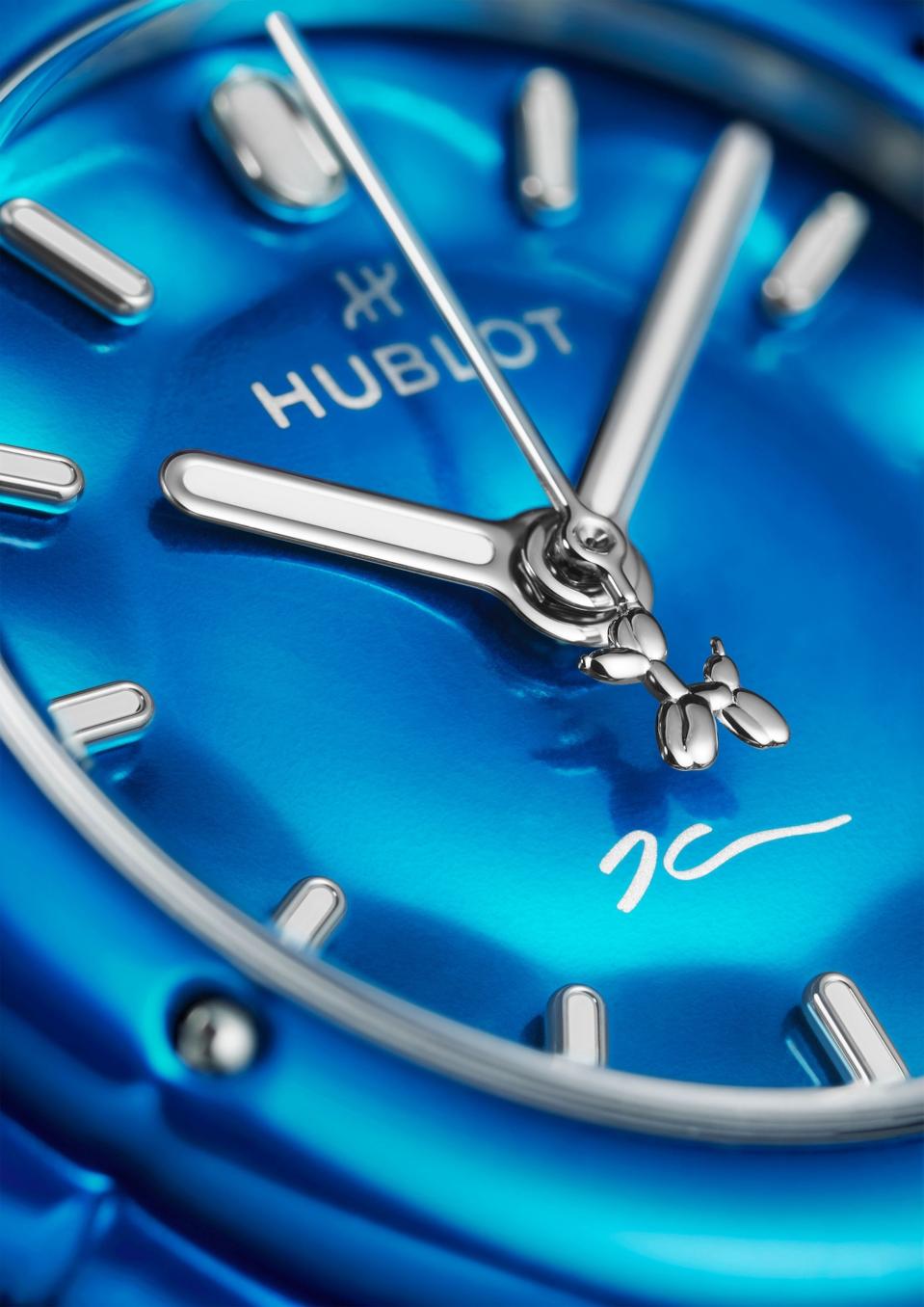
The red and blue versions are crafted in polished anodized aluminum, a choice that enables Hublot to achieve the intensely saturated colors associated with Koons’s reflective sculptures. The silver version is polished stainless steel. All three house the automatic HUB1710 movement with a 50-hour power reserve and are water resistant to 50 meters.
For Koons, translating the sculpture into a watch involved more than applying his artwork to another medium. He says the challenge was to reinterpret the architecture of the Classic Fusion watch so that the components appear to have been “shaped by air pressure.”
That approach also fits neatly into Hublot’s long-running “Art of Fusion” philosophy. The brand was founded in 1980 with the then-radical idea of pairing a precious-metal watch case with a rubber strap. Over the years since its inception, Hublot has made the mixing of unexpected materials, disciplines and cultural worlds a cornerstone of its identity.
![MP14 v1[1]](https://specials-images.forbesimg.com/imageserve/6aa87d3b278cc6a91759c094/960x0.jpg?fit=scale)
Hublot MP-14 Origin By Jeff Koons
The second new watch of the partnership is totally different from the Balloon Dog watches. The MP-14 Origin by Jeff Koons is an ultra-complicated, gem-set sapphire watch limited to just 30 pieces and priced at $488,000.
Here, Koons and Hublot turn their attention from balloons to the cosmos. Inspired by Koons’s Gazing Ball works (which juxtapose white statues with sapphire blue gazing balls), the MP-14 uses mechanical complexity and precious materials to interpret Koons’s ideas about light, perception and creation The 44mm watch is conceived as a miniature universe, with concentric white-gold rings set with baguette-cut diamonds and blue sapphires seemingly orbiting a central sapphire dome.
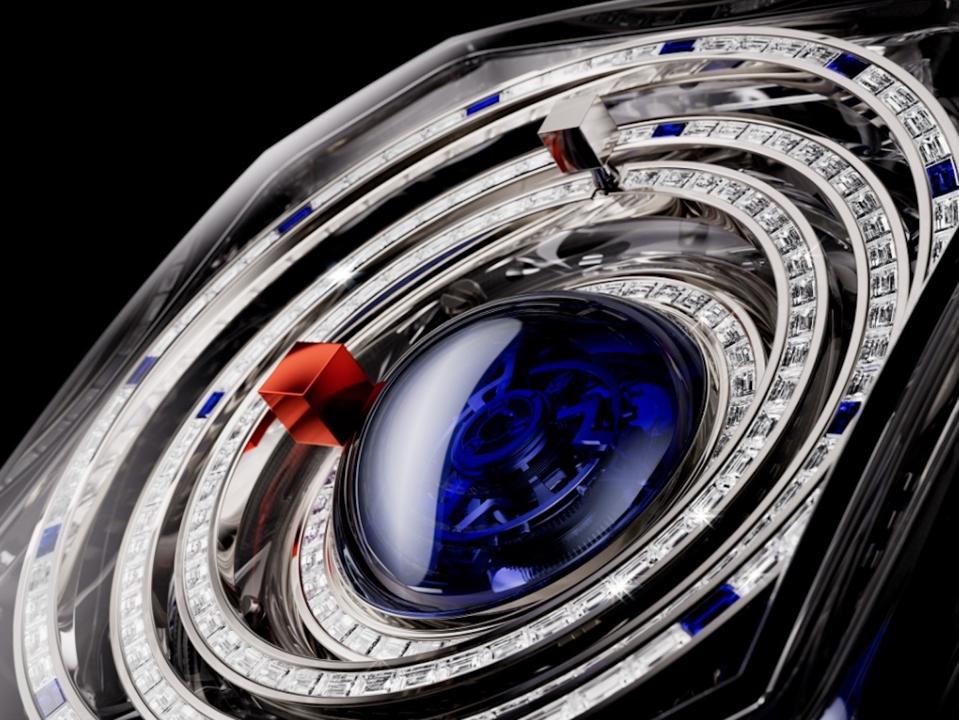
Technically, the watch marks an important first for Hublot: its first automatic central tourbillon. The HUB9014 movement consists of a massive 594 components and offers 60 hours of power reserve. Suspended rotating rings indicate the hours and minutes via small floating cubes, while a peripheral oscillating weight leaves the center of the movement visually open. The sapphire case alone requires approximately 534 hours of machining. Interestingly enough, Hublot downplays this technical milestone in favor of Koons’s design aesthetics.
Want to see more Forbes articles on your feed? Tap here to make Forbes Australia a preferred source on Google.
Look back on the week that was with hand-picked articles from Australia and around the world. Sign up to the Forbes Australia newsletter here or become a member here.