The sequel to 2025’s lapis-themed watch of the same name is as beautifully conceived and technically sophisticated as the original. But it is what this G.F.J. represents – a shift in strategic thinking at Zenith – that’s most intriguing.
In October, Zenith announced it had opened a “consultation process” between management and employees’ union representatives – as part of a sweeping restructuring now underway at the LVMH-owned watchmaker. Reports suggest as many as 100 roles at the brand’s Le Locle production facilities may be eliminated, along with a comparable number elsewhere in its international business.
The development comes amid a period of great difficulty for the watch industry at large. Doubly so for ‘mid-range’ luxury houses like Zenith, whose industrial and commercial base no longer aligns with such a characterisation. The response from brand leadership has, thus, been twofold.
In the short term, Zenith will continue as a pivotal supplier of advanced mechanical movements to intragroup brands inside the LVMH umbrella: such as Bvlgari, Tiffany and Hublot. Down the line, the ultimate goal is to go upmarket. In a move which now feels familiar among mid-priced Swiss heritage brands, this means fewer watches organised into tighter, more creatively coherent collections, at a price that appeals exclusively to ultra-affluent consumers.
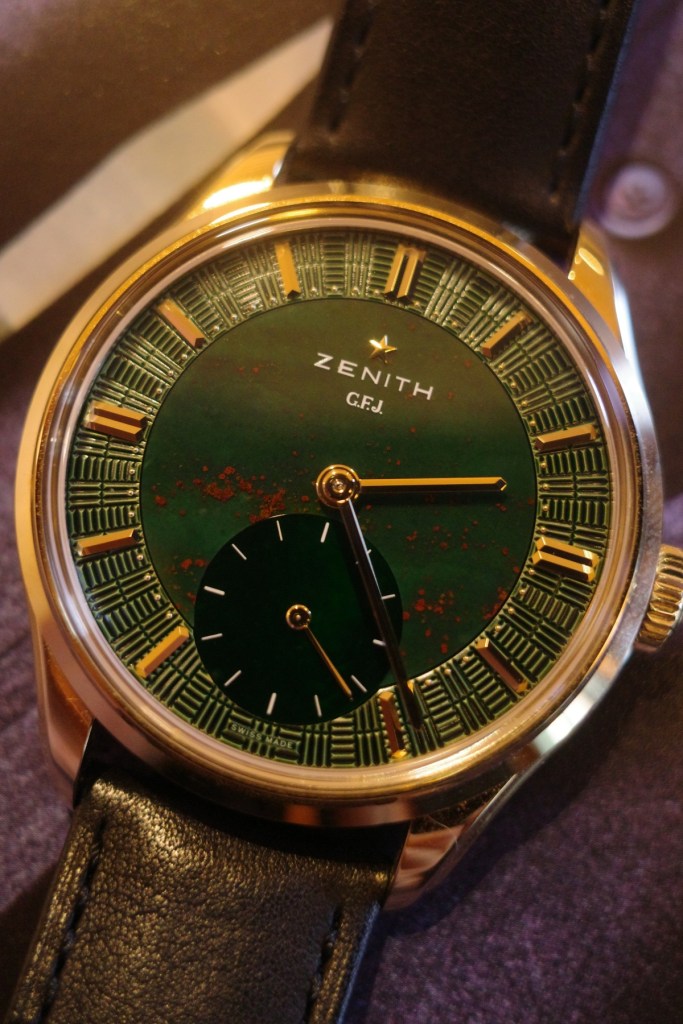
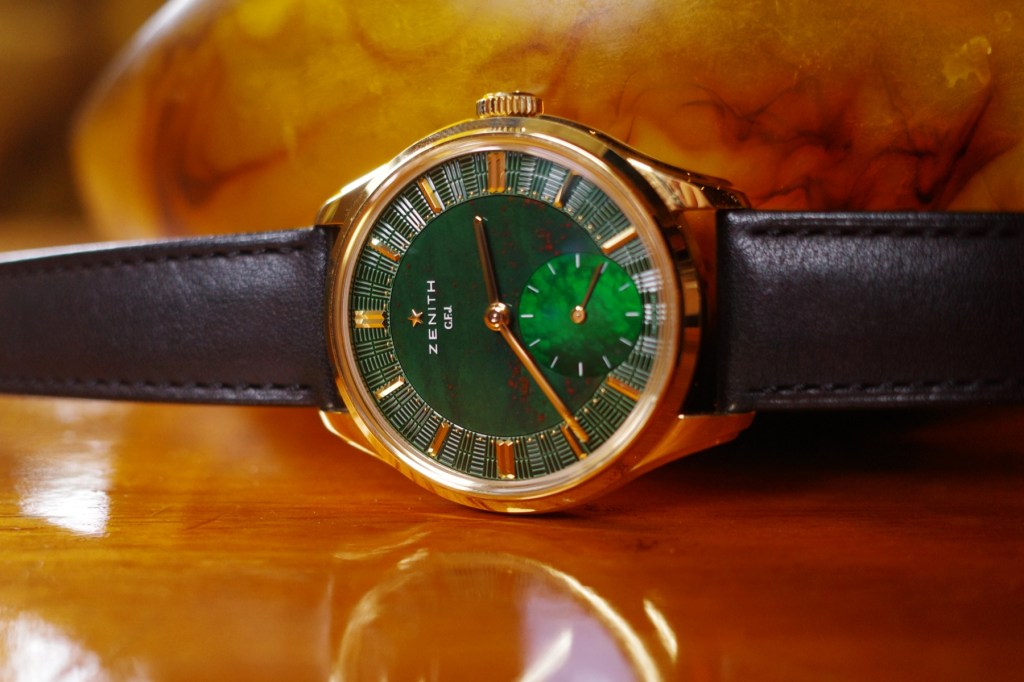
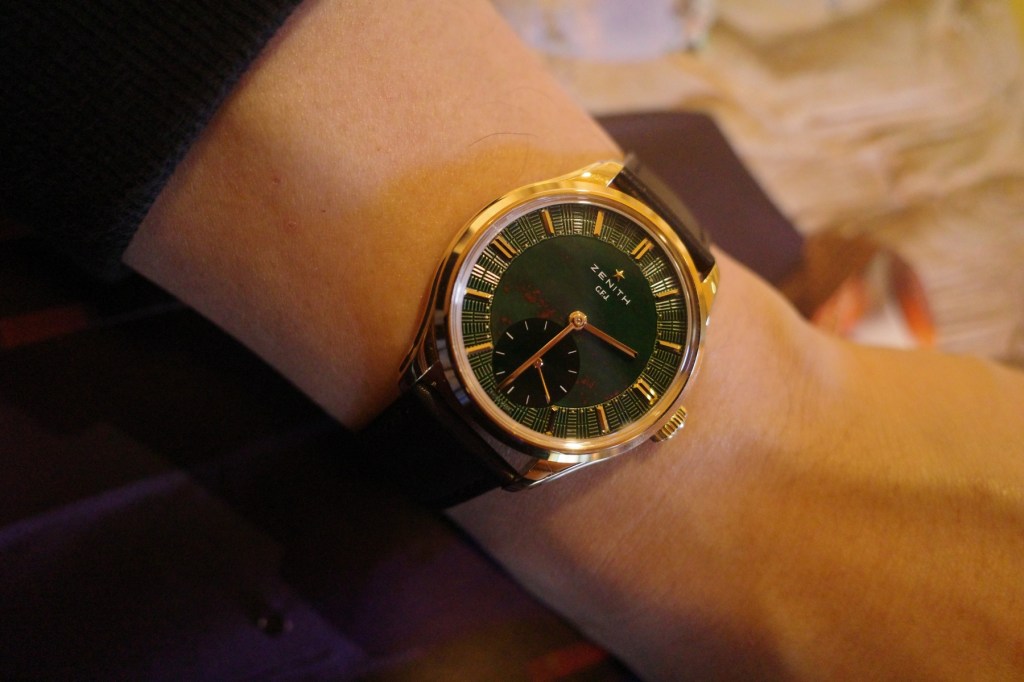
Like it or not, this is why the high-end G.F.J. collection is so significant. After the hard reset which seems sure to follow the restructuring, these watches will become the new ground floor of Zenith’s capital-L luxury business. At $81,500, the recent ‘Bloodstone’ G.F.J. – which I had in my possession for about a week in order to review – exemplifies that ambition.
Before going any further, I’m obliged to be pedantic. Rather than a fully new product, the ‘Bloodstone’ is effectively a line extension. The original G.F.J. arrived in 2025, and was built around a platinum case, intricately decorated dial (in lapis lazuli) and, crucially, an incarnation of the historic Calibre 135 built to contemporary expectations.
This year, two new variations followed: one in tantalum, and this decidedly un-monochrome take in yellow gold with a green stone dial. All three share the same dimensions (39mm x 10.5mm) and technical stats, meaning that enthusiasts who enjoyed the size and performance of the original can be assured of an experience that’s roughly consistent.
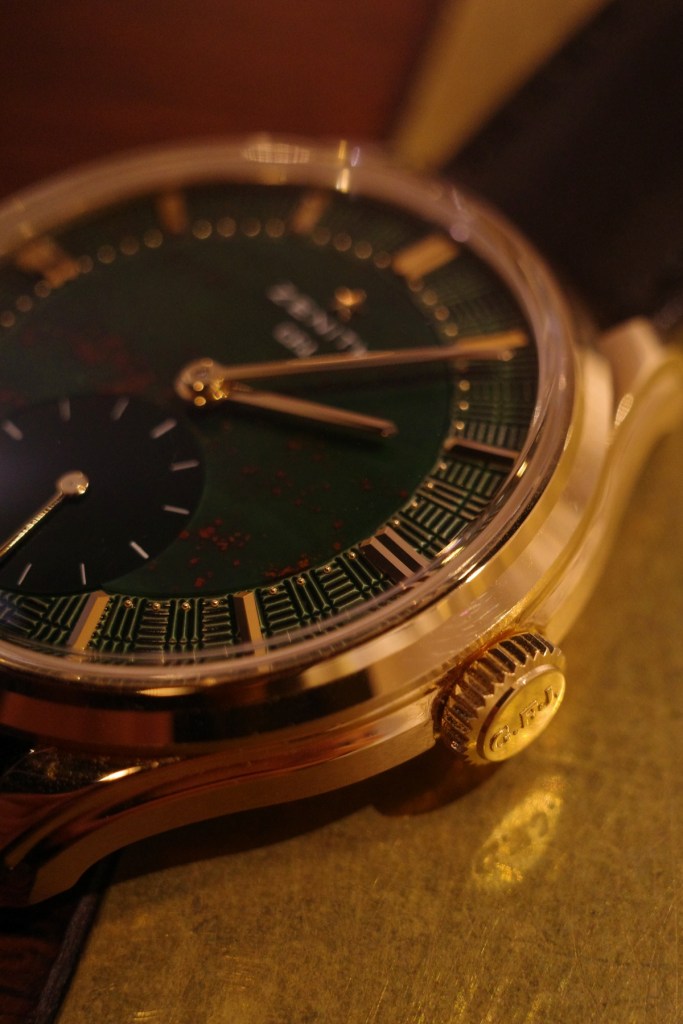
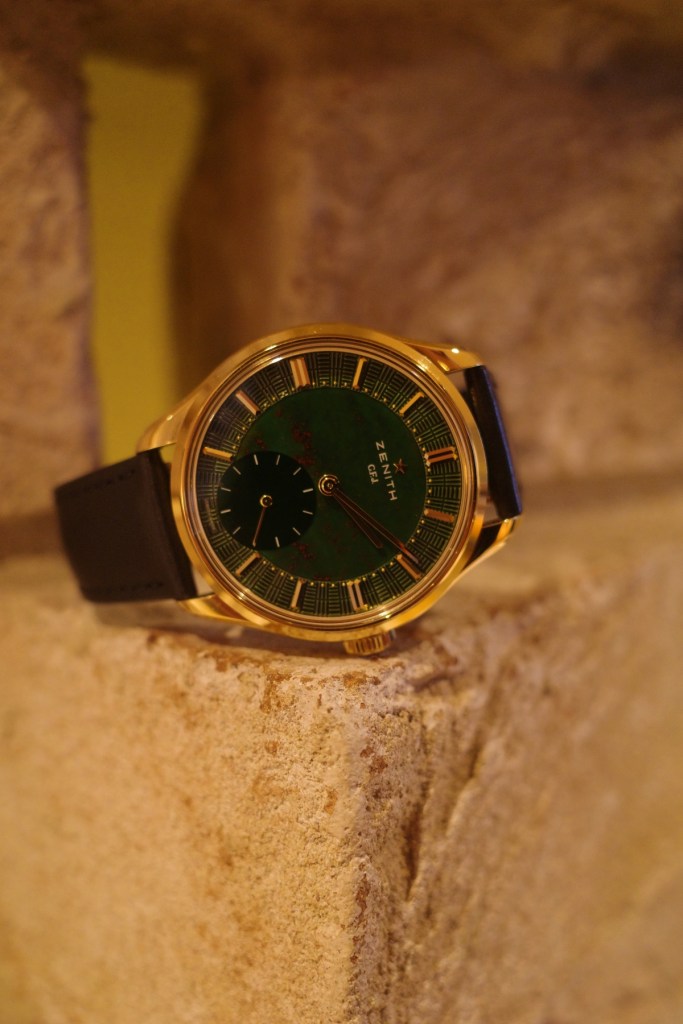
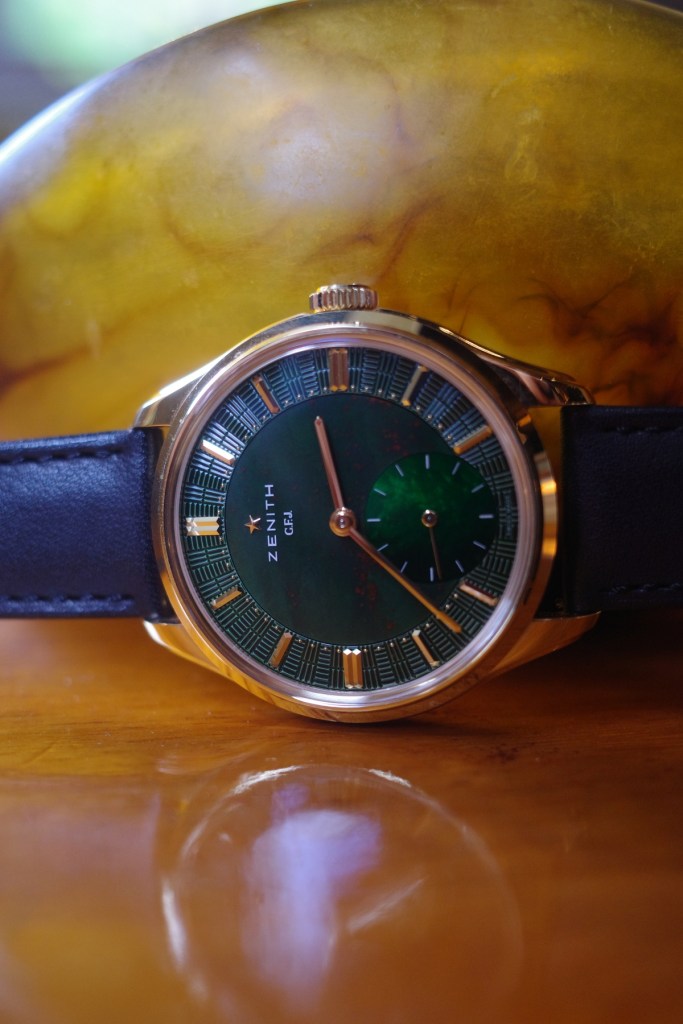
The real sticking point with this watch? Aesthetics. Visually, it’s an almost 180° departure from the G.F.J. in tantalum or platinum. The combination of yellow gold and semiprecious green stone brings a more extravagant dimension to the design language, which, until now, has relied mainly on tone and texture to convey visual interest in the metal.
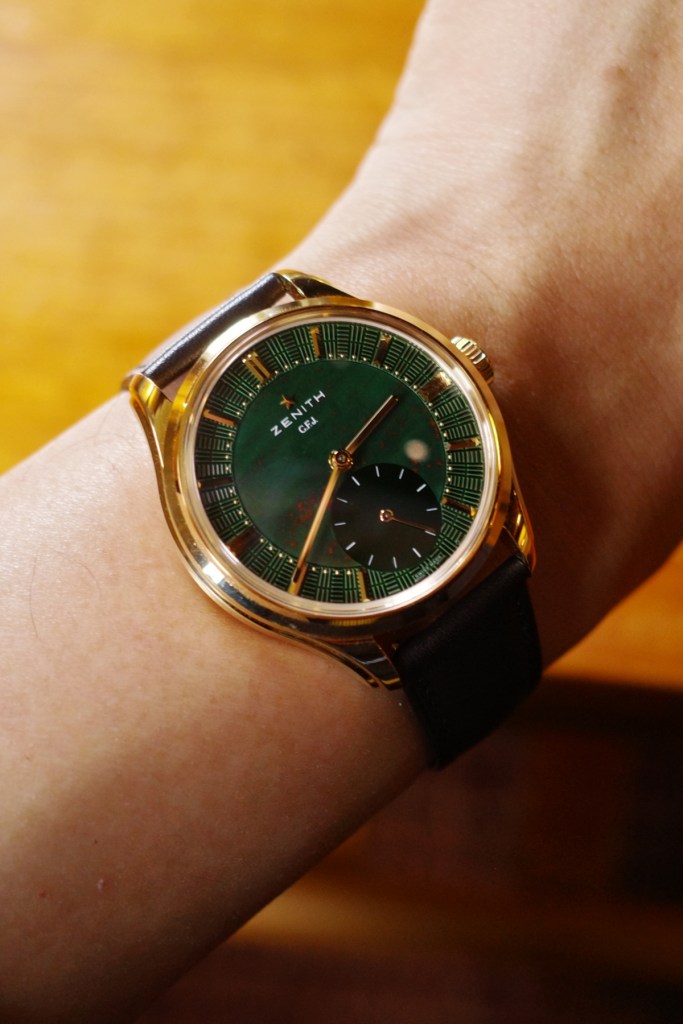
A quick sidebar on minerals: since the era of Greco-Roman civilisation, bloodstone has been a material prized for its connotations of longevity, good fortune and (semi-verifiable) medical usefulness. The mineral’s cryptocrystalline structure gives it both opaque and translucent properties, meaning that in a decorative context it presents a smattering of red droplet-like inclusions – hardened iron oxide that lends the stone its name.
As with other stone materials favoured in fine watchmaking, the patterns that form in bloodstone are natural and randomly occurring. No two dials look exactly alike. On the loaner Zenith has given me, most of the reddish inclusions are clustered between 3 and 8 o’clock. Up close – ideally under a loupe, if you’ve got one handy – bloodstone completely upends the G.F.J.’s traditionally subdued aesthetic.
It’s easy to lose yourself for a few minutes in the shimmer of greens and reds, which, inexplicably, reminded me of an ionising nebula.
More from Forbes Life…
Framed by 39mm of yellow gold, the bloodstone dial evokes a quintessential sci-fi movie scene: where the protagonist gazes out the window of their spaceship in awe, onto a horizon blanketed in dust and hydrogen gas.
Evidently, Zenith’s designers were keen to extend this feeling of awestruck romance beyond the dial – which is why the case sports more than half a dozen large, angularly polished chamfers. There’s probably a bit too much mirror-polishing going on for my liking, but chalk that up to personal preference.
You certainly see the logic in Zenith’s approach: to make the case of this G.F.J. as bright and lavish as the dial it encloses. This is achieved most successfully in a number of notable places: on the lug, which features a sinuous stepped design; and in the small minutiae of the hour indices.
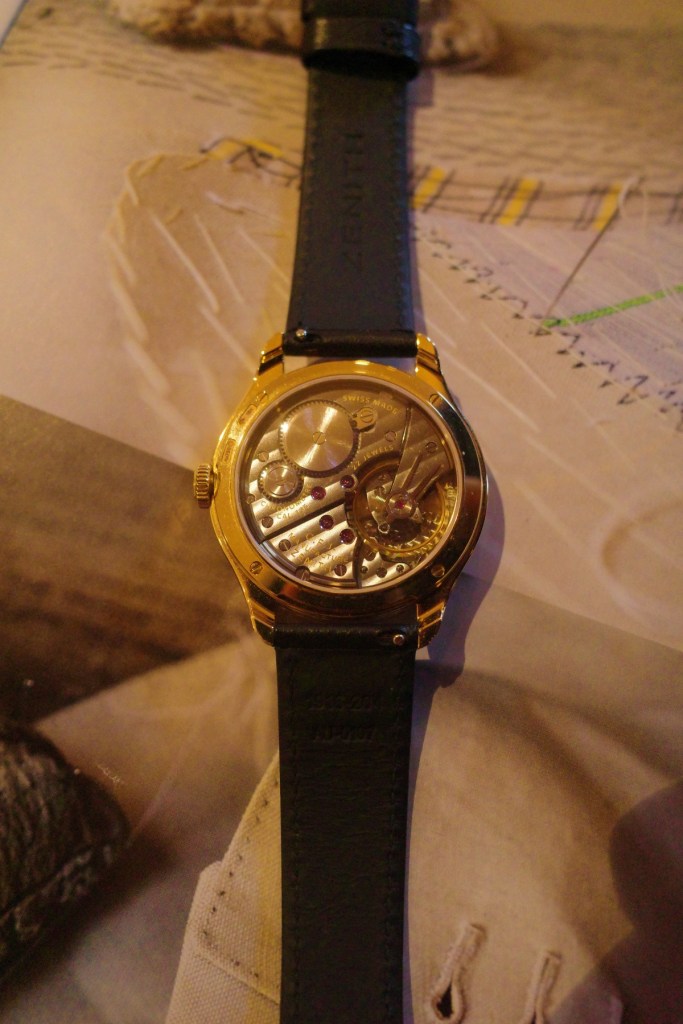
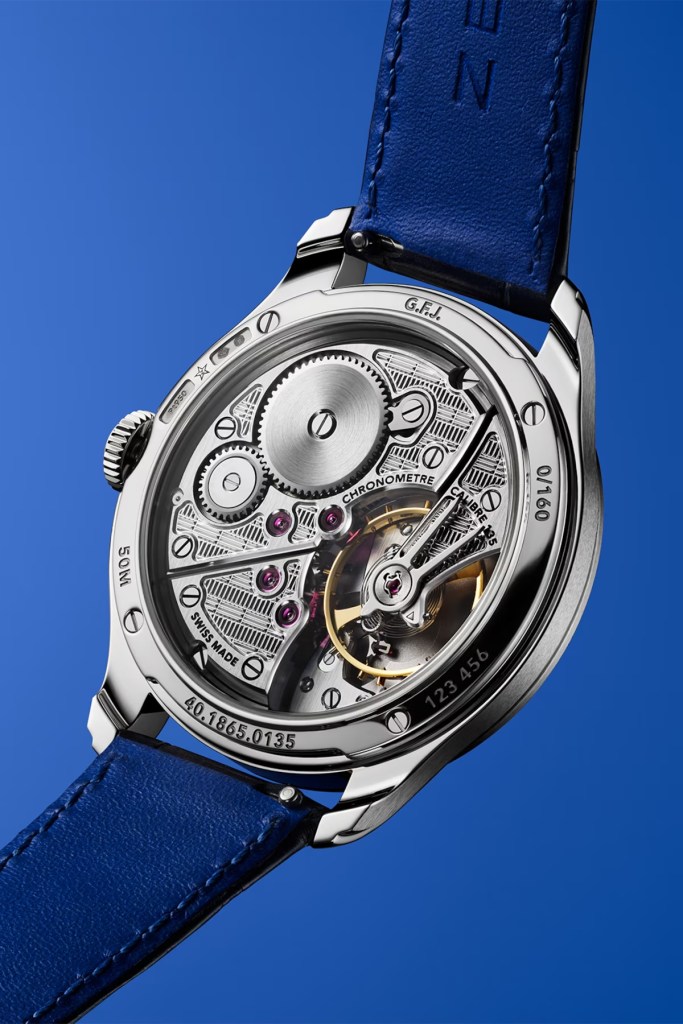
Flipping over the watch, the Calibre 135 movement comes sharply into focus. As core to the G.F.J. identity as the elaborate sector-style dial, it is technically identical to the version from 2025. That means a true three-day power reserve, lots of hand-finishing on the bridges, and the trademark oversized balance wheel.
That final feature is worth unpacking in slightly more detail: at 14mm, it is massive (relative to the movement’s other components), outputting a slow ‘n’ steady beat rate of 18,000vph. For reference, most modern COSC-certified watches function at 28,800vph; yet Zenith has been able to preserve the calibre’s elegiac pace while simultaneously ratcheting up accuracy to ±2 seconds per day.
That is possible thanks to manual adjustment of the movement by Zenith’s own watchmakers: a fitting tribute to the brand’s historic team of régleurs, who fine-tuned the original Calibre 135 which would go on to win the famed 1948 Neuchâtel Observatory competition.
Temporarily deferring the question of value, the new G.F.J. ‘Bloodstone’ is a beautifully realised, technically sophisticated piece of watchmaking. Then again, if you’ve got this far into my more-than-1,000-word evaluation (commiserations, by the way) it’s safe to assume you’re among the ilk, horologically speaking, for whom the G.F.J. collection is already a well-liked quantity.
Zenith’s challenge lies in how it is able to stimulate further overlap in the Venn diagram between such an ‘enthusiast’ audience and well-heeled luxury buyers who can be persuaded to stop amassing Rolexes and Patek Philippe Calatravas in favour of this as an alternative.
At a total production of 161 pieces worldwide, the Bloodstone is very much the sort of watch Zenith is going to have to overdeliver on selling into the future – made in large enough quantities to shore up the company’s production capacity, but a far cry from the days of 13,000 watches per annum.
Inevitably then, one arrives at the complicated question of pricing. Even among the sort of serious collector who spends $100,000 on a watch unblinkingly, the Bloodstone’s price tag will invite (rightly or wrongly) comparisons with other superficially similar designs in precious metal.
Obvious points of comparison include Vacheron Constantin and A. Lange & Söhne – both of which make elegant, classically styled dress watches equipped with manual hand-decorated movements. Whether collectors are willing to accept the premium that accompanies the G.F.J. hinges largely on what weight they attach to the legacy of history (especially the Calibre 135).
Given the current state of the Swiss watch industry, it’s safe to say that survival is no longer just about making a strong, coherently executed product. On that score at least, the G.F.J. ‘Bloodstone’ steps confidently in the right direction.
Want to see more Forbes articles on your feed? Tap here to make Forbes Australia a preferred source on Google.
Look back on the week that was with hand-picked articles from Australia and around the world. Sign up to the Forbes Australia newsletter here or become a member here.