Hundreds of California-based billionaires could be subject to a one-time wealth tax if it passes in the November midterms, imposing a 5% tax on their net worth, and Forbes found even just the 10 richest billionaires in the state could owe $31.5 billion collectively alone if the measure passes—with Meta CEO Mark Zuckerberg leading the pack.
Key Facts
- Forbes calculated an estimate for how much the 10 richest people in California would owe under the one-time wealth tax, based on their net worth on Forbes’ Real-Time Billionaires list as of the morning of Oct. 27, and subtracting the value of real estate assets that will not be included in how the tax is calculated.
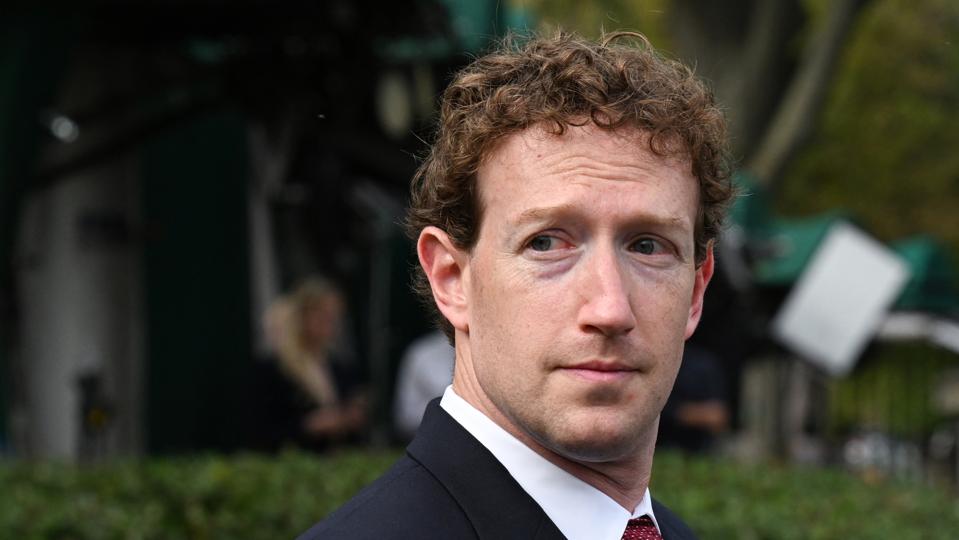
- Mark Zuckerberg (Estimated tax $10.9 billion): The Meta CEO is now the richest person in the state, after other top billionaires like Google cofounders Sergey Brin and Larry Page left, but Zuckerberg is reportedly staying—thanks to a deal he struck with Meta’s board, which kept Zuckerberg from leaving the state in exchange for the company unveiling a new class of stock that the CEO can sell to pay for the tax on his more than $200 billion fortune.
- Jensen Huang (Est. tax $9.5 billion): The Nvidia CEO, whom Forbes values as being worth more than $170 billion, has actually come out in favor of the wealth tax, telling CBS he “[doesn’t] mind paying taxes” and arguing it’s a “privilege” he’s able to pay it and adding, “I’m not afraid of paying taxes. I’m just afraid of being poor.”
- Eric Schmidt (Est. tax $1.8 billion): Ex-Google CEO Schmidt, who may have to pony up nearly $2 billion of his more than $30 billion net worth, has been one of the tax’s most prominent opponents, ranking alongside Brin as one of the billionaires who’s spent the most opposing the tax and giving approximately $40 million to a PAC fighting the measure.
- The next-richest billionaires who stand to pay the most under the tax, but haven’t publicly weighed in on it, are Broadcom cofounder Henry Samueli (est. tax $1.6 billion), Ubiquiti founder and CEO Robert Pera (est. tax $1.5 billion), Kingston Technology cofounder and CEO John Tu (est. tax $1.4 billion), Kingston Technology cofounder and COO David Sun (est. tax $1.4 billion), OpenAI cofounder and president Greg Brockman (est. tax $1.3 billion)—who has pouredmillions into the midterms, but not on this issue—and Figure CEO and founder Brett Adcock (est. tax $1.2 billion).
- John Doerr (Est. tax $1.1 billion): The venture capitalist and 10th richest person in California has also spent some $40 million so far opposing the wealth tax, according to campaign finance figures compiled by the New York Times, as he stands to hand over at least $1 billion of his roughly $20 billion fortune.
Contra
The estimated tax bills were calculated using Forbes’ valuations for California’s top billionaires, but there are some differences in how Forbes calculates its valuations and how the state calculates net worth for the purposes of the tax, so the final amounts paid may differ from these estimates. Having assets in certain kinds of trusts could lower a billionaire’s net worth for the purposes of the tax, for instance, and Forbes values private businesses based on a best estimate of their market value, while the tax calls for a different method that could yield higher or lower valuations for some billionaires.
What To Watch for
It remains to be seen if the tax will actually pass in the midterms, as billionaires like Schmidt and Brin have spent millions opposing it. A poll released Thursday by UC Berkeley and the Los Angeles Times found 50% of likely voters now plan to vote against the measure, while 42% are in favor of it and 8% are undecided. That’s a notable decline from even just six weeks ago, when a narrow majority favored the tax, the Times notes. Even if the tax passes, however, there are also other measures on California’s ballot that could effectively nullify it if they also pass. Those measures could prohibit exemptions outlined in the wealth tax measure or impose a full prohibition on wealth taxes. Between the three measures—known as Propositions 40, 41 and 42—whichever one receives the most “yes” votes will pass, meaning that even if the wealth tax, Proposition 40, gets a majority vote, it could still be nullified if a different measure was more popular.
What About Anthropic’s IPO?
One factor that could change up the list of the top taxpayers is Anthropic’s imminent public listing, after the artificial intelligence company filed for an initial public offering earlier this week. Forbes values CEO Dario Amodei and sister Daniela Amodei, the company’s cofounder and president, at approximately $13 billion each while the company remains private, which means they would each pay roughly $680 million in tax should the measure pass. Anthropic going public could significantly boost their net worths, however: While the company’s IPO pricing still hasn’t been determined, reporting suggests it will likely be valued in a range that would boost the Amodeis’ individual net worths to more than $20 billion, meaning they would likely each be on the hook for at least $1 billion in tax.
Surprising Fact
While the tax, should it pass, would collect at least tens of billions from California’s richest residents, the cost of driving other billionaires out of the state could offset those gains, research suggests. A working paper from Stanford University researchers, published by the National Bureau of Economic Research, found the income tax lost by billionaires leaving the state would likely outweigh how much revenue the one-time tax brings in. Using Forbes valuations, the research found that, across a review of 100,000 potential outcomes, 85% of results would yield negative revenue for the state.
Want to see more Forbes articles on your feed? Tap here to make Forbes Australia a preferred source on Google.
Look back on the week that was with hand-picked articles from Australia and around the world. Sign up to the Forbes Australia newsletter here or become a member here.