From lawyer to labourer to EV pioneer, Tim Washington transformed JET Charge from a two-person start-up into Australia’s leading charging infrastructure giant.

Tim Washington never set out to build a clean-energy empire. When he stood at a professional crossroads after working as a corporate lawyer and managing his family’s apparel-manufacturing business built by his mother from a single sewing machine in Melbourne, he faced a changing global economy.
Rather than relocating manufacturing offshore – as traditional apparel production shifted away from China – Washington chose to walk away from the family business and invest his personal savings into something entirely new.
Combining a passion for emerging technology with an interest in cars, Washington and his co-founder, Ellen Liang, co-launched JET Charge in 2012. At the time, electric vehicles were still a novelty, but Washington recognised that home charging would change the paradigm of car ownership by freeing motorists from traditional petrol stations. A specialised business around EV charging infrastructure would be required in the future, he concluded.
Knowing nothing about electrical work or automotive systems, the now-CEO needed to get his hands dirty. He leaned on an experienced sparky named Jay Robinson, who took Washington under his wing.
“I had to learn,” Washington told Forbes Australia in an interview at the company headquarters in Port Melbourne. “I was on the tools with Jay for about two years, crawling around houses, crawling under houses, learning electricity.”
Jay Robinson’s insights and knowledge were invaluable. He became the J in JET Charge. Co-founder Ellen Liang provided the E, and Tim rounded out the name with his first initial. The co-founders set up shop in Washington’s home in Armadale.
In 2014, the China-born entrepreneur ordered one of Australia’s earliest Teslas, a decision that paid off in both learning the ins and outs of electric vehicle ownership and in the relationship that flourished with the Elon Musk-founded company.
When the early Teslas arrived in Australia, there were sales professionals but no infrastructure in place to charge the vehicles. JET Charge had a solution. Washington had installed Victoria’s first residential EV charger at his home.
“I ordered a Tesla, which is how I got in touch with Tesla, because back then they still had very personal relationships with their buyers,” says Washington. “They had test rides out of our driveway in Armadale for two months before they found their office.”
Building the EV backbone
Following that early partnership with Tesla, JET Charge secured contracts with Volvo, Porsche, and Jaguar Land Rover, to supply and install dealership charging infrastructure across Australia.
For the first eight years, Washington went without a wage as the company grew organically. In late 2020, JET Charge secured its first institutional funding round.
Two years ago, the company locked in a $72 million Series C, led by French sustainable investment group Mirova, alongside the Clean Energy Finance Corporation (CEFC), the RACV, and Kilara Capital.
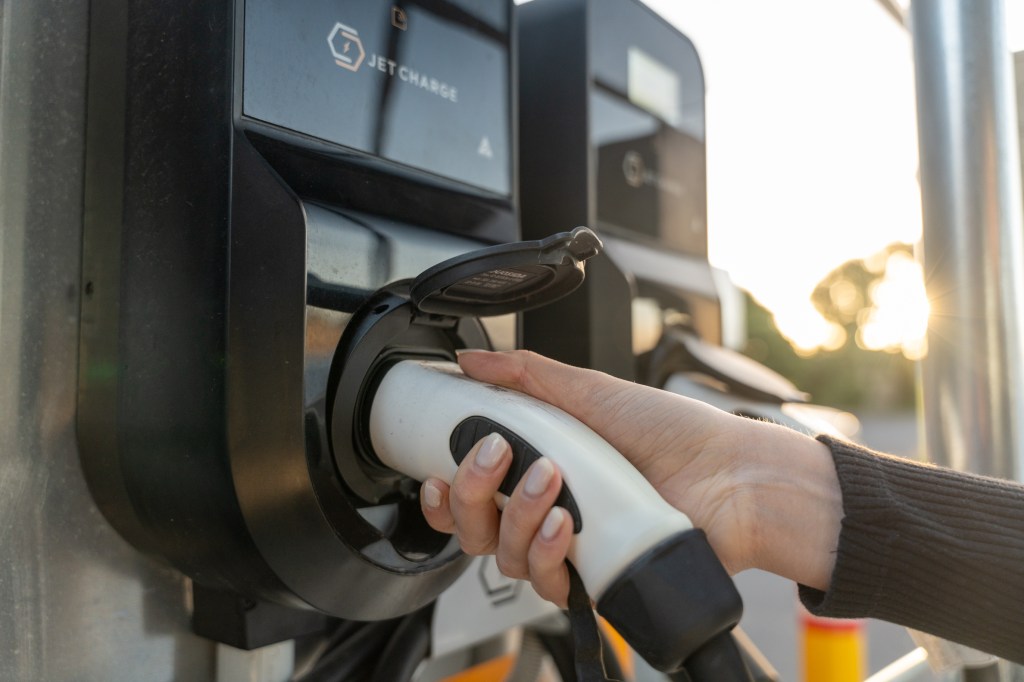
Today, JET Charge has a team of 170 people and operates as Australia’s largest specialised EV charging infrastructure and technology provider, having deployed tens of thousands of charging stations across residential, retail, and commercial locations in ANZ.
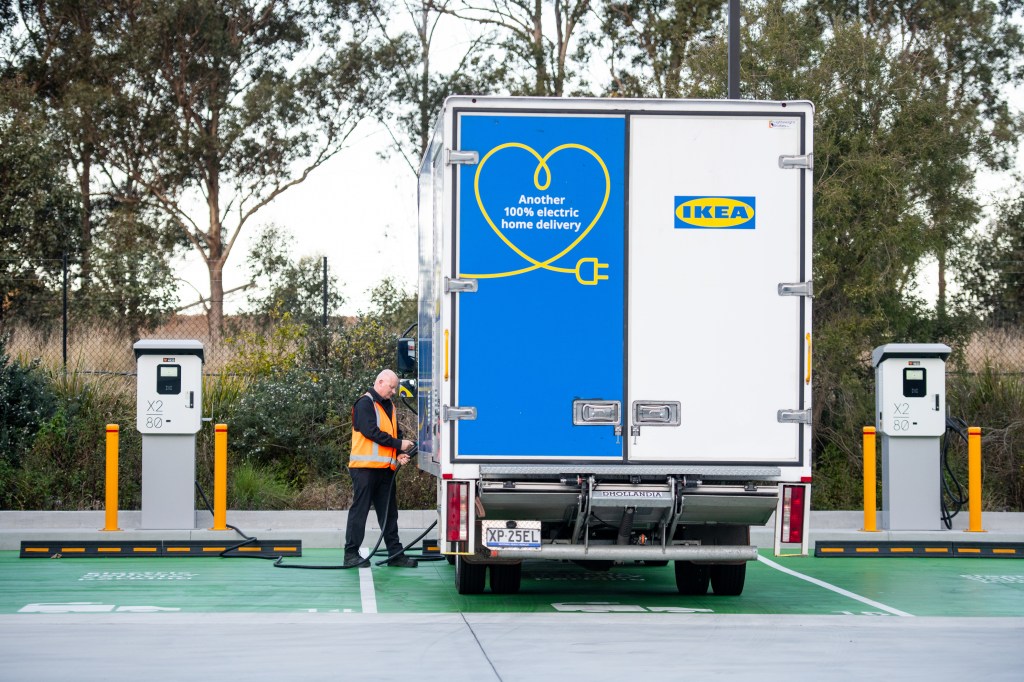
While everyday Australians may know the brand from home setups or public chargers at stores like Coles and IKEA, the majority of the company’s heavy lifting happens behind the scenes in the B2B market.
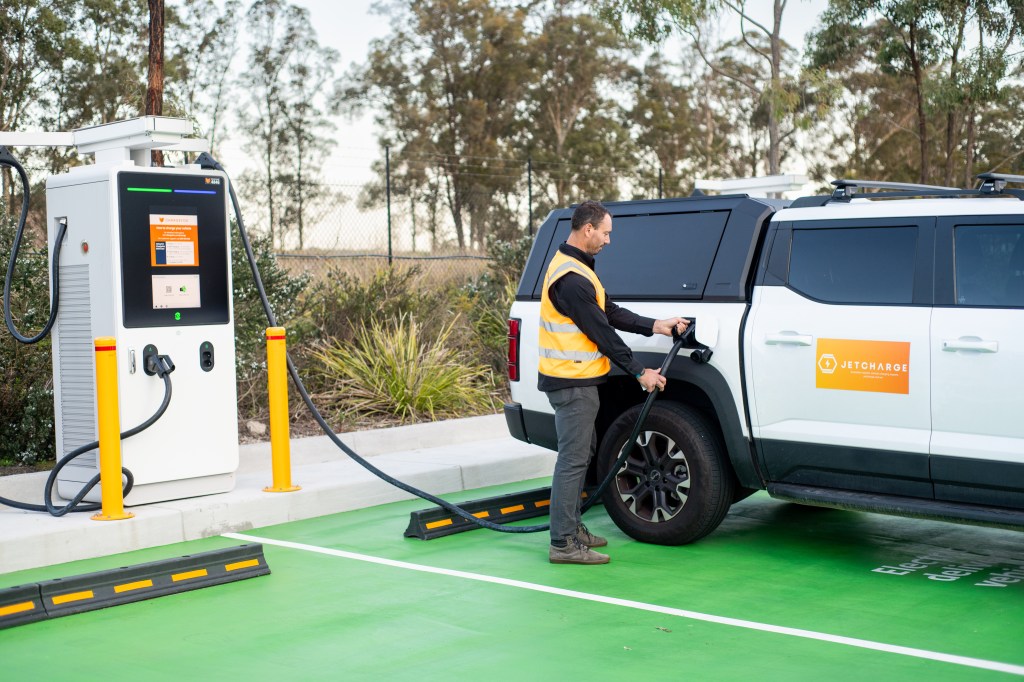
The enterprise side of JET Charge focuses on heavy-duty electrification: designing, engineering, and managing charging depots for electric bus fleets, commercial transport, and delivery vans for logistics networks.
Sparking change across the country
Washington and Liang’s brainchild expanded as the popularity of EVs accelerated nationwide. So far, 2026 sales of the green vehicles have already exceeded last year’s total, fuelled in part by global cost-of-living pressures and geopolitical volatility.
When bowser prices spiked, consumers sitting on the fence rushed to make the switch: “Residential inquiries went up three times,” says Washington. “Really, it was people who were already considering it. Once the market hit 25 to 30 per cent, that’s a preview of the market that is to come.”
He is referring to the S-curve technology adoption model, whereby reaching 25 to 30 per cent market share represents an inflection point. At this threshold, a technology shifts out of the “early adopter” phase and crosses into the mainstream majority.

Washington believes this year’s increase in inquiries isn’t an isolated spike – it is a preview of the high-volume demand the company has been preparing for throughout the last decade. Key to increasing adoption is making it cheaper, he says. He has a plan and data for that too.
In a recent report, the company revealed that switching a 100-vehicle fleet of heavy vehicles to run on electricity delivered overnight annual fuel savings of 70 per cent. After the 4 pm to 9 pm peak electricity usage hours – when people arrive home from work and power up their homes – non-peak rates dip to between $0.13 to $0.18 per kWh.
Charging commercial vehicles after 10 pm, even though they may be plugged in around 5 pm, can reduce the annual electricity bill for a 100-vehicle fleet from $5.8 million to $1.3 million. JET Charge software syncs depot charging with wholesale market prices. Its system can pause or activate charging in five-minute increments, pulling power when wholesale prices plunge and stopping it when it spikes.
Government policy is also incentivising companies to electrify their fleets. Federal targets under the Net Zero Roadmap aim for a 62 per cent to 70 per cent emissions reduction by 2035 and a benchmark of zero by 2050.
Enterprises have set their own targets too. JET Charge built a $4.5 million network of 59 chargers across seven IKEA sites, helping IKEA make 83 per cent of its home deliveries zero-emission. Four years ago, that number was just 5 per cent.
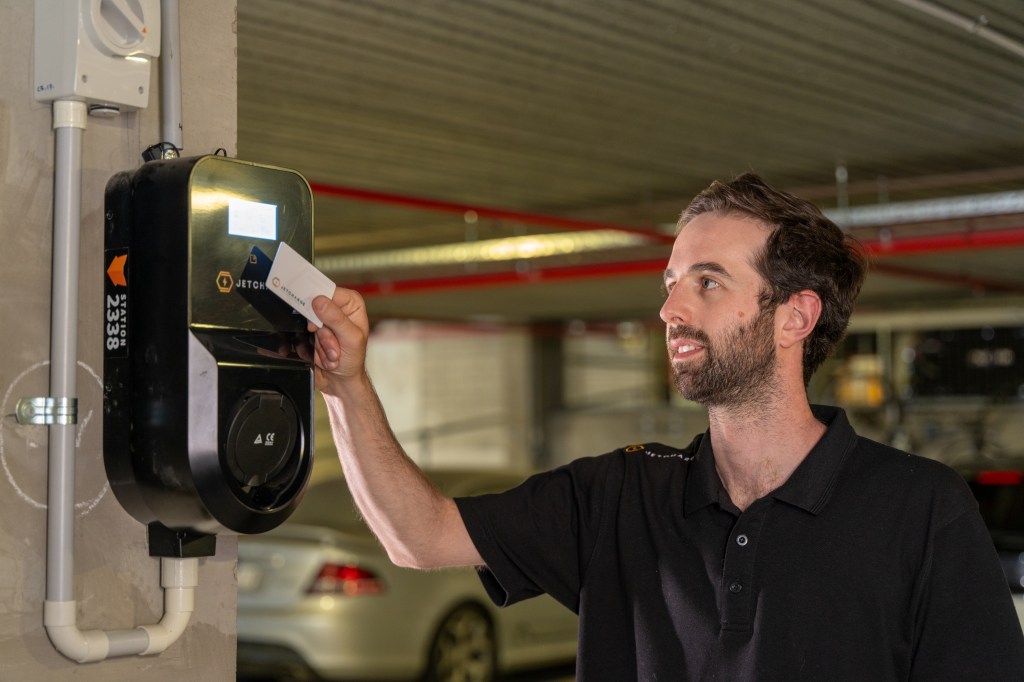
As the market matures, JET Charge is expanding its commercial model by providing local electricians or ‘sparkies’ with hardware, load-management tools and technical training so that they can execute complex EV projects themselves.
Powering up and evolving transportation
Washington is also looking to Vehicle-to-Grid (V2G) technology, which can turn idle corporate fleets into massive commercial batteries that feed power back into the grid when demand spikes.
That technology is being tested in multiple Australian states, as the shift towards EVs intensifies. There were around 20,000 petrol stations across our nation in the 1970s. Today there are 7,000, according to the Australian Institute of Petroleum.
Industry projections from BCG and McKinsey indicate that while combustion vehicles will continue to require petrol stations as we know them today, post-2030 multi-energy hubs combining fast-charging, retail, and alternative fuels will be needed as Australia tracks toward its 2050 Net Zero targets.
It’s a multi-decade transition and future that Washington is ready for.
“We are essentially building the fuelling infrastructure for a world where everyone drives EVs. It’s not about creating one-off public chargers it’s about building an entire ecosystem that powers where people actually live, work, and park.”
Want to see more Forbes articles on your feed? Tap here to make Forbes Australia a preferred source on Google.
Look back on the week that was with hand-picked articles from Australia and around the world. Sign up to the Forbes Australia newsletter here or become a member here.