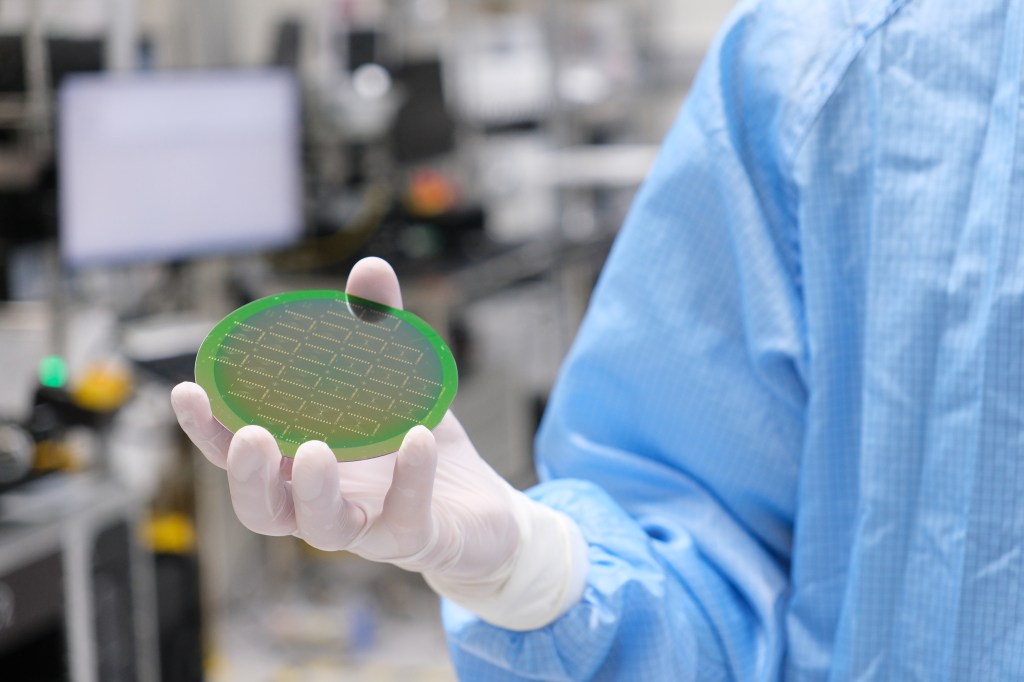
AI companies have long been fighting to get their hands on GPUs (graphics processing units). This week, a stealthy Queensland startup came out with a chip that computes using sound waves, rather than electricity, and may one day be an alternative to in-demand GPUs.
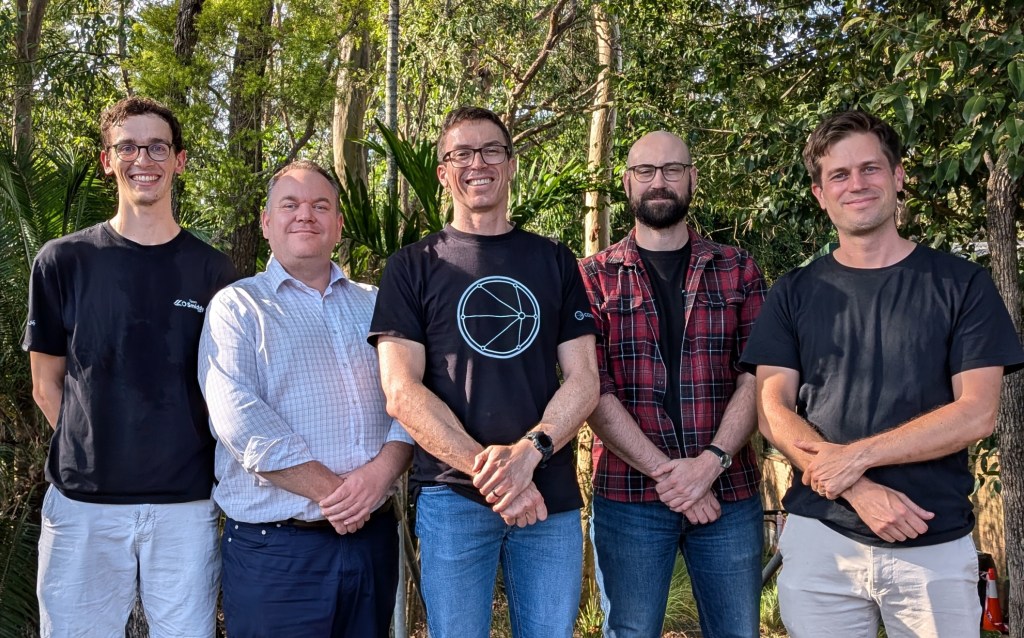
It was 2022 when Dr Glen Harris and Dr Christopher Baker were researching the physics of acoustic wave computing and phonons at a Brisbane quantum lab, and discovered the future commercial scalability of what they were working on.
“When we manufactured that first device with 10,000 interconnected phononic nodes using standard processes, that was the validation of scalability. That’s when phononic computing went from ‘interesting physics’ to ‘this could actually be a product,'” Dr Harris tells Forbes Australia.
“We were understanding how nanoscale sound waves could be engineered to perform computation. But the real breakthrough was realising we could do it using standard semiconductor fabrication.”
Within a couple of years, the University of Queensland PhDs were in discussions with CSIRO-founded VC Main Sequence about commercialising their deep tech breakthrough.
“Developing these prototypes, we quickly realised a key feature of our approach was its potential for ultra-low power consumption computing,” says Harris.
UniQuest, the commercialisation arm of the University of Queensland, and aviation and space multinational corporation Lockheed Martin, saw the potential in the technology too.
“The acoustic wave platform offers a completely new approach with strong potential to deliver mission-critical capability with exceptional efficiency, which is vital for space-based and tactical edge assets,” says Dr Tony Lindsay, a director with Lockheed Martin Australia.
The initial target market for the new chips is the USD$47 billion global Edge AI industry – expected to grow to USD$385 billion by 2034 – which services autonomous drones, wearables, cameras, self-driving systems, and smart devices. These items need ‘real-time inference at ultra-low power,’ Cortisonic states, and are being targeted because its a sector where GPUs dont have a distinct advantage.
Alex Romero, an investment manager at Main Sequence says he sees enormous opportunity in what Cortisonic is doing.
“Their vision to solve AI’s energy dependency with a physics-based solution is incredibly compelling. The combination of foundational IP, commercially scalable manufacturing, early validation from Lockheed Martin, and dedicated government funding gives them unique credibility as they emerge from stealth to reshape the future of edge computing,” says Romero.
In addition to investing in Cortisonic, Lockheed Martin has formed a $3.2 million strategic partnership with them and the Australian Department of Defence to validate the technology and demonstrate its ‘minimum viable capability.’
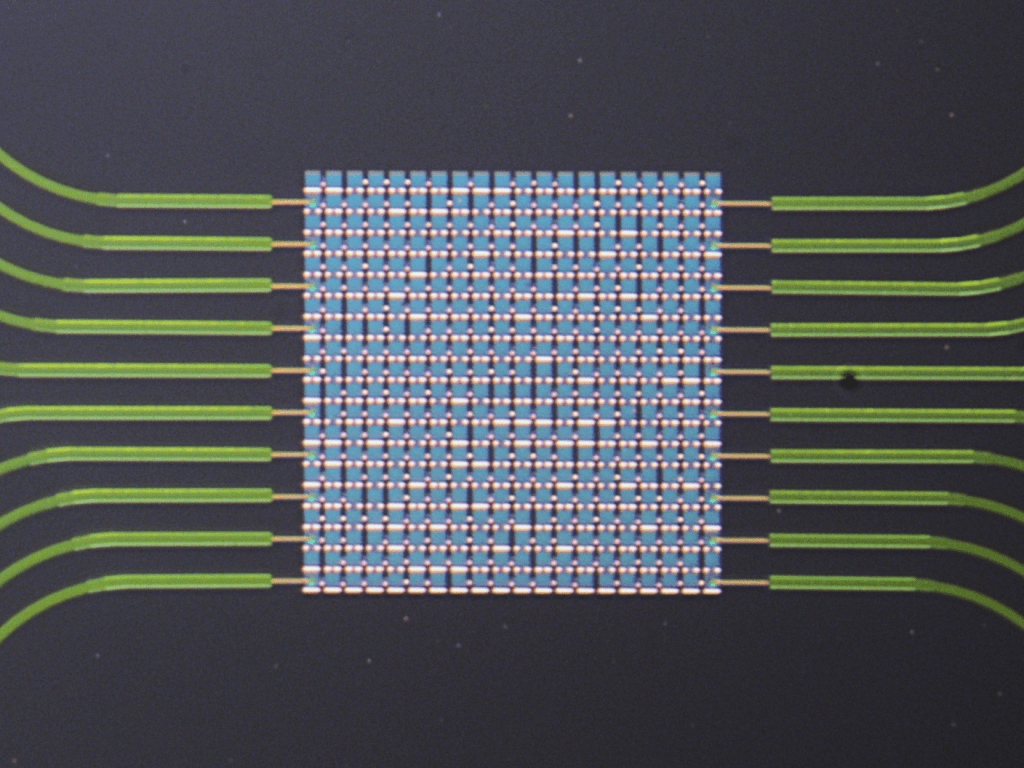

Dubbed ‘Sonic Processing Units,’ Cortisonic’s innovative chips can be complementary to current chips that are in such demand in the AI boom, Harris says.
“We’re introducing phonons into the mix of computational elements. It’s about using all the particles at your disposal — electrons, photons, and now phonons — to do computing more efficiently,” says Harris.
Having the support of Maryland-headquartered Lockheed Martin has been instrumental in bringing the technology to market, the CEO says.
“When someone from Lockheed Martin is telling you there is a need for this type of technology for resource-constrained environments, and Main Sequence is ready to back it properly, you don’t keep this in a lab,” he says.
“I genuinely believe phononic computing will become part of the standard semiconductor toolbox. Not replacing electronics or photonics but sitting alongside them as another option chip designers reach for when they hit power constraints.”
Look back on the week that was with hand-picked articles from Australia and around the world. Sign up to the Forbes Australia newsletter here or become a member here.