As global AI giants face increasing friction in Washington, Anthropic CEO Dario Amodei has landed in Australia with a strategic ‘Plan B.’ For Canberra, it is a play for sovereign capability; for Amodei, it is a bid to prove that responsible AI is viable.

With a population of 28 million, Australia is small fry on the global population stage. Yet, when taking a look at the Anthropic Economic Index released this week, our island home is the 7th highest adopter of Claude AI around the world. And that’s four times higher than what Anthropic researchers were expecting.
Not only are we using the technology more, but we are using it differently – collaboratively, and in unique ways compared to the citizens of other countries.
“Usage spans from complex genomic research and legal drafting to agricultural logistics and financial modelling,” Anthropic states. “Australian users perform the most diverse range of tasks among all English-speaking nations.”
So while Anthropic is busy sparring with US regulators over defence contracts and supply-chain risks, CEO Dario Amodei jetted out of San Francisco this week, landing in NSW.
“Australia’s investment in AI safety makes it a natural partner for responsible AI development.”
Dario Amodei
He met with tech leaders in Sydney and Prime Minister Albanese in Canberra, signing a Memorandum of Understanding (MOU) with the federal government to “capture the opportunities of AI, spread the benefits, and keep Australians safe.”
The MOU casts Australia as a regulatory base – a stable, US-aligned alternative to the increasingly politicised US defence landscape.
Data sharing, infrastructure, and transparency
While many diplomatic agreements are light on technical detail, this MOU establishes a formal framework for how Anthropic will integrate with Canberra. The agreement focuses on three core areas: technical transparency, infrastructure alignment, and economic data sharing.
According to the San Francisco-headquartered AI firm, the data it will share with the government is a high-resolution map of the economy. While the public can access national averages via the Anthropic Economic Index, the version provided to the government includes specific metadata on “task-level” automation.
This allows policymakers to see exactly which professional skills are being augmented in real-time and grants the Australian Treasury access to a significantly more granular dataset.
By providing the raw, sector-specific data behind the trends, Anthropic is giving Australian officials a ‘look under the hood’ of the economy, providing a lead time on labour market shifts that traditional, lagging indicators can’t keep up with.
The MOU also mandates a technical exchange between Anthropic and Australia’s AI Safety Institute, allowing for joint safety evaluations of “frontier” models before they are fully deployed in the local market.
Furthermore, Anthropic has signalled its intent to align any future Australian operations with the government’s strict new Expectations for Data Centres, which govern energy grid upgrades and sustainable water usage. This suggests that in exchange for market access, Anthropic is willing to adhere to a level of local oversight.
From raw data to clinical decisions
Anthropic’s $3 million investment into the “AI for Science” program targets a specific, costly friction point in the Australian medical system: the interpretation of genetic sequencing.
“I’m particularly excited by the work Australian research institutions will be doing with Claude to advance disease diagnosis and treatment,” Amodei said in Canberra.
At the Garvan Institute of Medical Research, the Murdoch Children’s Research Institute, and ANU, the challenge has shifted from sequencing DNA to interpreting the data to diagnose rare diseases. By deploying Claude, data analysis can take minutes rather than hours.
“The clinical payoff will be transformative: more patients diagnosed, with direct implications for precision medicine,” says ANU Associate Professor Dan Andrews. And that allows Andrews and his team at The John Curtin School of Medical Research to increase its scope.
“With Claude Code, we’re creating bespoke AI tools so quickly that it’s forced us to think much bigger than we ever imagined. The size and importance of the problems we can now practically contemplate solving is revolutionary, and we’re only just at the very beginning of what is possible,” says Andrews.
For the Albanese government, Anthropic’s investment and the Claude’s capabilities provide a tangible outcome tied to the National AI Plan – demonstrating that frontier AI can deliver quantifiable efficiency to the public health infrastructure.
Related
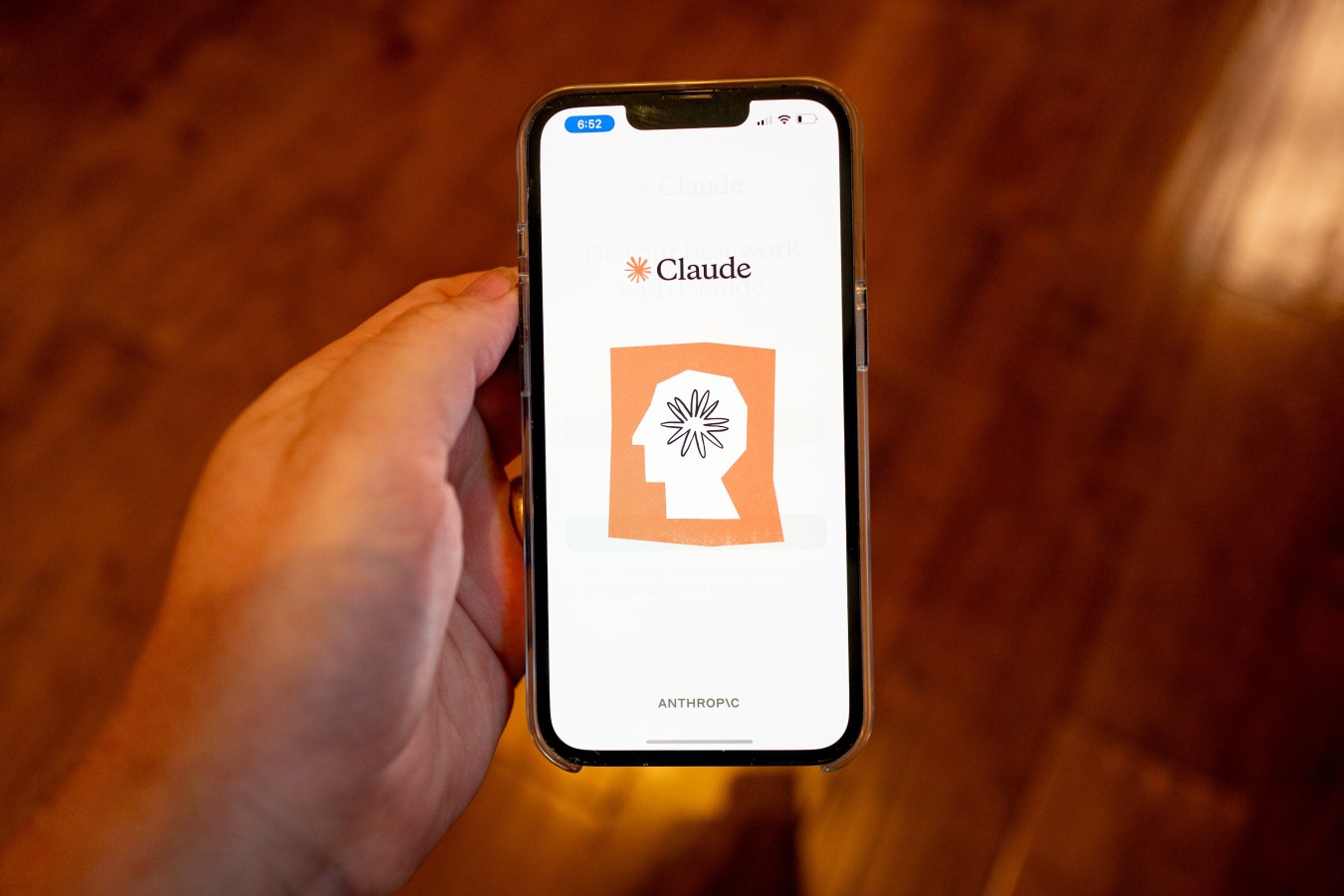
Anthropic’s final play in Canberra is a hedge on the future. By embedding Claude into the curriculum at the Australian National University (ANU), it is ensuring the next generation of Australian developers are “Claude native.”
It made a $500,000 donation to ANU’s School of Computing to teach “agentic software development.” If the nation’s future engineers are trained on Anthropic’s safety-aligned architecture, it becomes significantly harder for rivals to dislodge them from the local ecosystem.
“Initiatives such as this can help expand access to emerging technologies, supporting more equitable access for students and enabling teaching that is practical, ethical and grounded in real-world application,” says Professor Joan Leach, ANU’s Deputy Vice-Chancellor of Education.
For now, the ”Anthropic Australia alliance’ seems to be in full swing: the government gets the deep data to help manage a volatile technology, while Amodei gets a stable, high-skill democracy to prove his vision of responsible AI.
Want to see more Forbes articles on your feed? Tap here to make Forbes Australia a preferred source on Google.
Look back on the week that was with hand-picked articles from Australia and around the world. Sign up to the Forbes Australia newsletter here or become a member here.