Backed by Jeff Bezos, Danny Meyer and other savvy investors, Matias Muchnick’s NotCo has created alternatives for Coca-Cola, Kraft Heinz, Ferrero and more food giants. And the appetite for change is only growing.
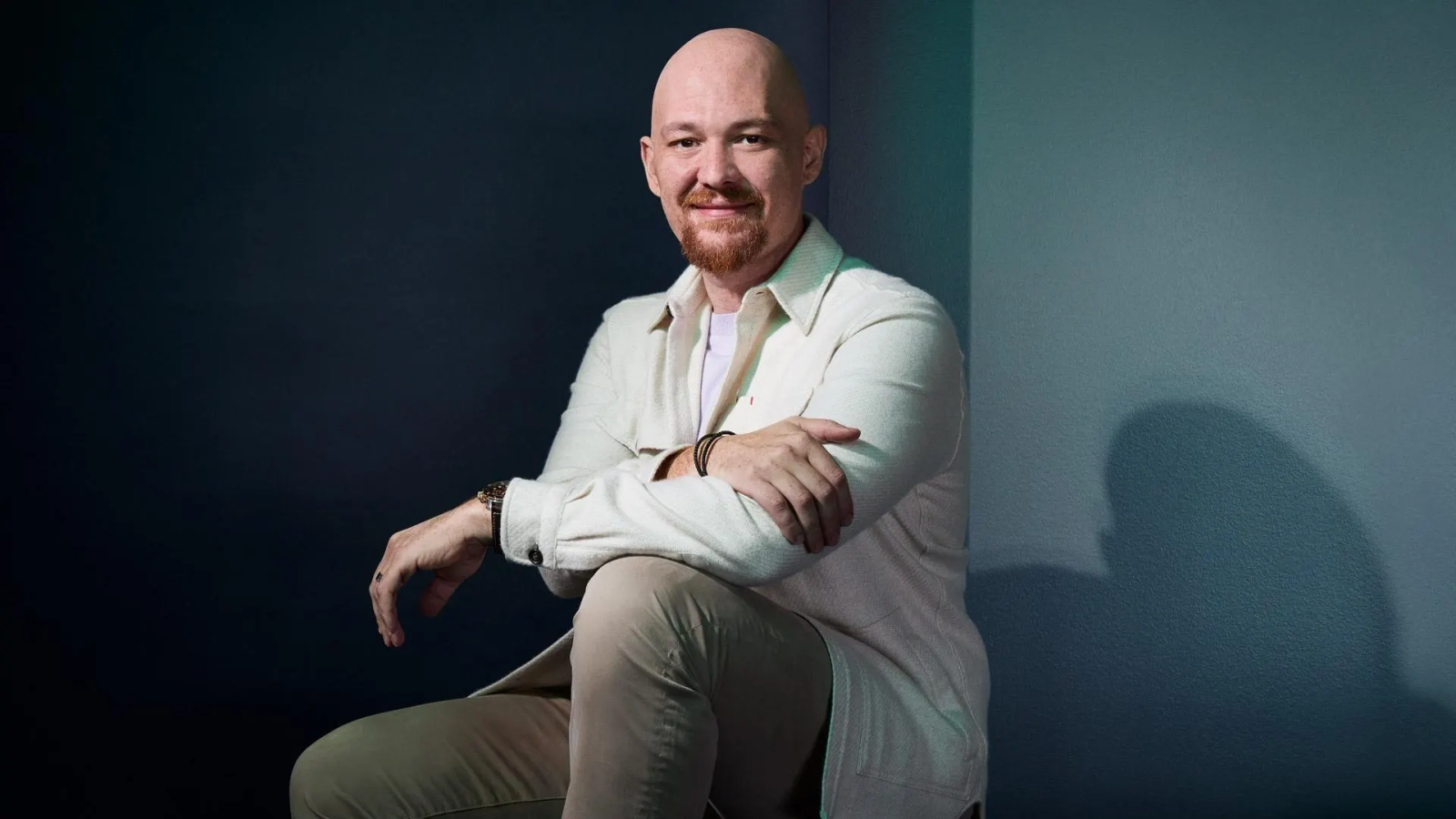
Mr. Fix-It: “We’ve become the ‘Better Call Saul’ for all the most complex problems that the biggest brands in the food industry have,” says NotCo founder Matias Muchnick.
NotCo
Italian-based confectionary giant Ferrero uses more than 30,000 recipes every year in products that include Nutella and Kinder chocolates, and that complexity can make changes difficult. So after cocoa prices surged in 2024, Ferrero started to work with NotCo, a San Francisco based food tech company, as the startup demonstrated how its software can help reduce volatility and identify alternative ingredients without impacting taste, texture or flavor.
“If you change one thing, you change everything else,” explains Matias Muchnick, NotCo founder and CEO. “A computational problem is not a linear problem.”
A 37-year-old Chilean who lives between San Francisco and Santiago, Muchnick has become the food industry’s fixer. Using an artificial intelligence platform he has been building since 2015 (founded one day before OpenAI), his company creates plant-based alternatives for products typically made from dairy and meat. In the past four years, for instance, NotCo has developed 30 new products for Kraft Heinz through a joint venture, including Mac & Cheese, Kraft Singles and Oscar Mayer Sausages.
“We’ve become the Better Call Saul for all the most complex problems that the biggest brands in the food industry have,” says Muchnick.
Backed by Jeff Bezos, Roger Federer, Tiger Global, L Catterton, Kaszek Ventures and other investors, NotCo is the largest AI company in the food space—its AI-based business grew 300% last year, with $75 million in estimated annual revenue.
The company has raised over $425 million—which gave it a valuation of $1.5 billion—and Muchnick projects he won’t have to raise money again for a few years, but if he did, the valuation would be far higher due to the AI boom. At current market rates, based on revenue, NotCo could be valued at multiples well above 20 times sales.
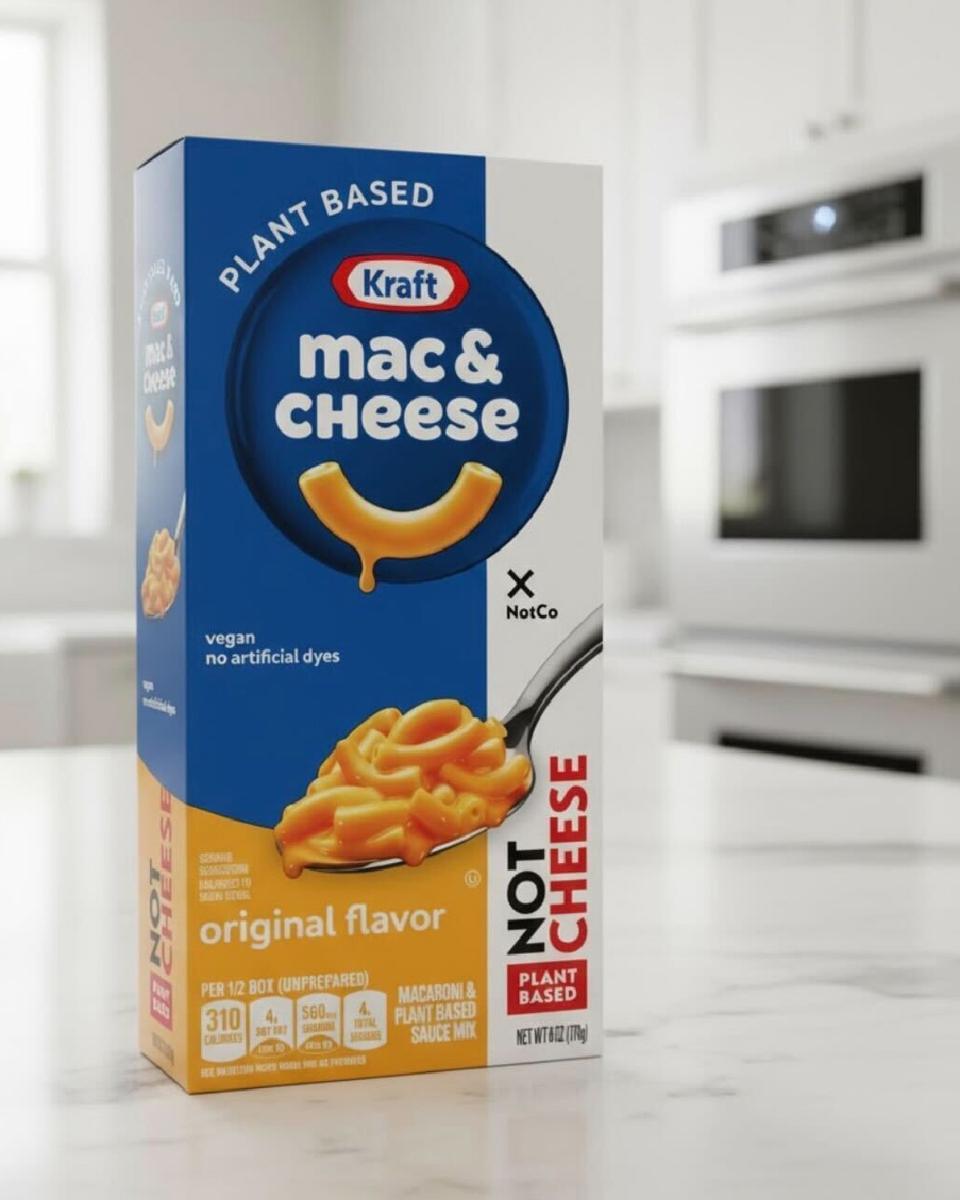
Vegan-omics: NotCo has developed 30 new products for its joint venture with Kraft Heinz, including Mac & Cheese and Oscar Mayer Sausages.
NotCo
Muchnick remains the single largest shareholder and retains an estimated 20% stake worth at least $300 million.
NotCo’s business split into two formal divisions two years ago: a profitable one for the AI enterprise software business with an estimated 70% gross income margin, and a currently unprofitable one for its in-house line of food products, including vegan milk and mayo, which serves to advertise what NotCo can do with its AI model.
The consumer-facing division is close to profitability and is growing at around 30% every year from 130 different products. Its products are mostly sold in Latin American countries including Brazil, Mexico, Chile, and Argentina. Customers can find NotCo’s NotBurger, NotChicken Nuggets and NotChicken Burger at Burger Kings in seven Latin American countries. The business’s overall top sellers are its non-dairy milk NotMilk, protein bars with zero sugar or high-protein, and several meat alternatives.
“It’s a perfect storm for big CPG [consumer packaged goods] companies. Consumer preferences are changing like they never did before,” says Muchnick. “And supply chain disruptions like cocoa and orange juice, shortages of hazelnuts, so many other things–ingredient dependency is really driving the margins of big companies.”
In the past three years, most consumer food companies have performed worse than the S&P 500, and Muchnick says, “a lot of that has to do with the capabilities of these big companies to adapt to the new changing world.”
According to a report from the Dutch AgTech consultancy Bright Green Partners, the market for AI in food processing is projected to grow from $15 billion in 2025 to $140 billion by 2034, as conglomerates seek animal-free alternatives and cheaper ingredients in general.
That’s where Giuseppe comes in. Muchnick named his AI model after the 16th-century Italian Renaissance painter Giuseppe Arcimboldo who created surrealist portraits of human faces composed of fruits, vegetables, flowers, and plants—elements people never expected could be combined together to generate such humanly-accurate portraits. “Just as the artist used a palette of vegetables to reconstruct a human likeness,” Muchnick says, “the AI uses a massive database of molecular data to reconstruct new products using unexpected ingredient combinations that no one expected could work together.”
Giuseppe can also tap into 10 years of private data on consumers and formulas, experience and scientific research alongside datasets like for regulatory compliance that have never been previously analyzed with artificial intelligence. “It’s an industry that doesn’t want to share anything with anyone. The competitive advantage is very deep within the weeds of formulation,” says Muchnick. “Working this inside, they hold the keys, they hold the tools—and they [can] work without our assistance at all.
“The only way of doing that is showing what you’re worth, the value that you’re creating, the value that you’re generating,” adds Muchnick. “For us, it is about commercial execution.”
Muchnick grew up in Santiago, the middle of three sons born to a banker father and a mother who was a photographer. After college at the University of Chile, he attempted to gamify wellness with a mobile app sponsored by the Chilean government called Chooz. The startup incentivized healthy living by granting users real prizes when they accomplished a goal in exercise, dieting, or meditation.
When the project ended in 2012, Muchnick founded Chile’s first plant-based food company, Eggless. After achieving placement in leading Chilean retail chains including Walmart, Jumbo and Unimarc, his eggless mayonnaise became the top-selling alternative mayo in the country in December 2014. Muchnick sold the company the following year in a small sale which gave him some proceeds that he says “were vital, providing the foundational capital” needed to launch NotCo.
The idea for NotCo was born out of his experience at Eggless. As he went into food science labs with clients, Muchnick realized “we were headed into a brick wall.” In looking for alternative ingredients, he soon realized that balancing cost, sensory experience, nutrition, manufacturability, and compliance across trillions of combinations “simply cannot be done on human intuition alone.” Muchnick started with around $250,000. For the first two years, he bootstrapped.
“Food formulation is one of the most intellectually demanding disciplines in applied science,” says Muchnick, who likens the complexities to playing chess with a blindfold. “There’s a parable in cognitive science about chess grandmasters. A grandmaster playing blindfolded is one of the most impressive displays of human cognition ever observed, holding entire board states in memory, calculating sequences eight moves deep without seeing a single piece. It’s heroic. It’s beautiful. And it is exactly the wrong way to play chess in a world where the other player has [the chess playing computer program] Stockfish. The CPG industry in 2015—and in most cases in 2026—was a room full of blindfolded grandmasters. Magnificent talent. Wrong tools.”
So Muchnick moved to New York to build the right ones. At first, he focused on building NotCo’s grocery store brand of vegan mayos, milks and other products, all formulated using the AI platform he was simultaneously developing. “The consumer data was completely disconnected to formulation,” he recalls.
Muchnick secured his first big investor in 2018, when Brazil-based Kasezk Ventures led a $3 million round.
Then the funding really poured in. In 2019, Muchnick raised $30 million for NotCo’s series B, including from London-based The Craftory and Bezos Expeditions. Then the next year, in the middle of the pandemic, Muchnick raised $85 million, bringing in more from Bezos as well as new investors with a proven track record in the food industry, including Greenwich, Connecticut-based L Catterton.
As a war chest mentality swept through the alternative protein sector, NotCo faced off on shelves against other insurgent brands such as Oatly, Impossible Foods and Beyond Meat, and Muchnick kept raising. In 2021, he secured two more checks: one for $10 million from Enlightened Hospitality, an affiliate of Danny Meyer’s Union Square Hospitality Group, as well as a series D for $235 million. That raise was the first time NotCo’s valuation topped over $1 billion, and it was led by billionaire-backed Tiger Global Management.
“We needed to continue to develop our AI and not invest all of our money into the consumer brand,” he recalls.
Aside from obvious fundraising skills, Muchnick’s key achievement—that his AI model now enables food to be formulated entirely by a computer for the first time—is “a paradigm shift” that’s “category-defining,” says Jonathan Levav, a Stanford Business School professor who has advised Muchnick since the early days of the company.
NotCo currently holds 31 patents, including 13 for its AI tech in the U.S. But its competitive moat is actually how far ahead Giuseppe is compared to new startup entrants and the years of data it has already captured through its private clients to enhance its model as well as work from inside NotCo’s labs.
What’s next is putting that data to work at more large food companies (NotCo works with seven of the top 20 biggest food conglomerates) as well as expanding what NotCo does with its existing customers.
“We constructed models that can build bridges within things that are completely disconnected in the fundamental workflows—from innovation to marketing, to sales, to supply chain,” Muchnick says. “This is an operating system that could be centralizing most of the decisions made.
This story was originally published on forbes.com and all figures are in USD.
Want to see more Forbes articles on your feed? Tap here to make Forbes Australia a preferred source on Google.
Look back on the week that was with hand-picked articles from Australia and around the world. Sign up to the Forbes Australia newsletter here or become a member here.