From rare Rolexes and Birkin bags to multimillion-dollar art collections, wealthy borrowers are unlocking quick cash from luxury assets—skipping banks and paperwork in favor of speed and discretion.
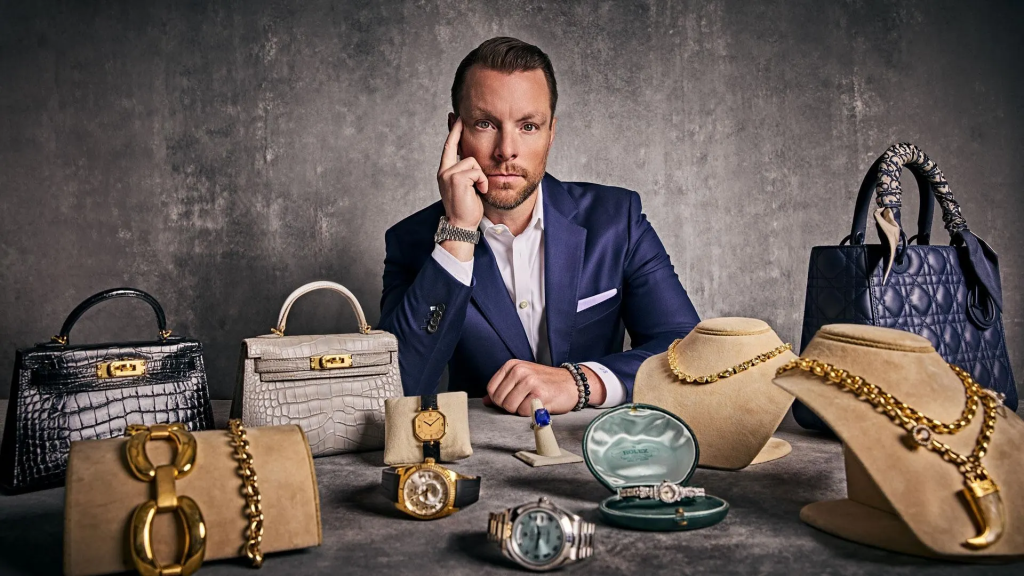
Inside a climate-controlled room at lender Luxury Asset Capital’s Manhattan office, rows of Hermès handbags line the shelves: Mini Kellys in exotic skins worth roughly $75,000 each, diamond-encrusted Birkin bags and other limited-edition pieces that are worth six figures. Nearby, a first edition of The Catcher in the Rye (which can sell for as much as $50,000) sits alongside contemporary artwork, including a Yoshitomo Nara drawing, worth more than $200,000. Down the hall, safes hold scores of Rolex watches, diamonds and gold jewelry, all meticulously tagged and sealed.
And none of it is for sale.
The items are all collateral—pledged by ultra-wealthy borrowers seeking quick cash. Denver-based Luxury Asset Capital runs its operation with the basic mechanics of a neighborhood pawn shop and the discretion of a Swiss bank. Borrowers pledge their watches, jewelry, handbags and fine art in exchange for short-term, nonrecourse loans—often funded within a day.
One borrower who manages a large hedge fund hocked his wife’s eight-carat diamond ring—worth upwards of $600,000—after receiving a large margin call (the loan was eventually repaid and the ring was returned. Another client once brought in an Emmy award as collateral.
Luxury asset lending sits at the intersection of wealth management and urgency. Cash poor, but asset-rich borrowers pledge high-end possessions in exchange for fast cash rather than selling them outright or navigating the paperwork and personal guarantees of traditional bank loans.
“It’s amazing how many people come to us and say, ‘I didn’t know I could do this,’” says Dewey Burke, founder and CEO of Luxury Asset Capital. Started in 2016, the firm reached profitability within its first year and over the last decade has lent well north of $1 billion across its portfolio of brands, most notably Borro (the company’s online lending platform) as well as physical locations in New York, Palm Beach and Beverly Hills. Revenue was an estimated $65 million last year.
Clients who use luxury assets as a revolving line of credit range from entrepreneurs and investors to collectors and business owners. Some arrive with safes full of watches. Others ship handbags overnight. A growing number treat their possessions as working capital.
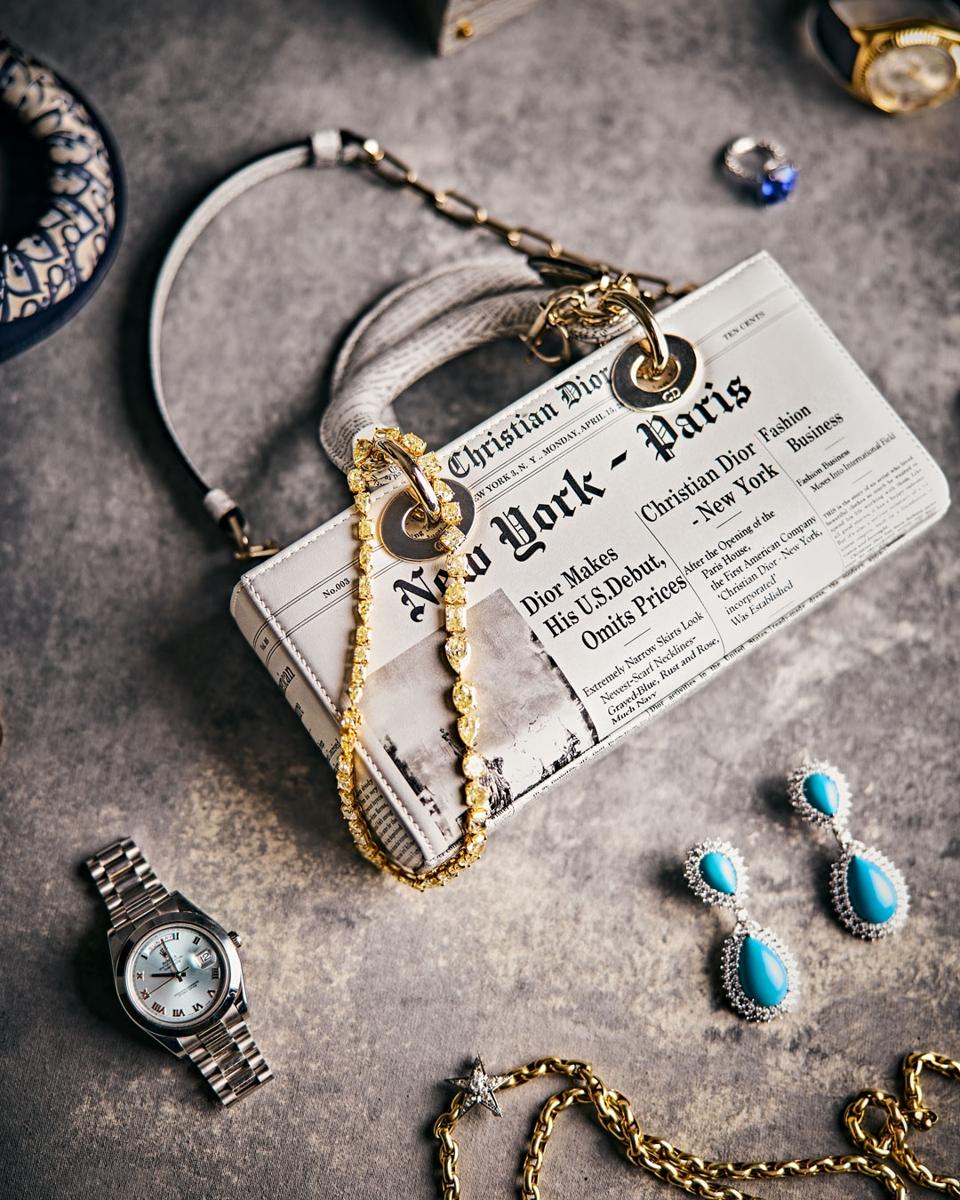
“One of our watch clients is constantly on waitlists at Rolex and Patek,” Burke adds. “They’ll come in, take a loan on one watch, go buy the new one and just cycle through.”
Flexibility is a big part of the appeal. While traditional banks typically lend against securities portfolios or real estate, luxury asset lenders are willing to finance a broader range of items that stretch the bounds of alternative assets for traditional financial institutions. Borro has loaned money against everything from Super Bowl rings to samurai swords to a midtown Manhattan parking space.
The pitch is simple: speed, discretion and no personal guarantees. Borrowers pledge their luxurious collateral, receive funds quickly and redeem their assets later. If they don’t repay, the lender keeps the item and sells it—often through auction houses like Christie’s or Sotheby’s.
In the past decade, handbags have emerged as one of the fastest-growing categories. Hermès Birkin and Kelly bags, particularly in exotic or custom versions, routinely fetch hundreds of thousands of dollars on the secondary market.
One of Borro’s clients in Beverly Hills once used the service to borrow roughly $30,000 against a custom Hermès Mini Birkin she had commissioned after waiting nearly a year for it to be produced. She had paid about $33,000 for the piece and had been offered more than $50,000 on the secondary market—but wanted to hold onto it. “I didn’t want to sell it,” she says. “[Owning an Hermès bag] is not an opportunity that comes around every day.” Instead, she used the loan to help finance renovations on a property she planned to flip. “It gave me a bridge loan to get to the other side,” she adds.
Another business owner based in London says she has repeatedly borrowed against diamond-encrusted Birkins and Van Cleef & Arpels jewelry to help finance her businesses. In one instance, she shipped items overnight and received funds within hours. “These are diamond Birkin bags sitting in my closet,” she says. “It gave me the opportunity to generate revenue instead of letting assets sit unused.”
Luxury asset collateral lending is not new, of course. In the 14th century, the Medici family pioneered modern banking practices in Florence for wealthy customers and simultaneously operated pawn shops at the low end. Today, it is increasingly marketed as a white-glove alternative to traditional pawn shops and private banks.
Burke says the thesis for the business model was straightforward: Provide a reliable loan alternative to banks, who traditionally don’t know how to value luxury assets. “Banks are kind of famous for saying, ‘We don’t know what we don’t know,’” he says. “If it’s not real estate or marketable securities, we’re just going to write that down to zero.”
Another appealing incentive is that these loans are nonrecourse: if the borrower fails to repay, the firm keeps and sells the item. There are no credit checks, no income verification and payouts often happen the same day.
Luxury Asset Capital now operates offices in Denver, New York, Los Angeles and Florida and thanks to Borro, has clients in all 50 states. Burke says the firm’s loan book has grown roughly 25-fold over the past decade, though he declined to disclose revenue figures. Typical loans average between $15,000 and $20,000, though Borro can lend up to $5 million.
Those loans can be lucrative for lenders. Most are short-term, typically lasting 30 to 120 days, though many borrowers extend or renew them, effectively using luxury assets as a revolving line of credit. Borro typically charges interest in the low single digits per month, according to Burke, with additional costs such as insurance and storage. In some cases, that can bring total borrowing costs to around 5% monthly for short-term loans. At that level, borrowers could face annualized rates approaching 60%. But because loans are often measured in months rather than years, borrowers view the cost as a tradeoff for speed and flexibility. For lenders, however, the math can add up quickly, particularly given repeat borrowing rates of roughly 74%.
Loan-to-value ratios typically range from roughly 40% to 65% depending on the asset, according to Burke—higher for more liquid categories like Rolex watches and lower for more specialized assets. That’s on par with private institutions like Bank of America, which typically cap lending at around 50% of appraised fair market value for high-end art collections.
The category’s growth reflects a broader shift in how wealthy individuals view luxury assets—not just as collectibles or status symbols, but as financial tools. As the price of gold and precious metals surged over the past year, Borro says it has seen a significant uptick in borrowers bringing in bullion and coins. Jewelry, watches and diamonds remain the firm’s largest categories, followed by handbags, art and other collectibles.
What distinguishes boutique lenders like Borro from traditional banks isn’t just pace, but the financial structure. Drew Watson, managing director and head of Art Services at Bank of America, describes what is effectively a two-tier market. On one level, are boutique lenders making nonrecourse loans, often at higher rates and against a wide array of assets. On another are private banks making recourse loans backed not just by art or other luxury assets but by the borrower’s broader balance sheet.
Bank of America’s art lending program, which was built out about a decade ago, typically targets collectors with internationally recognized collections valued at $10 million or more. Minimum loan sizes historically start around $5 million and loan-to-value ratios are generally capped at about 50% of appraised fair market value.
Loans are then typically structured as renewable lines of credit, often lasting one to three years, and generally priced in the single digits. Underwriting can take around 60 days, but once a credit line is in place, clients can draw from it as needed.
“The two segments are fairly distinct,” Watson says. The bank typically lends to borrowers with very large balance sheets and diversified collections. Boutique lenders, by contrast, often serve smaller borrowers, those for whom a recourse loan would not be an option.
Luxury asset lending remains a rarefied niche compared with the vast private banking system. But as resale markets deepen and alternative assets proliferate, high-end possessions are increasingly treated not just as status symbols but as balance-sheet tools. In a market where timing can matter as much as valuation, a Rolex, a Birkin or a museum-worthy painting is no longer just an indulgence—it can also be dry powder for the next opportunity.
This article was originally published on forbes.com and all figures are in USD.
Want to see more Forbes articles on your feed? Tap here to make Forbes Australia a preferred source on Google.
Look back on the week that was with hand-picked articles from Australia and around the world. Sign up to the Forbes Australia newsletter here or become a member here.