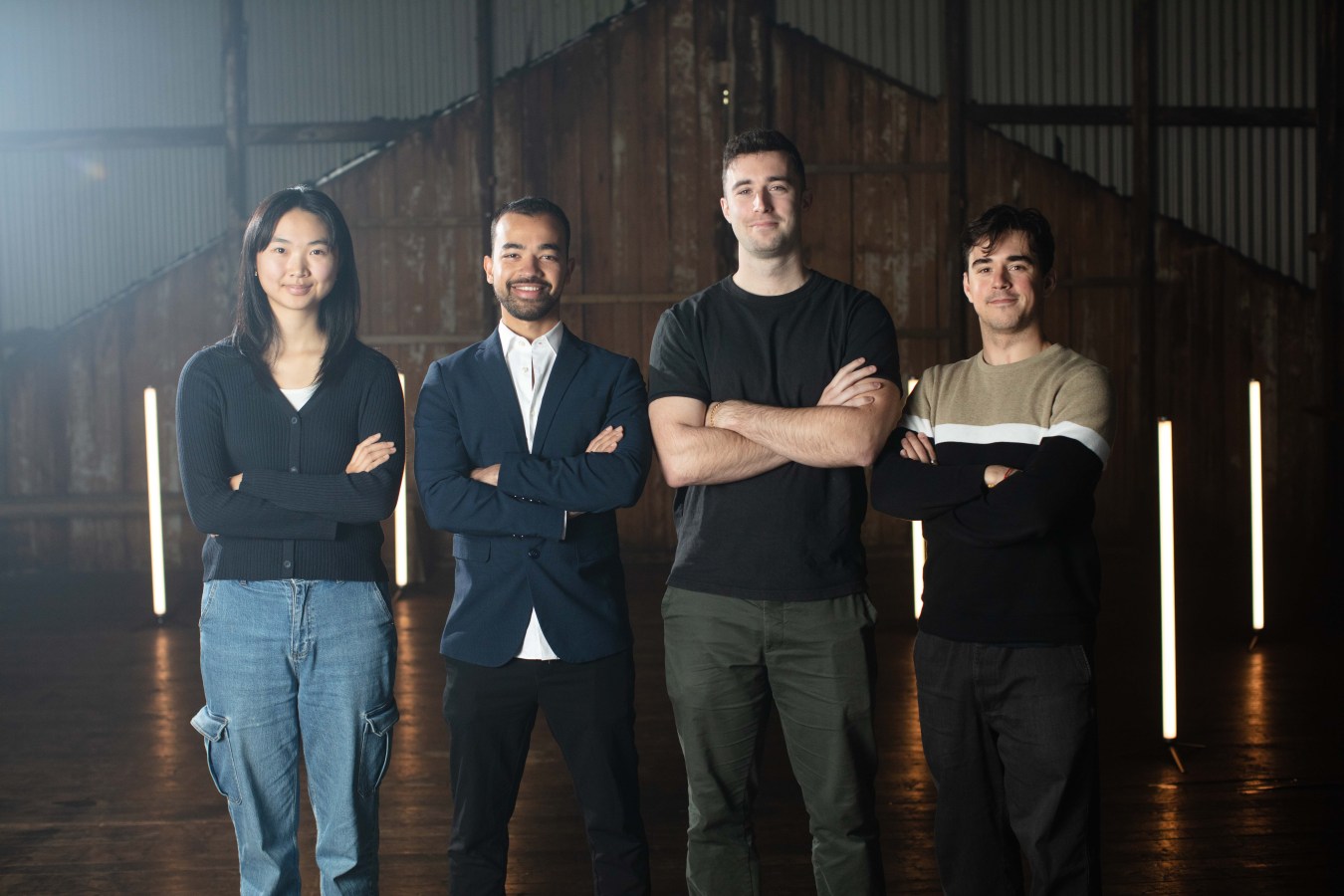
Canva had to delay its Canva AI 2.0 rollout after the booming costs of compute made the products uneconomical. The company has cut its AI costs and is ready to scale back up, founder Cliff Obrecht says.
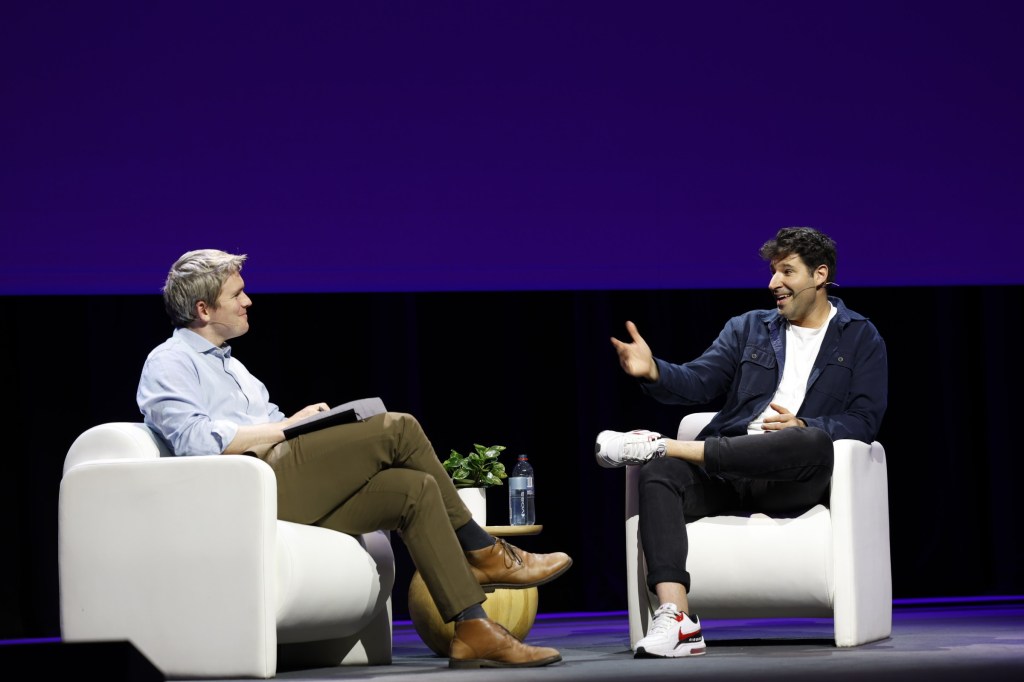
Canva co-founder Cliff Obrecht says the design giant has lowered the costs of serving AI products by 90 per cent after the company had to delay the rollout of its more ambitious generative tools.
Appearing at Stripe’s Sydney Tour event alongside Stripe co-founder John Collison, Obrecht spoke candidly about cost challenges the startup has faced as it transforms into an AI-first product.
“When we launched, or tried to launch, our AI product at Canva Create in April, we launched with a lot of frontier intelligence,” Obrecht said.
“They were amazing at what they did, but they were also very expensive… since we launched in April, we actually had to really slow down that rollout whilst we get those costs in check, but whilst also hitting quality and latency goals as well.”
In April the company introduced Canva AI 2.0, a two-year rebuild of its platform which it described as its biggest ever product launch. The refreshed platform centres on conversational design, where customers say what they want and Canva assigns models and tools to get the job done.
But Canva in July told investors that delays to product rollouts due to rising AI costs would come alongside revenue growth of 20 per cent for the year, according to the Australian Financial Review, a markdown from earlier projections of 30 per cent growth.

Amid a broader selloff of software stocks for the year, Canva investor Blackbird reportedly marked down its private valuation by 17 per cent to US$34.9 billion ($49.5 billion).
Obrecht on Wednesday said the company has been building AI models and capabilities in-house, allowing it to serve those products far more affordably.
“To serve 200-plus million users, a very generous free AI product comes with a huge cost,” Obrecht said, “and so we needed to get that cost down. We’ve managed to do that by about 90 per cent, which means we can really scale it up now.”
Canva has a 140-strong research team developing its own in-house models, which are cheaper for the company to deploy and handle the highest-volume jobs. Canva has also taught its platform to preference adapting designs from its existing library rather than generating fresh ones.
Engineers and researchers review the economics of the company’s AI tools on a weekly basis, a function that led the company to pause its initial rollout after seeing costs skyrocket.
“The cost of good to serve a user has gone from cents per month to now many, many more cents per month,” Obrecht said. “That’s really changed the dynamics of the cost-to-serve and also of the dynamics in business.”
The software industry is navigating upheaval due to the booming growth of artificial intelligence. Publicly listed companies like Atlassian, Xero and Salesforce have had their share prices battered due to investor fears that businesses could use Claude to vibe code bespoke tools rather than pay for B2B software. Meanwhile, large companies are realising AI experimentation comes at a cost. Most famously, Uber’s CTO said the company burned through its yearly AI budget in four months.
Canva is in many ways the face of Australia’s startup sector, being by far its greatest success story even after its recent valuation markdown. Yet Obrecht said on Wednesday the company came very close to moving to San Francisco after receiving its first venture funding.
“It was a real knife edge,” he said. “We raised $1.5 million, but the Australian government gave us another million dollars so that essentially doubled our runway… We think there’s a great talent here. We’re sort of a bigger fish in a small pond, which is a double-edged sword. We get written about in the press a lot.”
Want to see more Forbes articles on your feed? Tap here to make Forbes Australia a preferred source on Google.
Look back on the week that was with hand-picked articles from Australia and around the world. Sign up to the Forbes Australia newsletter here or become a member here.
See where Melanie Perkins ranks today on Forbes Australia’s Real-Time Rich List.