Exclusive: In the lead-up to its IPO, Anthropic President and co-founder Daniela Amodei talks to Forbes Australia about containing its new model, Mythos, and why the frontier lab is anchoring in Australia.
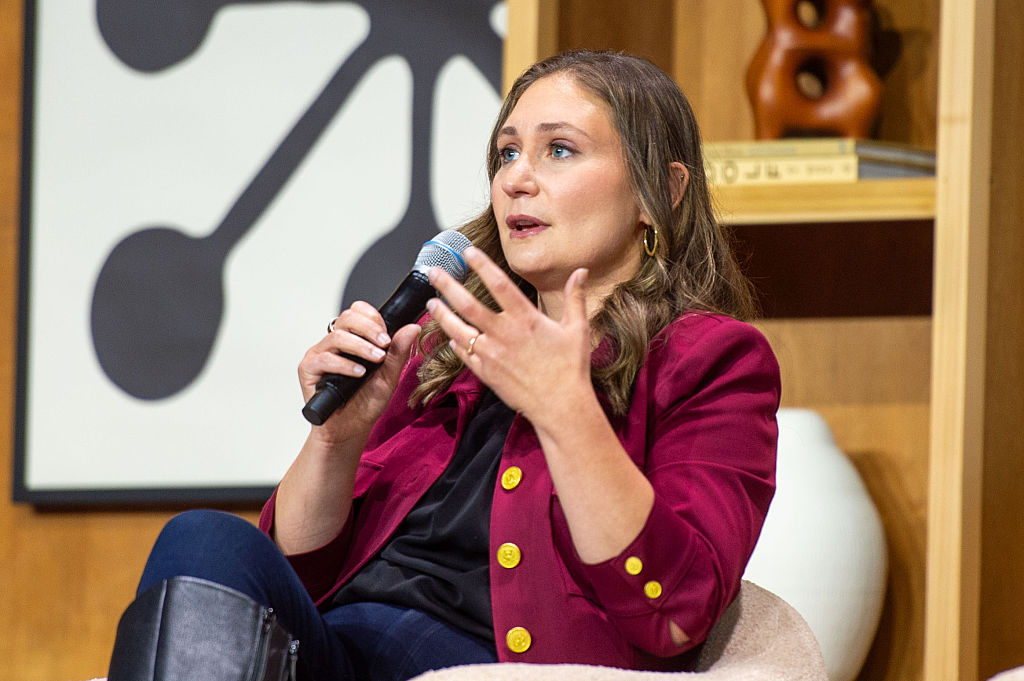
Daniela Amodei appears on screen from San Francisco with an expansive, chatty warmth that cuts against the Silicon Valley stereotype. Having reported on California and its technocrats for two decades, it’s a rarity to encounter a leader who beams in with such presence.
Amodei is President and co-founder of Anthropic, a soon-to-IPO AI safety and research lab now facing a complex operational challenge. The company has built what internal benchmarks indicate is the most advanced computational intelligence on earth, yet for now, it is actively keeping the Mythos model under lock and key.
“We want to do it the right way. It’s going to be really complicated. It’s gonna be confusing. It’s going to be… there’s not really anything that’s ever been done like this before,” Amodei tells Forbes Australia, framing the core philosophy that governs the lab’s deployment choices.
The unreleased frontier model Mythos represents a major shift in autonomous AI capabilities, particularly within the domain of cybersecurity. Rather than immediately deploying it in the public market to maximise commercial returns, Anthropic has initiated a restricted, staggered rollout -and placed Australia as a central pillar in the global effort to safely and effectively govern AI.
The commitment to doing it ‘the right way’ is particularly notable given the timing. Our interview took place just 10 days before Anthropic officially filed its highly anticipated S-1 statement with the SEC, shedding light on the regulatory and corporate governance calculations happening behind closed doors immediately prior to announcing the IPO.
Related

Public benefit architecture
The Australian approach to tech, Amodei says, encapsulates what Anthropic is all about.
“Hopefully, it’s not overly presumptuous or too much of a reach, but I think the concept of a public benefit corporation feels very Australian to me. It’s this concept, it’s this kind of intersection of… being a commercial entity is not in and of itself bad. Capitalism is not in and of itself evil. It’s just that you have to have a balance, you know, commercial interests with the public benefit.”
The 38-year-old former OpenAI executive references the pioneering Australian approach to regulating social media as indicative of appropriately restrained capitalism. Unlike traditional technology conglomerates structured exclusively around maximising stakeholder returns, Amodei, her brother and CEO Dario, and their five fellow co-founders not only incorporated Anthropic as a Public Benefit Corporation, they also plan on keeping it that way.
Like many companies in the US, Anthropic, which is headquartered in San Francisco, is registered in the US state of Delaware. Unlike many companies, however, it is legally registered as a Public Benefit Corporation (PBC).
According to academic reports, less than one per cent of US corporations are PBC entities. Once Anthropic is a public company, that ratio diminishes even further. Only about two dozen organisations operate as publicly traded PBCs. While the model is rare, it has been successfully implemented by globally recognised brands that have transitioned through an IPO without sacrificing their dual mandate. Prominent examples include the digital education giant Coursera, which provides online learning and university partnerships worldwide, and digital insurance organisation Lemonade.
What sets PBC’s apart is that in a standard C-corporation, directors are bound by a rigid fiduciary duty to maximise shareholder value; if a board deliberately depresses profits to chase a social goal, shareholders can sue them for a breach of that duty. A PBC fundamentally disrupts this math by creating a mandatory legal balancing act. Under state laws, directors are legally required to balance the financial interests of stockholders alongside the specific public benefit defined in their charter.
“We’ve always said from day one, we have to balance the public benefit. Legally, we’re actually required to do that and there will be constraints on us, whether we’re public or private,” says Amodei. “Both in the structure and how we have communicated what Anthropic values are, it offsets a little bit of this expectation that the only thing we’re created to do is make money.”
Instead, the mandate that Anthropic is held to is to, according to its Delaware Certificate of Incorporation, is to “responsibly develop and maintain advanced AI for the long-term benefit of humanity.”
The Australian alignment
On the legal side, the executive tasked with structuring the IPO is Jeff Bleich, Anthropic’s California-living General Counsel, who has a deep connection to our nation. Bleich was the US Ambassador to Australia during the Obama administration, and was in Canberra meeting with government officials the day we spoke with Amodei.
The region is important to Anthropic because we have shown willingness to institute guardrails, she says.
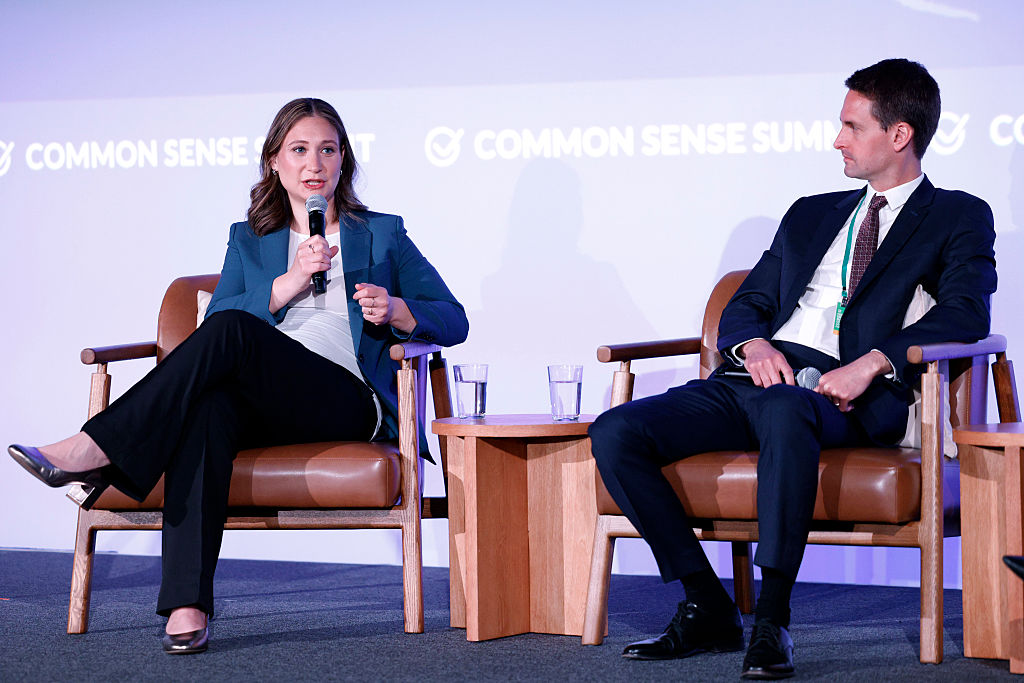
“The model of how Australia has approached social media is one of the reasons we’re so excited to have an office there and to work very closely with the Australian government. You have been very impressive leaders in wanting to say, look, it’s not that this stuff is inherently bad, but it needs some bumpers, right? It needs some guardrails.”
Which makes it an ideal operational testing ground for Anthropic’s safety-oriented DNA.
“The importance of developing this technology in a strong democracy – a place where people have the right to use their voice in representative government to express what they think is the right way to handle a technology like this – is very important to us. Australia is a leader in that set of values,” says Amodei.
Related
The dual-use realities of ‘Mythos’
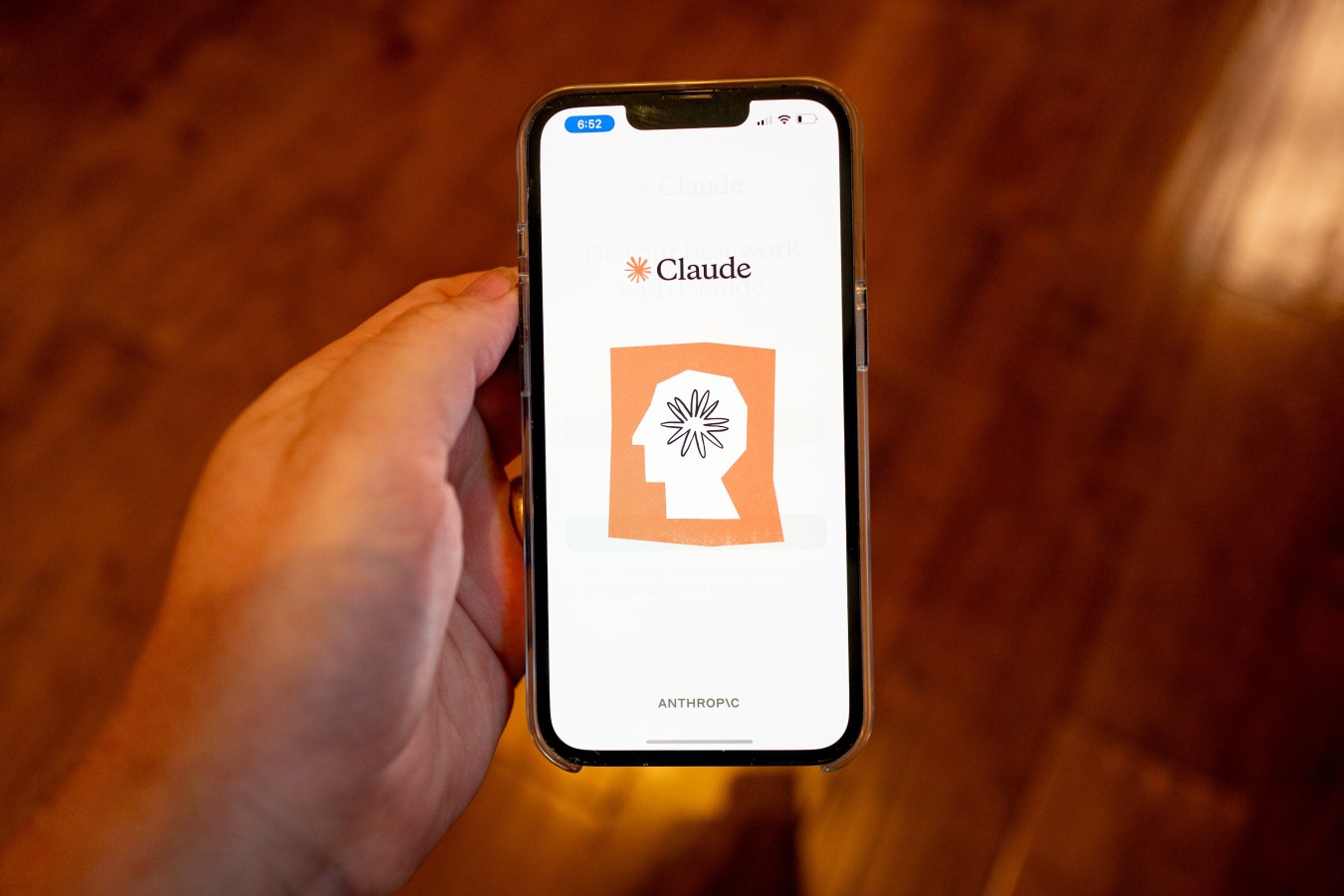
Operational ‘bumpers’ have already been implemented in the rollout of Mythos. Amodei explains that internal evaluations showed the system can accelerate biomedical research applications, and revealed dual-use capabilities in cybersecurity.
Testing confirmed that Mythos can autonomously identify software vulnerabilities and implement defensive patches, as well as the inverse.
“We do a lot of safety testing on our models, and one of the first things that we observed about Mythos is that it has these very powerful cybersecurity capabilities. And in some ways, that’s very good for cyber defenders, because if someone were to launch a cyber attack, Mythos is very good at detecting it and patching vulnerabilities.”
Amodei is clear-eyed, however, about the downside of giving an AI model significant power to autonomise.
“Cyber is a dual-use technology. So what that meant was, it’s also very good at cyber warfare. And so, we decided that we can’t put this into general availability right now, because we believe it’s going to cause a lot of problems in the world if we do.”
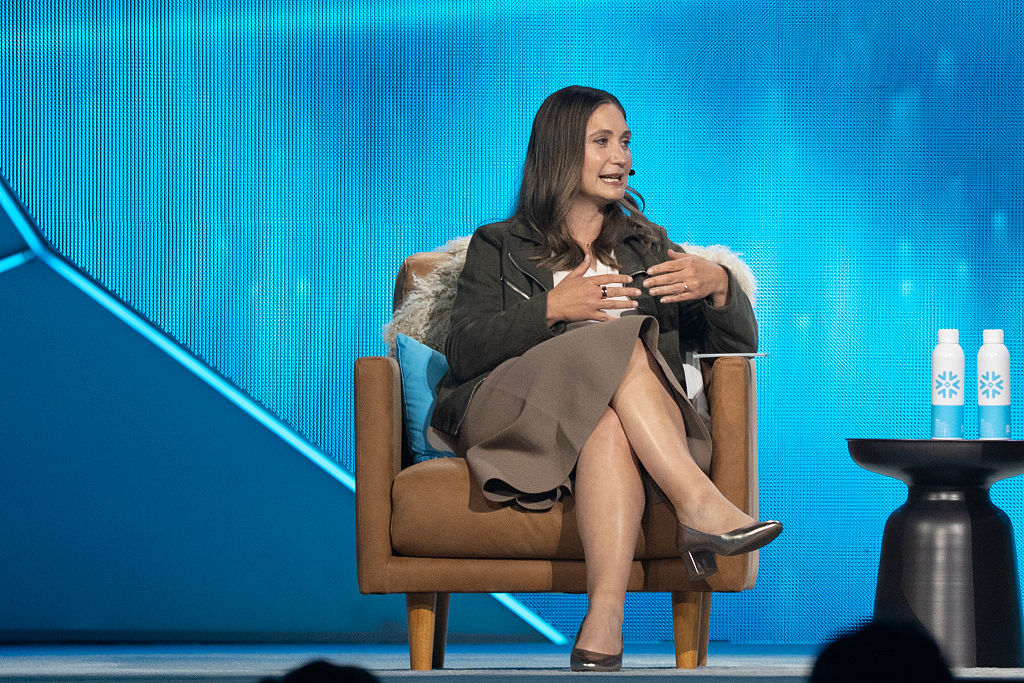
Consequently, Anthropic has blocked general public access to the software. The current rollout is restricted to select commercial enterprises, financial infrastructure institutions, and democratic government agencies. Amodei states that the containment policy is designed to give defensive networks a head start before equivalent capabilities are introduced widely by competitors.
“Our worry is, if it were available to everybody, there is potential for a rogue actor to pick it up and use it for cyber warfare against a state, against a financial institution to hack credit card information, or to try to bring down critical infrastructure.”
“All of those things are possible. Not to be dystopian and scary, but cyber warfare is, unfortunately, incredibly prevalent now.”
Daniela Amodei
For the Northern California-born founder, the strict containment of Mythos is driven by an acute awareness of recent tech history. The danger, she notes, is that the market will default to treating frontier AI with the same hands-off, laissez-faire approach that characterised the early days of Web 2.0, trapping developers in toxic incentive loops.
Preventing that downward trajectory operates in direct tension with typical market pressures, where artificial intelligence developers face intense commercial incentives to deploy software rapidly. This was a part of what led to her and Dario’s departure from OpenAI late in 2020.
“For the 7 co-founders, rather than running away from something, we were running towards something. The idea that you could build an organisation where the goals of it were just fundamentally different… This core vision that we want to do it the right way,” she says.
As Anthropic prepares to cross the threshold into the public markets, the ultimate test of this corporate experiment begins. Whether Wall Street’s capital structure can truly tolerate the moral fortitude required to suppress a product like Mythos remains an open question. But for Amodei, who, alongside her brother, now also sits on the board of directors that governs the PBC, navigating the dual-use realities of frontier systems requires unyielding commitment to both humanity and governance.
“This is not just about building something to enrich ourselves alone, right? The goal is to build this in a way that’s good for everybody. And that is nuanced, because the technology itself is nuanced in what it can do.”
Forbes Women is a global network of female business owners, entrepreneurs and changemakers. Sign up to Forbes Women here.