T. Rowe Price and Franklin Templeton, which each manage trillions in assets, bought into Canva at a US$40 billion valuation in 2021. Canva is preparing a foundation model it hopes will help reverse the trend.

Key Takeaways
- T. Rowe Price and Franklin Templeton have marked down the valuation of their Canva holdings by 9 per cent and 6 per cent respectively since the start of the year.
- The valuation cuts, revealed in recent filings to the US’ financial regulator, show that Canva’s institutional backers are revising their holdings alongside its VC investors.
- Blackbird, Canva’s biggest backer, has reduced the valuation of its Canva holding by 17 per cent, to US$34.9 billion.
- The re-evaluations come as Canva told investors it was reducing its revenue growth forecasts as its AI product rollout was delayed by cost concerns.
- Canva is prepping a new foundation model that it hopes will allow it to offer frontier-grade outputs at a fraction of the cost.
Big number
US$38.2 billion. That is T. Rowe Price’s implied valuation of Canva, down 9.1 per cent from US$42 billion at the start of the year, based on the price it has assigned to the company’s shares. Meanwhile, Franklin Templeton pulled the design giant down to US$39.3 billion during the June quarter.
Key Background
T. Rowe Price and Franklin Templeton are finance giants, with the former managing US$1.9 trillion of assets and the latter US$1.8 trillion. Both backed Canva when the design giant raised US$200 million in 2021, a round that valued it at US$40 billion.
Canva has been a rollercoaster ride for both investment managers. T. Rowe Price wrote its valuation down 44 per cent amid the tech wreck of 2022, and Franklin Templeton as much as 60 per cent. By the beginning of 2026, both priced its shares at an implied valuation of US$42 billion.
T. Rowe Price marked down Canva’s share price by 9.1 per cent, from US$1,646 to US$1,496, at the end of the March quarter, its filings show. That valuation stuck for the reporting period ending June 30.
Franklin Templeton’s revision was smaller. It held Canva’s valuation through the March quarter, but knocked it down 6.3 per cent, from US$1,646 to US$1,541, by June 30.
Blackbird, Canva’s earliest backer and its largest VC shareholder, slashed the valuation of its holdings by 17 per cent from US$42 billion to US$34.9 billion. Blackbird co-founder Rick Baker said in a statement that “the Canva AI product is looking great and early signs from users are strong, and that gives me a lot of optimism in what’s next.”
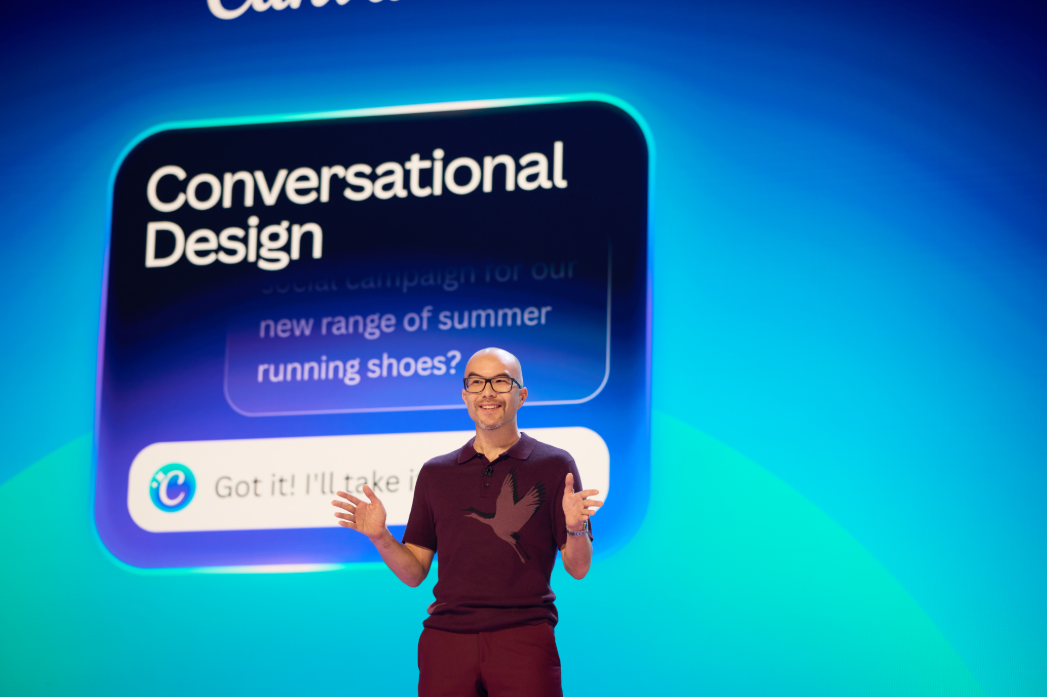
Canva in April introduced Canva AI 2.0, a two-year rebuild of its platform which it described as its biggest ever product launch. The refreshed platform centres on conversational design, where customers say what they want and Canva assigns models and tools to get the job done.
But Canva in July told investors that delays to product rollouts due to rising AI costs would come alongside revenue growth of 20 per cent for the year, according to the Australian Financial Review, a markdown from earlier projections of 30 per cent growth.
What To Watch For
Canva’s research team has for the past five months been building a foundation model, two people familiar with the matter said. It is roughly as capable as Google’s Nano Banana, but seeks to be far more cost-effective than models by OpenAI and other frontier labs, they said. Canva hopes to launch the model soon.
Crucial Quote
“We’ve always been focused on building a generational company, and that means making deliberate decisions for the long term rather than optimising for short-term valuations,” a Canva spokesperson said.
“Being private gives us the freedom to make big bets and think with a much longer time horizon rather than simply managing quarter to quarter, and that approach is shaping how we evolve Canva for the AI era. We’ve seen markets move in both directions over the years, but we’ve never been more confident in the enormous opportunity ahead.”
Global View
Public software stocks have been rocked since the beginning of the year as investors fret about how their business models could be disrupted by artificial intelligence.
Some, like Atlassian and Salesforce, have recovered or even improved their position. But many are still languishing. Monday.com remains down 38 per cent, while Canva’s fellow design player Figma has slumped 38 per cent since 2026 began.
The turmoil came amid Canva’s advancing plans for a long-awaited IPO. The company, which accounts for over half of the value of Australia’s entire startup ecosystem, has said it will list on the Nasdaq. Timing is, as it has been for years, a mystery.
Want to see more Forbes articles on your feed? Tap here to make Forbes Australia a preferred source on Google.
Look back on the week that was with hand-picked articles from Australia and around the world. Sign up to the Forbes Australia newsletter here or become a member here.