Elizabeth Holmes’ partner requested, and then famously gave up, his profit participation in what has become one of the highest-grossing documentaries of all time, missing out on millions. Don’t feel badly for him. As an heir to a hotel fortune, he should be just fine.
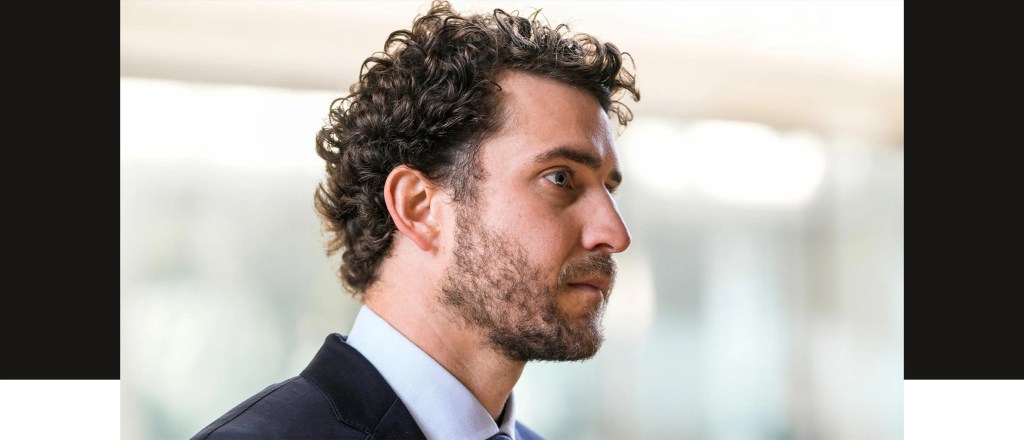
Aside from the headier philosophical ideas raised by You Can See Everything, the more immediate questions raised by the film tend to be about money, and lies. How much did the film’s subject, convicted Theranos founder Elizabeth Holmes, know about her partner Billy Evans’ deal with studio partner A24 for a cut of profits? Why did Evans later give up his stake? And how much is Evans, a hotel heir shown juggling various startup schemes and the film’s primary villain, actually worth? The answers are a lot less – and more – than one might expect.
Just before the movie crossed $100 million (A$151.1 million) at the global box office, Evans appeared on CBS Sunday Morning on Nov. 15 and said he would’ve earned “tens” of millions of dollars from the film under the original agreement. But the actual number, according to Forbes estimates, is far lower. Based on comparisons to other back-end deals for documentary subjects, as well as A-list actors and IP holders, Evans’ abandoned profit participation would’ve likely been worth between $2 and $4 million (A$3-6 million), as of mid-November. According to the Hollywood Reporter, he agreed with A24 to route the profits to an undisclosed children’s charity instead.
It’s still a lot of money in the documentary business, where filmmakers rejoice over selling projects to a streaming service for a 20% return and maybe a couple million in total profits. Even on a $100 million (A$151.1 million) box office haul, profit participants don’t get paid until theatres take their share (roughly half of the gross total), and the studio recoups its expenses, in this case an estimated $7 million (A$10.6 million) production budget and another $10 million (A$15.1 million) or so in marketing expenses, plus other more opaque overhead costs that make up the dreaded “Hollywood accounting.”
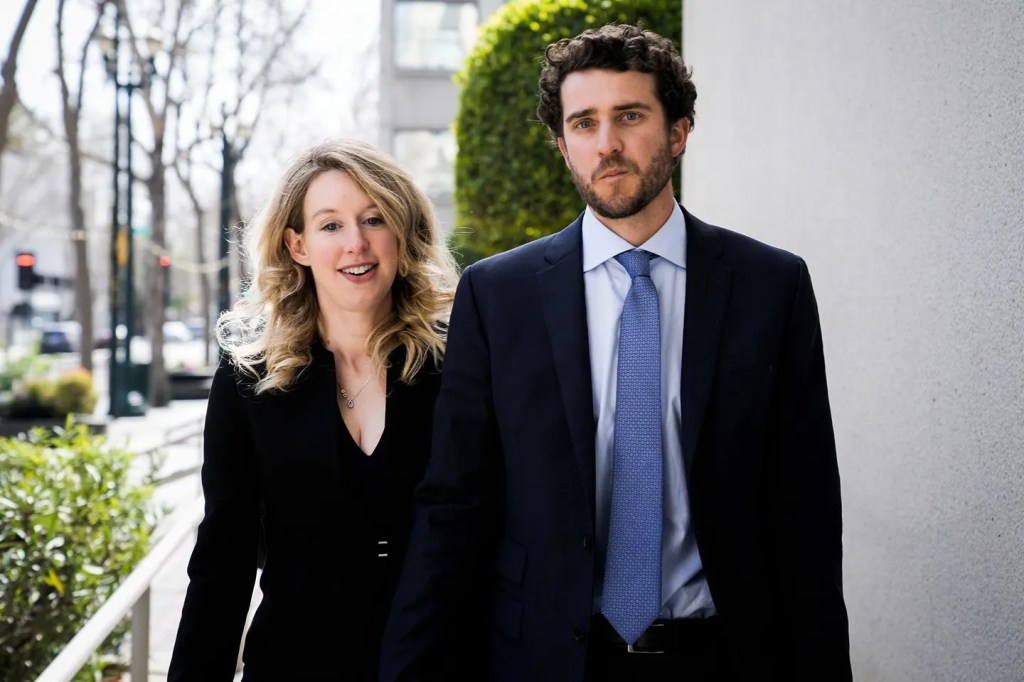
While documentary subjects are not historically compensated, in recent years the practice has become more commonplace among celebrity subjects whose involvement in a movie creates most of its commercial value. For the biggest celebrities, studios or streamers might give a lump sum of money to a talent for the film’s entire production budget – such as Netflix’s deal with David Beckham for £16 million (roughly $22 million (A$33.2 million)).
The deal Evans sought for the Holmes documentary was more similar to how traditional movie stars are paid for scripted projects. Sources tell Forbes that Evans wanted up front fees in addition to back-end participation, shopping the project to multiple studios and production companies. Though the contract specifics of A24’s winning bid are unknown, the movie makes it clear that Evans was at least given a cut of the profits.
You Can See Everything debuted in October to rapturous reviews and impressive ticket sales, reaching profitability within a matter of weeks. From there, all future earnings from ticket sales, at-home video on-demand, and eventually streaming will be added to a profits pool, and distributed to each participant based on their negotiated position, percentage and distribution fee (basically a 10-35% surcharge from the studios). In the end, Evans could have pocketed as much as $8 million (A$12.1 million) total in the months and years to come.
“I’ve spent a lot of my resources trying to defend my wife and to free her. And paying for childcare. The amount of money [I’ve] spent on lawyers would blow your mind. That’s why I thought it was a reasonable ask,” Evans told CBS. “Would it be nice to have that amount of money? Would it be super useful? It’s a crazy amount of money, it’d be nice to have, absolutely. But I can’t look back.”
He did not mention the charity donation in the interview, but he did reference it in a cryptic way. “I don’t know how much I can talk about,” he said. “But what I can say is, knowing where the money is going, I’m not unhappy about that decision.”
It’s reasonable to wonder how Evans and Holmes afforded the lifestyle shown in You Can See Everything, which included a San Diego rental house with direct ocean access and a large house in Austin, Texas. Holmes and her business partners owe more than $450 million (A$680.1 million) in restitution to Theranos victims, but the couple has separate finances and is not legally married, presumably so Evans doesn’t legally share that debt responsibility (and could have potentially kept the millions paid to him from the movie).
The beach house reportedly belongs to family friends of Evans, and Fielder brings up his family’s money in another of the movie’s more bracing scenes, in which he asks Evans about how he fell in love with Holmes so quickly in 2017 considering the news of her fraud had already come to light.
“Weren’t you worried she was sort of scamming you?” Fielder asks.
“100%,” Evans replies, “but what did she have to gain from me?”
“Isn’t your family rich?” Fielder replies flatly.


Evans obfuscates about differing levels of wealth and walks away. But it’s true. He is the grandson of William D. Evans (d.1984), who founded Evans Hotels in 1953. The company remains entirely under family ownership – managed by Evans’ father, Bill Evans, and aunt, Grace Evans Cherashore, two of his five kids. It now controls three luxury resorts in the San Diego area: Bahia Resort Hotel, Catamaran Resort Hotel, and The Lodge at Torrey Pines. In addition, it owns two sternwheeler cruise boats and a vintage car museum. Combined, Forbes estimates the Evans family’s net worth to be more than $400 million (A$604.5 million), though that’s mostly tied up in the properties and shared among the extended and growing family.
“If you mention to any San Diegan the Lodge at Torrey Pines or Bahia or Catamaran, they all know them,” says Matthew Reynolds, cofounder of San Diego-based Vanguard Realty Advisors. “These are rare, unique properties, and well-run, as far as I know. I was actually surprised to learn that they own all of them.”
After the release of the movie, local news outlet Voice of San Diego inquired to Evans Hotels about Billy Evans involvement in the family business. In a statement, CEO Robert H. Gleason wrote, “Billy Evans does not work for Evans Hotels, holds no ownership in the company, and is not in any way involved in the business.” When asked if he remained an heir to the business, considering he is the oldest of Bill Evans’ three children and his namesake, a company spokesperson replied, “We don’t comment on personal family matters, including inheritance questions.” Our translation: Billy might inherit his father’s stake along with his siblings but doesn’t own any of it himself yet. Meanwhile, Evans says he’s “not paying myself much at all” from his bloodtesting startup Haemanthus, which reportedly has raised more than $18 million (A$27.2 million) and holds one patent but does not yet have a tangible product.
The potential millions from the documentary could have been a significant income source for a father raising two children with a partner in prison. So why give it up, besides the evident pressure from Fielder, who warned him (on camera) that the appearance of economic benefit could make Holmes look hypocritical. When asked by The Hollywood Reporter, Evans said that, “Time and time again, when there’s things that I really didn’t want to do that they said would be helpful for making a better movie and helping people see Liz more clearly, I made those sacrifices or decisions to help the project.”
If the money was donated to help bolster the public’s perception of Holmes, or himself, why not say so? Add it to the list of unanswered questions, each of which will continue to fan the ambiguity and mystery that have turned the movie into a sensation.
Want to see more Forbes articles on your feed? Tap here to make Forbes Australia a preferred source on Google.
Look back on the week that was with hand-picked articles from Australia and around the world. Sign up to the Forbes Australia newsletter here or become a member here.