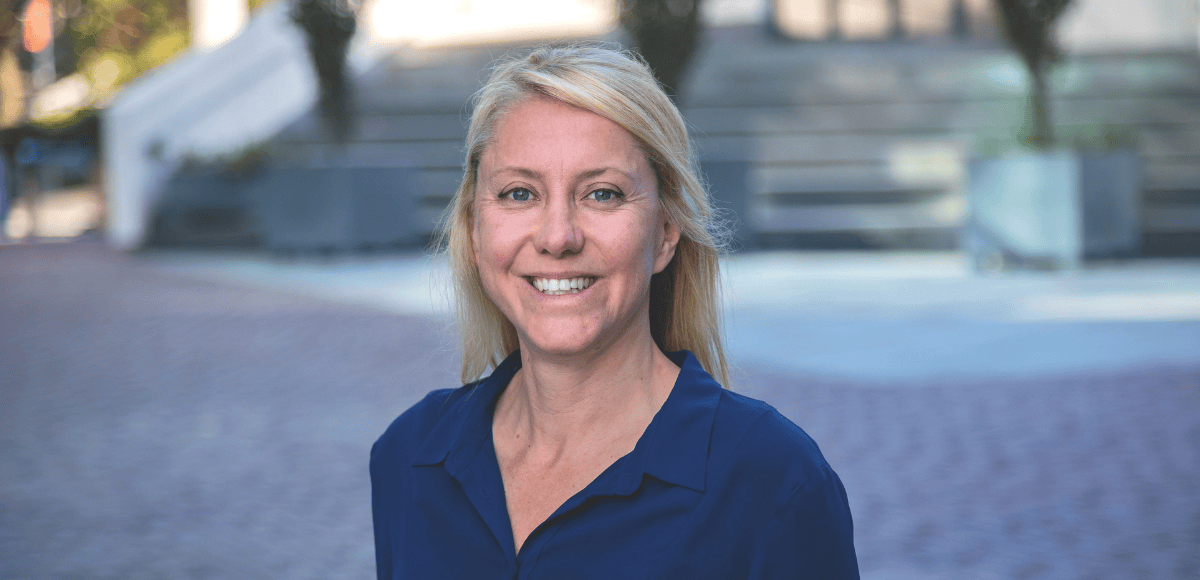

From squalid student digs to a nationwide property portfolio, Craig Carracher and Stephen Gaitanos have transformed Australia’s accommodation crisis into the nation’s largest purpose-built housing empire.
This story features in Issue 22 – out now. Tap here to secure your copy.

She opened the front door of the rundown old terrace house in North Sydney, he caught a split-second glimpse of the inside wall moving. He looked closer. It was a mass of glistening cockroaches.
A few days later, he discovered that he and his three fellow students sharing their miserable, pest-ridden digs still had nothing on their neighbours out the back. They were a bunch of Japanese students all crushed into a garage, converted into a cheerless single room.
That was my first exposure to the whole international student shitshow, says Craig Carracher. It was disgusting. And I realised that our unrenovated, cockroach-infested, terrible accommodation was nothing to what they had to put up with while studying in Sydney.
Thirty years on, Carracher, together with close friend Stephen Gaitanos and brand and disruptor doyen Anouk Darling, is the head of a company that’s become the largest student accommodation provider in Australia, with around 20,000 apartments across 40 properties nationwide. It’s a portfolio currently valued at $20 billion, with plans to expand it by 2030/2 to 100,000 beds, valued at $100 billion.
It has been an extraordinary rise since the launch of Scape in 2014, and its rebranding in 2025 as part of the overarching The Living Company. In the interim, the company has weathered huge challenges that threatened, at one stage, to wipe it out, such as COVID-19 preventing overseas travel, Prime Minister Scott Morrison’s 2020 order for international students to go home, and wars that menaced global political and economic stability. But despite such odds, the business has bounced back even stronger.
“It was the last thing I thought I’d do, with my experience of student accommodation,” Carracher added.
“But we realised that a lot of capital internationally wanted to invest in student accommodation and it was already a bit of a thing in England, the US and Canada. Here, however, we just didn’t have any private Purpose-Built Student Accommodation (PBSA), yet Australia is the third-largest market in the world for international students. That was a huge value proposition.”
Carracher’s road back to student life was nothing if not a long and winding one. He took his law degree at the University of Sydney, winning the university medal in law, and studied for a stint at Britain’s prestigious Oxford University. That was a completely different experience of student housing: he lived in historic Magdalen College, in rooms with four-metre-high ceilings and windows that opened onto the UK’s oldest botanical gardens.
From there, he lectured at Sydney University before a job with the Australian Securities Commission and then, in 2001, went to work for Kerry Packer, as his external lawyer managing private equity deals. Four years later, he relocated to Asia, where he served as managing partner at the law firm Minter Ellison in Bangkok, before being approached by James Packer to become his lawyer.
“He said I had to work for him for at least five years,” Carracher recalls. “I think he knew then that his father was dying, but of course, I didn’t. So, I moved back to Australia, worked for Kerry Packer for the last year of his life as general counsel, and then for James for another five.
“I have nothing but admiration for James. It’s a very tough and difficult life, and he went through a big personal transition coming out of One.Tel and then his father died, and him taking charge. He’s one of the smartest people I know in business and is brilliant with numbers, but maybe he’s not as good a judge of people as his father was.”
In 2009, Carracher left Packer to set up his own real estate private equity company and advisory firm, Telopea Capital, knowing his legal and financial expertise and ability to move quickly could help him seize an opportunity during the GFC from the dislocation in capital markets. He partnered with friend Andrew Kerr, the former boss at wealth managers Merrill Lynch, who brought along a young colleague, Stephen Gaitanos, to set up the business with them. Telopea Capital was meant to have eight partners; instead, it dwindled to just two, Carracher and Gaitanos.
Yin & Yang
Gaitanos, 15 years younger than his new partner, had lived at home with his parents while he took his first degree in commerce and law at the University of NSW, and when he took his MBA at the revered Wharton School at the University of Pennsylvania, he was put up in an executive apartment.
“I never had a chance to stay at a PBSA, but I’ve always believed that students should have private student accommodation at an affordable price,” he says. “For far too long, students have been forced to live in squalor off campus, and rogue landlords can take advantage as they don’t have any rental history.”
After a spell at Macquarie Bank as an analyst, then at Merrill Lynch in investment banking, real estate, mergers and acquisitions (M&A), and capital markets, Gaitanos became the vice president of Morgan Stanley Real Estate before leaving to help set up Telopea Capital.
Carracher and Gaitanos found they bonded immediately, with complementary skillsets. “Craig has an unbelievable legal mind and intellect and is so creative in coming up with new ideas for growing the operating side of a business,” Gaitanos, now 46, says. “I’m more into capital origination, capital partnering, capital raising and limited partnerships.
“We’re very symmetrical in some ways, and opposites in others. Many see us as yin and yang. But we’re both super aggressive in business and just want to win.”

So, when the opportunity came up to invest in student accommodation, they both recognised its potential – and leapt at it. Their new company, The PAD Student Living, took on student accommodation in Brisbane and started expanding rapidly. Gaitanos borrowed $113,000 from his parents, Carracher put in the same amount, and the remaining $109,000 of the total $335,000 was contributed by friends and family, until they had 1,800 beds under management. They then sold to Goldman Sachs and Blue Sky for $15 million.
“We realised that with so much international capital wanting to invest, we needed to build our own properties,” Carracher says. “We found education-oriented real estate a very attractive model, particularly with the Chinese growth market and Asian urbanisation.”
The pair co-founded Scape Australia in 2013, with Carracher serving as executive chairman, and Gaitanos as managing director. Their first big project was in Melbourne, buying an old seven-storey office block opposite RMIT University for $35 million – a record price per square metre – with a plan to demolish it for a PBSA – covering the initial deposit and option from private funding.
Looking for an investor, they hit the jackpot in January 2015. Netherlands pension fund APG agreed to partner on their $220 million development fund, going in 50:50 with the negotiator, a man who’d once been an overseas student in Australia and knew just how urgently the country needed decent lodgings. Several other investors later came in, and that site now houses the 47-storey Scape Swanston, offering more than 750 beds for students.
“That was the turning point, APG, one of the biggest investors in Europe at the time, putting its hand up to take the risk,” Carracher says. “It helped us be profitable from day one.”
By 2019, Scape Australia had become the largest student accommodation owner and operator in the nation after a $700 million deal, taking back their old properties, as well as new ones, from Goldman Sachs and Blue Sky. Shortly before the end of that year came another mega deal – the single largest property transaction of the year at $2.2 billion – with Scape buying rival Urbanest’s 6,805 beds in Sydney, Melbourne, Brisbane and Adelaide. To back the deal, Scape’s core fund raised about $1 billion in debt, which allowed global funds, including APG Asset Management Asia, Allianz Real Estate and AXA Real Estate Investment Managers, to increase, or take, equity in that core fund.
Scape Australia had built a substantial portfolio of assets and a team of people, with sales offices throughout China and Asia.
And then came COVID-19.
The arrival of the pandemic, the closing of borders and the Australian government’s exhorting overseas students to return home couldn’t have come at a worse time for Scape Australia. While they immediately adopted advanced hygiene programs to prevent sickness, financially, it was an unmitigated disaster for the sector.
Gaitanos remembers it as a very tough time. “The hardest decision was to stick with it and not pull up stumps,” he says. “But neither of us has a give-up attitude. My parents, for instance, were migrants from Italy and Greece who arrived only with their clothes on their backs, and failure wasn’t an option.
“But we were nearly wiped out. I was fucked. My whole life savings were on the line, and I couldn’t sleep. There was no playbook for something like that. We had thousands of kids in our buildings we had to look after, but revenue went down 90%, and we had no idea when, or if, this would end.”
Luckily, however, the good relationships they’d built with their capital partners from Europe, China and the Middle East stood them in excellent stead, with everyone patiently standing by them. When the pandemic finally ended, the 2023 rebound in overseas students’ enthusiasm to return to study in Australia took everyone by surprise.
Even better, Australians had finally realised how important they were to the economy, Carracher says. “They weren’t just driving Ubers. They were spending money and filling jobs that Australians didn’t want to do, and they were nurses, healthcare workers and doing part-time jobs in all sorts of roles. And by the time COVID-19 ended, we were the proud owners of another 9,000 apartments and had spent $3 billion acquiring them. The banks and equity all supported us despite the border lockdowns.”

Rebranding the business
Anouk Darling, CEO, Student Living & BTR, came into the company 2020 after a consulting contract to integrate Urbanest into the company and rebrand it to Scape. She had attended Melbourne University. She flatted with friends to survive, in a three-bedroom house where three slept in beds, and three slept on the floors.
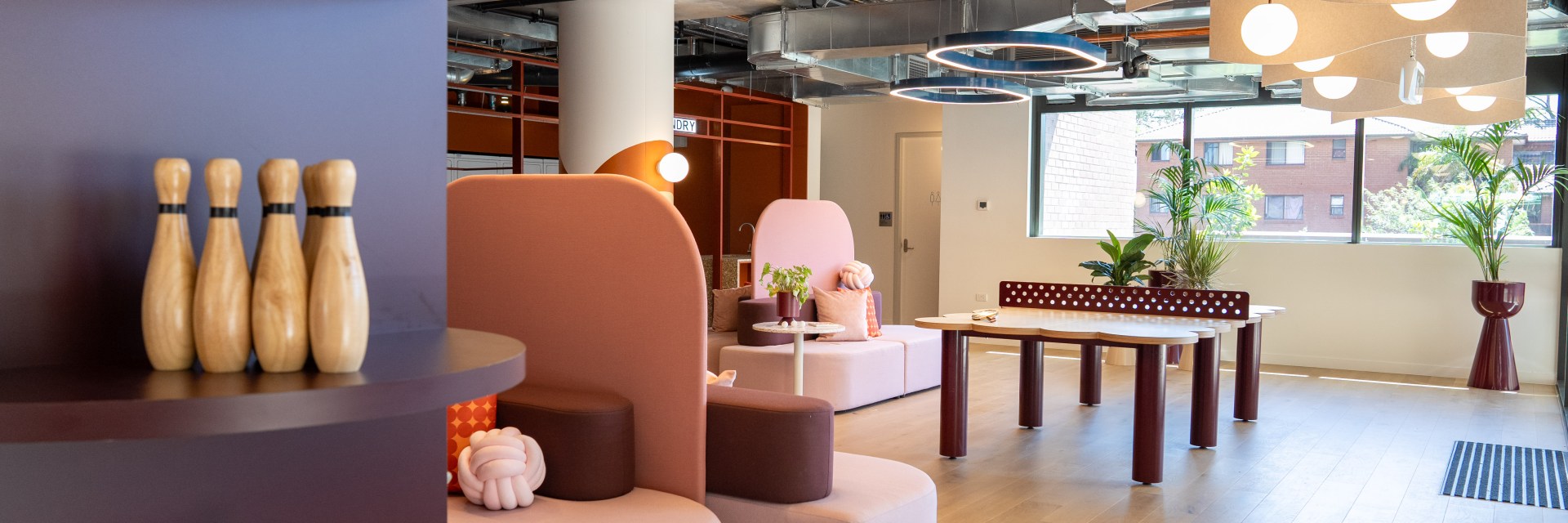
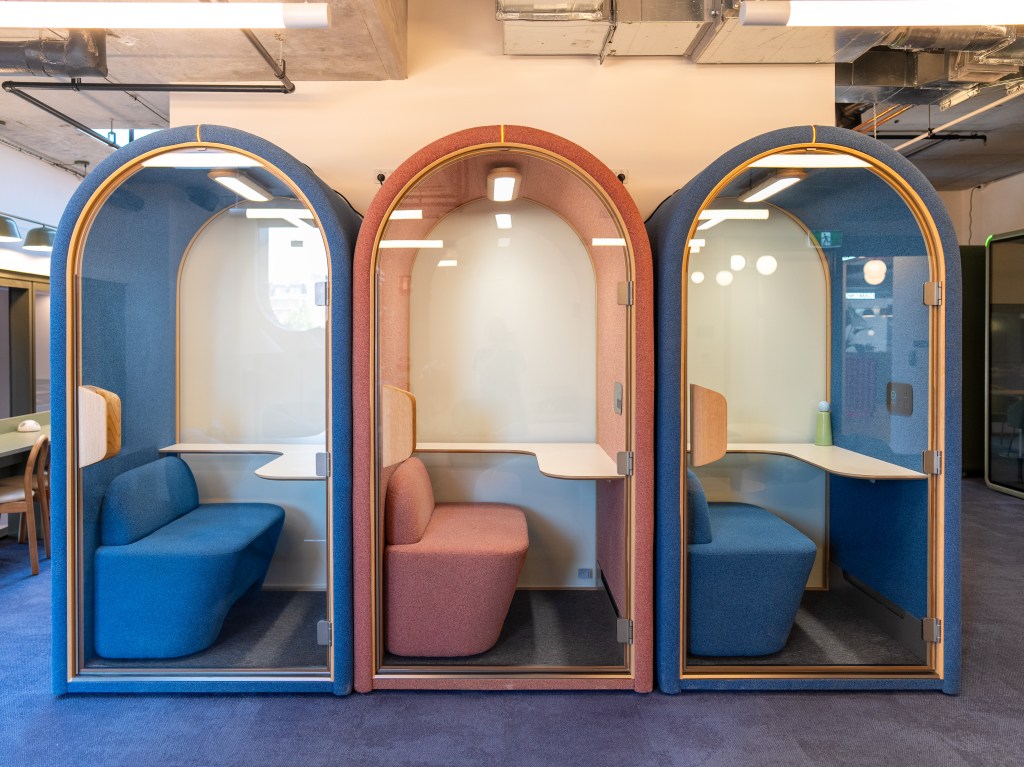
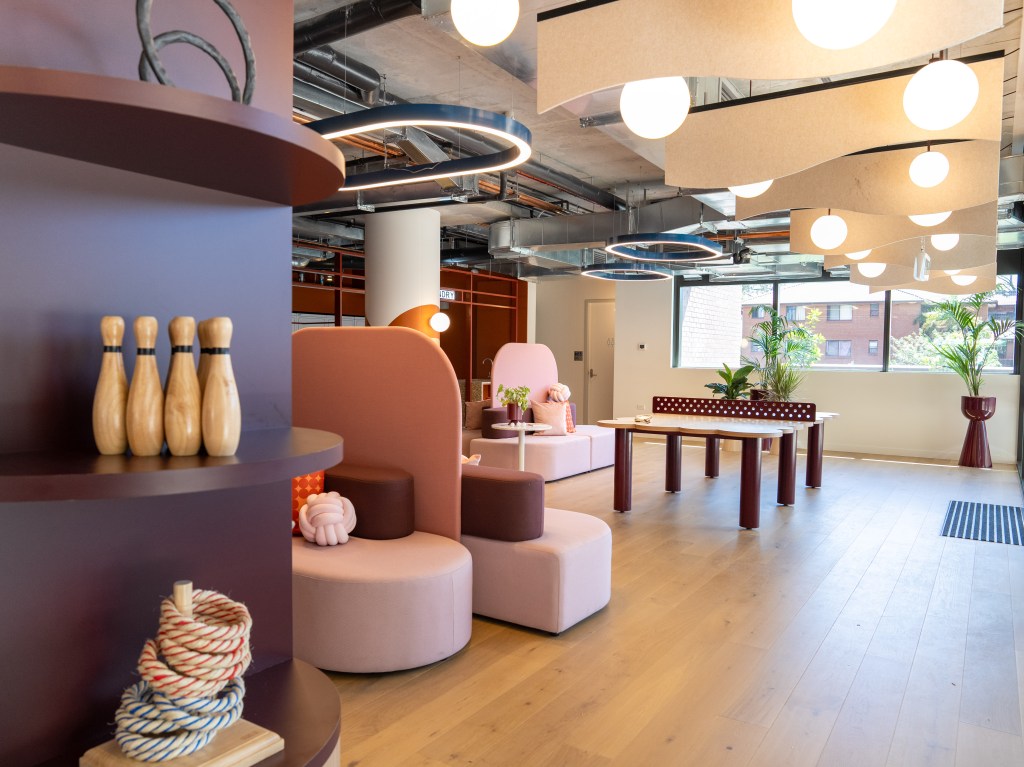
“Just like every other Australian, I hadn’t heard about PBSAs,” she says. “So when I saw what Scape was offering students, I couldn’t believe how fantastic the product was. It’s all built around the students’ needs with great amenities, like gyms and common lounges, and beautiful design.”
Darling, who refuses to give her age, is a leading brand builder who’s worked with the likes of Jetstar, Scentre Group, Westpac, and Westfield, and was on the board of the Macquarie Group for nearly ten years. Now, she’s passionate about changing living environments, which, she feels, can change lives.
She’s set the ambition for the then branded Scape to be ‘The Earth’s Best Living Company’, offering scholarships, internships and art programs, championing diversity and inclusivity, and prioritising the welfare of students in their care. At the same time, she’s championed the use of agentic AI to scale up operations efficiently in an industry that, at term start times, has to deal with up to 40,000 queries from potential and incoming, students at once.
“I realised straight away that Scape was a platform that could be used for good,” says Darling, who, in 2024, was awarded CEO of the Year Property Development & Real Estate by The CEO Magazine. “During COVID-19, some of our buildings were empty, so we pivoted to providing accommodation for people who’d experienced domestic violence, people in boarding houses and, at one point, 3,500 refugees from Afghanistan.
“I’m building our verticals, and other revenue streams and commercial partners, but our business is always about the person and understanding the customer. The diversity of my background has allowed for a global mindset and knowing that customer experience is the brand and creating a positive impact on how people live.”
The trio launched their overarching The Living Company in 2025 which now also includes Build-to-Rent (BTR) housing and seniors’ living. It currently has plans for more than 2,000 BTR apartments in Sydney, with hopes for far more via M&As, and last year took over the retirement village operator Aveo in a deal worth $3.85 billion, with 10,000 units.
Expanding horizons
Student living, however, is still the main focus of the business, with plenty of room to expand. The UK and the US remain the gold standard of the global industry, with 45 and 29 beds, respectively, per 100 students on 2025 figures from commercial real estate and investment firm CBRE. Australia, by contrast, has just six beds per hundred. That means our 1.6 million undergraduate students – only 5,000 fewer than the UK – have more than seven times fewer beds for them than in the UK. In addition, a total of 31% of our students are from overseas, more than the UK’s 25%, the US’s 6%, Canada’s 16%, and Germany’s 14%.
“There’s much deeper penetration of PBSA beds in the UK, US and European markets than in Australia, but that also means there’s a lot of potential here for growth,” says one of the authors of CBRE’s annual reports on the PBSA sector, Alex Shaw, a director in CBRE’s Living Sectors Capital Markets team. “But Scape is the biggest player in Australia by virtue of their acquisitions, and it has now started to lease up and are stabilising its development assets. It’s attracted a huge amount of overseas capital for its portfolio, rather than just for individual projects. That’s an excellent runway to growth.

“They have all the micro-pieces in play for expansion, too – the platform, brand, reputation among students, and lease performance – while Australian universities are climbing up the prestige, performance and research rankings. We’re also relatively affordable, safe and close to Asia, while student surveys show that many would rather come here than go to the US at the moment.”
According to the Australian Department of Education, 57% of all our international students come from just five countries: China 23%; India 17%; Nepal 8%, Vietnam 4%, and the Philippines 4%.
So, there’s a pervasive feeling that the company is still at the beginning, and rapid growth in all directions is very much on the cards. “We’re now one of the biggest residential real estate developers in Australia and certainly the largest for rent, and have ambitions to keep on growing and are looking aggressively in Europe, Hong Kong, Japan and Korea,” says Carracher.
“As well as student accommodation, we’re also actively looking in the market now to double our seniors’ capacity and disability living. Our business has set itself a $100 billion target, and we’ve agreed to commit.” He expects 70-80% of the funding for that to come from the PBSAs, BTR and seniors’ living, as well as new residential streams like land lease, and other residential for rent. Asia is the target for the balance with a focus on Japan, Hong Kong and Korea, while PBSAs in Europe are also of interest.
Gaitanos is just as determined. “We’ve been terribly successful, but we’ve nearly lost everything a few times. At base, though, we want to create phenomenal housing at affordable rates, and we want to make sure that happens.”
The Cities
The building of smart PBSAs is helping revitalise many previously neglected areas of cities and proving a major catalyst for change, says architects.
Increasingly, purpose-designed and professionally managed student lodgings are being welcomed as good neighbours.
“We’re now seeing good student accommodation revitalising previously overlooked and unfashionable areas, and turning them into much more lively precincts,” Rothelowman Architects principal Ben Pomroy has said. “It’s had the effect of creating a new vibrancy in the neighbourhoods around them.”
Melbourne was the first city where students started moving from campuses into new accommodation in the CBD and city fringes, including Docklands.
DKO Architecture has designed several projects over the past few years. Founding partner Koos de Keijzer says the new developments really add to the landscape. “They’re good for the neighbourhood,” he says. “Having so many students around means you get a high degree of street activity from people who like coffee and food and who are very sociable. This is an important part of our clever economy, and it benefits everyone.”
The next student urban renewal hot spot in Sydney is to be at Blackwattle Bay, by the new $836 million Sydney Fish Market, where Scape is to build a 26-storey tower with hundreds of units. In Perth, there’s another 1,146-bed, 19-storey PBSA going up in the urban renewal project at Perth City Link, a partnership between Erben and US real estate company Heitman.
Brisbane’s South Bank has also been transformed by PBSAs, with Scape South Bank having 783 beds over 15 storeys.
The Investment Category
Australia’s PBSA sector is still enjoying strong interest from offshore investor groups, with transaction volumes, according to figures from the Ray White Group, topping $1.88 billion in 2025.
Ray White, head of research, Vanessa Rader says that PBSA stock currently offers only around 90,000 beds across the privately owned and managed sector, with approximately 134,000 student-only beds when including on-campus and college accommodation. That’s against more than 1.6 million students enrolled in Australian universities annually.
“It’s this fundamental undersupply that continues to attract capital from North American, European and Asian institutional funds looking to leverage their operational expertise in a market that remains relatively underdeveloped compared to the United Kingdom or United States,” she says.
“This scarcity has driven transaction pricing to new heights. Cap rates have compressed to as low as 4.75% in Sydney, though this tightening is starting to ease, with rates typically ranging from sub-5.0% in prime Sydney and Melbourne locations to around 6.75% in emerging markets. Recent large portfolio deals have settled around the 5.0 to 5.5% mark, demonstrating investor confidence in the sector’s fundamentals despite broader economic uncertainties.”
The latest Urbis Student Accommodation Benchmarks show that 40,000 beds are now in various stages of development across the country, up from 36,000 recorded in early 2025.
The fresh surge in investment and supply is nowhere more evident than in Sydney’s Central Station, a much-vaunted tech hub development anchored by Atlassian. It’s now been reconfigured to have student housing forming a large part of the future mix.
The Politics
Despite the massive demand for student accommodation and the critical undersupply, the sector still faces huge challenges.
Latest figures from the Australian Government Department of Education’s International Student Monthly Summary and Data Tables show 846,321 international students studied in Australia in the year to December 2025, a 0.5% decline on the same period in 2024. At the same time, the number of new students studying in Australia in 2025 (202,882) plummeted by 15% on 2024.
Denver Craig, who’s worked in Australia with overseas students says the industry is faltering a little right now.
“The government is still increasing student visa fees, for instance, more than doubling the post-graduate visa application fee, making it the most expensive post-study work visa in the world,” he says.
“But the current Federal Government is allowing universities to increase overseas student numbers if they can provide accommodation for them. That incentive has caused a lot of growth recently for the big players in the market, like Scape.”
There’s still growing frustration within the sector that international education is being swept into the broader migration debate.
Phil Honeywood, CEO of the International Education Association of Australia, says, “Unfortunately, for both the Government and our sector, the Hansonites, the Coalition and their media banner-wavers are only focused on the overarching Net Overseas Migration figure. They don’t want to understand that any increase is being driven by massive increases in Working Holiday Visa holders, and other related visa category holders, but not our international students.”
Want to see more Forbes articles on your feed? Tap here to make Forbes Australia a preferred source on Google.
Look back on the week that was with hand-picked articles from Australia and around the world. Sign up to the Forbes Australia newsletter here or become a member here.