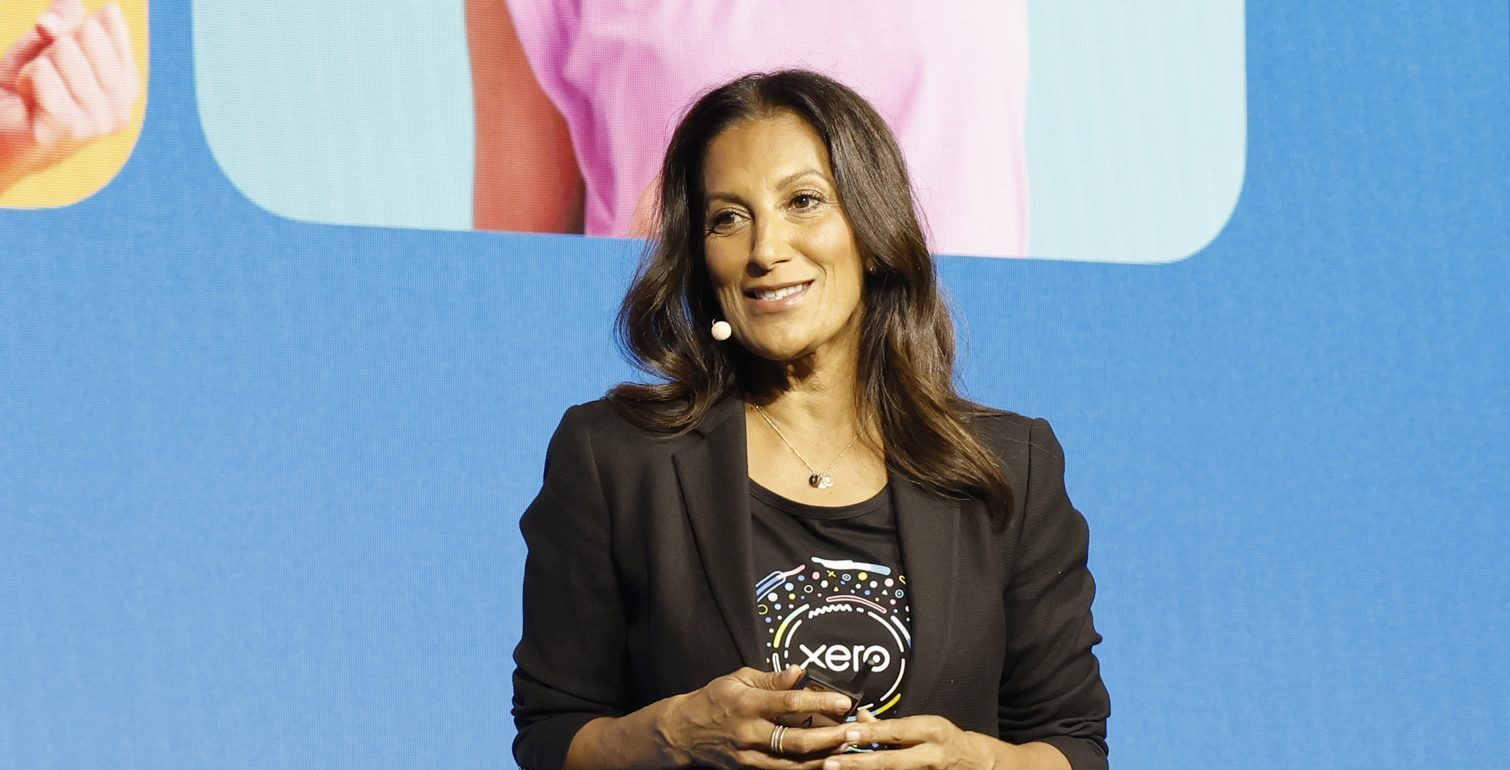

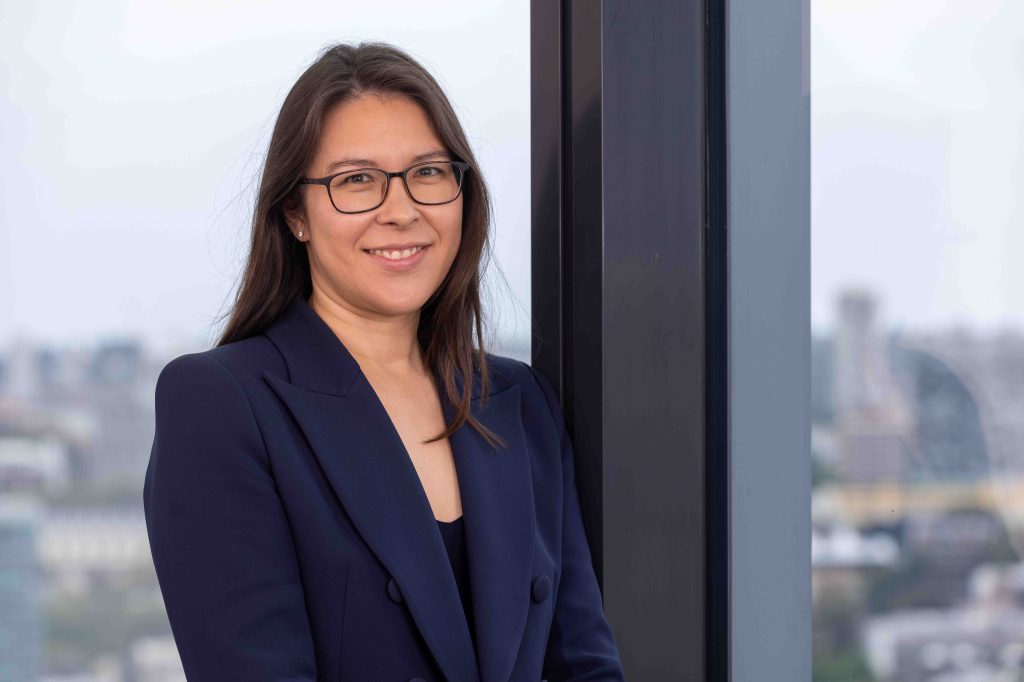
Systematic trend investor and East Coast Capital Management CEO, Simone Haslinger, has more than 20 years of investment experience, including stints with J.P. Morgan and Deutsche Bank. She spoke with Stewart Hawkins about the importance of diversification, the fallibility of human behaviour and why she prefers fear over greed.
This story features in Issue 25 – out now. Tap here to secure your copy.
What’s your approach to wealth building?
What ultimately drives markets is human behaviour. What we see is that there are behavioural biases that keep repeating. People who’ve lived through bull markets are statistically more likely to invest in equities throughout their lifetime, and people who’ve experienced bear markets are statistically less likely to have the same level of exposure. It basically boils down to “the experience effect” where what you’ve personally experienced influences how you invest. Even if you know about this effect, and you know that this occurs in your brain subconsciously, [that] isn’t enough to course correct.
There are many other [examples] as well. There’s herding behaviour. You see these FOMO effects… everybody piling into AI again and then pulling back out and pulling back in. Fear and greed continue to drive markets. Markets don’t behave rationally.
So how do you counter that?
We have a systematic approach to overcome those biases. For instance, [say] equity markets are rallying; we’re in a huge equity bull market. A rational investor who has experienced bear markets might say, “It’s overextended.” Warren Buffett famously talked about going to cash a few years ago. Well, if you’d gone to cash two years ago, you would’ve missed out on two years of fantastic returns.
What we have is a system that allows us to trade those bubbles. We trade the trend. We trade at currently over 90 international futures markets, and our algorithms look at the price data and say, “This looks like a trend. You should buy or should sell.” We buy or sell dispassionately on those signals to enter and exit trades.
Can you give me a real-world example?
Around about [the] October prior to Russia invading Ukraine in the February of ‘22, our systems told us to buy wheat. We didn’t really know why… and it was only several months later that Russia invaded Ukraine, and we go, “Aha, wheat. [Ukraine] is the wheat belt of Europe”. This is why the wheat price has taken off.
What elicited the signal?
Price action.
Discretionary managers are trying to trade on information. They’re doing fundamental analysis. They’re forming a view. Maybe they’ve uncovered a piece of information that other people haven’t fully digested, and that then forms the basis for what they do. We don’t need to have that information because we look at how somebody else’s information has impacted the price, and we read the price. We don’t need to know why. Someone, somewhere realised that Putin was rattling his sabre or whatever and thought, “Okay, there is a potential… that the Ukraine wheat production was going to be impacted.”
I would posit that there would’ve been people on the ground in that region or politically connected to know that that was a possibility to take some positions which ultimately reflected into the price, which then triggered our signals to go.
How is it different to technical analysis that looks at price-chart patterns?
It’s trends. Will a market trend? This is a well-established industry. It’s been around for decades, and each trend-following manager will have a different definition of what a trend looks like and when to enter and when to exit. Some will enter trades more quickly; others will take a longer time to enter into a trend. They’ll have different definitions of what forms a trend, and that’s the IP of that manager.
What it means is that a trend-following manager will never enter into the absolute bottom of a long trend. If you think about the Kospi, for instance, which has been a crazy market in recent months. A trend-following manager is never going to get in right at the absolute trough of the Kospi index price, but at some point, as that trend starts to take off, trend-following managers will enter at various entry points depending on their systems. [Equally] you’ll never get out at the absolute top, but at some point, as it corrects.
We integrate risk management into everything we do. As we enter a trade, we will also enter a stop-loss position. In an ideal world, as the trend moves up, our stop will move up with it, and then at some point it might correct, and we’ll exit, but we’ll also exit dispassionately. The trick is, how much room do you give that trade to move, because the market oscillates, and so if you’ve moved your stop up and if it’s too tight, you get stopped out all the time, which can end up trading a lot and spending a lot on brokerage.
We’ve done back tests. There’s lots of academic research where various market participants have looked at price data that goes back centuries – like rice futures in Japan – and apply trend following methodology and say, “This continues to work.”
What defines a trend for you?
Some trend-following managers do look at very short periods of time and say: “Oh, it looks like equities are taking off again. Let’s pile back into equities.” They’re looking at very short-term time horizons to determine a trend. In our experience, that sometimes feels great to trade psychologically, and a big part of trend following is: do you have the application, the mental gymnastics to be able to stick with a trend because sometimes the indicators tell you to do things that you might not fundamentally agree with. It might say, “Buy back into the Kospi in the short term,” and you might say, “Phew, that’s really volatile, and it’s very concentrated, and I’m not sure if that’s the “right thing to be doing.”
With trend following, fundamentally, not every trade we enter is a winning trade. It’s a statistics game. If you think about a bell curve of distributions, we will make losses, but those losses will be small losses because we will hit our stops.
What asset classes do you look at?
We have a very heavy skew to commodities in our portfolio. Our fundamental thesis is diversification, diversification, diversification. What are you investing in that has different return drivers? In our minds, having exposure to commodities which have very different return drivers, like weather, geopolitical disruption that doesn’t necessarily get reported in mainstream news, but is very specific to that location that can then disrupt supply and have big impacts on price. These are return drivers that bear no resemblance to what might be driving the ASX 200 on any given day.
Most of our customers in Australia have portfolios that are heavily skewed to property [and] stocks, possibly some bonds. We would say a big swathe of those underlying exposures, when the next GFC happens, whenever that is, a lot of them will become correlated. They’ll all go down together. [But] when those big corrections happen, they tend to happen slowly enough that trend-following strategies can exit and navigate into whatever else is the next trend to emerge out of that. There [should be] a period of some months coming into the big correction where things become very uncertain and a little bit choppy, and we exit our positions.
The beauty of our systems is we have no preconceived notions about how markets should interrelate with one another. We wouldn’t say, “Oh, we’re max long equities, therefore we must have bonds to counterbalance that.” If we’re max long equities and nothing else is trending, we’ll just have equities on. If we enter a period where 60/40 doesn’t work, that’s okay, because we don’t assume 60/40 should work.
What discretion do you have building portfolios with this system?
The only discretion we have is in our universe composition. You can blend in quite a significant portion of “trend” to a traditional portfolio. We look at ASX 200 total return, and we look at an Australian 60/40 portfolio and then say, “How much of our product could you blend in to an efficient frontier and reduce your risk and increase your return?” It is [an] uncorrelated return stream with access to asset classes that most investors have no hope of being able to access. Which should give them outperformance versus a less diversified portfolio over time.
The discretion sits in which underlying instruments we put in our investable universe to then apply the algorithms to. We look at futures markets only, and we look for the most liquid markets. Equities are about 18% of our investable universe. Within that, we trade globally diversified equity indices. We have a fixed income sleeve, a similar proportion of the total portfolio. We have currencies. I think that’s about 22%.
We’re trading things like the Kospi, the Nifty, the Malaysian stock market, the Swedish stock market, in addition to your usual suspects, Nasdaq, S&P 500, ASX 200, FTSE, and so on. The remainder is this very large commodities bucket. Within that, you’ve got agricultural commodities, meats and livestock, metals, energy.
You flow where the capital flows?
As market regimes shift, whether we understand it or not, and of course we have a personal view, but it’s inconsequential. We love a bit of fear. We love greed, but we love fear more.
The system means that we can trade bubbles. We don’t need to have the stress of saying, “I don’t know how to trade this equity market” or “these AI valuations make no sense. I don’t know what to do with it.” We don’t have to worry about that because we just say, “As and when that corrects, we will exit.” If it is a bubble, we can trade that bubble.
What does worry you at the moment?
Things [US President Trump] is doing will create far bigger second-order effects beyond his presidency that he can’t necessarily control. By that I mean, you can’t blow up energy infrastructure that costs billions of dollars and not have some sustainable impact on energy prices, supply chain logistics, and confidence.
The last few months have been extraordinary, and I would say it feels almost like energy prices are manipulated, and we know government reserves have been sold down and so on. But look beyond that. Look beyond the short-term price impact. It will take years to address the issues created in the last few months. Whilst we may be getting a handle on inflation, we’ve now got this inflationary effect of elevated energy prices for some time.
I absolutely think that there’s a risk of an equity market correction, and that would be obviously very disruptive to most Australian investors. I look at things like SpaceX’s IPO and think that doesn’t make a lot of sense. These valuations are hard to reconcile. Once you start putting KPIs in there about the number of people who are going to live on Mars. There are just a few signals that people are getting a bit overexuberant perhaps about certain pockets of the market.
The data will tell you that retail investing has ticked up, you know, particularly in the US. SpaceX is a signal that sort of says to me, “Geez, markets are feeling pretty exuberant.” You know, and I’m not saying the market’s going to crash tomorrow by any means, but I see some signs that are not inconsistent with some of the signs I saw coming into the GFC.
What’s your most optimistic scenario for the next 12 months?
I’m hopeful people start to recognise that they need to be more diversified in their portfolios. Most investors don’t even realise the level of concentration in their portfolio. You might think, “I’ve gone to an international long/short equity fund, so I’m getting different geographic exposure.” But if it’s all AI-linked in different countries, it’s still one element.
Your best piece of advice?
Diversify and discipline.
This article represents the views only of the subject and should not be regarded as the provision of advice of any nature from Forbes Australia. The article is intended to provide general information only and does not take into account your individual objectives, financial situation or needs. Past performance is not necessarily indicative of future performance. You should seek independent financial and tax advice before making any decision based on this information, the views or information expressed in this article
Want to see more Forbes articles on your feed? Tap here to make Forbes Australia a preferred source on Google.
Look back on the week that was with hand-picked articles from Australia and around the world. Sign up to the Forbes Australia newsletter here or become a member here.