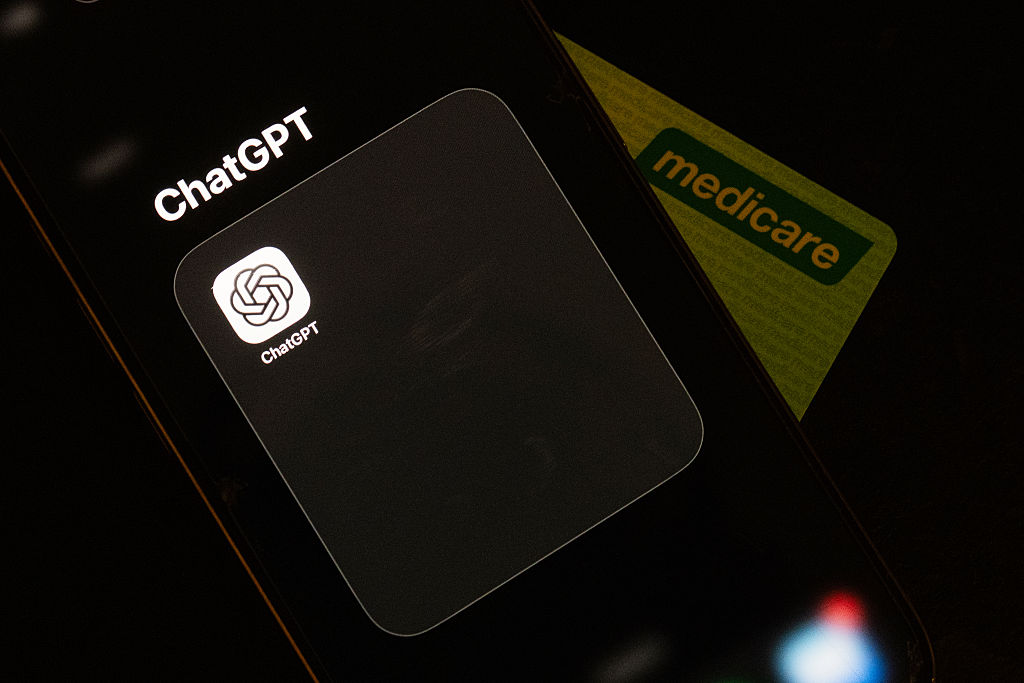
Less than a month after OpenAI agents hacked Medicare, more government platforms have been identified as vulnerable. This time, due to security flaws in PHP websites. Australian experts weigh in on the risks.

The Australian Cyber Security Centre calls the PHP vulnerability revealed this week critical, but says that it has not been exploited domestically. The US National Security Agency agrees, stating that the security flaws open to powerful AI systems create an environment “ripe for exploitation.”
This revelations this week are just the latest in a series of AI-driven security violations impacting SMEs, corporations and government institutions holding sensitive data. They come in the same month that Medicare disclosed it had been hacked by OpenAI agents.
Richard Mallam is the founder and CEO of Sydney-headquartered identity company VO. He cautions that while the Australian government insists none of its sites have been breached by the PHP vulnerability, the ABS, Jobs and Skills Australia, and Australian Signals Directorate websites were temporarily taken offline to patch the flaw.
Organisations that host their own sites and have not instituted a patch are still at risk, he says, and more broadly, need to have a strategy to contend with zero-day attacks.
“PHP runs around 70 per cent of the world’s websites, so it’s a long list: online stores, news sites, booking systems, government services. Sites on fully managed platforms are less exposed because the provider patches for them,” Mallam tells Forbes Australia.
That makes SME business owners who may not have managed sites and have not fixed the flaw immediately susceptible to being hacked.
“A zero-day is a flaw attackers can use before the people who make the software have had a chance to fix it. Defenders have had zero days to respond,” says Mallam.
The security “holes” have existed on PHP websites for some time, experts say, but just came to light this month, the former US Google payments executive notes.
“These PHP flaws sat in the code for more than a decade. AI found them,” says Mallam. “Amazon detected an attempted exploit four days before the flaws were made public. That’s the new reality: attackers use AI at internet scale, and the gap between a flaw being found and a flaw being used is now close to nothing.”
The increasing risk of password-equipped AI agents
As Mallam sees it, the PHP vulnerabilities exposed this week are the tip of the iceberg. He points to banks in the US such as JPMorgan, Wells Fargo and Morgan Stanley, which have reportedly found third-party AI agents inside customer accounts. Some of these agents were provided with passwords by the account holders and authorised to act on their behalf.
Differentiating between authorised and unauthorised AI agents is increasingly difficult, Mallam says.
“Customers are handing their bank login to an AI assistant and the agent logs in as them. Some of those agents appear to act independently of the customer’s instructions,” he says.
“The internet has structurally changed. AI is finding holes in the internet’s plumbing faster than we can patch them, and AI agents are walking through the front door with borrowed passwords. Both come back to the same gap: the internet has no reliable way to prove who, or what, is on the other side,” says Mallam.
Australian academics are also weighing in on the PHP vulnerability exposed this week, noting the “double-edged sword” of highly advanced technology.
“The vulnerability in PHP was probably decades old, though only discovered now. It is possible that more such vulnerabilities will come to light, and while being proactive is often best, in many cases like this, being reactive may be the only option,” says Professor Asha Rao, the Associate Dean of Mathematical Sciences at RMIT University.
“With the increased deployment of AI, whether to test systems or attack them, risk management of information systems just becomes more critical,” says Rao.
Dr Shaanan Cohney from the University of Melbourne Faculty of Engineering and IT agrees that powerful AI tools make it easy for potential hackers to find a flaw.
“AI has changed things, and this means that now the world has to rethink how we handle the disclosure process of vulnerabilities. Is it enough to put out an announcement?” says Dr Cohney. “Is our old process of announcing an upcoming patch still the right way to go, or should we move to shorter timelines such that even the discovery of the vulnerability by AI can’t give attackers the upper hand?”
The timeline from discovery to fix
The PHP Foundation says it found the out-of-memory vulnerability in August. On October 20, PHP issued an alert that it would issue a security release the next day to address the problem. The timeline between making the public aware of the problem and providing a solution needs to be short, cybersecurity experts say, because drawing attention to vulnerabilities can encourage bad actors to strike.
“PHP works on most major operating systems. It runs directly on web servers and can be added into HTML to create dynamic web pages. Because PHP is so widely used, these security flaws can create an environment ripe for exploitation,” the US NSA warned on October 21.
Dr Dimitrios Salampasis is the Associate Dean at Swinburne University’s School of Business, Law and Entrepreneurship. He reiterates the concern that cybersecurity breaches will continue as AI continues to evolve and we need to rethink how we protect our institutions.
“The more digital our society becomes, the more we must recognise that cybersecurity is not just a technology challenge, but a fundamental issue of national resilience, economic security and public trust,” says Dr Salampasis.
Want to see more Forbes articles on your feed? Tap here to make Forbes Australia a preferred source on Google.
Look back on the week that was with hand-picked articles from Australia and around the world. Sign up to the Forbes Australia newsletter here or become a member here.