A little-known company called Fluidstack has become a test bed for Google’s plans to sell its own AI chip. That’s helped it hit a $18 billion valuation and minted its founders as new billionaires.
A small British startup called Fluidstack got its start back in 2017 helping gamers make some beer money renting GPUs to AI researchers. Until July, it had never disclosed raising any funding, and its founders had given few interviews. But despite its low profile, Fluidstack appears to have landed a role as the proving ground for Google’s ambitious plans to build out its AI chip business into an enterprise that could rival Nvidia.
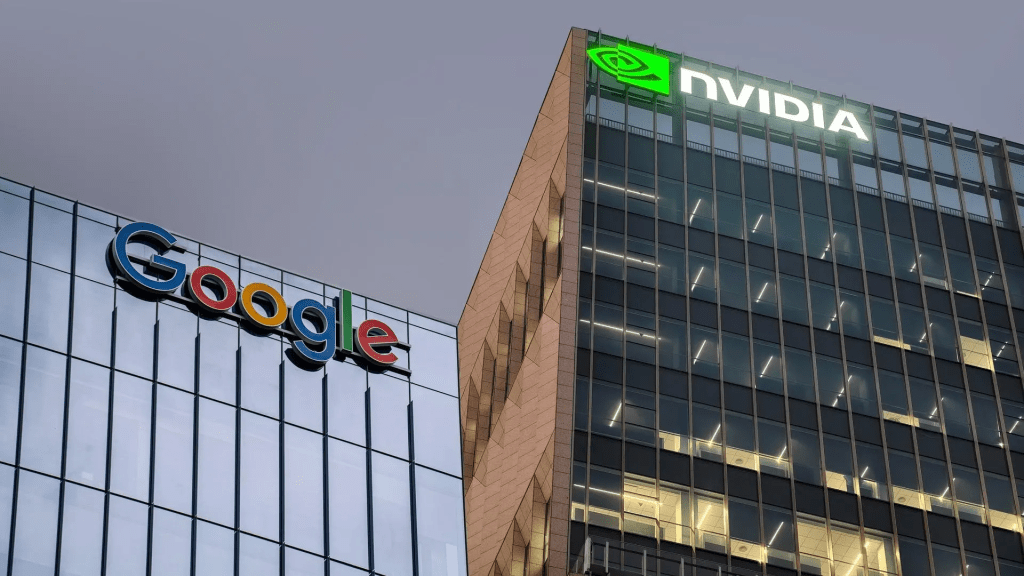
Google has used its own chips, called Tensor Processing Units (TPUs), for more than a decade to power everything from self-driving cars to the machine learning systems behind YouTube and search. For years, it’s offered them through its Google Cloud business, where other enterprises can rent TPU compute. But with demand for chips reaching feverish heights, the $4 trillion (market cap) company’s fastest-growing division is in overdrive, with a $514 billion demand backlog.
Now, Google has also started to sell TPUs directly to other companies, making them an increasingly viable alternative to Nvidia’s AI chips. In October 2025, Anthropic inked a deal with Google to buy up to 1 million TPUs, slated for building and running the next generation of Claude — the first major sale of TPUs Google has announced.
Google wasn’t just selling silicon. It put together an elaborate $200 billion plan to finance the rollout of its TPUs to Anthropic, in which the search giant holds a significant stake. Google enlisted Wall Street giants Blackstone, Apollo and Morgan Stanley and chipmaker Broadcom to help Anthropic buy and deploy the chips, as first reported by the Financial Times.
Fluidstack is in the middle of these arrangements, helping lock up the excess power of multiple crypto miners in billion-dollar deals backstopped by Google. In November, Anthropic announced it would invest $50 billion in new data centers to be built by Fluidstack — about the cost of a single gigawatt of compute. By building the data centers for Anthropic’s massive 1 million TPU rollout, Fluidstack appears to be the first publicly known operator of TPU data centers outside of Google.
Google confirmed Anthropic is the only publicly named customer using TPUs in its own data centers. Anthropic says it has a diversified approach to its compute strategy, using hardware from Google, Nvidia, AMD and AWS. It is now also building its own custom chip. Fluidstack declined to comment.
Morgan Stanley estimated that Google could rake in $13 billion in chip sales alone next year.
An investment memo shared by one of Fluidstack’s venture capital backers claims that the company is on track to manage up to 1.3 gigawatts of power across more than 10 sites this year. The memo projected Fluidstack’s revenue growing to $660 million in 2026, more than tripling from $200 million last year. By 2030, it aspires to be managing sites with more than 17 gigawatts. That’s more than all of Amazon’s and Microsoft’s current U.S. data center capacity, according to a report from investment bank Jefferies.
With its 1.3 gigawatts on track for this year, Fluidstack could soon outstrip publicly traded neocloud Nebius (market cap: $57.4 billion), which said it planned to have 1 gigawatt of AI data centers live in 2026. Its rival CoreWeave (market cap: $47 billion) said it would expand its power base to 1.5 gigawatts by the end of the year. Nebius and CoreWeave have a different business model. They buy chips — almost entirely GPUs from Nvidia — and rent them out. Fluidstack thinks it can move a lot faster by building its own data centers and renting the space to host chips rather than buying them directly.
To fund its data center plans, Fluidstack has closed a new, previously unreported $1.5 billion round led by quant fund Jane Street that valued it at over $18 billion, according to several sources close to the company (Bloomberg previously reported it was in talks to raise a $1 billion round). In July, the firm announced a $750 million round at a $7.5 billion valuation, led by hedge fund manager Leopold Aschenbrenner’s Situational Awareness. Fluidstack and a string of new partners, like tech fund Coatue’s data center arm, have loaded up on over $15 billion of debt to fund its projects, according to SEC filings.
Until December, the startup was based in London (it’s now headquartered in New York). Had it stayed in the U.K., it would have shared the title of Europe’s most valuable AI startup alongside drone builder Helsing, which raised at a $18 billion valuation in July. The deal would have made Fluidstack’s three co-founders Gary Wu, 31, Jamie Cox, 29, and César Maklary, 29, among the youngest self-made billionaires in Europe, according to corporate filings that detail their shareholdings.
Fluidstack declined to comment. Jane Street and Aschenbrenner did not respond to requests for comment.
Cox was studying classics at Oxford University when he met economics student Wu. They started Fluidstack in 2017. Cox dropped out and became a Thiel Fellow the following year. “We realized that we had PhD friends on one side struggling to get compute from hyperscalers … and on the other side we had hardcore cloud gaming friends using their crazy setups just two or three evenings per week, so we thought there was a market there,” said Maklary, who worked on aerodynamics for a Formula One team before joining the startup in 2020, in a 2024 YouTube presentation.
It was slow going. On the side, Cox and Wu started a cashback card to fund tree planting in 2020. Treecard proved a much bigger hit with investors than Fluidstack initially, raising more than $30 million by 2022 (it was shuttered in April 2026).
During the pandemic, Fluidstack’s business shifted to renting entire blocks of GPUs from corporate and college labs. It would later land deals with startups like Poolside, Mistral and Character.ai. After ChatGPT’s launch, the company grew to manage AI supercomputers with clusters of thousands of GPUs run inside other companies’ data centers. Revenue surged to over $66 million in 2024, the last year that Fluidstack disclosed its finances in U.K. corporate filings.
By February 2025, the tiny startup was the unlikely star of French President Emmanuel Macron’s AI Action Summit, when he announced that Fluidstack would help build an $11.5 billion data center in France. “Nvidia has told me that they will send those chips when we need them,” Maklary told the Wall Street Journal at the time. Maklary and Wu were pictured with Jensen Huang at Nvidia’s annual chip show in California later that year, where the Nvidia CEO signed a Lego model of one of his AI chips.
Just over a year later, Fluidstack reportedly walked away from the deal. A source close to the company said that the France project was scrapped because more power could be secured on a shorter timeline in the U.S. Fluidstack had already started talks with Anthropic and Google, which were hungry to build new data centers fast after Claude’s code-writing prowess made it a breakout hit.
Clues to their emerging partnership began to trickle out in Securities and Exchange Commission filings from a trio of struggling bitcoin miners beginning last August.
Fluidstack started signing billion-dollar deals to lock up the power from bitcoin miners like TeraWulf, Cipher Mining and Hut 8 for the next decade — even though on paper it had raised only $30 million in equity and $38 million in debt up to December 2024, as Forbes reported. Google was named as providing billions of dollars as a backstop for the contracts. Combined, these deals represent just under 1 gigawatt of power.
Then Anthropic announced its Fluidstack deal in November. “We selected Fluidstack as our partner for its ability to move with exceptional agility, enabling rapid delivery of gigawatts of power,” Anthropic wrote in a blog post announcing the deal.
Fluidstack has other customers too: Meta, Jane Street and Black Forest Labs. It’s already telling new hires that it wants to secure 50 gigawatts of power by 2030. “The goal is to sign more capacity this decade than anyone in the market,” reads one job description. Candidates “won’t just run a data center; you’ll run infrastructure the size of a G7.”
Fluidstack’s cofounders have been able to land meetings and contracts with big names in Silicon Valley because they’ve demonstrated an ability to scale data centers quickly and hit tight deadlines, says Alex Bouzari, CEO and cofounder of AI data storage company DDN, a Fluidstack supplier.
The company also offers startups a “white glove” service to set up and nurse sometimes temperamental clusters of AI chips. That was helpful for researchers working with familiar Nvidia chips, which are packaged with a powerful software library called Cuda, but was vital for using TPUs. Few outside of Google’s AI labs have worked with these chips directly, and they came with less software scaffolding.
The investor memo makes it clear that Fluidstack’s main selling point now is speed. It claims to be able to build a data center in just three months that would take Google, Amazon or Meta at least a year. A source close to the company said that it had stripped back the design of its data centers to prioritize speed of construction — similar to Elon Musk’s approach to building his Colossus data center in Tennessee. Fluidstack has hired more than a dozen former Tesla and SpaceX staff over the last year, according to LinkedIn updates.
In June, Fluidstack quietly signed a lease for two buildings covering more than 1 million square feet on the outskirts of Glendale, Arizona. It’s hiring for dozens of roles with experience in factory management and robotic welding. Job postings indicate the startup is building modular data center units that can be shipped on trailers to remote locations, like one of its new data center sites about 80 miles west of Abilene, Texas.
The company is also hiring experts with experience building and managing “utility-scale” solar farms. That could help it sidestep concerns that state grids cannot support the number of data centers already under construction, which has caused widespread backlash.
Wu, Cox and Maklary aren’t the only ones getting rich from Fluidstack’s booming valuation. The company has also secured some big-name backers that have not been previously reported. BlackRock, hedge fund manager Gavin Baker’s Atreides Management and Meta board member Charlie Songhurst are all named in corporate filings as shareholders. Multiple sources also said Alphabet and early Anthropic backer Spark Capital are additional investors.
As the lead investor in the $7.5 billion round earlier this year, Leopold Aschenbrenner’s fund is now one of Fluidstack’s biggest shareholders, with an estimated $2 billion stake (he also reportedly holds a reported $5 billion stake in major Fluidstack partner Anthropic, and is married to Dario Amodei’s chief of staff). Aschenbrenner reportedly faces an SEC investigation for losing $35 billion from leveraged bets on AI-related stocks that led to the sale of his hedge fund book to Citadel in July. Despite that blowup, he’s still reportedly writing new checks for startups.
Others in Aschenbrenner’s orbit also hold stakes in Fluidstack, like chip analyst Dylan Patel of SemiAnalysis, who reportedly shared a San Francisco office with the investor. Forbes estimates that a special purpose vehicle (SPV) named after the analyst and SemiAnalysis’s president Doug O’Laughlin could now hold around $140 million of Fluidstack stock.
SemiAnalysis’s newsletters and research reports on chips, AI and neoclouds have become compulsory reading for tech investors. But Patel’s relationship with Fluidstack is now at the heart of a legal battle with a former employee Wei Zhou, who was terminated in January. SemiAnalysis filed a lawsuit against Zhou alleging breach of contract and sharing trade secrets just days before Zhou filed his own suit. He claimed Patel allegedly pushed him to include sensitive data on TPUs from Fluidstack in SemiAnalysis reports. That private data could impact the share price of Nvidia, Google and other stocks which could allegedly violate securities laws, Zhou said in the suit. The cases have now been pushed to arbitration.
SemiAnalysis and Wei Zhou didn’t respond to comment requests. Dylan Patel declined to comment on the record.
One of the most prolific backers of AI startups is glaringly absent from the roll call of Fluidstack’s backers: Nvidia. The $5 trillion chip giant has spent billions to spawn a new generation of cloud companies like CoreWeave, Nebius, Crusoe and more, all of which provide access to its chips. Fluidstack is perhaps the only neocloud data center builder it hasn’t backed.
Fluidstack certainly doesn’t have any loyalty from even its biggest customers. It may be poised to secure a chunk of Anthropic’s spending on chips — the investment memo estimates that the AI frontier lab will need 4 gigawatts of new compute next year (Anthropic didn’t respond to questions on this figure). But Anthropic is also renting chips from Elon Musk, Amazon and Google Cloud. It signed deals totaling $75 billion in just the last week with rival data center operators Nscale and Lambda — both backed by Nvidia.
Now Nvidia is working on a Google-style $500 billion arrangement with Wall Street to finance new data centers running its own chips. By straying so far into Google’s orbit, Fluidstack might risk missing out on this even bigger prize.
Want to see more Forbes articles on your feed? Tap here to make Forbes Australia a preferred source on Google.
Look back on the week that was with hand-picked articles from Australia and around the world. Sign up to the Forbes Australia newsletter here or become a member here.