Anthropic filed for an initial public offering ahead of the opening bell on Monday, bringing the maker of Claude closer to what could be one of the largest public debuts in stock market history and revealing numerous previously unknown aspects of how the company functions and how it views AI’s role in society.
Key Takeaways
- Anthropic, which confidentially filed with the Securities and Exchange Commission in June, plans to list under the ticker symbol “ANT,” and is on track to go public as soon as mid-November.
- The filing did not disclose the valuation Anthropic is targeting or the number of shares.
- The company generated around $16.3 billion in revenue for the first half of the year, up from $1.2 billion a year earlier, but incurred a $80.7 billion net loss for the first half of the year, the filing shows.
- Goldman Sachs and Morgan Stanley are leading the IPO, according to the filing.
- Tech stocks rose on the news Monday, with Nvidia jumping 2.4%, Microsoft 1.5%, Tesla more than 5%, Micron 3%, Broadcom 2.3% and CoreWeave 1.8%.
HOW ANTHROPIC THINKS AI COULD BE APPLIED WITH “INCREDIBLE POTENTIAL”
In outlining Anthropic’s goal of ensuring investors know both the potential and risks of AI, the filing outlines four key applications of the technology: biology and medicine advancement, economic growth, expanded access to benefits and government services. On the health front, Anthropic believes AI could potentially cure cancer, Alzheimer’s, heart disease, rare genetic diseases and major infectious diseases, and the filing states that Claude has already begun making biological discoveries, including a molecular machine that could possibly be used for gene editing.
To aid economic growth, Anthropic believes AI could reverse stagnated productivity growth in advanced economies by streamlining current processes and coming up with ideas for new ones.
It also believes AI could help raise global economic growth rates and distribute medicine and services to communities that don’t have access to crucial health services by strengthening available data and the breadth of expertise. Finally, Anthropic believes AI could greatly improve tax, social services, medical and planning and permitting services by continuing to work with governments to streamline the processes.
The goals largely mirror Anthropic co-founder and CEO Dario Amodei’s October 2024 landmark essay, “Machines of Loving Grace,” where he wrote that five applications of AI—biology and physical health, neuroscience and mental health, economic development and poverty, peace and governance, and work and meaning—have “the greatest potential to directly improve the quality of human life.”
Related
WHERE ANTHROPIC THINKS AI POSES THE GREATEST RISKS
“Anything so powerful can be used for ill as well as good,” the filing reads, and outlines four broad categories of risks: that it may be used by people looking to do harm, behave independently, be used by authoritarian governments and create significant economic disruption. In addressing the first risk, the filing states that Anthropic has “guardrails and trusted access programs that are designed to block misuse of our technology while still enabling positive applications.” The company acknowledged in the filing that AI acting on its own could become “a global security threat of the first order,” and authoritarian governments could use it to create high-tech surveillance states, advance repression and strengthen their power. The filing also states that Anthropic will be studying economic disruptions caused by AI, and already committed $200 million to partner with governments to run studies for potential responses.
CRUCIAL QUOTE
“We believe that Al is one of the most consequential technologies in human history. If managed well, it could rapidly accelerate scientific innovation, greatly increase economic growth rates, bring cures for major diseases within reach, and solve problems that have resisted generations of human effort,” the filing reads. It adds, “Anthropic aims to realize these benefits while navigating and preventing the risks that come with a technological revolution this fast and this powerful.”
BIG NUMBER
While Anthropic reported $117 billion in total liabilities as of June 30, 2026, arrangements for lease obligations aren’t reflected in its balance sheet until the leases officially start, meaning many of its large deals aren’t reflected in this figure. Total estimated future undisclosed lease obligations totaled $321 billion as of June 30, 2026, and the company lists numerous contracts, many of which have start dates coming up later this year. Anthropic committed to spending at least $45 billion with Microsoft between November 2026 and May 2033, $114.5 billion with Google between April 2026 and July 2033, $110 billion with Amazon between between May 2026 and April 2036, up to $120.5 billion with SpaceX over terms extending into 2029, up to $44.6 billion with wholly owned subsidiaries of Nscale Global Holdings Limited over terms extending into 2033 and around $41 billion with Lambda, Inc. over terms extending into 2034.
ANTHROPIC’S MASSIVE CAPITAL EXPENDITURE
Anthropic, which has spent over $19 billion in AI infrastructure since its founding, could see its obligations total roughly $1 trillion through 2045. That figure would account for about 3% of the total $31.6 trillion that PwC estimates will be spent on global AI development by 2050. If it cannot keep its revenue up to speed, Anthropic’s IPO and the greater tech industry could experience a significant cooling effect.
FORBES VALUATION
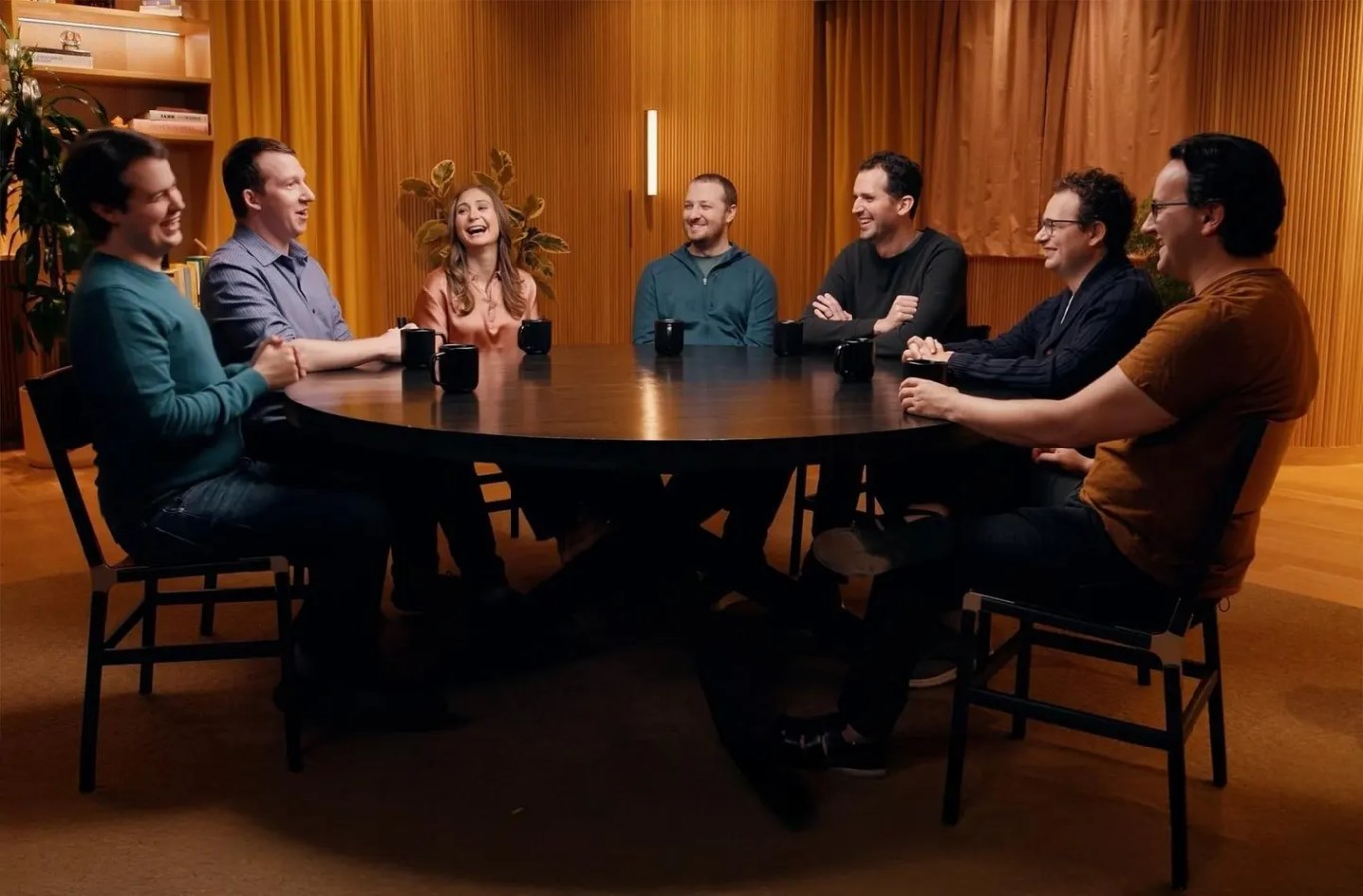
Each of Anthropic’s cofounders own around a 1.4% stake, according to Forbes’ calculations. The ownership stakes for Dario Amodei, Anthropic’s co-founder and CEO, and Daniela Amodei, cofounder and president, are worth an estimated $13.6 billion and $13.7 billion, respectively. Dario Amodei’s estimated net worth was $15.5 billion on Monday, placing him No. 178 on Forbes’ Real-Time Billionaires list, tied with Daniela Amodei. Anthropic’s head of public benefit Jack Clark and chief science officer Jared Kaplan have stakes worth an estimated $13.7 billion each. Anthropic has not disclosed its target valuation, but if the estimate of between $1.5 trillion and $2 trillion is correct, each of the cofounders’ net worth would be over $20 billion, according to Forbes’ calculations.
KEY BACKGROUND
A group of former OpenAI employees founded Anthropic in 2021. The company developed Claude, a family of AI models that compete with others like OpenAI’s ChatGPT and Google’s Gemini. Amazon, Google and Nvidia have invested billions of dollars in the company, helping them fund investments in chips, data centers and other efforts to develop and market the AI technology. The company, which reported its third-quarter earnings in October, grew revenue by 45% to $16.8 billion in the quarter. It has committed to spending $518 billion over ten years on cloud services, computing and infrastructure, and reported spending nearly $9 billion on computing capacity and infrastructure in the first half of the year, compared to $2.3 billion a year earlier.
TANGENT
Anthropic’s IPO comes at a time when investors are growing increasingly wary about the return on investment for substantial AI spending. The latest wave of anxiety came after Meta and Tesla’s earnings, which showed high and low capital expenditures, respectively, triggered the latest drop in AI-related stocks on Thursday. These fears, coupled with rising interest rates, are creating a rough environment for many tech and semiconductor stocks, which has influenced other AI firms’ decisions to delay their IPOs until later this year, including Switch and Nscale, Reuters reported, citing people familiar with the matter.
SURPRISING FACT
Anthropic is committing at least 5% of its shares to a new public benefit fund once it goes public. The Anthropic Public Benefit Fund, subject to stockholder approval, is intended to give the company “increased flexibility and scale” when it comes to making donations to nonprofits or “direct distributions to specific populations,” excluding political donations or lobbying efforts. Hours after Anthropic’s announcement, Elon Musk said that next year he will give every child in America one SpaceX share.
Want to see more Forbes articles on your feed? Tap here to make Forbes Australia a preferred source on Google.
Look back on the week that was with hand-picked articles from Australia and around the world. Sign up to the Forbes Australia newsletter here or become a member here.