The quantum computing startup will receive up to $53 million to establish a supply chain in the US. Later this year it hopes to progress through a US Defence initiative that could score it an even bigger windfall.
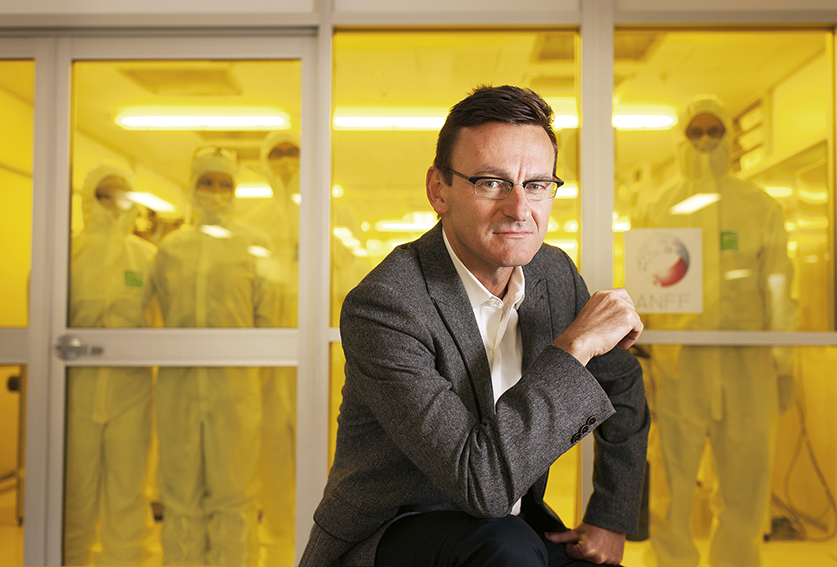
Andrew Dzurak first received grant funding from the US Government when he was a quantum academic in 1999. Now, some 26 years later, he’s inked a much bigger deal: a US$38 million letter of intent with the US Department of Commerce for his Diraq startup.
The agreement, which funds Diraq establishing a complete supply chain in the United States, will see the startup awarded grant money after hitting various technical milestones. Much or all of the grant funding will turn into equity, making Uncle Sam an investor.
“Australia and the United States have been working together on quantum computing for nearly three decades,” Dzurak told Forbes Australia. “This to me is the fruit of a lot of labour over a long period of time.”
It may not be the last money Diraq receives from the United States before the year’s end. The startup is taking part in the US Defense Advanced Research Projects Agency (DARPA) Quantum Benchmark Initiative, which seeks to identify quantum companies that can fulfil the technology’s potential by 2033.
Diraq is currently in the R&D-oriented Stage B of the program. Later this year DARPA will announce which companies progress to Stage C, which comes with up to US$300 million ($420 million) in supporting funds.
“Obviously, I can’t speak for DARPA but I’m feeling very good about how that’s progressing,” Dzurak said.
Diraq would join a small club in the program’s Stage C currently populated only by PsiQuantum and Microsoft. Silicon Quantum Computing, a competing startup out of which Diraq spun, is also currently in Stage B.
Diraq was one of nine quantum companies to sign a letter of intent with the Department of Commerce as part of an initiative under the CHIPS and Science Act to bolster quantum manufacturing in the US. It is the smallest company on the list – Dzurak has not disclosed Diraq’s valuation but says it’s under $1 billion – and the only one not headquartered in the US.
The big winners from the investment splash are IBM and GlobalFoundries, which will receive US$1 billion and US$375 million respectively to establish quantum foundries. PsiQuantum, which this week announced it was moving the location of its Brisbane quantum computer after months of delays, will get US$100 million.
Diraq’s key differentiator from competitors is that its quantum chips can be made using the same CMOS manufacturing technology that foundries already use to pump out hundreds of billions of chips each year. It will use the grant to expand its work with GlobalFoundries, which manufactures its semiconductors, and to enlarge the footprint of its Silicon Valley, Los Angeles and Chicago operations.
“We will certainly be expanding very significantly in the United States,” Dzurak said. “This [funding] from the Department of Commerce will be invested all in the United States to help us build up supply chains.”
Should the LOI be consummated as expected, Diraq would end up backed by both the US and Australian governments. The National Reconstruction Fund, the Australian Government’s $15 billion fund to stimulate advanced manufacturing, tipped $20 million into Diraq in February. While the chips that power Diraq’s quantum computers will be made overseas, Dzurak says system assembly – which requires delicate handling of electronics and cryogenics – will occur in Australia.
Quantum computers theoretically capable of cracking algorithms that would brick the most powerful existing supercomputers. This high-powered compute can be used to exponentially advance chemistry, enabling foundational breakthroughs that could lead to everything from cancer-curing drugs, more efficient fertiliser production and scientific white whales like superconductors.
A system capable of achieving this feat is known in industry parlance as a “utility-scale” quantum computer. Diraq’s first product will hit the market in 2029, with a utility-scale quantum computer to follow in 2031.
Want to see more Forbes articles on your feed? Tap here to make Forbes Australia a preferred source on Google.
Look back on the week that was with hand-picked articles from Australia and around the world. Sign up to the Forbes Australia newsletter here or become a member here.